Class D Fire Extinguisher for Metal Fires in Labs
Class D Fire Extinguisher Guide: Metal Fires in Shops and Labs
In busy workshops and research labs, sparks often fly. Most of the time, that is part of the job. However, when combustible metals ignite, the situation changes fast. A class d fire extinguisher metal fires solution becomes essential in those moments. Unlike ordinary flames fueled by paper or liquid, metal fires burn hotter, react faster, and refuse to cooperate with water or foam. Kord Fire Protection technicians often explain that treating a magnesium blaze like a trash can fire is like bringing a garden hose to a volcano. It is simply not the right tool.
This guide walks through how these extinguishers work, why they matter in industrial and laboratory settings, and how proper training turns panic into control. Along the way, the advice remains steady, practical, and just a touch entertaining. After all, even serious safety topics can hold attention without putting anyone to sleep.
Understanding Combustible Metal Fires in Industrial Settings
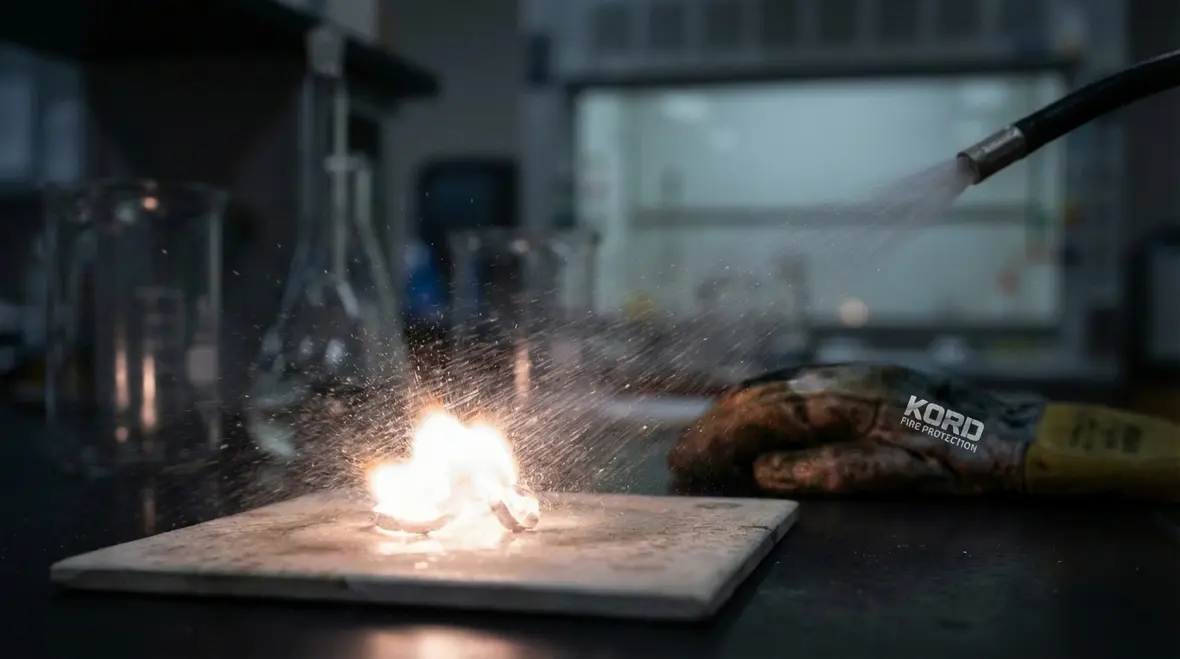
Metal fires behave differently because the fuel itself changes the rules. Materials such as magnesium, titanium, sodium, potassium, zirconium, and lithium burn at extremely high temperatures. Moreover, some react violently with water, releasing hydrogen gas and making the fire worse. That is not drama. That is chemistry doing what chemistry does.
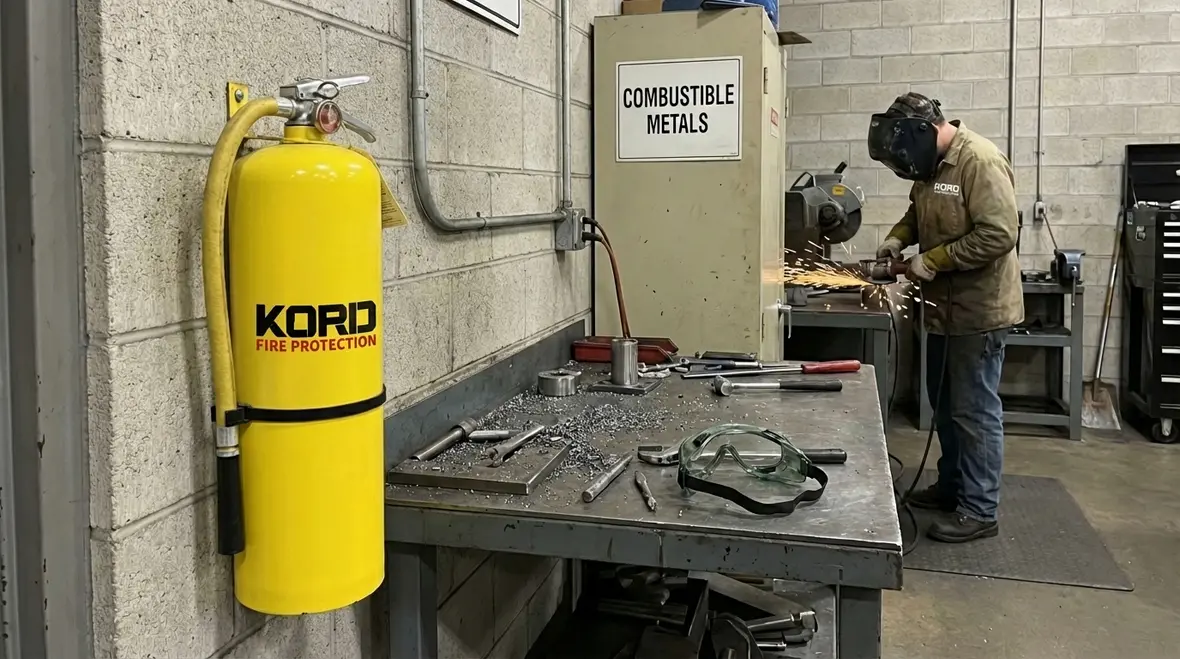
In machine shops, fine metal shavings collect under equipment. Meanwhile, grinding and cutting operations create sparks that can ignite those particles. In laboratories, reactive metals may sit in storage cabinets or under fume hoods. If exposed to moisture or heat, they can ignite without much warning.
Kord Fire Protection technicians often describe metal fires as stubborn. They do not smolder politely. Instead, they flare bright white and burn with intense heat. Therefore, traditional extinguishers designed for wood, paper, or flammable liquids simply do not stand a chance. In fact, using the wrong extinguisher can cause flare ups or even small explosions.
Because of these risks, understanding the nature of combustible metals becomes the first step in preventing disaster. Knowledge sets the stage. The right equipment finishes the job.
If your facility also handles more common fire hazards, Kord’s overview of NFPA 10 portable fire extinguisher guidelines helps put Class D protection in context alongside A, B, C, and K units.
Why Standard Extinguishers Fail Against Metal Fires
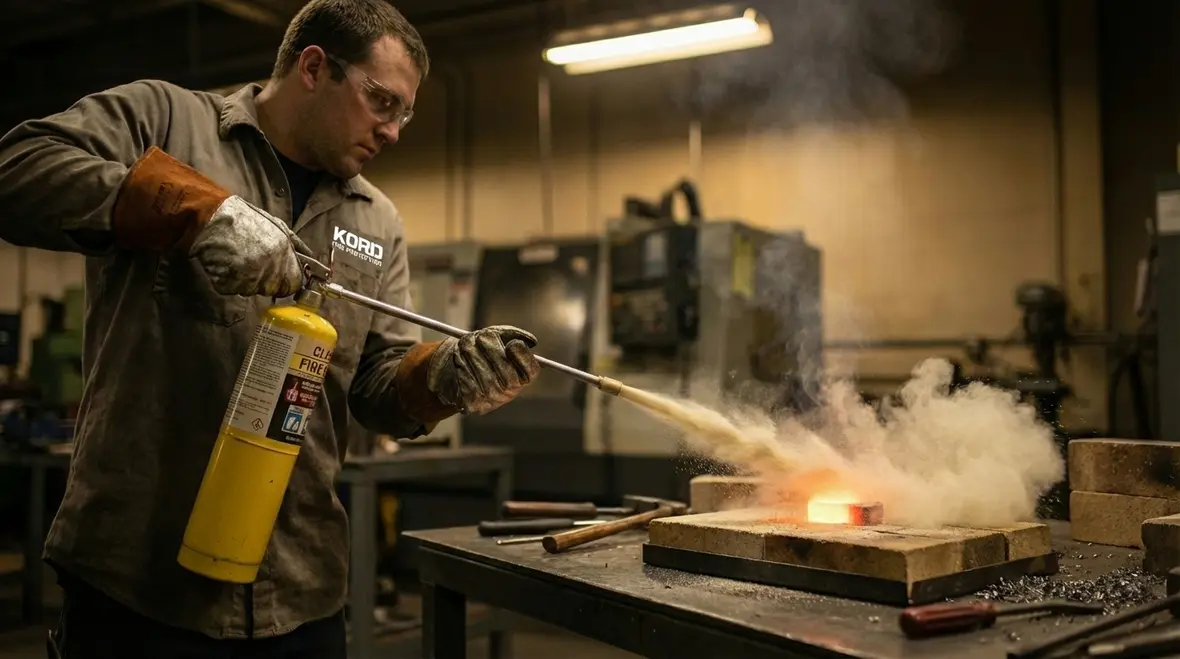
Water based extinguishers cool common fires. Foam units smother liquid fuels. Carbon dioxide displaces oxygen. However, metal fires laugh at these tactics. When water contacts burning magnesium or sodium, it can split into hydrogen and oxygen. That reaction feeds the flames rather than stopping them.
Similarly, carbon dioxide may not withstand the extreme temperatures involved. The metal can strip oxygen from the carbon dioxide molecule itself. That means the extinguishing agent becomes part of the reaction. It is a bit like asking the villain to guard the treasure.
For this reason, fire codes require specialized equipment wherever combustible metals are present. A class d fire extinguisher metal fires unit contains dry powder agents designed specifically to smother and absorb heat from reactive metals. Instead of cooling with liquid, it forms a crust over the burning material. Consequently, it isolates the fire from air and controls the reaction.
Kord Fire Protection technicians emphasize that grabbing the nearest red cylinder without checking its label is a gamble no one should take. Labels matter. Training matters more. Their fire extinguisher training sessions walk employees through which unit belongs with which hazard, including those tricky metal fires.
How a Class D Fire Extinguisher Metal Fires Solution Works
A class D unit looks simple on the outside. Inside, however, it holds a carefully formulated dry powder. Depending on the hazard, that powder may contain sodium chloride, graphite, or copper based compounds. Each agent serves a specific type of metal.
When discharged, the powder flows gently over the burning material. Unlike high pressure water streams, the application remains controlled. This matters because disturbing the metal can scatter burning fragments. Nobody wants flaming shrapnel flying across a shop floor.
The powder absorbs heat and forms a crust. As a result, oxygen cannot reach the surface. The fire loses its fuel source and begins to die down. Kord Fire Protection technicians often compare the effect to placing a heavy blanket over a campfire. The difference, of course, is that this blanket handles temperatures that would melt ordinary materials.
Importantly, these extinguishers are not one size fits all. Facilities must match the extinguishing agent to the specific metals present. Therefore, hazard assessments play a critical role in selecting equipment.
When Kord’s technicians perform fire extinguisher service and certification, they verify that Class D units match the hazard profile instead of just ticking a box on a spreadsheet.
Where Shops and Labs Face the Highest Risk
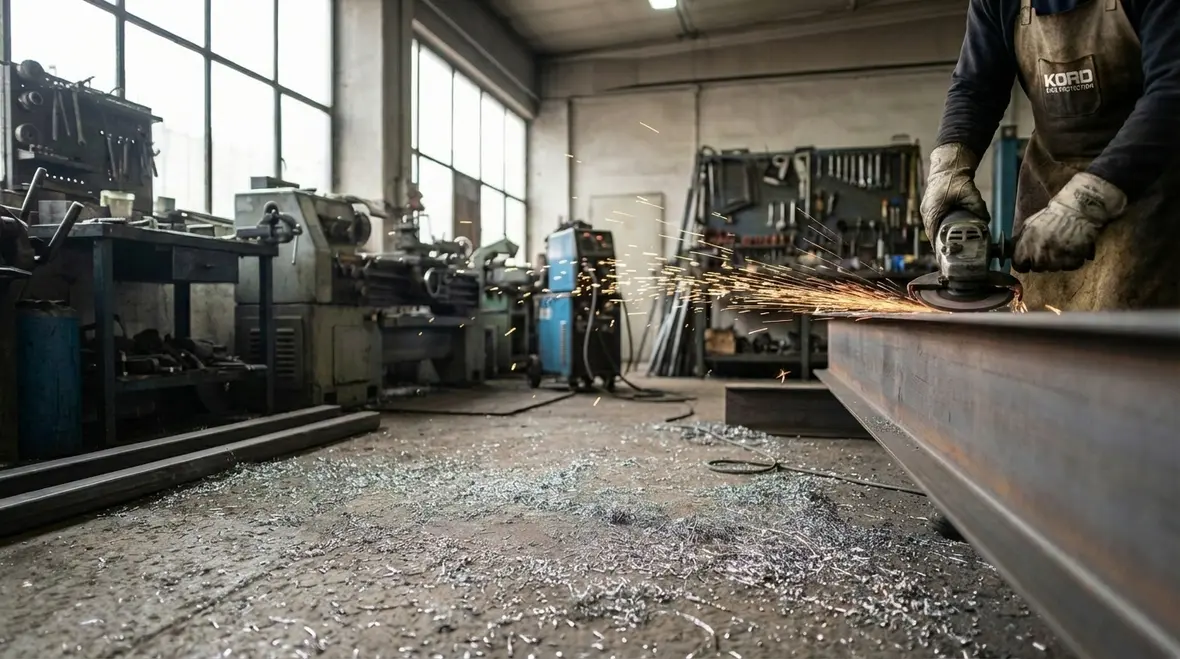
Although metal fires are less common than paper or electrical fires, they occur in predictable areas. Recognizing these zones allows managers to place extinguishers where they will do the most good.
High risk areas include:
- Grinding and cutting stations where sparks meet metal dust
- Powder handling rooms in additive manufacturing
- Storage cabinets for reactive metals
- Laboratory benches using alkali metals
- Waste collection bins containing metal shavings
In each of these areas, small particles create large hazards. Fine shavings ignite more easily than solid blocks. Furthermore, ventilation systems can spread burning particles if not properly designed.
Kord Fire Protection technicians regularly survey facilities and note that placement often makes the difference between a quick response and a costly emergency. An extinguisher hidden behind stacked boxes helps no one. Accessibility and visibility remain key. Their article on fire extinguisher requirements for businesses reinforces that code compliance is about access, not just checking off numbers.
Choosing the Right Equipment for Metal Fire Protection
Selecting a class d fire extinguisher metal fires solution requires more than checking a box on a compliance form. Instead, it involves understanding the specific materials in use and how they behave under heat.
Below is a simple comparison to guide decision makers:
Column One: Common Metals
- Magnesium
- Titanium
- Sodium
- Potassium
- Lithium
Column Two: Typical Extinguishing Agents
- Sodium chloride based powder for magnesium and sodium
- Graphite based powder for high temperature metals
- Copper powder for lithium battery related hazards
While this overview helps, it does not replace a professional assessment. Kord Fire Protection technicians evaluate the environment, the quantities stored, and the processes involved. Consequently, they recommend units with the proper rating and capacity.
Additionally, they advise on mounting height, signage, and inspection schedules. Because an extinguisher buried under dust or blocked by equipment becomes decoration rather than protection. Their guidance on how often a fire extinguisher needs to be serviced is especially useful for keeping Class D units inspection ready, not forgotten in a corner.
What Should a Shop Owner Ask About Metal Fire Safety?
Shop owners and lab managers often turn to search engines with practical questions. The answers, thankfully, are straightforward.
What size extinguisher is needed?
It depends on the volume of combustible metal present. Larger quantities require higher capacity units.
How close should it be?
Ideally, within quick walking distance of the hazard area, without placing the user directly in harm’s way.
Is training mandatory?
Yes. Because even the best equipment fails if no one knows how to use it.
Kord Fire Protection technicians often conduct hands on sessions. During these sessions, they demonstrate proper discharge technique, safe approach distances, and post incident procedures. They also remind participants that confidence comes from practice, not guesswork. Nobody wants their first attempt to be during a real emergency.
Maintenance, Inspection, and Code Compliance
Owning the right extinguisher marks only the beginning. Regular inspection ensures readiness. Most safety standards require monthly visual checks and annual professional servicing. During inspections, technicians verify pressure levels, confirm that seals remain intact, and examine the condition of the discharge nozzle.
Because dry powder agents can settle over time, proper storage matters. Units should remain upright and protected from moisture. Furthermore, any discharge, even partial, calls for servicing or replacement. A half empty extinguisher is like a half charged phone during a storm. It may not last when needed most.
Compliance with local fire codes protects both people and business operations. Insurance carriers also review fire protection measures during audits. Therefore, maintaining documentation of inspections and training supports smoother reviews and fewer surprises.
Kord Fire Protection technicians keep detailed service records and help facilities stay aligned with evolving regulations. As codes update, so should safety plans. Their monthly inspection and annual service support ensures Class D units are more than dusty wall art.
Training Culture and Emergency Planning
Even the finest class d fire extinguisher metal fires equipment cannot replace a strong safety culture. Effective programs combine hazard awareness, proper storage practices, and clear emergency procedures.
First, facilities should minimize metal dust accumulation through routine cleaning. Second, they should store reactive metals in approved containers away from moisture. Third, they should develop evacuation plans that account for high heat and possible re ignition.
Drills reinforce these procedures. During practice scenarios, employees learn who contacts emergency services, who attempts initial suppression, and when to step back. Because sometimes the bravest move involves retreating and letting firefighters take over.
Kord Fire Protection technicians stress calm decision making. In their words, panic spreads faster than flame. Clear roles and steady training prevent confusion. And yes, they occasionally lighten the mood with a movie reference about explosions. However, they always circle back to the message that real life demands preparation, not heroics.
FAQ: Metal Fire Extinguishers in Shops and Labs
Conclusion: Protecting Your Shop or Lab Starts Now
Metal fires demand respect, preparation, and the right tools. A properly selected and maintained extinguisher, combined with expert guidance from Kord Fire Protection technicians, transforms risk into readiness. Do not wait for sparks to become headlines. Schedule a professional assessment, train your team, and equip your facility with confidence.
Because when it comes to combustible metals, preparation is not optional. It is protection in its purest form. To move from “hoping we are covered” to “we know we are covered,” connect with Kord’s fire extinguisher service & certification team and request a shop or lab walkthrough that includes Class D coverage.
For facilities that also need help with sprinklers, alarms, and suppression systems beyond extinguishers, explore Kord’s broader fire protection services to build a complete, code aligned safety plan.
Know Your Weapon Before You Fight the Flame
Kord Fire Protection is your go-to when it comes to all things fire protection. For over 20 years, we’ve been serving Southern California with the quality service and equipment to keep your home or business safe at all times. Our competitive prices reflect our unwavering commitment to protecting what matters most in the event of a fire emergency. Give us a call, send an email, or use that form!

Join Our Newsletter!
Get the latest fire safety tips delivered straight to your inbox From our Newsletter.