
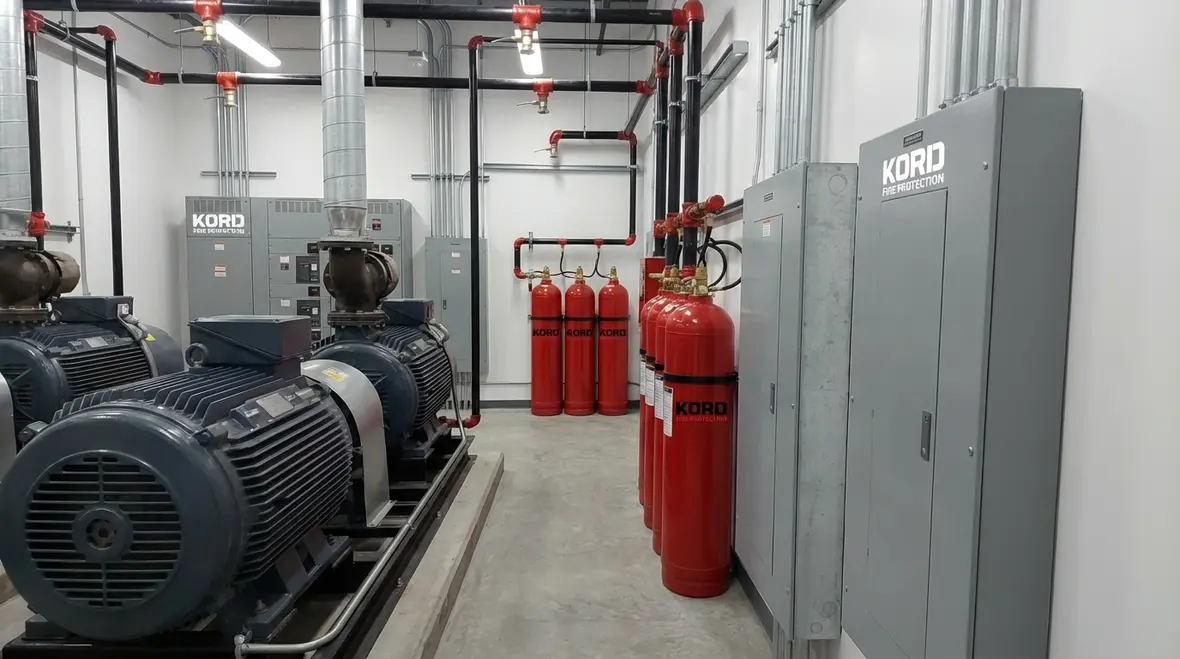
Dry Chemical Fire Suppression System Guide
Fire does not wait for permission. It does not check the calendar. It simply arrives, loud and hungry. That is why our dry chemical fire suppression system stands ready long before the first spark ever dreams of becoming a flame. Designed to act fast and decisively, this solution protects high risk environments where water alone would do more harm than good. From industrial plants to commercial kitchens, it steps in with precision and confidence.
However, like any powerful tool, it has a purpose, a limit, and a need for care. In the sections that follow, the best use cases, practical limits, and maintenance needs will unfold clearly. Along the way, Kord Fire Protection technicians will help explain what works, what does not, and why preparation always beats panic.
Understanding the Power Behind a Dry Chemical Fire Suppression System
A dry chemical fire suppression system works by releasing a fine powder agent that interrupts the chemical reaction of fire. In simple terms, it stops the flame at its source. Rather than cooling the fire like water does, it smothers and disrupts combustion. As a result, it acts quickly and effectively across several fire classes.
Typically, these systems use agents such as monoammonium phosphate or sodium bicarbonate. Each agent targets specific hazards. For example, monoammonium phosphate works well on Class A, B, and C fires, which include common combustibles, flammable liquids, and electrical equipment. Sodium bicarbonate, on the other hand, often handles flammable liquid and gas fires with precision.
Kord Fire Protection technicians often explain it in plain language. Fire needs heat, fuel, and oxygen. Remove one, and the party is over. The chemical agent forms a barrier between fuel and oxygen while also halting the chemical chain reaction. It is less Hollywood explosion and more silent shutdown. Efficient. Decisive. Almost polite.
Moreover, these systems can operate automatically through heat detection or manually when someone pulls a station. That flexibility makes them valuable in environments where seconds matter. Because in fire safety, seconds do not stretch. They vanish.
Where Should a Dry Chemical Fire Suppression System Be Installed?
When business owners search online, they often ask, where is this system most effective? The answer is straightforward. It shines in environments where water based suppression could damage equipment or fail to control flammable liquids.
Industrial Facilities
Manufacturing plants with paint booths, fuel storage, or heavy machinery benefit greatly. Since flammable liquids and electrical panels coexist in tight spaces, a fast acting chemical agent makes sense. Additionally, these systems can integrate with alarms and automatic shutdowns for machinery.
Commercial Kitchens
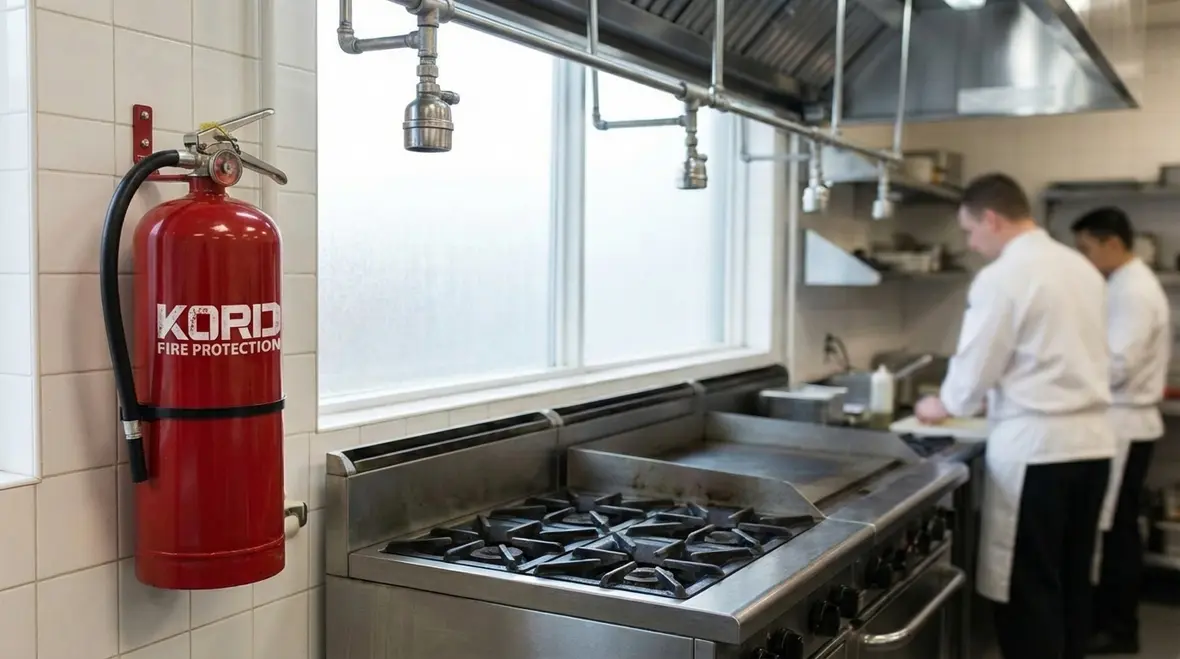
Although wet chemical systems dominate modern kitchen protection, dry chemical units still serve in certain setups, especially where grease and open flame cooking equipment pose serious risks. They respond quickly to stovetop flare ups and hood fires. For newer kitchen hood designs, many facilities also explore clean agent or water mist fire suppression options as part of a broader strategy.
Fueling Stations and Garages
Gasoline vapors and sparks are not friends. Therefore, automotive shops and fueling areas often rely on chemical suppression to prevent flash fires from spreading.
Electrical Rooms
Water and live circuits mix about as well as cats and bath time. Consequently, dry powder agents offer a non conductive solution for energized equipment. In rooms packed with sensitive electronics, though, Kord Fire Protection may recommend clean agents that align with NFPA 2001 clean agent standards for minimal residue and rapid recovery.
Kord Fire Protection technicians emphasize proper hazard assessment before installation. Not every space needs this approach. However, when flammable liquids or electrical risks dominate, it often becomes the smart choice.
Limits and Considerations Before Installation
Every hero has boundaries. Even the most reliable fire suppression equipment comes with practical limits.
Residue and Cleanup
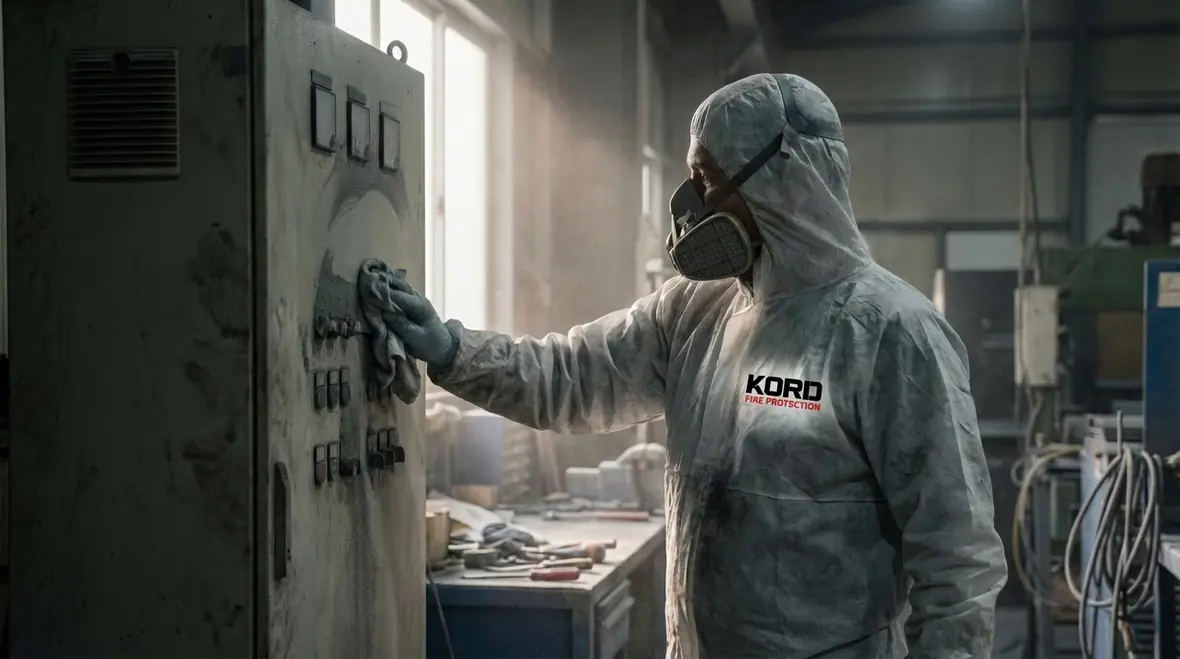
First, residue remains after discharge. The powder spreads quickly and coats surfaces. While that residue helps stop the fire, it also requires thorough cleanup. Sensitive electronics may suffer contamination if not properly protected. Therefore, data centers often lean toward clean agent systems instead, such as the eco-focused Fluoro-K clean agent solution.
Visibility and Evacuation
Second, visibility can drop during discharge. The cloud of chemical agent fills the protected area rapidly. Although that helps extinguish flames, it may temporarily reduce sight lines for occupants. For this reason, proper evacuation planning must accompany installation.
Reignition Risk
Third, these systems do not cool surfaces as effectively as water. While they interrupt combustion, hot materials may reignite if not monitored. That is why post discharge inspection remains essential.
Kord Fire Protection technicians often share a simple truth. The right tool depends on the hazard. Installing a dry powder system in the wrong setting is like bringing a snow shovel to the beach. It is impressive, but not helpful.
How Does Maintenance Protect System Performance?
Fire protection systems demand respect. Regular maintenance ensures they perform when called upon.
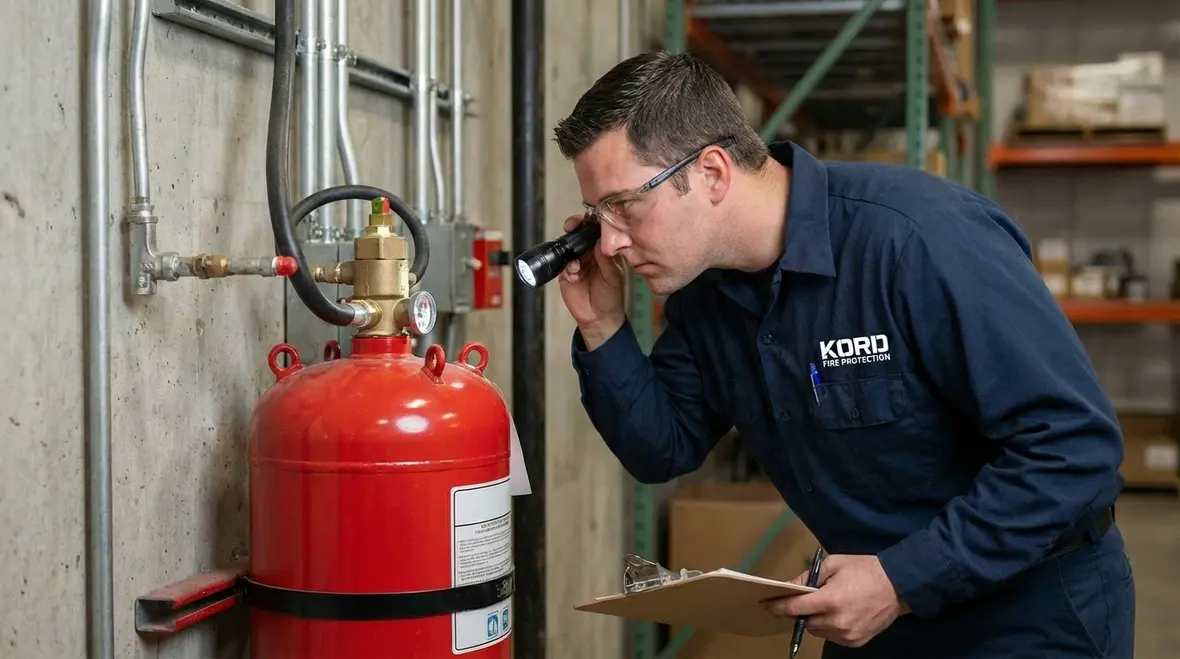
Inspection schedules typically include monthly visual checks and annual professional servicing. During these visits, technicians examine nozzles, piping, detection devices, and control panels. They verify that pressure levels remain within manufacturer specifications. In addition, they confirm that the chemical agent has not compacted or absorbed moisture.
Over time, vibration can settle the powder inside storage cylinders. Consequently, technicians may need to loosen and agitate the agent to prevent clumping. If left unchecked, compacted agent may not discharge evenly.
Furthermore, detection systems require testing. Heat sensors, pull stations, and alarms must function as designed. Because a suppression system that fails to activate is little more than expensive decoration.
Kord Fire Protection technicians approach maintenance with calm focus. They document findings, replace worn components, and ensure compliance with local fire codes. As they often say, the goal is boredom. If the system never makes headlines, it has done its job well.
Dual Comparison: Dry Chemical Systems Versus Other Suppression Options
Dry Chemical Advantages
- Fast flame knockdown
- Effective on flammable liquids
- Non conductive for electrical hazards
- Cost effective for industrial risks
- Simple mechanical design
Considerations Compared to Alternatives
- Leaves residue requiring cleanup
- Not ideal for sensitive electronics
- Limited cooling effect
- May reduce visibility during discharge
- Requires recharge after activation
While clean agent systems leave no residue, they often cost more and suit enclosed spaces. Meanwhile, water based sprinklers cool effectively but may spread flammable liquids. Therefore, the choice depends on hazard type, asset value, and operational needs. For facilities where codes reference NFPA 17 dry chemical extinguishing system requirements, dry chemical becomes a particularly strong fit.
Kord Fire Protection technicians guide clients through this comparison step by step. They evaluate fuel sources, building layout, and regulatory requirements. In doing so, they ensure the selected system aligns with real world risk rather than guesswork.
Installation Planning and Code Compliance
Proper installation demands more than mounting cylinders on a wall. It begins with hazard analysis. Technicians calculate enclosure size, airflow patterns, and fuel load. They then determine the required agent quantity and nozzle placement.
Additionally, local fire codes and national standards govern design and testing. Authorities often require system acceptance tests after installation. These tests confirm correct discharge patterns and alarm integration.
Permitting also plays a role. Business owners must coordinate with inspectors before commissioning the system. Although paperwork may feel tedious, it ensures the installation meets safety standards.
Kord Fire Protection technicians manage this process with steady hands. They coordinate with engineers, building owners, and fire officials. As a result, projects move from concept to certification without confusion.
Common Mistakes Businesses Should Avoid
Some organizations treat fire protection as an afterthought. Unfortunately, fire does not accept apologies.
Ignoring Environmental Factors
One common mistake involves ignoring environmental factors. High humidity can affect agent performance over time. Therefore, storage conditions matter.
Skipping Training
Another error lies in skipping training. Employees should understand manual activation procedures and evacuation routes. Because in an emergency, hesitation wastes time.
Delaying Recharge and Service
Finally, businesses sometimes delay recharge after discharge. Even a partial activation requires professional inspection and refill. Otherwise, the system may not provide full coverage during the next event.
Kord Fire Protection technicians stress proactive care. They encourage routine audits and staff education. A few scheduled hours of preparation can prevent days of recovery later.
FAQ About Dry Chemical Fire Suppression
Conclusion: Protection That Stands Ready
Fire safety rewards foresight. A well designed dry chemical fire suppression system delivers swift action where flammable liquids and electrical hazards demand respect. Yet, performance depends on expert installation and steady maintenance. Kord Fire Protection technicians bring clarity, skill, and calm authority to every project.
For businesses that value preparedness over regret, now is the time to act. Schedule a consultation and ensure protection stands ready before the first spark appears. Explore Kord Fire Protection’s full range of fire suppression services and system support to match your facility with the right dry chemical, clean agent, or water mist solution—and keep your operation ready when it matters most.
Know Your Weapon Before You Fight the Flame
Kord Fire Protection is your go-to when it comes to all things fire protection. For over 20 years, we’ve been serving Southern California with the quality service and equipment to keep your home or business safe at all times. Our competitive prices reflect our unwavering commitment to protecting what matters most in the event of a fire emergency. Give us a call, send an email, or use that form!

Join Our Newsletter!
Get the latest fire safety tips delivered straight to your inbox From our Newsletter.


