Dry vs Wet Chemical Fire Suppression Systems
Fire does not negotiate. It does not pause to consider schedules, budgets, or lunch breaks. It simply consumes. That is precisely why chemical fire suppression systems stand as silent guardians in commercial kitchens, industrial plants, fuel storage facilities, and manufacturing floors. Within the first seconds of ignition, these systems act decisively, releasing agents designed to interrupt the chemistry of combustion itself. As Kord Fire Protection technicians often explain to clients, fire is a reaction, and if one understands the reaction, one can stop it. The real question is not whether to install a system. It is which type to trust when the heat rises.
Now, let us walk calmly into the smoke and clear it with knowledge.
Understanding Chemical Fire Suppression Systems and How They Stop Fire
To understand the difference between dry and wet chemical systems, one must first understand how fire survives. Fire needs three things: heat, fuel, and oxygen. Remove one, and the flame bows out gracefully. Chemical suppression systems do exactly that, though they do it with far more sophistication than a dramatic bucket of water.
Dry and wet chemical agents interrupt combustion at a molecular level. In other words, they break the chain reaction. Instead of simply cooling the flames, they attack the chemistry that keeps the fire alive. Consequently, these systems act faster than traditional sprinklers in certain environments.
Kord Fire Protection technicians frequently compare the process to pulling the batteries out of a smoke alarm. The noise stops not because the air changed, but because the power source was removed. Similarly, suppression agents cut off the energy that fuels combustion.
However, choosing between dry and wet systems depends entirely on the hazard involved. A commercial fryer behaves very differently from a paint spray booth. Therefore, selecting the proper system is less about preference and more about physics.
Dry Chemical Fire Suppression Systems Explained Clearly
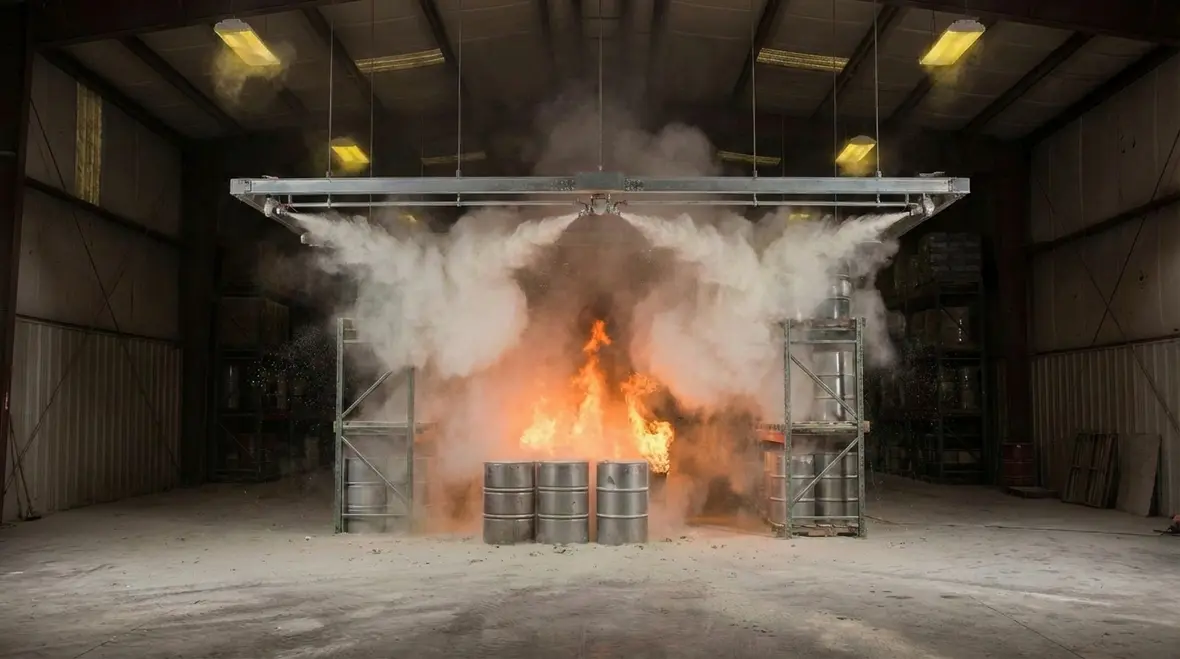
Dry chemical systems discharge a fine powder, typically composed of monoammonium phosphate or sodium bicarbonate. While that may sound like ingredients from a high school science lab, these compounds are remarkably effective against Class A, B, and C fires.
Once released, the powder forms a cloud that blankets the flames. At the same time, it interferes with the chemical reaction within the fire. The result is rapid extinguishment.
Kord Fire Protection technicians often demonstrate how the powder coats surfaces. That coating creates a barrier between fuel and oxygen. Therefore, the fire cannot reignite easily. It is like placing a lid on a boiling pot. The heat remains, but the reaction cannot continue.
Dry chemical suppression is particularly effective in:
- Industrial manufacturing facilities
- Fuel storage areas
- Electrical rooms
- Mechanical spaces
- Vehicle paint booths
Because the agent is nonconductive, it is safe for energized electrical equipment. That alone makes it invaluable in data centers and control rooms. However, there is a trade off. The powder residue can spread widely and require thorough cleanup. Imagine flour tossed across a kitchen during an enthusiastic baking show finale. Effective, yes. Neat, not exactly.
Still, in high risk industrial environments, dry chemical systems offer reliability and speed that few alternatives can match. For a deeper dive into standards that govern these systems, Kord Fire’s overview of NFPA 17 dry chemical extinguishing systems is a valuable reference.
Wet Chemical Fire Suppression Systems and Why Kitchens Depend on Them
Walk into a commercial kitchen during peak dinner rush, and you will witness controlled chaos. Flames leap under pans, oil bubbles fiercely, and timing is everything. In that environment, wet chemical systems shine.
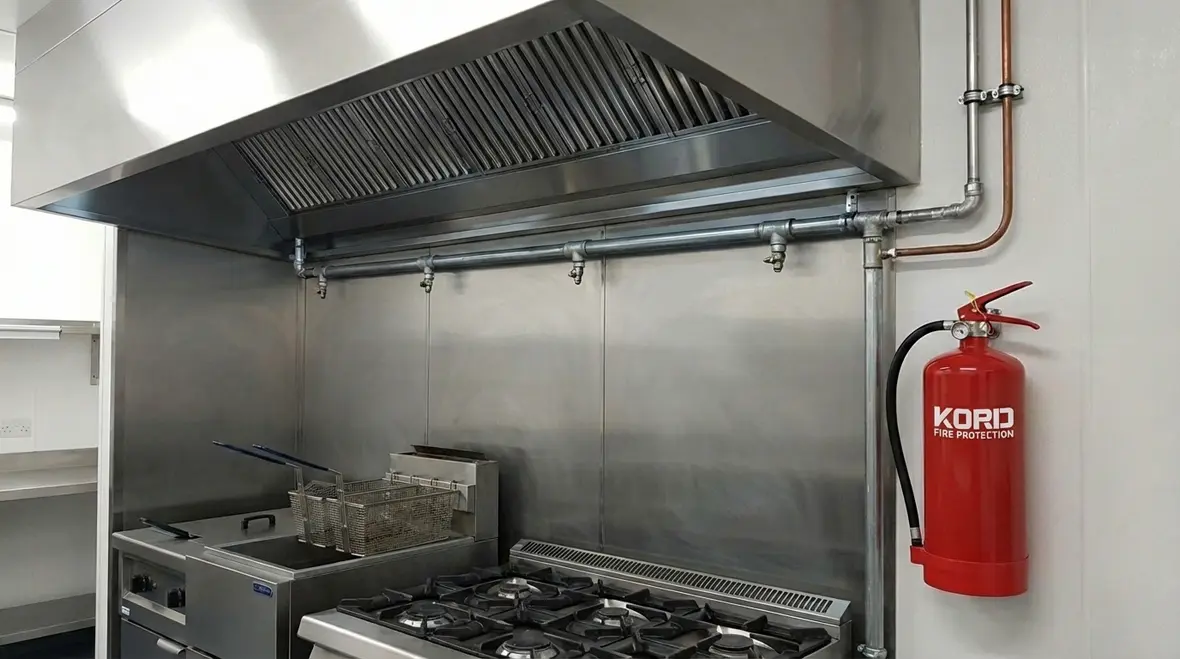
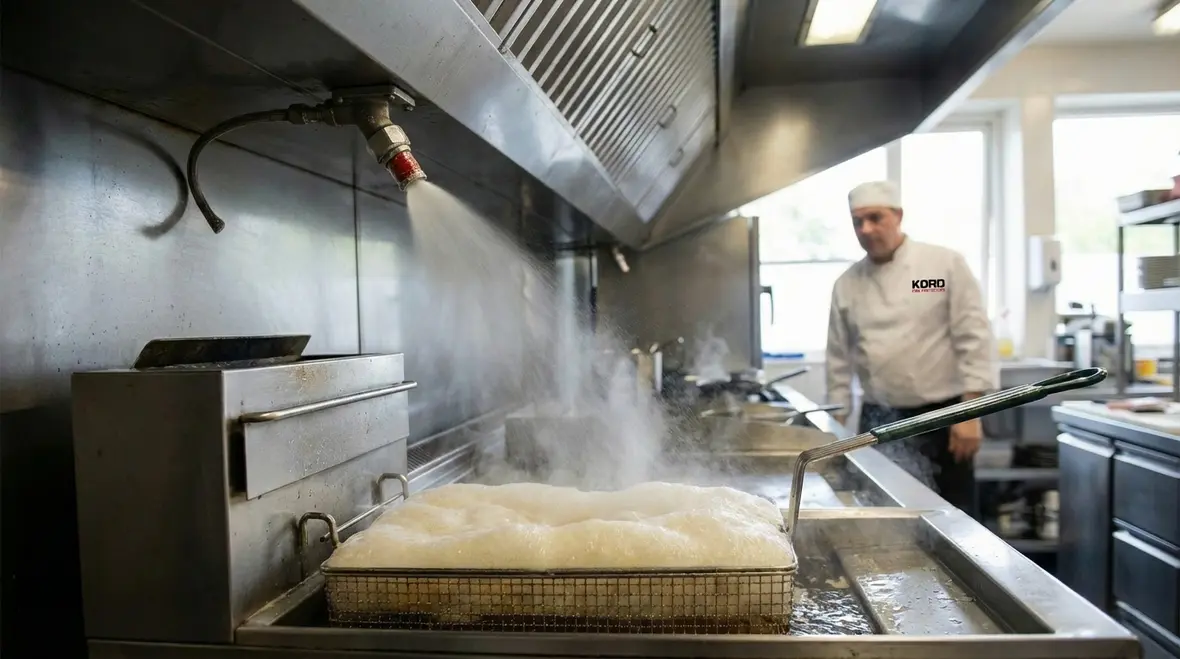
Wet chemical agents are specifically engineered for Class K fires, which involve cooking oils and fats. Unlike dry agents, these chemicals react with hot grease to create a foam blanket. This process is known as saponification. Yes, it sounds like a spell from a wizard movie, but it is pure chemistry.
When the agent contacts the burning oil, it forms a soapy layer over the surface. That layer cools the oil and seals it off from oxygen. As a result, the fire not only goes out, but the risk of reignition drops significantly.
Kord Fire Protection technicians emphasize that water alone can worsen a grease fire. Throwing water onto burning oil creates a violent flare up. Wet chemical systems, however, are designed to avoid that explosive reaction. They deliver a fine spray that cools while forming the protective blanket.
These systems are commonly installed in:
- Commercial kitchens
- Restaurant hood systems
- Food trucks
- Institutional cafeterias
- Industrial cooking facilities
Additionally, they often integrate with hood ventilation systems to shut down gas lines and power automatically. Therefore, they not only extinguish flames but also eliminate fuel sources. It is a coordinated response, almost like a well rehearsed kitchen brigade responding to a dinner rush. If you want to see how this works step by step, Kord’s guide to commercial kitchen fire suppression systems lays it out in plain language.
Dry Chemical vs Wet Chemical and Where Each Is Used
Choosing between systems requires a clear assessment of the hazard. Although both are forms of chemical based fire protection, their applications differ sharply.
Below is a side by side comparison that Kord Fire Protection technicians often walk clients through.
Dry Chemical Systems
Primary Use: Industrial and electrical hazards
Fire Classes: A, B, C
Agent Form: Powder
Residue: Heavy, requires cleanup
Electrical Safety: Nonconductive
Reignition Control: Good
Wet Chemical Systems
Primary Use: Commercial cooking operations
Fire Class: K
Agent Form: Liquid solution
Residue: Light foam, easier cleanup
Electrical Safety: Designed for kitchen equipment
Reignition Control: Excellent for grease
Therefore, the decision rests on fuel type. If the threat involves flammable liquids, machinery, or energized equipment, dry chemical systems typically provide broader protection. Conversely, if the hazard centers around deep fryers and high temperature oils, wet chemical technology offers specialized defense.
In short, one would not bring a snow shovel to a beach party. Similarly, one should not install a generic suppression system where a targeted solution is required.
How Businesses Decide Which System They Need
Many business owners assume that all fire suppression equipment works the same way. However, building codes, insurance requirements, and hazard analyses tell a more detailed story.
Kord Fire Protection technicians begin with a risk assessment. They evaluate fuel sources, ventilation systems, occupancy levels, and equipment layout. Then, they match the hazard profile with the appropriate chemical agent.
For example, a manufacturing plant that handles solvents may require a dry chemical system with strategically placed nozzles. Meanwhile, a restaurant will require a hood mounted wet chemical system that complies with kitchen fire codes.
Additionally, local regulations often mandate specific system types. Therefore, professional guidance ensures compliance and reduces liability. After all, guessing wrong with fire safety is not like picking the wrong paint color. The stakes are considerably higher.
Insurance providers also factor in the type of suppression installed. Proper systems can lower premiums because they reduce potential loss severity. Consequently, investing in the correct setup often pays dividends beyond safety alone.
Maintenance and Inspection Keep Protection Reliable
Even the most advanced chemical fire suppression systems require routine maintenance. Without inspection, valves can clog, pressure levels can drop, and nozzles can become obstructed.
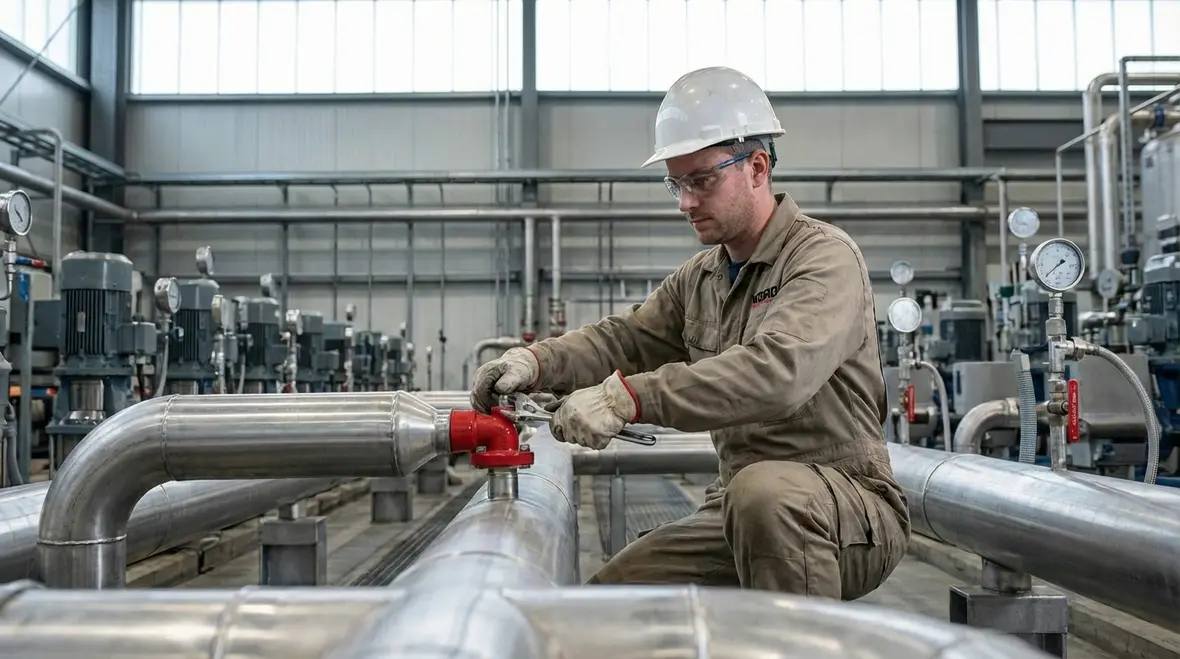
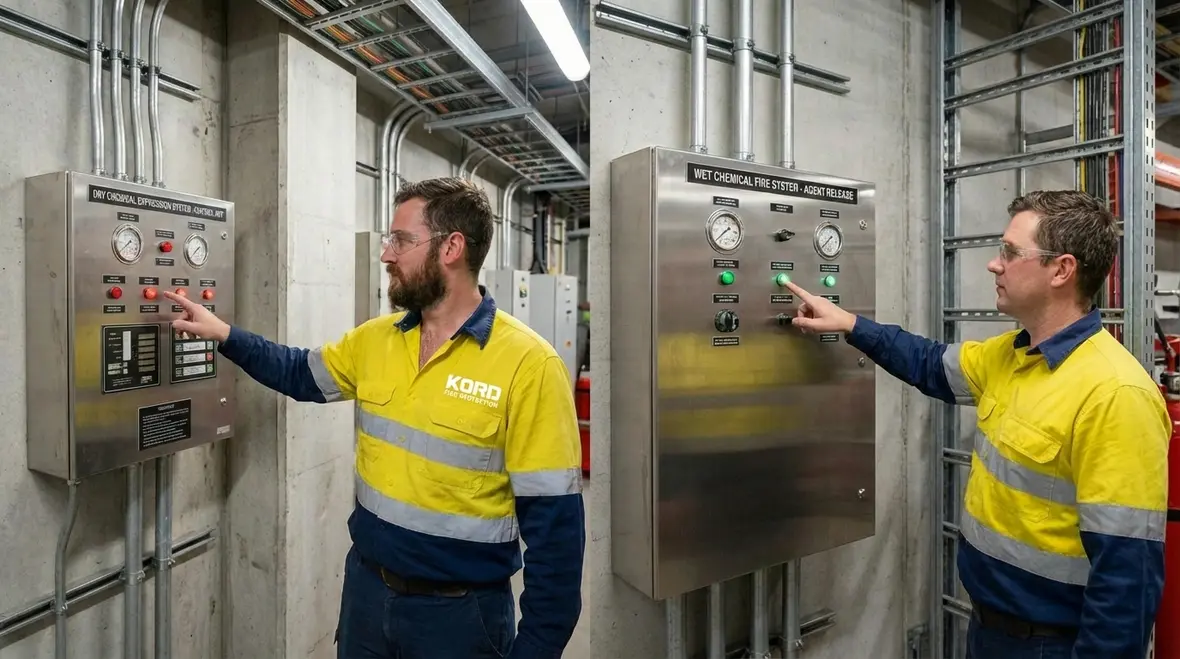
Kord Fire Protection technicians conduct scheduled inspections to verify cylinder pressure, check discharge lines, and test detection components. Furthermore, they ensure that manual pull stations and automatic triggers function correctly.
In commercial kitchens, grease buildup can interfere with nozzles. Therefore, regular cleaning works hand in hand with suppression maintenance. In industrial settings, dust accumulation may obstruct components. Each environment presents unique challenges.
Most systems require professional inspection at least twice per year. Additionally, any system discharge demands immediate servicing and recharge. A suppression system without agent is about as useful as a flashlight without batteries.
Routine maintenance ensures that when fire strikes, the system responds instantly. That reliability provides peace of mind, and peace of mind is priceless in high risk environments.
Common Questions About Chemical Fire Suppression Systems
Protect What Matters Most with the Right System
Fire does not wait for convenience. Therefore, preparation must come first. Whether a facility requires dry chemical protection for industrial hazards or wet chemical coverage for a bustling kitchen, the right system makes all the difference. Kord Fire Protection technicians stand ready to assess risks, explain options clearly, and install solutions built to perform under pressure.
When safety matters, trust experience. Contact Kord Fire Protection today and ensure your facility is protected before the first spark ever flies. To explore design and installation options across multiple system types, visit Kord Fire’s fire suppression services page and start planning the right protection for your building.
Know Your Weapon Before You Fight the Flame
Kord Fire Protection is your go-to when it comes to all things fire protection. For over 20 years, we’ve been serving Southern California with the quality service and equipment to keep your home or business safe at all times. Our competitive prices reflect our unwavering commitment to protecting what matters most in the event of a fire emergency. Give us a call, send an email, or use that form!

Join Our Newsletter!
Get the latest fire safety tips delivered straight to your inbox From our Newsletter.