When Commercial Kitchens Need a K Class Fire Extinguisher
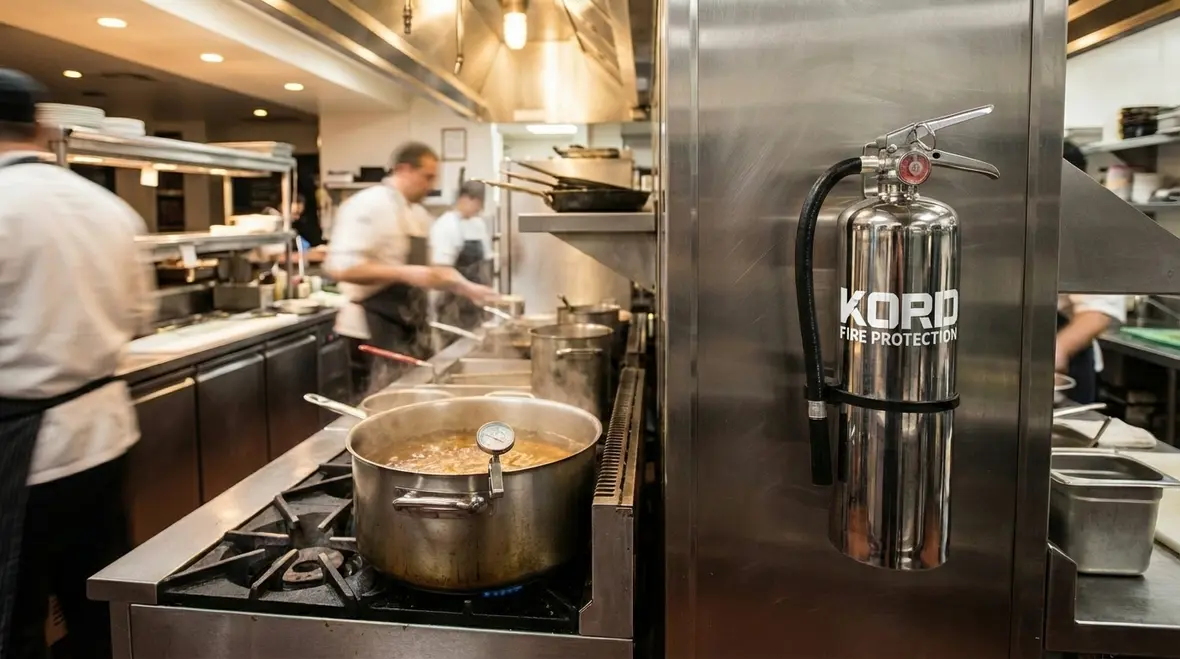
There is a quiet confidence that comes from knowing a kitchen is protected. Not just “we have something red on the wall” protected, but truly prepared. That is where our k class fire extinguisher enters the conversation. In commercial kitchens filled with sizzling pans and vats of bubbling oil, the right extinguisher is not a luxury. It is a line of defense. However, not every kitchen needs one. And that is where things get interesting.
Kord Fire Protection technicians often explain this with calm clarity. They walk into restaurants, schools, churches, and even residential buildings, and they do not start by selling equipment. Instead, they ask simple questions. What kind of cooking happens here? How much oil is used? Is this a home stove or a commercial fryer that could rival a fast food empire?
Because when it comes to kitchen fires, context matters. A lot.
Understanding the Role of a K Class Fire Extinguisher
A k class fire extinguisher is specifically designed for fires fueled by cooking oils and fats. These are not your average paper or wood fires. Instead, they burn hotter, spread faster, and react violently to the wrong extinguishing agent.
When hot oil ignites, water becomes the villain of the story. Pouring water on a grease fire creates a steam explosion that can launch flaming oil across the room. It is the kind of chaos that makes action movies look calm. Therefore, standard extinguishers rated for Class A or B fires often fall short in commercial kitchens.
In contrast, a K rated extinguisher uses a wet chemical agent. This agent cools the fire and forms a soapy layer over the surface of the oil. That layer seals in vapors and prevents re ignition. In other words, it does not just knock the fire down. It keeps it down.
Kord Fire Protection technicians often describe it as placing a fire proof lid over a pot of trouble. It is simple. It is effective. And in the right setting, it is essential.
If you want to dig deeper into how Class K units differ from other extinguishers, Kord Fire’s guide on what makes a Class K fire extinguisher different from others breaks down the science and NFPA requirements in detail.
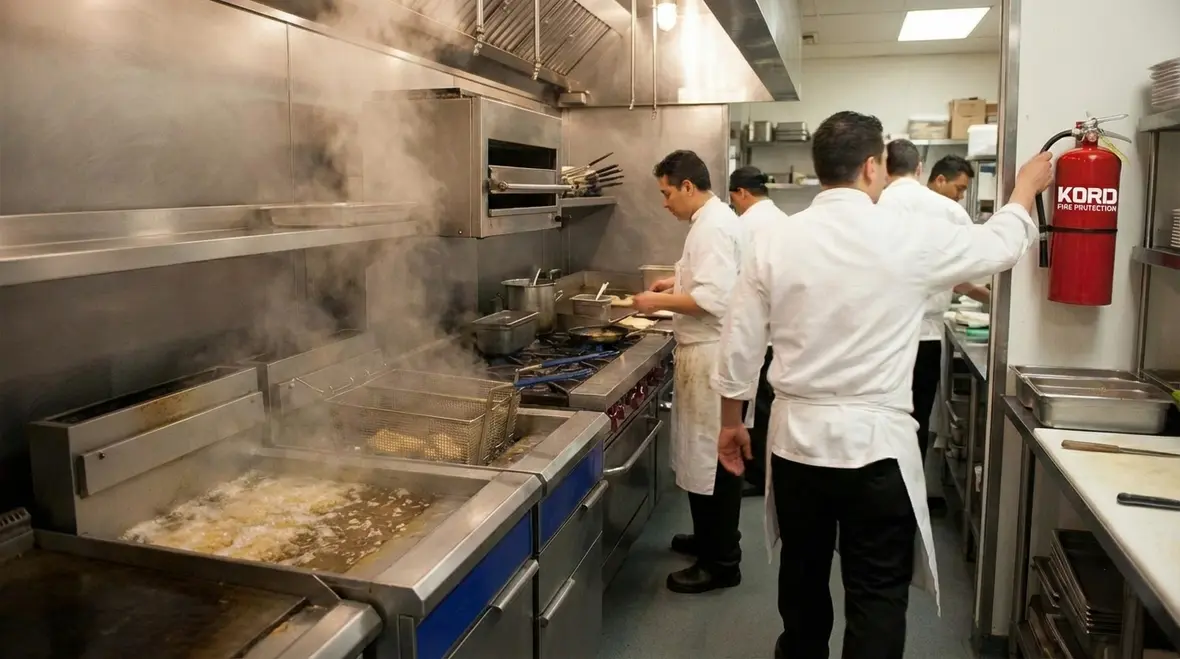
When Commercial Kitchens Absolutely Need One
Not every kitchen is created equal. Some are modest break rooms with a microwave and a coffee pot. Others operate like culinary factories. So when does a commercial kitchen require this level of protection?
Generally, any kitchen that uses deep fat fryers, large griddles, or high volume cooking with vegetable oils and animal fats should have a K rated fire extinguisher on site. Restaurants, food trucks, cafeterias, hotels, and institutional kitchens all fall into this category.
Additionally, local fire codes often mandate it. Fire inspectors expect to see the correct extinguisher mounted within reach of cooking equipment. Moreover, insurance providers look for it during risk assessments. Without it, coverage can be limited or premiums can climb.
Kord Fire Protection technicians explain that modern commercial cooking appliances are more powerful than ever. They heat faster and reach higher temperatures. Consequently, the potential for ignition increases. Even with an automatic suppression system installed in the hood, a portable extinguisher provides backup. If the system fails or the fire spreads beyond the hood, staff need an immediate tool in their hands.
Think of it as the seatbelt to the airbag. One does not replace the other. They work together.
For a broader look at matching extinguishers to hazards, Kord Fire’s overview of NFPA 10 portable fire extinguisher guidelines explains why commercial kitchens land squarely in Class K territory.
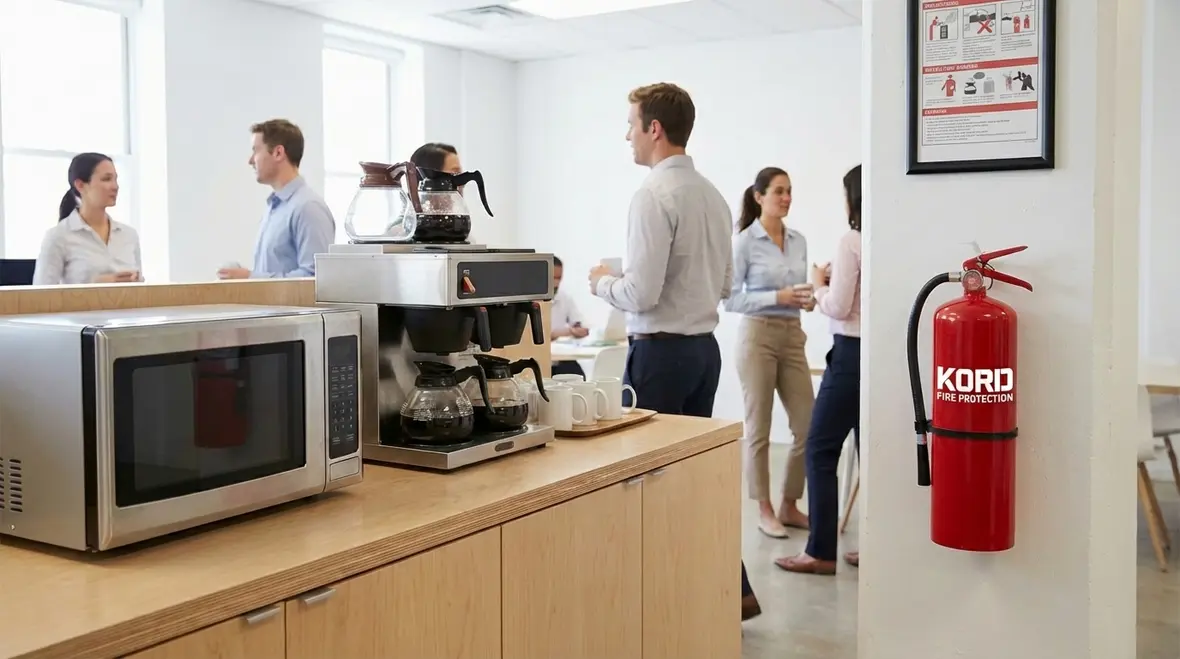
When a Kitchen Does Not Require a K Rated Extinguisher
Now here is where many people are surprised. Not every kitchen needs this specialized unit.
For example, a typical home kitchen rarely requires a K class model. While grease fires can occur at home, residential fire codes usually recommend a multipurpose ABC extinguisher for general coverage. These are designed to handle common household fires involving paper, electrical equipment, and small amounts of cooking grease.
Similarly, office break rooms without commercial fryers or high volume oil cooking may not require a dedicated wet chemical extinguisher. In these spaces, the fire load is lower. Therefore, a properly rated multipurpose extinguisher often meets code.
Kord Fire Protection technicians take time to explain this distinction. They do not believe in overselling. Instead, they assess the actual risk. If a kitchen does not use deep fryers or large quantities of oil, they recommend what aligns with both safety and compliance. It is not about the biggest extinguisher. It is about the right one.
After all, no one wants to install restaurant level fire protection next to a toaster oven that mostly reheats leftovers.

What Kord Fire Protection Technicians Look For During an Inspection
During a kitchen inspection, technicians follow a careful process. They do not guess. They evaluate.
First, they identify the cooking equipment. Are there deep fryers? Tilt skillets? High output ranges? Next, they measure the distance from appliances to existing extinguishers. Fire codes specify placement, and that placement matters in an emergency.
They also review the hood suppression system. In many commercial kitchens, an automatic system activates when heat sensors detect a fire. However, portable extinguishers serve as a critical backup. Therefore, technicians ensure that staff can access the unit without reaching through flames.
Additionally, they verify that the extinguisher carries the correct rating and is fully charged. An expired or improperly serviced unit is little more than wall decor. And while bright red cylinders do add a certain industrial charm, safety is the real goal.
Finally, they train staff. Because even the best equipment fails if no one knows how to use it.
If you are unsure whether your extinguishers and suppression system are correctly laid out, Kord’s article on proper fire extinguisher placement shows how strategic positioning saves critical seconds when it counts.
Side by Side Comparison: Commercial vs Non Commercial Kitchens
Commercial Kitchen
- High volume cooking daily
- Deep fryers and large oil vats
- Professional grade appliances
- Mandatory hood suppression systems
- Often required by code to have a wet chemical extinguisher
Non Commercial Kitchen
- Low volume or occasional cooking
- No deep fat fryers
- Standard residential appliances
- No commercial hood system
- Usually covered by multipurpose ABC extinguisher
As a result, the need for a K rated unit becomes much clearer. It is about risk level, not square footage.
Common Myths About Kitchen Fire Protection
Myth number one: Any extinguisher will handle a grease fire. Unfortunately, that belief has fueled more damage than a superhero origin story. Using the wrong agent can spread flames and intensify heat.
Myth number two: The hood system is enough. While automatic suppression systems are powerful, they activate only under certain conditions. If a small fire starts outside the protected area, staff must respond quickly. Therefore, a portable unit remains vital.
Myth number three: Training is optional. In reality, hesitation wastes precious seconds. Kord Fire Protection technicians often conduct hands on demonstrations. They show how to pull the pin, aim low, squeeze the handle, and sweep side to side. It sounds simple. However, under pressure, even simple steps can feel complicated.
Finally, some believe that installing more extinguishers equals better safety. In truth, proper placement and correct type matter more than quantity. A single correctly rated extinguisher in the right spot beats three mismatched units scattered around like misplaced coffee mugs.
How to Choose the Right Fire Extinguisher for a Kitchen
Business owners often ask what they should type into a search bar when evaluating their needs. The answer is straightforward. They should ask what type of cooking takes place and what local codes require.
First, review the equipment. If deep frying is part of daily operations, a K class fire extinguisher is likely necessary. Next, consult local regulations. Fire codes differ by region, and compliance protects both lives and licenses.
Then, schedule a professional assessment. Kord Fire Protection technicians provide on site evaluations. They measure hazards, review layout, and recommend solutions tailored to the space. Moreover, they ensure that the selected extinguisher integrates with existing suppression systems.
It is a bit like casting the right actor for a role. You would not cast a romantic comedy lead as an action hero without expecting some chaos. Likewise, choosing the wrong extinguisher invites unnecessary risk.
To see how extinguisher types align with specific hazards in your city, Kord’s breakdown of guidelines for fire extinguishers in Anaheim offers a helpful real world example.
FAQ: K Class Fire Extinguisher and Kitchen Safety
Protect What Matters Most
In the end, the decision is not about checking a box. It is about protecting people, property, and livelihoods. The right extinguisher in the right kitchen makes all the difference. Kord Fire Protection technicians stand ready to assess, explain, and equip each space with confidence. Schedule a professional evaluation today and ensure that every flame in the kitchen stays exactly where it belongs. Safe, controlled, and under watchful eyes.
If your operation relies heavily on fryers, grills, or 24/7 cooking, consider pairing your Class K units with a UL 300 compliant hood system. Kord’s kitchen hood fire suppression services are designed to work hand in hand with portable extinguishers so your defenses overlap, not compete.
Ready to confirm whether your commercial kitchen truly meets code and best practice for Class K coverage? Explore Kord Fire’s dedicated fire extinguisher service & certification options, or reach out directly through the contact page to request a walkthrough, quote, or staff training session tailored to your kitchen.
Know Your Weapon Before You Fight the Flame
Kord Fire Protection is your go-to when it comes to all things fire protection. For over 20 years, we’ve been serving Southern California with the quality service and equipment to keep your home or business safe at all times. Our competitive prices reflect our unwavering commitment to protecting what matters most in the event of a fire emergency. Give us a call, send an email, or use that form!

Join Our Newsletter!
Get the latest fire safety tips delivered straight to your inbox From our Newsletter.