Type K Fire Extinguisher Used for Grease Fires
Type K Fire Extinguisher Used For: Cooking Oils, Grease, and Commercial Kitchens
In the world of fire safety, not all flames play by the same rules. Some crackle politely in a fireplace. Others roar to life in a commercial fryer like they are auditioning for an action movie. That is precisely where a type k fire extinguisher used for high temperature cooking oils and grease becomes essential. Within the first moments of a kitchen fire, the right tool makes the difference between a close call and a headline.
Kord Fire Protection technicians often explain it in calm, steady tones. You would not bring a garden hose to a grease fire any more than you would bring a spoon to a sword fight. The right extinguisher exists for a reason. And in commercial kitchens, that reason usually involves bubbling oil, open flames, and very little room for error.
Understanding the Unique Threat of Commercial Kitchen Fires
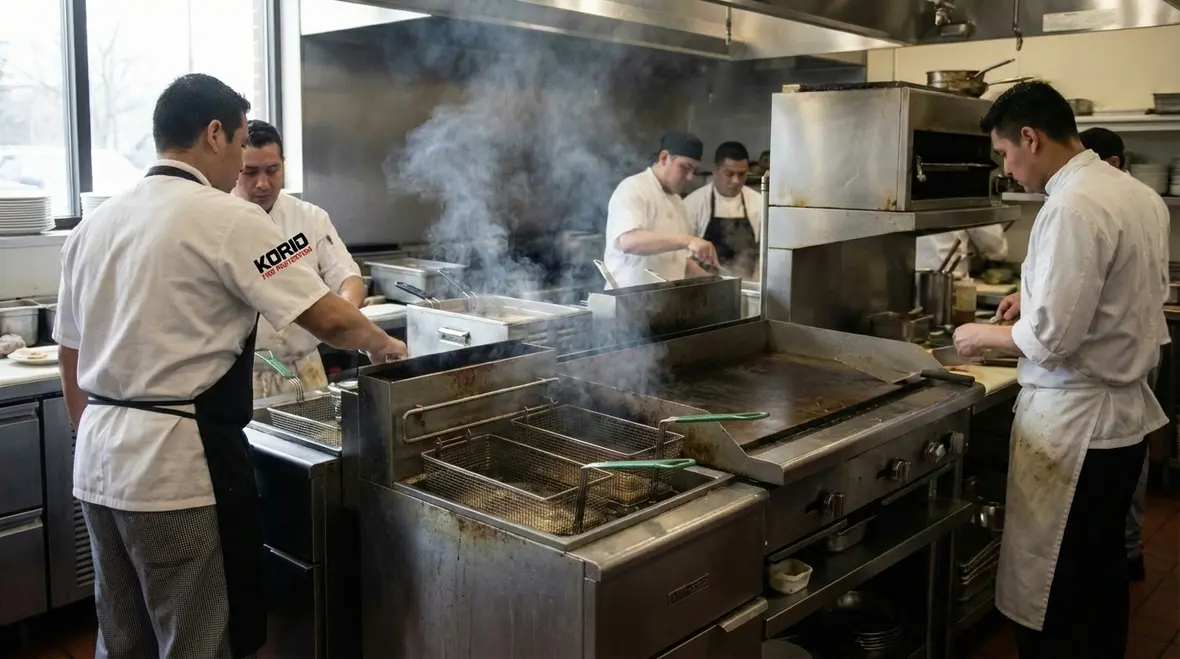
Commercial kitchens are controlled chaos. Orders fly in. Fryers stay hot for hours. Grills blaze. Chefs move fast. Consequently, the environment creates a perfect storm for fire risk.
Unlike paper or wood fires, kitchen fires often involve animal fats or vegetable oils heated beyond 340 degrees Celsius. At these temperatures, oil does not just burn. It can ignite explosively. Furthermore, once grease catches fire, water becomes the worst possible choice. When water hits burning oil, it instantly turns to steam and expands. That expansion can scatter flaming oil across the room. Suddenly, one small fire becomes a wall of flame.
Kord Fire Protection technicians regularly demonstrate this during training sessions. They show how quickly oil reignites if not properly cooled. Therefore, standard extinguishers designed for wood or electrical fires simply do not provide the right solution. Commercial kitchens need a specialized answer built for high heat and stubborn fuel sources.
If your operation relies heavily on fryers and high-heat cooking equipment, pairing the right extinguishers with a code-compliant kitchen fire suppression system keeps that controlled chaos from turning into an evacuation drill.
What Makes a Type K Fire Extinguisher Different
The science behind stopping grease fires
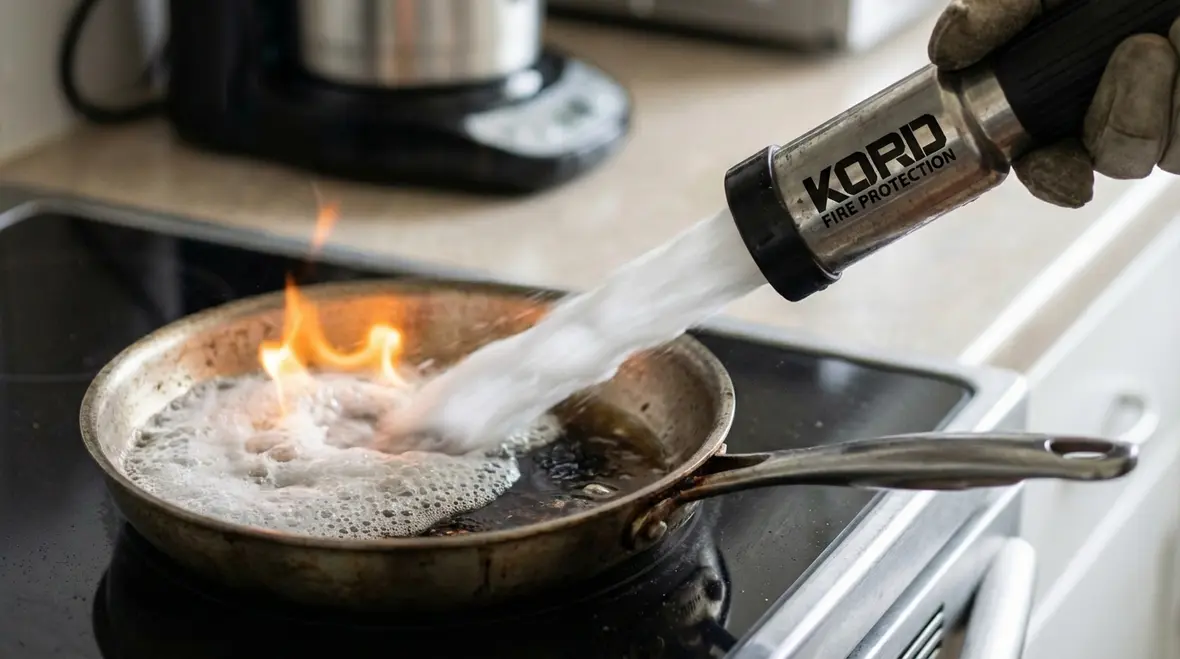
A type k fire extinguisher used for grease fires contains a wet chemical agent, usually potassium acetate based. That may sound like something from a science lab. However, its job is simple and brilliant.
When discharged onto burning oil, the chemical reacts with the fat in a process called saponification. In plain terms, it creates a soapy foam layer over the surface. This foam does three critical things:
- It smothers the flames by cutting off oxygen
- It cools the hot oil below its ignition temperature
- It prevents reignition by sealing the surface
Because of this dual action of cooling and smothering, the fire stays out. That cooling factor is what sets it apart. Other extinguishers may knock down flames briefly. However, if the oil remains hot, the fire can flare back up like it never left.
Kord Fire Protection technicians emphasize this point during inspections. They remind kitchen managers that grease fires are stubborn. They need to be cooled, not just silenced.
Where a Type K Fire Extinguisher Belongs in a Kitchen
Strategic placement that matches real-world workflows
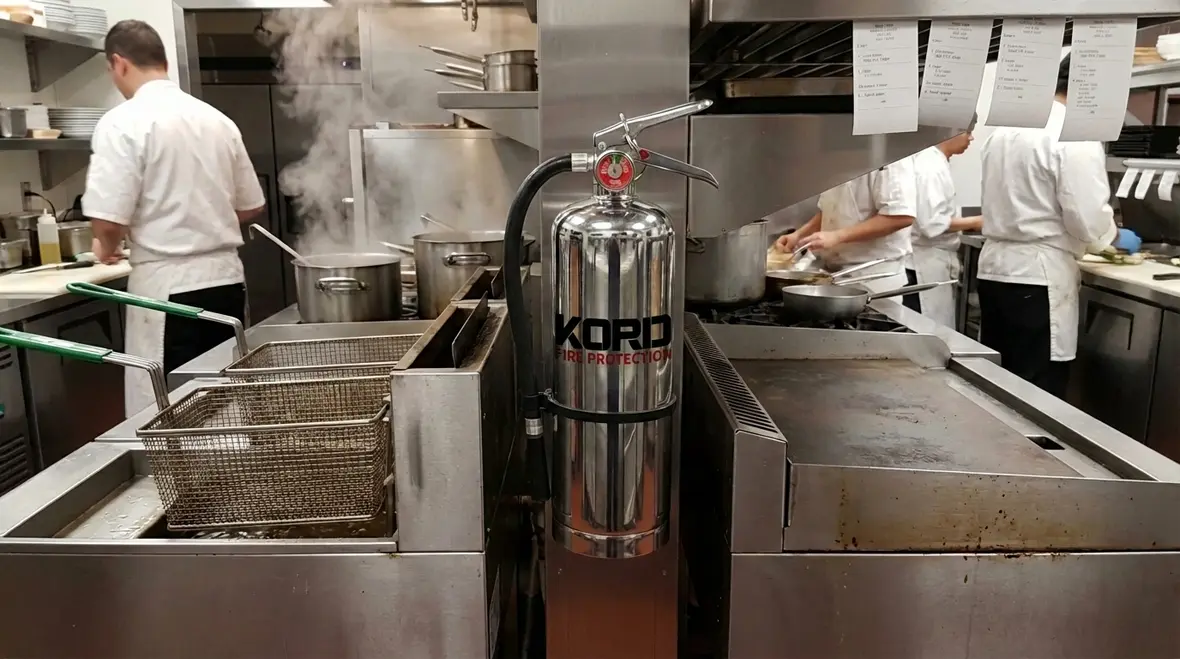
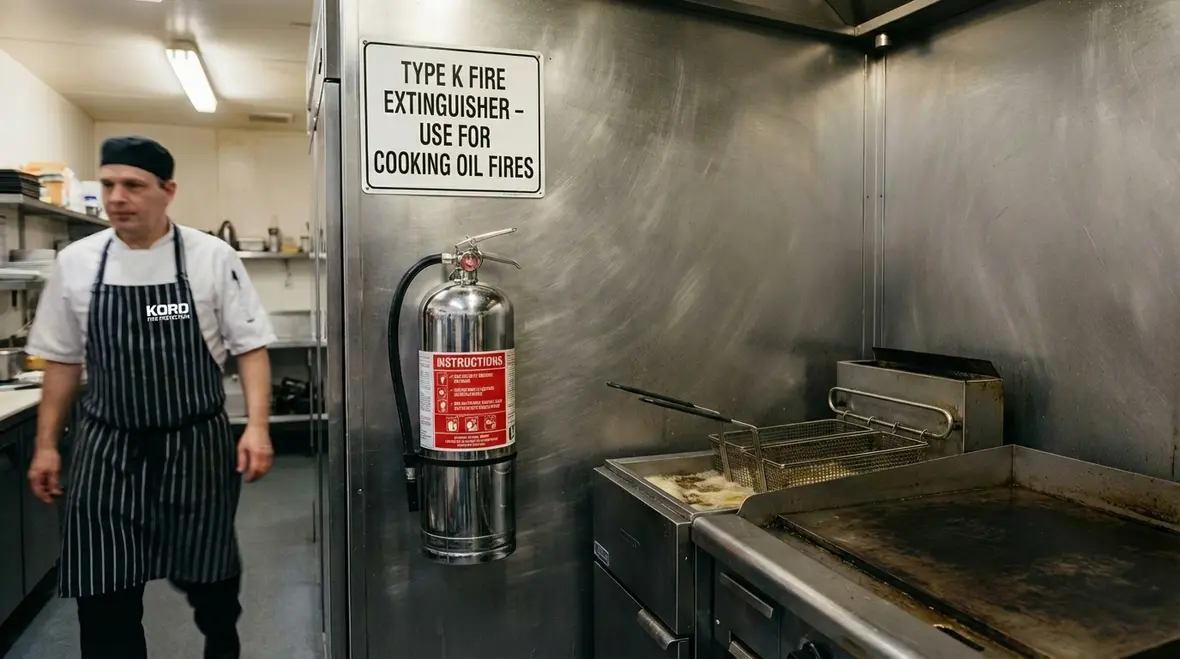
A type k fire extinguisher used for commercial cooking environments should be positioned with intention. Placement is not random. In fact, local fire codes often require it within a certain distance of cooking appliances.
Typically, these extinguishers sit near:
- Deep fat fryers
- Flat top grills
- Commercial ranges
- Wok stations
However, they should not be so close that someone must reach through flames to grab one. That would defeat the purpose entirely. Instead, technicians recommend mounting the unit along an exit path. This way, staff can approach the fire while maintaining a clear escape route.
Additionally, modern commercial kitchens often include automatic suppression systems in hoods. Yet even with built in systems, a portable extinguisher remains necessary. Automatic systems activate overhead. A handheld unit allows targeted response at floor level or along equipment edges.
Side by Side Comparison of Fire Classes in Kitchens
As shown below, each class addresses a different threat. Therefore, using the wrong extinguisher is not just ineffective. It can be dangerous.
| Fire Class | Fuel Source | Typical Extinguisher | Why It Works |
|---|---|---|---|
| Class A | Paper, wood, cloth | Water or foam | Cools and penetrates solid materials |
| Class B | Flammable liquids | Dry chemical | Interrupts chemical reaction of fuel |
| Class C | Electrical equipment | Non conductive agent | Prevents electrical shock |
| Class K | Cooking oils and grease | Wet chemical | Cools oil and forms protective foam layer |
Why Water and ABC Extinguishers Fall Short
Impressive spray, disappointing results
Many people assume any extinguisher will handle any fire. That assumption is understandable. After all, they all spray something that looks impressive. Yet grease fires require precision.
Water spreads burning oil. Meanwhile, standard ABC dry chemical extinguishers can knock down flames. However, they do not cool the oil enough to stop reignition. In a busy restaurant, that delay can mean the fire reignites just as staff return to normal operations.
Kord Fire Protection technicians often describe it with a bit of humor. Using the wrong extinguisher on a fryer fire is like putting a bandage on a broken pipe. It may look helpful for a moment, but the real problem continues underneath.
Therefore, commercial kitchens that rely only on multipurpose extinguishers leave themselves exposed. A dedicated solution for cooking media fires is not optional. It is essential.
How to Use a Type K Fire Extinguisher Safely
Applying PASS to hot oil and grease fires
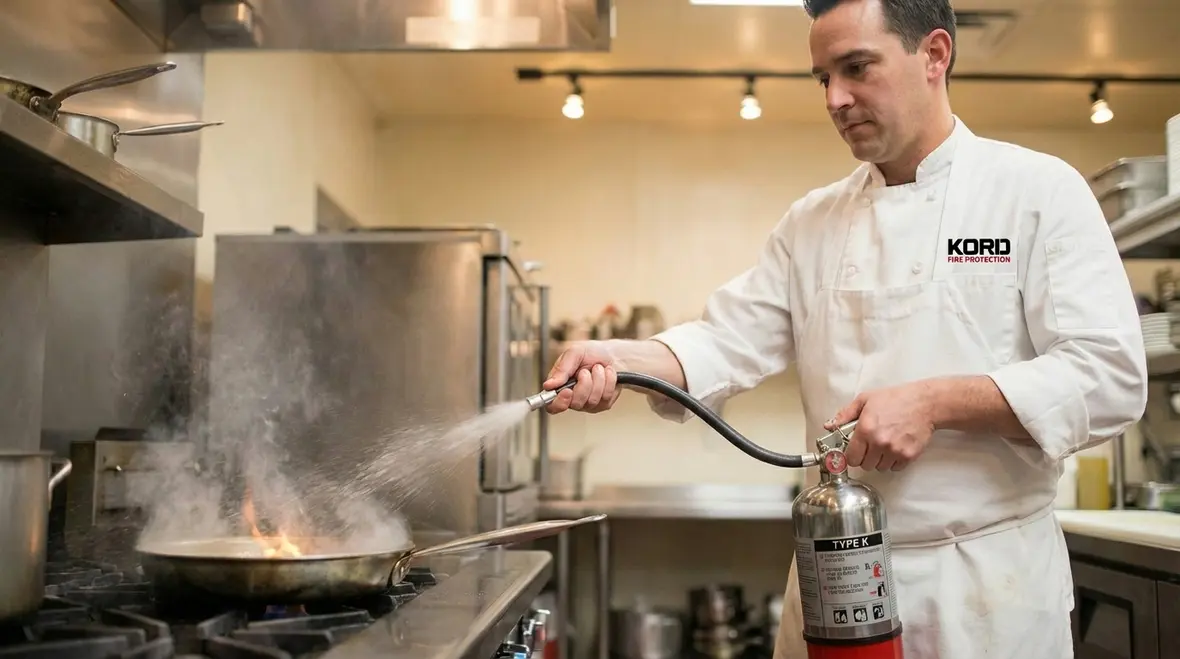
When faced with a grease fire, speed matters. However, calm action matters more. The PASS method remains the standard approach:
- Pull the pin
- Aim at the base of the fire
- Squeeze the handle
- Sweep slowly across the surface
With a type k fire extinguisher used for hot oil, aiming slightly above the surface allows the agent to fall gently onto the burning grease. Spraying directly into the oil at high force could splash it. Therefore, controlled discharge is critical.
Furthermore, staff should never turn their backs on the fire immediately after discharge. Watching for reignition ensures the cooling process has worked. If flames return, a second application may be necessary.
Kord Fire Protection technicians conduct live demonstrations so kitchen teams gain confidence. Because when alarms sound and adrenaline rises, muscle memory takes over. Training transforms panic into action.
How Often Should a Type K Fire Extinguisher Be Inspected?
Balancing day-to-day checks with professional service
This is the one question nearly every restaurant owner asks. The answer is simple but important.
A type k fire extinguisher used for commercial kitchens should receive:
- Monthly visual inspections
- Annual professional maintenance
- Hydrostatic testing as required by manufacturer guidelines
During monthly checks, staff confirm the pressure gauge sits in the green zone, the pin remains intact, and no visible damage appears. However, annual service requires certified professionals.
Kord Fire Protection technicians examine internal components, verify chemical integrity, and ensure compliance with local codes. Additionally, they document each service visit. That documentation proves invaluable during insurance reviews or fire marshal inspections.
Skipping maintenance might save a few dollars today. Yet it risks thousands tomorrow. Extinguishers are like seat belts. No one plans to use them. But when needed, they must work flawlessly.
Compliance, Codes, and Insurance Requirements
Why the right Class K extinguisher also protects your business on paper
Commercial kitchens operate under strict safety regulations. Fire codes often mandate that any establishment using deep fat fryers must maintain a Class K extinguisher within a specified distance. Therefore, ignoring this requirement can lead to fines or closure.
Insurance carriers also review fire protection measures. In many cases, proof of a properly maintained type k fire extinguisher used for grease fires can influence premiums. Insurers prefer proactive risk management. And frankly, so does everyone else.
Moreover, local fire marshals frequently inspect restaurants unannounced. Having equipment clearly labeled, accessible, and serviced sends a message. It says the business takes safety seriously. That level of professionalism builds trust with both regulators and customers.
The Human Element Behind the Equipment
From code compliance to calm, confident staff
Fire safety equipment does not operate in isolation. People use it. People maintain it. And people depend on it.
Kord Fire Protection technicians approach kitchen safety with a steady presence. They explain not just what a type k fire extinguisher used for grease fires does, but why it matters. They walk staff through real world scenarios. They answer questions without jargon. And occasionally, they lighten the mood with a small joke about how no one wants their signature dish to be flambéed unintentionally.
That blend of authority and calm reassurance builds confidence. In high pressure environments like restaurants, confidence is powerful. It prevents hesitation. It reduces chaos. And it protects lives.
To see how extinguishers fit into your building’s bigger safety picture, explore Kord’s full range of fire protection services and how they keep commercial kitchens inspection-ready year round.
Frequently Asked Questions
Conclusion: Protect the Kitchen Before the Heat Rises
In every commercial kitchen, heat fuels creativity. Yet without preparation, it can also fuel disaster. A properly maintained type k fire extinguisher used for grease and cooking oil fires stands as a quiet guardian beside the fryer. Kord Fire Protection technicians help businesses stay ready, compliant, and confident.
Do not wait for smoke to test your preparation. Schedule an inspection, train your team, and protect what you have built. To take the next step, request a quote for restaurant and kitchen fire suppression services today and make sure your Class K extinguishers and suppression systems are working together long before the dinner rush begins.
Know Your Weapon Before You Fight the Flame
Kord Fire Protection is your go-to when it comes to all things fire protection. For over 20 years, we’ve been serving Southern California with the quality service and equipment to keep your home or business safe at all times. Our competitive prices reflect our unwavering commitment to protecting what matters most in the event of a fire emergency. Give us a call, send an email, or use that form!

Join Our Newsletter!
Get the latest fire safety tips delivered straight to your inbox From our Newsletter.