
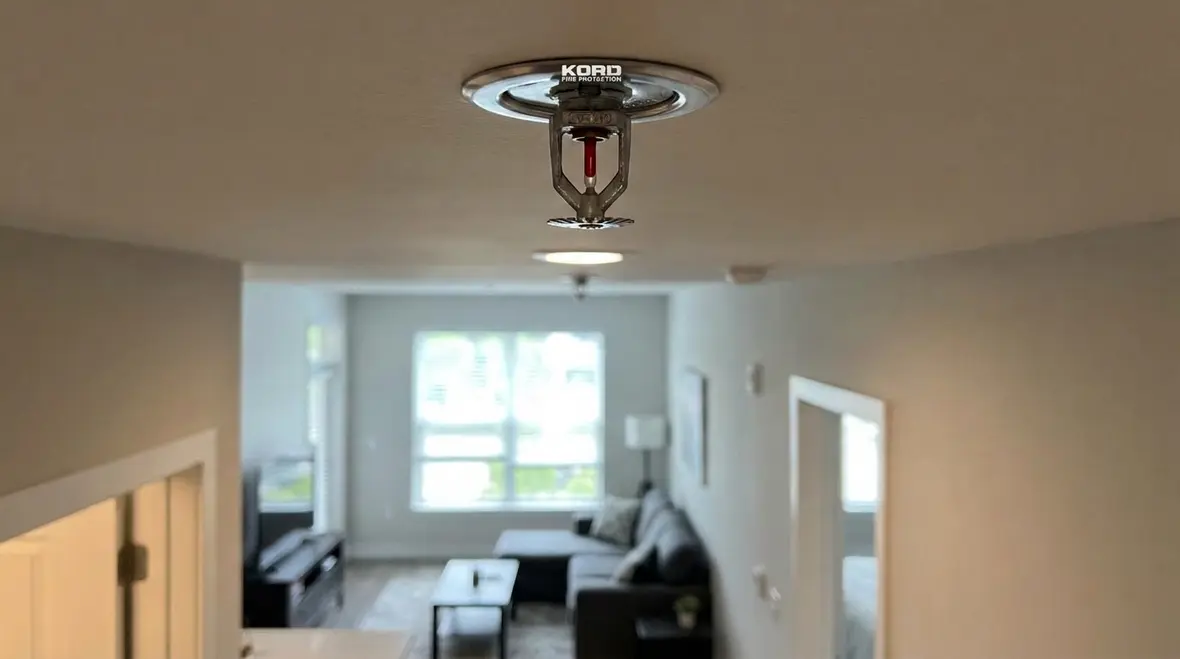
What Fully Sprinklered Throughout Really Means: NFPA 13R Section 4.1 Explained
Quick Answer: “Fully sprinklered throughout” under NFPA 13R Section 4.1 fully sprinklered throughout definition means the sprinkler system is installed in all required spaces and areas in accordance with the standard’s scope and limitations. Partial coverage, skipped rooms, or unprotected concealed spaces typically disqualify the building from 13R.
Near the start of any compliance review, it also helps to understand how a broader fire sprinkler system service program supports installation quality, inspections, repairs, and long-term documentation for commercial properties. ([kordfire.com](https://kordfire.com/fire-sprinkler-service/?utm_source=openai))
What NFPA 13R 4.1 is trying to control
NFPA 13R is an alternative sprinkler standard designed for certain residential occupancies. It uses specific design tradeoffs, primarily by limiting the extent of protection in ways that can still be acceptable for targeted construction and fire scenarios. Section 4.1 establishes the threshold requirement that the building must be “fully sprinklered throughout” in the manner the standard intends, so that the simplified criteria remain valid.
In practice, the compliance issue is not wording alone. It is whether sprinkler coverage aligns with the actual premises configuration, construction type, compartmentation, and the scope rules that NFPA 13R applies. Facility owners and facility managers often discover that what they assumed were “optional” protected areas are exactly where the standard expects sprinklers.
NFPA 13R 4.1 fully sprinklered throughout definition, in plain compliance terms
The NFPA 13R 4.1 fully sprinklered throughout definition refers to installation of sprinklers throughout the building in the required areas such that the system provides coverage consistent with the standard’s scope. The intent is to avoid gaps that would undermine the fire control assumptions used for 13R design and layout.
For commercial and mixed use facilities, the most common misunderstandings occur in areas like:
- Concealed and partially concealed spaces
- Bathrooms, closets, and similar small enclosures
- Corridors, landings, and access paths to dwelling units or guest rooms
- Mechanical and service rooms where layout and construction create unique coverage questions
- Areas created later through tenant fit outs, storage additions, or changed ceiling configurations
When coverage is missing in one of these “pressure test” areas, plan reviewers frequently treat the configuration as not fully sprinklered, which can force a redesign or require switching to a different design standard.
For foundational context on how automatic sprinkler systems are installed and what the approval process looks like, reference: NFPA 13 overview of automatic fire sprinkler system installation. Even though that page focuses on NFPA 13, it provides helpful alignment on system components, installation expectations, and common compliance checkpoints. ([kordfire.com](https://kordfire.com/nfpa-13-overview-automatic-fire-sprinkler-system-installation/?utm_source=openai))
What “throughout” means for real facilities: coverage, concealment, and layout
“Throughout” is where projects typically slow down. The required sprinkler placement depends on how the building is organized and how fire behaves within it. Coverage cannot be treated as a simple floor plan exercise. It must be treated as a coverage engineering exercise tied to ceiling conditions and room boundaries.
1) Ceilings and concealed spaces
A primary risk area is concealed space created by suspended ceilings, dropped soffits, bulkheads, and other architectural features. If those spaces are not accounted for correctly, the building can lose the “fully sprinklered throughout” status. Inspectors and insurance stakeholders often look for evidence that ceiling types were identified during design and installation, and that sprinkler drops were coordinated to actual field conditions.
Common failure points include:
- Ceiling substitutions after construction documents were issued
- Missing sprinkler drops where ceiling access panels were later removed or relocated
- Improper coordination between ductwork and sprinkler placement
2) Small rooms and service enclosures
Small enclosures can be easy to overlook during walk-throughs. Yet, they can significantly influence fire growth and tenability. In commercial settings, tenant alterations can also change what counts as a protected enclosure. A suite remodel can add storage, change partitions, or create new enclosed rooms without triggering sprinkler scope review.
Commercial facility best practice is to treat tenant improvement submittals as an engineered sprinkler impact review, not just a contractor document review. Kord Fire Protection typically supports these reviews by verifying coverage continuity, checking hydraulic implications, and aligning inspection documentation with field reality.
3) Corridors and egress support spaces
Fire control is not only about limiting the fire in the room of origin. It also supports occupant movement and firefighter access. That is why coverage in access paths matters. When “fully sprinklered throughout” is compromised in circulation areas, the building may not meet the assumptions that guided 13R selection.
How “not fully sprinklered” gets identified during plan review and inspections
Projects often fail compliance at the point where drawings meet field conditions. Plan review can identify gaps before construction, but enforcement frequently comes at inspection or acceptance testing, when the system is assessed against the installed condition.
Typical identification triggers include:
- Escalation of review questions about protected areas shown on drawings versus what is installed
- Cover plate and ceiling condition discrepancies found during documentation and on site verification
- Inspection report findings for missing or obstructed sprinklers
- Hydraulic calculation scope mismatches tied to unprotected areas
To reduce these outcomes, facilities should require a coverage validation close to installation completion. That validation should compare: approved plans, field ceiling types, finished room layouts, and concealed space boundaries. Kord Fire Protection supports this by coordinating installation details with compliance expectations, including the documentation trail needed for ongoing inspections and property transfer due diligence.
Maintenance and impairment risks that can defeat “fully sprinklered throughout” over time
Even when the original design met NFPA 13R 4.1 fully sprinklered throughout definition, ongoing facility operations can change sprinkler performance and compliance status. A system can remain installed while becoming functionally impaired due to changes or poor maintenance practices.
Common long term impairments
- Obstructions from new storage, racks, partitions, or ceiling infill
- Ceiling tile replacement or ceiling reconfiguration that changes protection intent
- Missing sprinkler heads due to renovations that were not communicated to fire protection management
- Paint or corrosion issues at the sprinkler level that delay response
- Valve or system component changes that affect water delivery reliability
Commercial property teams typically manage this through a structured impairment reporting process and a periodic inspection program aligned with local authority requirements. If the building experiences frequent tenant change, the maintenance program must include a tenant alteration review workflow so that sprinkler coverage remains true to the original protected intent.
For broader context on fire pump systems that often support sprinkler reliability in larger commercial networks, see how fire pumps support sprinkler systems. Pump performance and water supply reliability connect directly to whether the sprinkler system will deliver the designed protection in an actual fire event. ([firepumps.org](https://firepumps.org/blog/how-fire-pumps-support-sprinkler-systems/?utm_source=openai))
Practical compliance checklist: getting to “fully sprinklered throughout”
Facilities can treat the requirement as a verification exercise that closes the gap between documents and the installed environment.
| Checklist item | What to verify | Why it matters for NFPA 13R 4.1 |
|---|---|---|
| Approved coverage plan alignment | Match drawings to installed sprinkler locations and spacing | Prevents coverage gaps that undermine the “throughout” requirement |
| Ceiling and concealed space documentation | Confirm ceiling types, soffits, and concealed boundary conditions | Concealment gaps are a frequent cause of non compliance |
| Field obstruction review | Confirm no new obstructions block spray patterns | Maintains functional compliance after renovations |
| Tenant alteration workflow | Require review when partitions, ceilings, or storage change | Protects “fully sprinklered throughout” status over time |
| Inspection and test readiness | Maintain documentation for valves, risers, and system components | Supports ongoing acceptance and inspection outcomes |
Kord Fire Protection helps commercial, industrial, and retail facilities maintain compliance through plan review support, installation verification coordination, and ongoing inspection, testing, and maintenance practices that protect system reliability and documented conformance. ([kordfire.com](https://kordfire.com/fire-sprinkler-service/?utm_source=openai))
Frequently Asked Questions
Conclusion and call to action
“Fully sprinklered throughout” is a coverage engineering and lifecycle compliance requirement, not a wording checkbox. If a building’s ceiling conditions, concealed spaces, or tenant modifications do not match the intended protection scope, the project can lose eligibility under NFPA 13R. Kord Fire Protection can support coverage verification, inspection readiness, and maintenance planning to help commercial owners protect compliance and system reliability. Schedule a review of your installed coverage and upcoming alteration plans.

Join Our Newsletter!
Get the latest fire safety tips delivered straight to your inbox From our Newsletter.



