Warehouse Lighting Efficiency Solutions to Cut Costs Australia
Quick Answer
Warehouse leaders can cut operating costs by upgrading lighting design, controlling glare and heat, and using smart scheduling and sensors. When teams align energy goals with safety needs, they also reduce maintenance and extend lamp life. Kord Fire Protection can partner by ensuring upgrades support fire and life safety requirements during and after installation.
In warehouses across Australia, light is never just “light.” It is visibility, safety, productivity, and yes, a line item on the monthly bill. With Warehouse Lighting Efficiency Solutions the right way, facilities can reduce energy use while improving task performance in busy aisles, loading docks, and storage zones. And because every upgrade touches people, equipment, and compliance, this work needs more than an electrician with a confident smile. It needs a plan. Then it needs partners.
For facilities that want those upgrades coordinated with broader safety work, Kord’s full fire protection services can fit naturally into the conversation early, especially when lighting changes interact with access, documentation, and life safety systems. It is a practical way to avoid treating the ceiling like a free-for-all.
Why Warehouse Lighting Efficiency Solutions cut costs without cutting corners
In most facilities, lighting inefficiency hides in plain sight. Old fixtures waste power, outdated optics scatter light, and poorly aimed installations force operators to make do with darker edges. However, when teams apply Warehouse Lighting Efficiency Solutions, they focus on outcomes: fewer watts per lumen, better distribution, and smarter control. That combination typically lowers energy spend and reduces lamp or driver failures.
Meanwhile, the operational gains stack up. When docks stay bright and aisles stay consistent, workers make fewer trips, forklifts move with better sight lines, and supervisors spend less time chasing complaints. Also, better lighting supports safe picking and reduces errors caused by shadows. And while the spreadsheet might not clap, it usually gets the message.
Efficiency is really about useful light
That distinction matters. Warehouses do not win by blasting every corner with maximum brightness. They win by placing the right light where tasks actually happen, maintaining consistency across travel paths, and avoiding the kind of glare that makes polished concrete look like a mirror with opinions. Useful light supports performance. Wasteful light just fattens the utility bill and calls it strategy.
Where wasted light usually shows up in Australian warehouses
Teams often assume the main problem is “too many lights,” but inefficiency can come from the way light behaves across the building. First, mounting height and fixture spacing can create hotspots under fixtures and dark bands between them. Second, dusty environments and unclean lenses reduce output, which means more energy used for less usable light.
Third, lighting controls get neglected. A warehouse may have sensors, but they might be out of calibration, blocked, or set to stay on longer than needed. Then there is daylight. If skylights or high windows exist, lighting should respond to it, not ignore it like a teenager ignoring chores.
Finally, temperature matters. Some fixtures degrade faster in hotter zones, and drivers can fail sooner. If the facility runs through seasonal swings, the lighting plan needs resilience. In short, teams should diagnose patterns before they buy anything new.
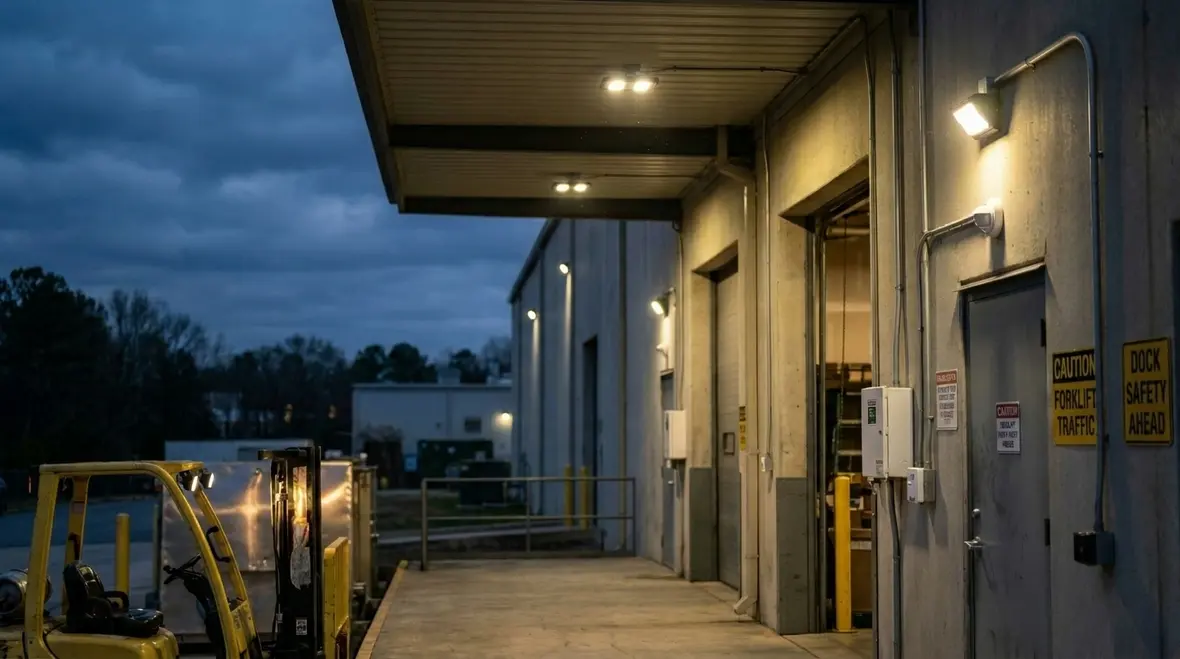
The usual suspects behind excess energy use
A few issues show up again and again: fixtures aimed too wide for narrow aisles, old fittings that throw light onto ceilings instead of stock, controls that never got recommissioned after a layout change, and maintenance routines built on hope rather than schedule. Warehouses evolve fast. Racking moves, lanes shift, stock profiles change, and traffic patterns follow. Lighting that worked three years ago may now be wasting power in all the wrong places.
Design improvements that reduce energy while boosting visibility
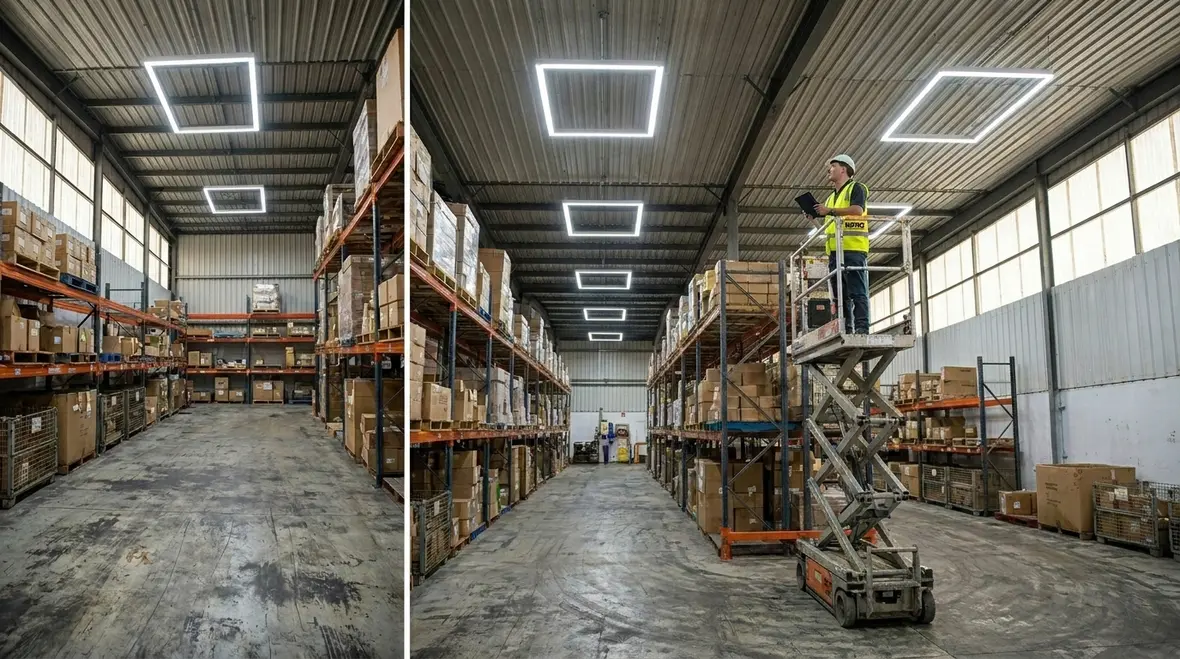
Smart design does more than replace fixtures. It shapes light. Facilities typically see strong results when they adjust three areas together: fixture choice, layout, and controls. For example, high efficiency LED fixtures with correct optics can deliver required illumination with fewer watts. Then teams can rework spacing and aim angles to reduce wasted spill into walls and ceilings.
Next, they should plan for lighting levels by task. A mezzanine storage area does not need the same intensity as a packing line, and loading bays need stable visibility for safe staging. So the solution becomes targeted rather than blanket. And yes, the one setting for the whole building approach can save time, but it also turns your energy bill into a guessing game.
Also, color and glare control matter. Better uniformity supports quicker visual recognition, which helps operators move smoothly. Low glare optics and proper mounting reduce reflections off glossy floors and metal racking, especially where equipment has shiny surfaces.
Better layouts improve both safety and workflow
A thoughtful layout does more than make the place look professionally lit. It helps teams read labels faster, steer more confidently, and reduce hesitation at intersections, dock edges, and pick zones. Consistency across vertical and horizontal sight lines matters in a building where speed is part of the business model. If workers need a second to adjust every time they move from one zone to another, those seconds add up. Warehouses are full of tiny delays pretending not to matter.
Controls and automation: the quiet engine behind long term savings
Even efficient fixtures underperform without controls. For warehouses, the best results usually come from occupancy sensing, scheduling, and daylight harvesting where applicable. Sensors should detect presence reliably at the working level, not just in the corners where nothing happens. Then automation should match operational rhythm.
For example, night shifts may run only on certain loading doors, while other zones stay idle. Instead of burning power across the entire facility, systems can dim or switch off in unused areas. During shift changes, lighting can ramp up gradually. That reduces abrupt brightness swings that sometimes irritate workers or interfere with night vision adaptation.
Additionally, monitoring helps. When a facility tracks energy use by zone, it can spot anomalies like stuck relays, failing drivers, or unexpected usage spikes. And once teams can see the pattern, they can fix the issue quickly instead of waiting for a surprise maintenance call.
Automation works best when it follows real operations
This is where practical site knowledge beats generic settings. Controls should reflect when pick faces are busy, when receiving opens, when dispatch surges, and when the graveyard shift only touches half the footprint. A smart system that ignores actual workflow is just a fancy way to annoy everyone. Good automation should feel almost invisible. Bad automation gets discussed loudly in the lunchroom.
Maintenance planning that protects both output and safety
Lighting upgrades should not create new headaches. Facilities benefit when they plan maintenance from day one. That includes clean access, realistic relamping or driver replacement strategy, and a schedule for lens and reflector cleaning. In dusty Australian environments, regular maintenance helps preserve lumens and reduces the need to overdrive fixtures.
Then there is downtime. If warehouse operations run lean, upgrades must minimize disruption. Teams can phase work floor by floor, align with planned shutdown windows, and coordinate with other trades so the site does not feel like a construction zone during peak season.
Also, it is wise to document the as built condition. As the months pass, small changes like added racking, new lanes, or equipment relocation can alter light performance. A maintenance plan that includes periodic checks keeps visibility steady and prevents mystery dark corners from creeping back in.
Clean data and clean fixtures both matter
If a site cannot tell which zones consume the most power, which fixtures fail early, or which aisles attract complaints, it is harder to improve anything. Good maintenance is part physical upkeep and part recordkeeping. The goal is not just to fix what breaks, but to spot patterns before they grow teeth. Warehouses already have enough surprises without adding mystery lighting drama to the roster.
How Kord Fire Protection strengthens lighting projects in the real world
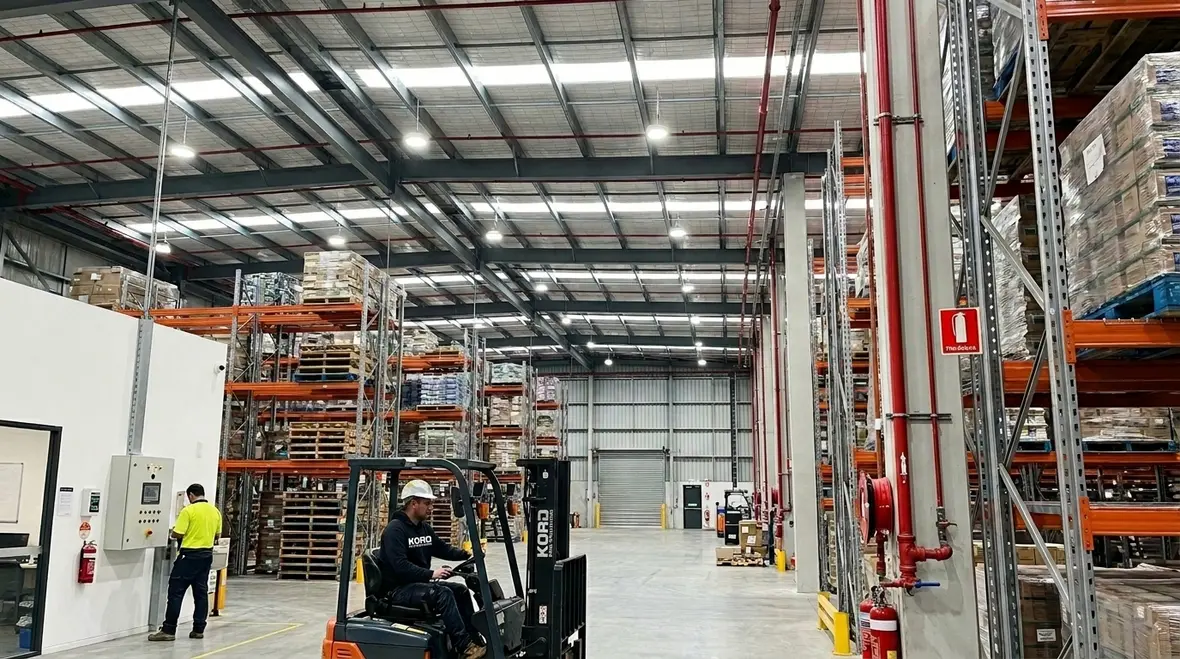
Lighting and fire and life safety often meet in the ceiling voids, along cable routes, and around access panels. That is where Kord Fire Protection can become a vital partner with this service job. As facilities upgrade fixtures and controls, they may modify cabling paths, add junction boxes, or adjust mounting points near fire rated components.
However, these changes must align with compliance expectations and maintain protection levels. Kord Fire Protection supports teams by helping ensure that installation work respects fire stopping requirements, maintains integrity around penetrations, and supports proper coordination with the building’s fire protection systems. In other words, they help the lighting upgrade improve visibility without accidentally creating new risk.
Also, during commissioning, the facility gains confidence when fire related documentation and installation details stay organized. This reduces rework and keeps projects moving. And if you have ever watched a project get delayed because someone touched the wrong cable route, you know how valuable prevention is. Yes, the ceiling can hide chaos.
If your team is also reviewing emergency illumination and exit path visibility, Kord’s related article on warehouse emergency lighting requirements adds useful context for how lighting strategy connects with life safety planning in high ceiling storage environments.
Implementation steps for facilities that need savings fast
To move quickly and still get it right, many Australian industrial and retail warehouses follow a structured path. First, teams run a site walk and confirm what is actually used. They review operating hours, occupancy patterns, and the zones that matter most for safety and productivity.
Next, they measure current illumination where it counts. Then they model new layouts based on target light levels, fixture selection, and expected control behavior. After that, they plan the rollout. They pick phases that reduce impact on operations, and they schedule work around peak demand and deliveries.
Then they install, test, and commission. Finally, they document performance and set targets for monitoring. If the facility tracks results against expectations, it learns fast and improves future decisions.
When these steps connect to Warehouse Lighting Efficiency Solutions, the project becomes a control system, not a one time swap. That means predictable savings and fewer surprises.
A practical rollout sequence
- Audit fixtures, controls, operating hours, and problem zones.
- Measure light levels in aisles, docks, staging, and packing areas.
- Select fixtures and optics that match tasks instead of guessing.
- Program sensors and schedules around real shift patterns.
- Install in phases that protect productivity.
- Commission, document, review, and refine after occupancy.
FAQ
Ready to lower costs and keep visibility strong?
Facilities across Australia can improve safety, reduce energy, and cut maintenance with a planned lighting upgrade. When teams use Warehouse Lighting Efficiency Solutions and pair the electrical work with fire and life safety coordination through Kord Fire Protection, they move faster and avoid risky rework.
Contact your lighting and fire protection partners today to schedule a site assessment and build an upgrade plan that works for your zones, shifts, and compliance needs. Better visibility, lower costs, and fewer surprises is a combination most warehouse teams are happy to see.

Join Our Newsletter!
Get the latest fire safety tips delivered straight to your inbox From our Newsletter.