Commercial Kitchen Fire Suppression Protocols in Australia, Kord Fire Protection
Quick Answer: Commercial kitchen fire suppression depends on correct system design, fast detection, safe agent discharge, and disciplined staff habits. Facilities also need code compliant inspections and clear response plans. When commercial kitchen fire safety is treated as a system, not a suggestion, teams reduce risk and downtime. Kord Fire Protection can support that full lifecycle.
Commercial kitchen fire safety sits at the center of day to day operations for industrial, retail, and facilities teams across Australia. In these kitchens, heat, grease, and high output equipment team up like a mischievous comedy trio, and one wrong moment can become a costly headline. However, solid fire suppression protocols do not rely on luck or heroic improvisation. They rely on clear procedures, trained staff, and properly maintained systems that work the moment they are needed. For teams looking at broader protection planning beyond the kitchen itself, fire suppression services can help connect kitchen specific controls with a wider site safety strategy.
Why suppression protocols decide outcomes in the kitchen
Fire in commercial cooking spaces does not behave like a candle you can politely ignore. Grease can ignite, flames can climb, and smoke can flood corridors faster than anyone expects. Therefore, suppression protocols must focus on speed, accuracy, and safety. A protocol answers several practical needs at once: it defines who acts, when it happens, what gets isolated, and how the team avoids compounding damage.
In a real kitchen, that means they treat three layers like a single chain. First, they prevent ignition through safe cooking and maintenance. Second, they detect early with the right components. Third, they suppress correctly with clean discharge control, then coordinate ventilation and power isolation. When these pieces align, the system helps protect people and assets. And yes, that is better than waiting for the fire brigade to do the job everyone else forgot to plan for. The fire brigade will still do their job, of course, but it is a much calmer story when the kitchen already handled the first strike.
What strong protocols do better than good intentions
A lot of sites assume the presence of suppression hardware automatically equals readiness. It does not. Readiness comes from how the hardware, the room layout, the maintenance plan, and the people behave together. That is why commercial kitchen fire suppression should be treated like an operational discipline rather than a box that got ticked during construction. Kord Fire Protection makes a similar point in its guide on commercial kitchen fire suppression for high volume kitchens, where performance under real pressure matters more than theory.
Core suppression steps teams follow during an alarm
When detection triggers an event, staff should not improvise. They should follow a practiced sequence that reduces confusion and keeps the kitchen safe. Most effective protocols follow this flow, regardless of brand or equipment style.
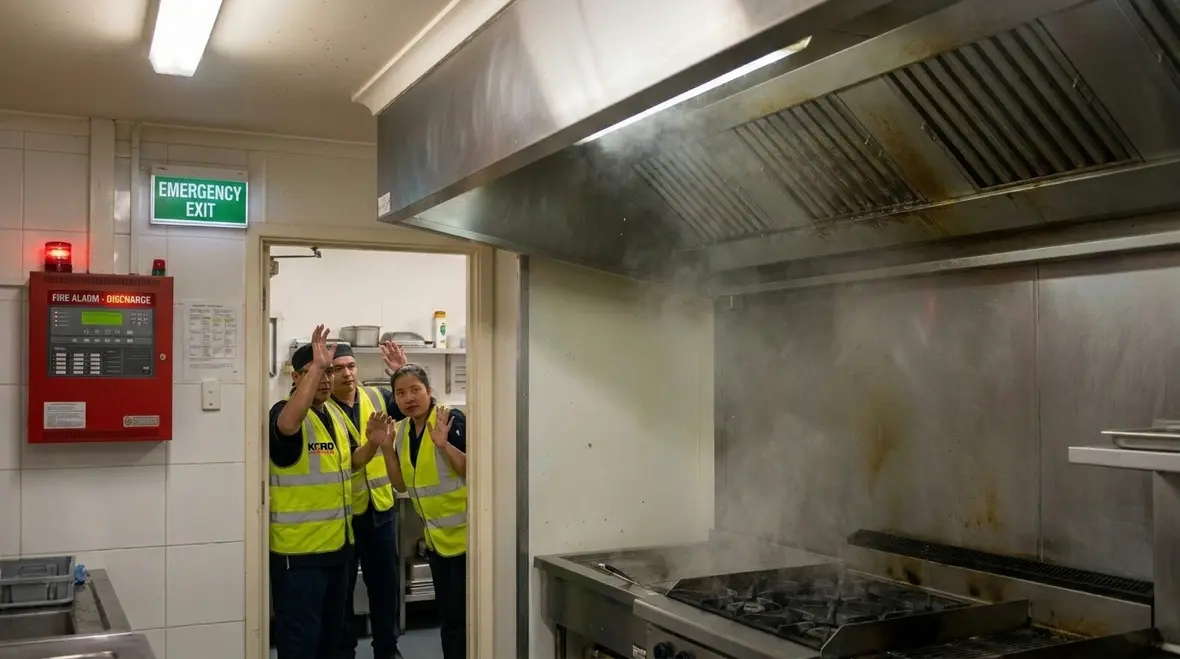
- Sound the alert and initiate evacuation for affected zones, using clear roles for head chefs, managers, and floor staff
- Confirm activation safely from a designated distance, never from the danger area
- Shut down fuel and power sources as required by the system design and local site procedure
- Keep doors and fire boundaries closed so suppression stays focused where it needs to work
- Allow discharge to complete and avoid reopening until the site lead declares the area safe
- Call the right stakeholders for inspection and restoration planning, then document what happened
Next, protocols must include a communication method. People often freeze when they cannot confirm what is real. So they should use a simple message format like “Alarm confirmed, evacuation complete, system activated, isolation underway.” That short script reduces stress and helps teams coordinate without stepping over each other.
Communication beats chaos every time
That message format works because it is short, factual, and easy to repeat under pressure. Teams do not need a dramatic speech in the middle of smoke and alarms. They need a few stable words that move everyone in the same direction. In practice, simple scripts often outperform complicated emergency playbooks that nobody can remember once adrenaline kicks in.
How design choices support suppression performance
Protocols work better when the system design matches the kitchen hazards. Grease loading, cooking styles, ventilation layout, hood geometry, and fuel type all influence suppression effectiveness. Therefore, a proper commercial kitchen fire safety program includes a design review that considers how the kitchen actually operates, not just how it is drawn on a plan.
Good design practice includes:
- Correct hood and duct coverage so agent reaches the right volume
- Appropriate detection placement to catch a developing event early
- Proper discharge control so the system releases when conditions meet activation criteria
- Ventilation and damper strategy that supports containment after discharge
- Coordination with cooking equipment to ensure shutoff actions match system intent
Then, teams should run a “real use” validation. They look at the busiest shift, the highest grease risk tasks, and the actual time it takes for staff to notice an abnormal event. That is where protocols become practical instead of theoretical. Because nobody wants a fire plan that only works in a quiet training room. Even Batman would struggle with that.
Design reviews should follow the kitchen, not fight it
This is especially important in kitchens that evolve over time. Menus change. Equipment gets swapped. Ventilation patterns shift. Production volume grows. If suppression design is not reviewed after those operational changes, the kitchen can slowly drift away from the assumptions the original layout was built around. That mismatch is where hidden risk loves to set up camp.
Maintenance schedules that prevent failure on the worst day
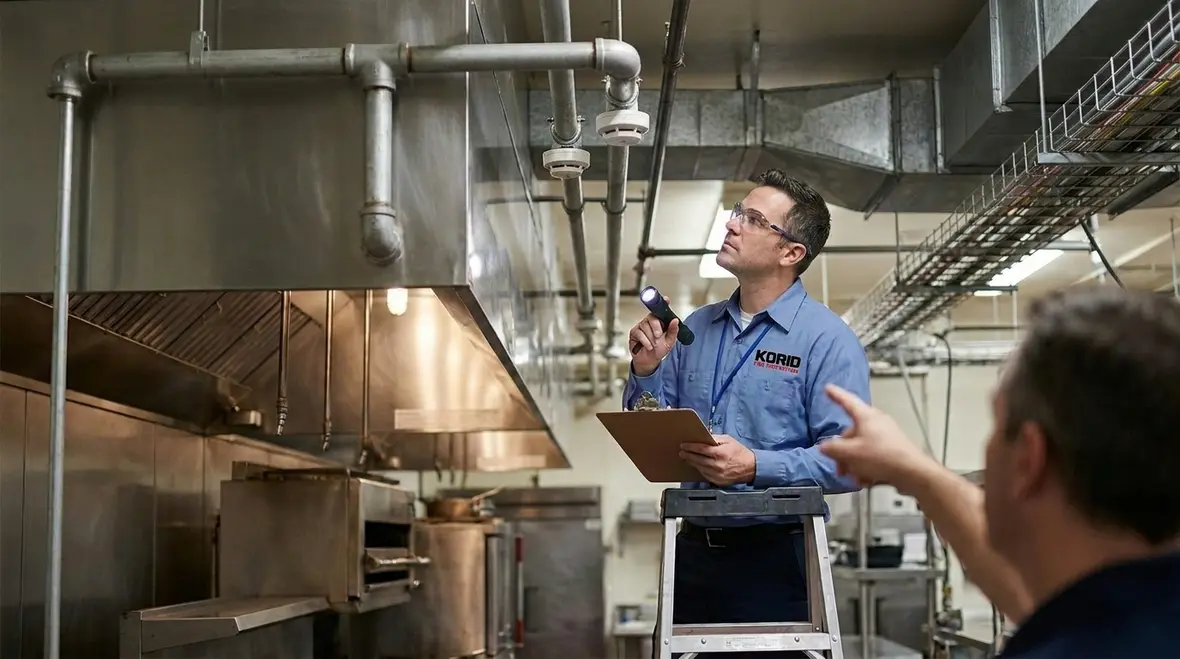
Fire suppression does not fail because the universe hates kitchens. It fails because systems drift out of spec. Dust, grease residue, damaged components, blocked nozzles, and tampered detection paths can all reduce performance. For this reason, teams should treat inspection and maintenance like a recurring operational job, not an annual surprise.
Commercial kitchens should maintain a documented schedule that includes:
- Routine checks of detection devices and alarms
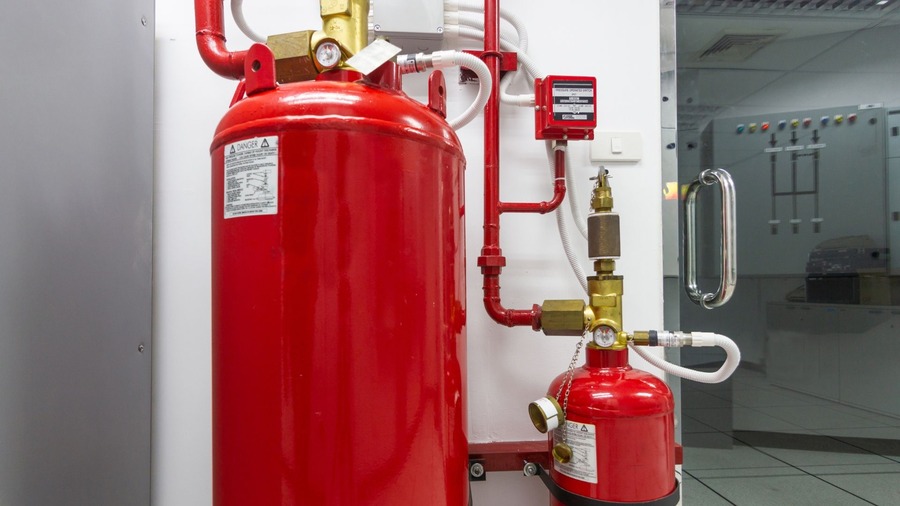
- Visual inspection of agent cylinders, pipework, and nozzles
- Verification of manual pull stations and warning devices
- Grease management in hood and duct areas
- Post event inspection procedures, including cleaning and component replacement as required
To keep things steady, sites should also confirm that service records match the actual kitchen layout. If equipment gets moved or upgraded, the risk profile changes. Consequently, they should review the system design after renovations or significant operational changes. That is where partner support adds real value. Kord Fire Protection can help facilities manage maintenance oversight, document compliance, and reduce “unknown status” risk, which is the kind of risk that loves to hide until the day it is most expensive.

Training, drills, and human behavior in the middle of chaos
Systems protect hardware. Training protects people. Even with the best commercial kitchen fire safety equipment installed, staff must know what to do in the first 60 seconds. After that, the event either becomes manageable or turns into a larger problem.
Good training includes role clarity and repetition. For example, teams should know who:
- initiates evacuation and accounts for staff
- contacts emergency services and site leadership
- handles shutdown actions based on the kitchen’s setup
- secures the area for safe post event assessment
- coordinates with service providers and manages documentation
Drills should include realistic triggers, not just a staged speech. They should practice alarm response, boundary control, and communication flow. And because people learn through repetition, they should schedule drills at sensible intervals, then refresh whenever staffing or procedures change.
Here is a small joke that still teaches a serious point. If the drill ends with “everyone stand around and wait,” then the plan is missing the part where humans act. Fire does not wait. It arrives, spreads, and asks for attention. So the team must respond with calm steps and a clear sequence, like a well run production line, not like a reality show where someone forgets their own name.
Why repetition matters more than confidence
People under stress rarely rise to a beautifully written policy they read six months ago. They default to what they have practiced. That is why drills, refreshers, and role clarity matter so much. Confidence is nice. Muscle memory is better.
Risk documentation and compliance support across Australia
Across Australia, facilities teams must keep clear records and ensure their systems meet applicable standards and site requirements. This matters because audits, insurer reviews, and operational due diligence often ask for proof, not promises. Moreover, good documentation helps management track trends such as repeat faults, frequent alarms, or recurring maintenance issues.
Many sites benefit from a simple risk documentation method that stays consistent across industrial, retail, and facilities environments. Below, a single view can help teams align tasks with accountability and timing.
Two column view for operational readiness
| What to track | Why it matters |
| Service and inspection records | Shows system health and supports compliance reviews |
| Kitchen changes and equipment upgrades | Prevents mismatch between hazard and system coverage |
| Training completion and drill notes | Confirms people can execute the protocol under stress |
| Incident logs and corrective actions | Reduces repeat events and supports continuous improvement |
When teams manage these items with discipline, they reduce uncertainty. And that is exactly where a partner like Kord Fire Protection can step in as more than a vendor. They can help facilities keep records clean, coordinate service planning, and ensure the commercial kitchen fire safety program stays aligned with real operations across multiple sites. For facilities that also manage industrial production environments, Kord’s article on industrial fire protection in manufacturing settings is a useful companion read because many of the same planning habits apply across complex properties.
Steps to keep suppression effective after a real event
After any discharge or activation, the work is not “done.” The site must treat the incident as a learning opportunity with clear next actions. First, staff must remain in a safe state until the area is assessed. Next, management should ensure emergency services have all needed information, then focus on restoration planning without rushing.
A strong post event approach typically includes:
- Documenting the sequence of events, time stamps, and any actions taken
- Arranging inspections of detection, release components, and related controls
- Cleaning and replacing parts as required by the system design
- Reviewing kitchen practices that may have contributed to ignition
- Updating protocols and training if gaps appeared during the event
This prevents the next incident from repeating the same failure points. And yes, it also helps with rebuilding trust internally and with insurers. The goal is simple: return to operations with confidence, not just with paperwork that says “we hope it is fine.”
FAQ
Conclusion: make readiness a business habit
Commercial kitchen fire safety works best when teams combine strong protocols, correct system design, and disciplined maintenance. That means clear roles, documented checks, realistic drills, and fast action during an alarm. When facilities treat suppression readiness as a core operation, they reduce downtime and protect people.
For multi site teams across Australia, Kord Fire Protection can become a vital partner to keep systems reliable and compliance steady. Schedule a review and strengthen your kitchen defenses now.

Join Our Newsletter!
Get the latest fire safety tips delivered straight to your inbox From our Newsletter.