Vehicle Fire Suppression Southern California Fleet Service
In the heat and traffic of Southern California, vehicle fire risk never clocks out. That is why vehicle fire suppression southern california fleets lean on engineered protection systems that respond fast, reduce damage, and help keep drivers and cargo safer. While many managers think about tires, routes, and maintenance schedules, fires bring a different kind of surprise. They can start in wiring, batteries, brake systems, or fuel components, and one event can turn a normal day into a headline. Fortunately, with the right plan and a reliable partner, fleet owners can build a smarter approach to fire readiness, inspections, and service that actually holds up when it matters.
Fleet fire risk in Southern California: what crews see in the field
Southern California runs on intensity. On any given day, fleets may handle repeated stop and start driving, long idling periods, heavy hauling, and frequent weather swings from coastal humidity to desert heat. Each condition stresses parts, and heat accelerates wear. Then add vibration, electrical loads, and aftermarket upgrades, and the odds of a small failure becoming a bigger incident rise.
In practice, common ignition paths include damaged wiring harnesses, overheated batteries, hydraulic leaks near hot components, and brake dust buildup in high-use applications. Moreover, high amperage systems in newer vehicles can create dangerous fault conditions before anyone notices. To keep incidents from snowballing, fleets need a fire protection approach that goes beyond “we have an extinguisher.” They need suppression technology that activates quickly and helps prevent flashover inside enclosed compartments.
Why local operating conditions matter more than people think
A fleet in Southern California is not dealing with one tidy, predictable environment. It may leave a cooler coastal route in the morning and crawl through dry inland heat before lunch. That daily shuffle matters. Temperature swings, vibration, road grime, and dense traffic all work together like unhelpful coworkers on a group project. None of them may look dramatic alone, but together they increase wear and make hidden hazards harder to spot. A serious fleet program accounts for those field conditions instead of assuming the vehicle lives in a perfect little laboratory.
How vehicle fire suppression works for different fleet types
Suppression is not one-size-fits-all. However, the core goal remains consistent: detect the threat and discharge the right agent in the right area fast enough to reduce heat and stop fire growth. For fleets, that means selecting systems based on vehicle layout and fire profile.
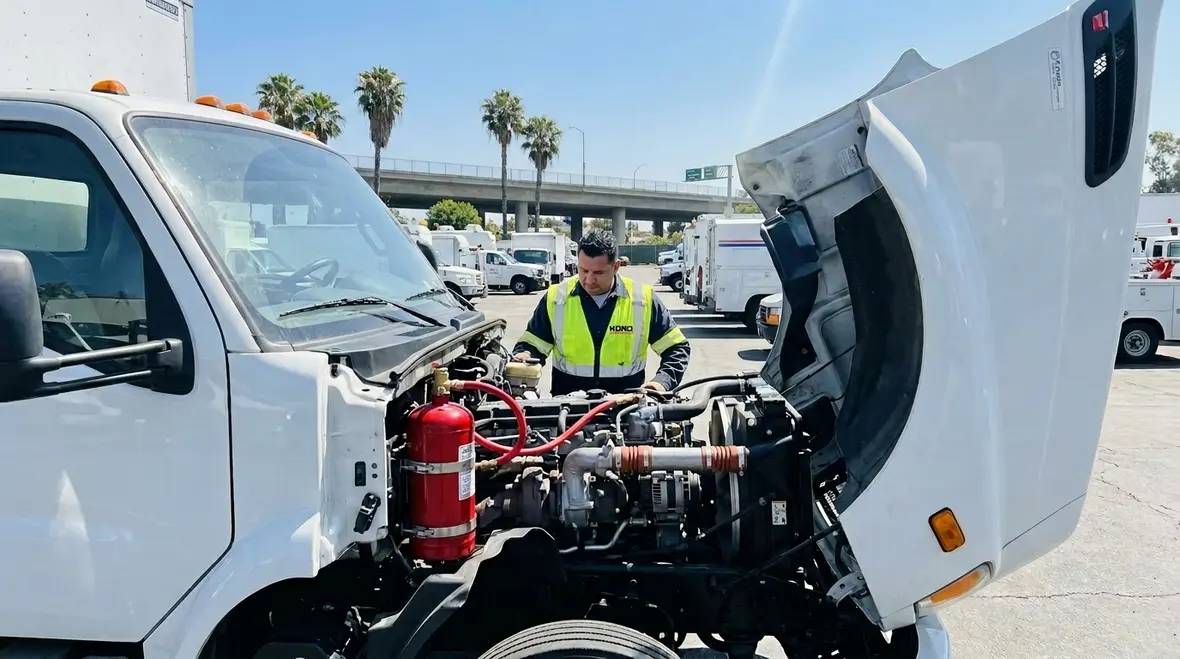
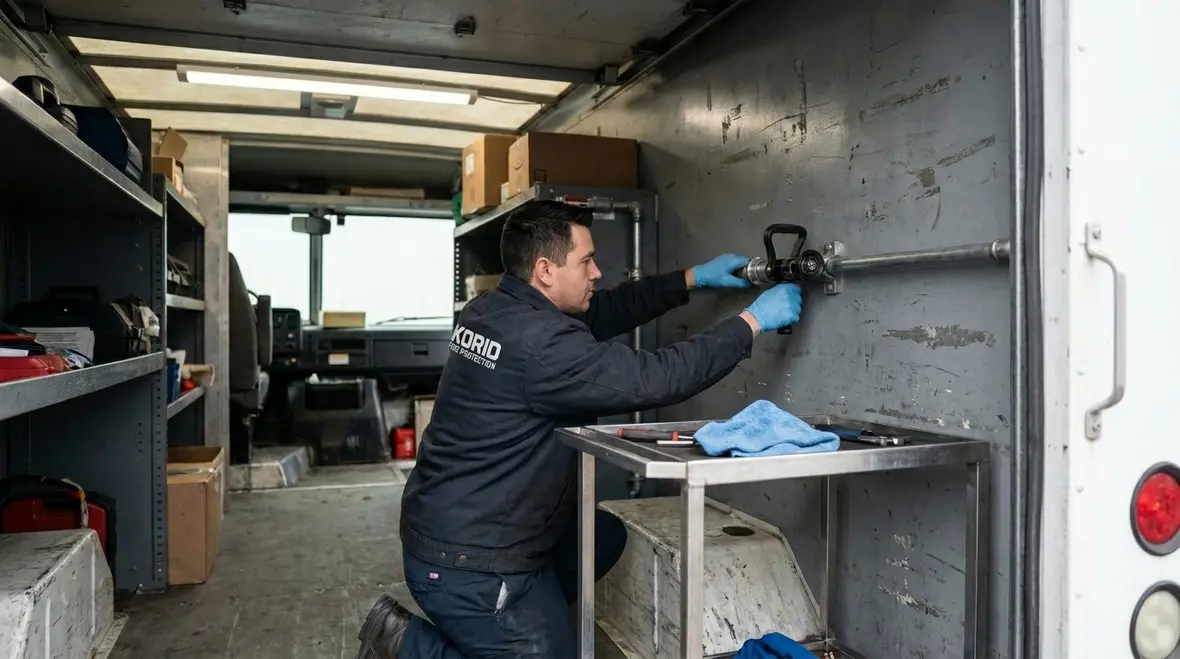
For light duty service trucks, installing protection around engine bays and electrical compartments helps address early ignition sources. For delivery vans and step vans, crews often prioritize compartments that can trap heat and flame. For buses and shuttles, suppression planning focuses on engine areas and sometimes interior zones where wiring and HVAC components carry risk. Meanwhile, for equipment or specialty vehicles that transport tools and parts, vehicle configuration shapes placement and activation behavior.
Just as important, the system must match real-world access needs. Crews should be able to service components without turning maintenance into a scavenger hunt. When suppression equipment fits the operational rhythm, compliance becomes easier and response is more reliable. Kord Fire Protection’s vehicle fire suppression systems service page emphasizes custom system design, installation, maintenance, testing, inspection, and 24/7 support for working vehicles, which makes that practical fit a lot more than a nice idea. It makes it the whole game.
Detection, discharge, and the speed that counts
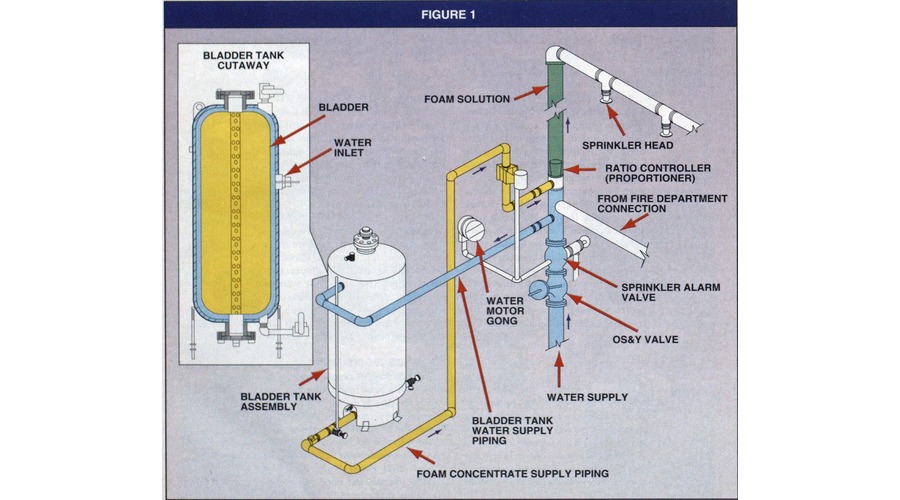
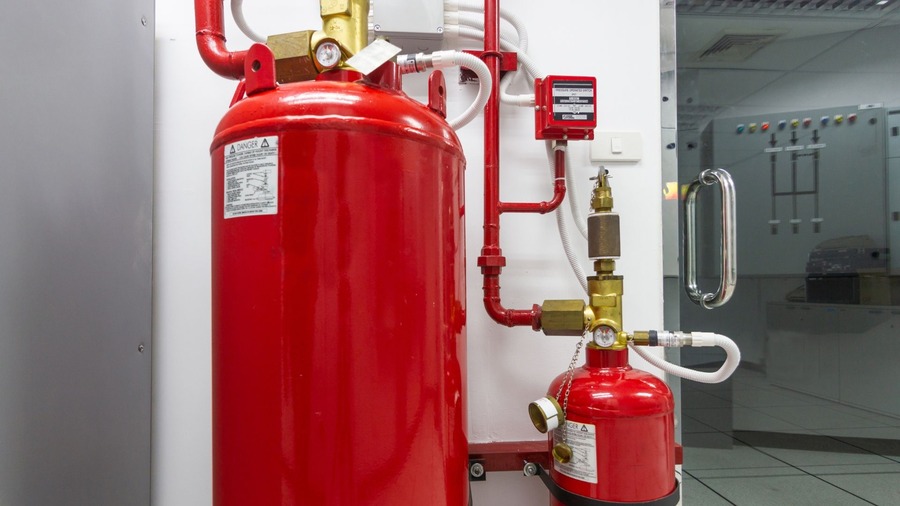
A properly designed setup generally combines detection components, agent storage, discharge hardware, and controls that either alert the operator, trigger automatically, or both. Kord Fire’s service materials explain that vehicle systems are typically built around those core components, with layouts tailored to the hazards of the specific unit. In plain terms, the system’s job is to react before a compartment fire has time to spread into wiring runs, fuel sources, or nearby materials. That early intervention is where the value lives.
Inspection, maintenance, and compliance that actually protects the business
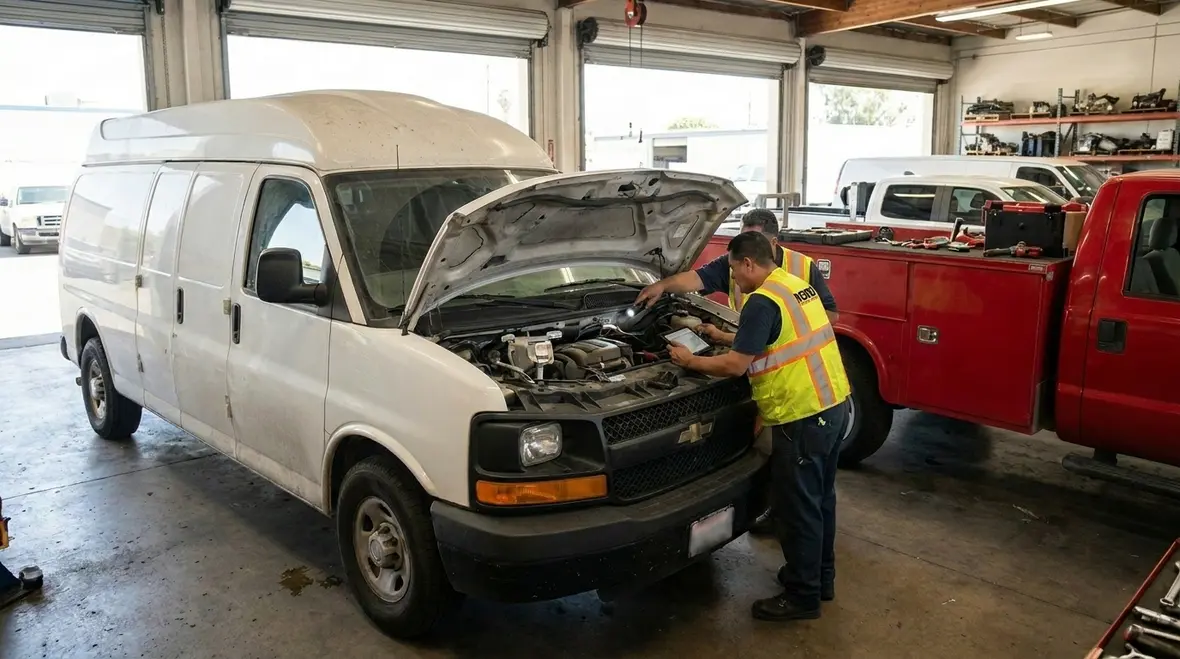
Suppression systems only perform as well as their service history. Therefore, fleets should treat inspections and maintenance like they treat brakes and tires. If the system is neglected, a future incident may expose the problem. For example, discharge nozzles can collect debris, detection devices can lose calibration, and agent storage pressure can drift beyond safe limits.
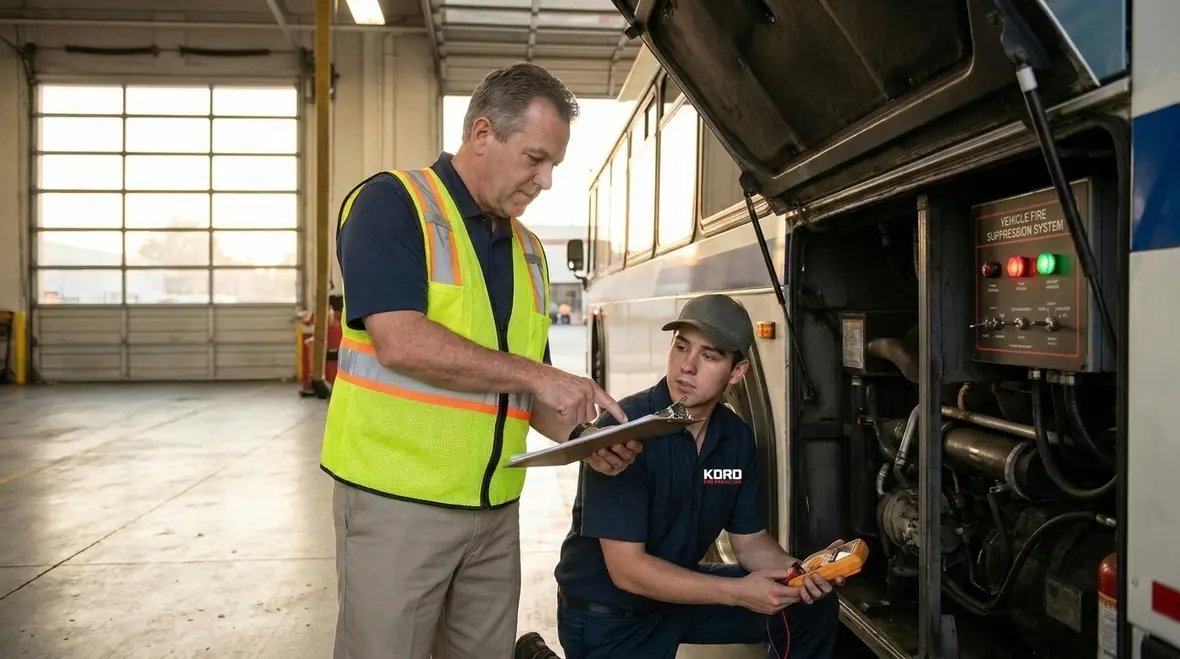
A strong maintenance plan includes periodic checks of detection and control components, verification of agent distribution paths, and documentation that shows the fleet stays ready. Additionally, technicians should confirm wiring integrity, mount stability, and clear access paths so future work does not compromise equipment. Kord Fire’s broader fire suppression services page notes that suppression systems should be tested and inspected on a semi-annual basis, while Kord’s maintenance guide for vehicle systems discusses pre-shift and monthly inspections with more comprehensive testing at least every six months.
Here is the fun part, in a sad way: if a system fails inspection, it is often because someone forgot a simple step. So, fleets benefit from clear service schedules, consistent recordkeeping, and a partner that keeps everything tidy and traceable. After all, nobody wants to be the company that has “the system” until the day it is needed. That is not a legacy worth building.
Partnering with Kord Fire Protection for dependable fleet service
Vehicle fire suppression southern california fleets need more than parts. They need a partner that understands how to service the real vehicles that drive daily routes. That is where Kord Fire Protection can become a vital ally. When Kord works with a fleet, the focus stays on readiness, safe operation, and reliable system performance.
First, Kord supports fleets with inspection and service workflows designed to reduce downtime. Then, the team helps coordinate documentation and scheduling so managers can keep operations moving. In other words, Kord helps turn fire protection into a managed program, not a once-in-a-while project. Also, Kord can assist with planning based on vehicle types, operating conditions, and onboard changes that occur over time.
For fleets that operate across Southern California, local responsiveness matters. A quick service response can prevent small issues from becoming costly repairs later. And when a system gets serviced correctly, the fleet gains confidence that the protection installed today will still perform when the calendar has changed. If you want a deeper companion read on upkeep, Kord’s vehicle fire suppression systems maintenance guide pairs naturally with a service-first fleet program and reinforces why regular care is not optional.
Installation planning: avoid common mistakes before the first mile
Even a good suppression system can underperform if installation is sloppy or mismatched to the vehicle. Therefore, planning has to start early. Fleets should confirm vehicle specifications, confirm compartment boundaries, and set expectations for service access. Then, installers should verify that nozzles, detection components, and wiring are positioned in a way that aligns with the vehicle’s fire behavior.
Another frequent mistake involves ignoring operational changes. Upfitters may add wiring, relocate batteries, or install equipment racks after the initial setup. If those changes occur without a review of suppression coverage, risk can shift. Consequently, fleets should plan for re-evaluation after modifications, not just at the time of purchase.
And yes, sometimes the problem is as simple as leaving protective barriers in place that block airflow or movement. That is like wearing a seatbelt you cannot actually use. So, fleets should insist on clean, tested installation procedures and confirm system operation during handoff. Kord Fire’s published guidance on system installation stresses risk assessment before installation and professional handling in accordance with applicable standards, which is exactly the kind of unglamorous discipline that saves everyone grief later.
What smart handoff looks like
A smart handoff gives the fleet more than keys and a hopeful nod. It includes clear labeling, documentation, basic operator awareness, and service access that does not require three people and a flashlight to find the important parts. When the installation is tidy and the handoff is thorough, future inspections get easier, follow-up service is faster, and everyone is less tempted to improvise. Improvisation is great for jazz. It is not the energy you want around fire protection hardware.
What successful programs include: training, reporting, and response readiness
A complete fire suppression program does not end at installation and inspections. Fleets should also build a response culture. Drivers need simple guidance on what to do during an event, how to alert dispatch, and how to avoid unsafe actions. Crews should know where system indicators appear and what “normal” looks like after activation.
In addition, managers should track events and near misses. If a vehicle experiences a small electrical fault, crews can flag the situation and trigger an inspection review. Over time, this data supports better planning and helps fleets reduce repeat risk.
Below is a practical view of what strong fleets often implement.
FAQ: quick answers for fleet managers
Ready to protect Southern California routes with a real plan
Vehicle incidents do not wait for business hours, and Southern California fleets do not get a second try once damage starts. Kord Fire Protection helps fleets build dependable vehicle fire suppression southern california readiness through smart service, inspection discipline, and documentation that supports compliance. If the fleet runs deliveries, service calls, or passenger routes, now is the time to review equipment condition and coverage.
For a direct next step, connect with Kord through its vehicle fire suppression systems page or explore broader support through fire suppression services. Contact Kord today to schedule an assessment and keep protection aligned with how vehicles actually operate. Because hope is not a fleet strategy, and fire definitely does not care about your calendar.

Join Our Newsletter!
Get the latest fire safety tips delivered straight to your inbox From our Newsletter.