Fire Extinguisher Placement Optimization in Australia
Quick Answer: Proper fire extinguisher placement reduces response time and improves safety across industrial, retail, and commercial facilities. Kord Fire Protection supports facilities with on site assessments, layout planning, signage guidance, and compliance minded recommendations. The goal stays simple: place the right extinguisher in the right spot, so a first incident does not become a first disaster.
For facilities that want broader support beyond placement alone, Kord Fire Protection also offers full fire protection services that can help keep extinguishers, alarms, and other life safety systems working together instead of acting like distant cousins at a family reunion.
Fire extinguisher placement optimization: the difference between a plan and a panic
Fire emergency moments rarely wait for meetings to start, and that is exactly why fire extinguisher placement optimization matters. In the first minutes of a fire, seconds decide outcomes. Therefore, facilities in Australia that operate with industrial equipment, fast customer turnover, or busy back of house areas need extinguisher locations that match real movement patterns, hazards, and travel paths.
To be clear, this is not about tucking extinguishers into the corner like forgotten holiday decorations. Instead, it involves a careful walk through the facility, a look at where staff actually move, and a plan that keeps equipment accessible under stress. And when facilities partner with Kord Fire Protection, the process becomes far more reliable because Kord can act as a vital partner for inspections, practical layout guidance, and ongoing readiness.
Yes, it sounds serious. But then again, fire does not care about sarcasm, movie quotes, or how confident someone feels in their “I’ve got this” moment.
Map hazards to real travel routes, not wishful thinking
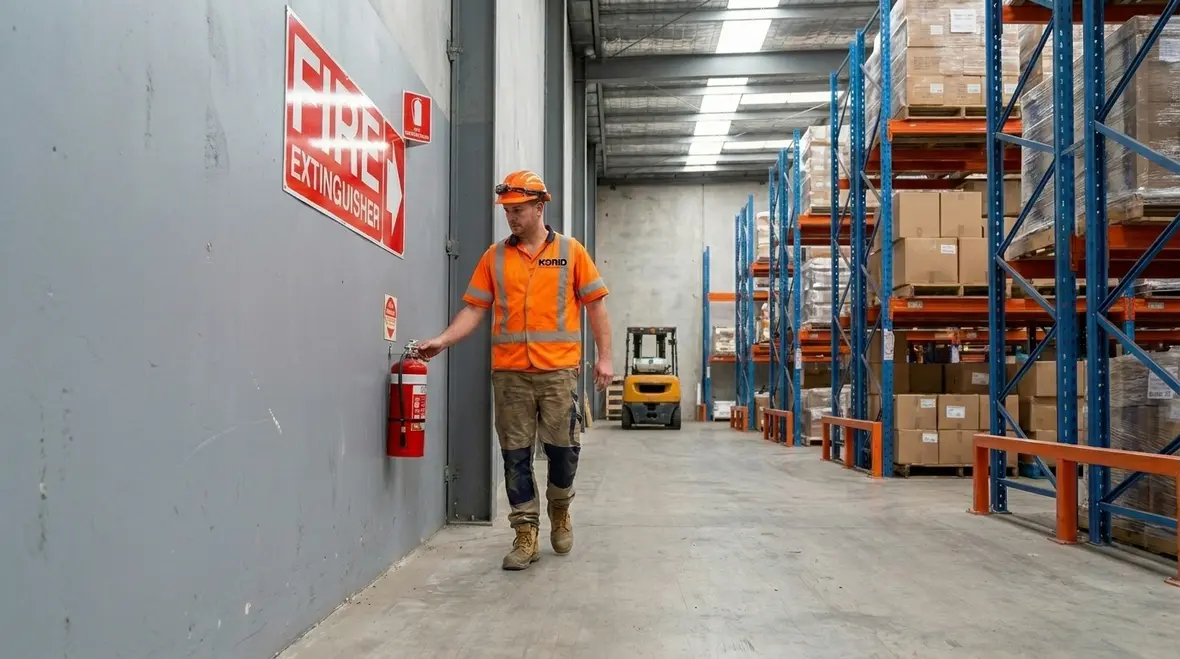
Facilities often place extinguishers based on what used to make sense during the original build. However, operations change. Stock moves, processes shift, forklifts take new routes, and electrical loads grow. Consequently, the best fire extinguisher placement optimization begins with hazard mapping and then ties that map to real travel routes.
What teams should review first
To do this well, fire safety teams consider the following elements in sequence:
- Where ignition risk sits: electrical panels, battery charging zones, cooking areas, storage racks, solvent handling points
- Where people move when they see smoke: exits toward stairs, aisles between racks, access corridors behind counters
- Where staff will grab equipment fastest: near likely decision points, not behind locked cages or tight turns
- What can block access: stacked pallets, parked trolleys, blind corners, low visibility at night
As a result, the facility does not just “comply.” It becomes easier to respond in. And if that sounds like common sense, well, fire safety loves common sense, even when people forget it during busy shifts.
This is also where many sites discover that an old layout no longer matches current operations. A warehouse that once had open visibility may now have denser racking. A retail floor may have added seasonal displays that narrow movement. A workshop may have introduced battery charging areas that changed the risk picture entirely. If the extinguisher map still reflects the building’s former life, response gets slower exactly when it needs to be instinctive.
Kord Fire Protection can help facilities review those patterns with practical eyes, which is useful because a floor plan on paper can look beautifully logical right up until someone tries to sprint around a pallet stack, a service trolley, and one mysteriously abandoned ladder.
Choose mounting height, visibility, and access that works in the moment
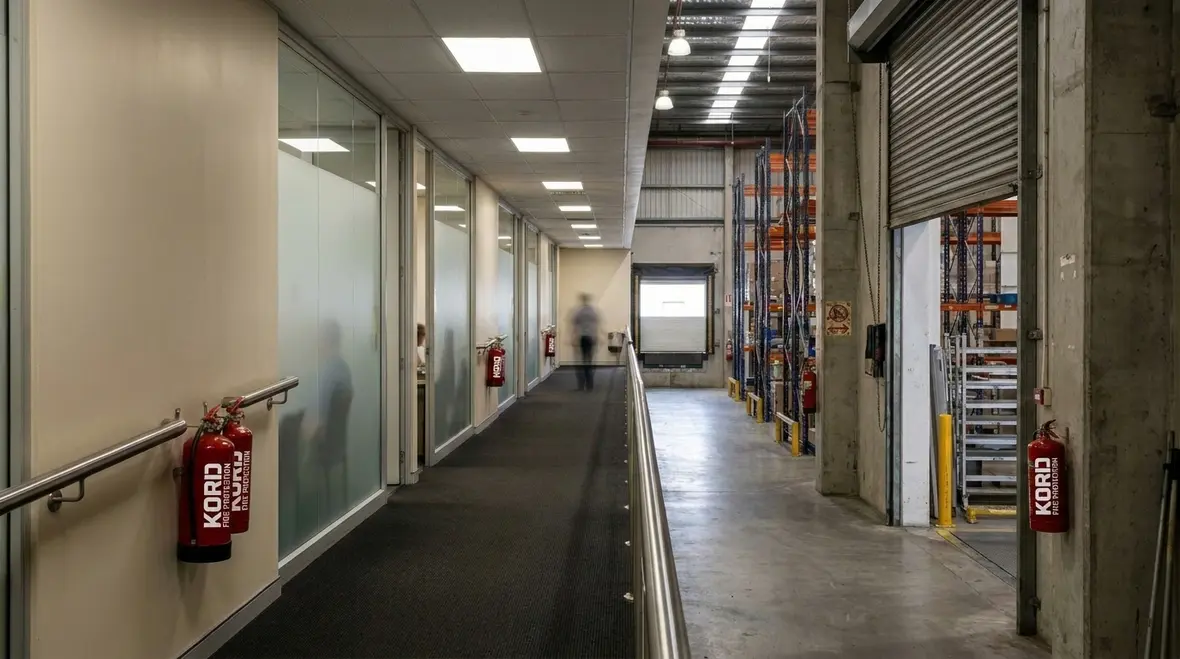
Even perfect extinguisher selection fails when access becomes slow. Therefore, placement must address three practical realities: someone must find it fast, reach it safely, and use it without wrestling the environment.
Practical access beats theoretical access
- Mounting height that a typical staff member can reach while standing, even with gloves and during urgency
- Clear line of sight using consistent signage and contrast on walls
- No obstructions between extinguisher and user, including temporary signage stands and parked equipment
- Safe approach distance that avoids placing the extinguisher where the fire could cut off the path
In many facilities, the “best” location on paper sits too close to high heat zones. However, moving it a short distance can dramatically improve accessibility. Kord Fire Protection can support this by reviewing site conditions and helping align the layout with how staff actually respond, not how a plan imagined it.
Because in an emergency, no one wants to perform a real life version of a comic book “grab and go” scene where the hero trips on a mop bucket.
Visibility matters more than people think. An extinguisher can technically be present and still feel invisible if signage blends into the wall, if shelving blocks the approach, or if the unit sits just around a blind corner that nobody remembers under pressure. Optimization means reducing that mental search time. When staff see smoke, they should not have to stop and solve a puzzle first.
Use spacing and coverage logic for buildings with multiple functions
Industrial and commercial sites rarely operate as one uniform space. They mix offices, warehouses, loading bays, retail floors, workshops, break rooms, and sometimes outdoor storage. As a result, extinguisher coverage must handle multiple hazard zones with consistent logic.
Coverage has to follow how the building actually works
Good layout thinking includes coverage for:
- Long aisles where travel distance can delay action
- High activity areas like retail checkout zones and service desks
- Back of house corridors where staff go when customers are not watching
- Transition points, such as between warehouse and office, where fire spread pathways can change
Therefore, crews and customers should both have access to extinguishers without crossing dangerous areas. In practice, this means placing units at strategic intervals and ensuring that doors, partitions, and furniture do not create dead zones.
When facilities adopt this approach, response teams do not need to “search for the right can.” They move directly to the nearest safe option. And that is the kind of operational calm that keeps a small incident from escalating into a full evacuation drama.
Multi use buildings create sneaky gaps. The office side may look well covered while the loading bay side ends up thin, or a workshop may be fine until a new partition wall changes travel distance in ways nobody notices until a drill. Good spacing logic keeps coverage balanced across the whole site rather than accidentally pampering one zone while another gets left to fend for itself.
Support compliance with documentation and staff readiness
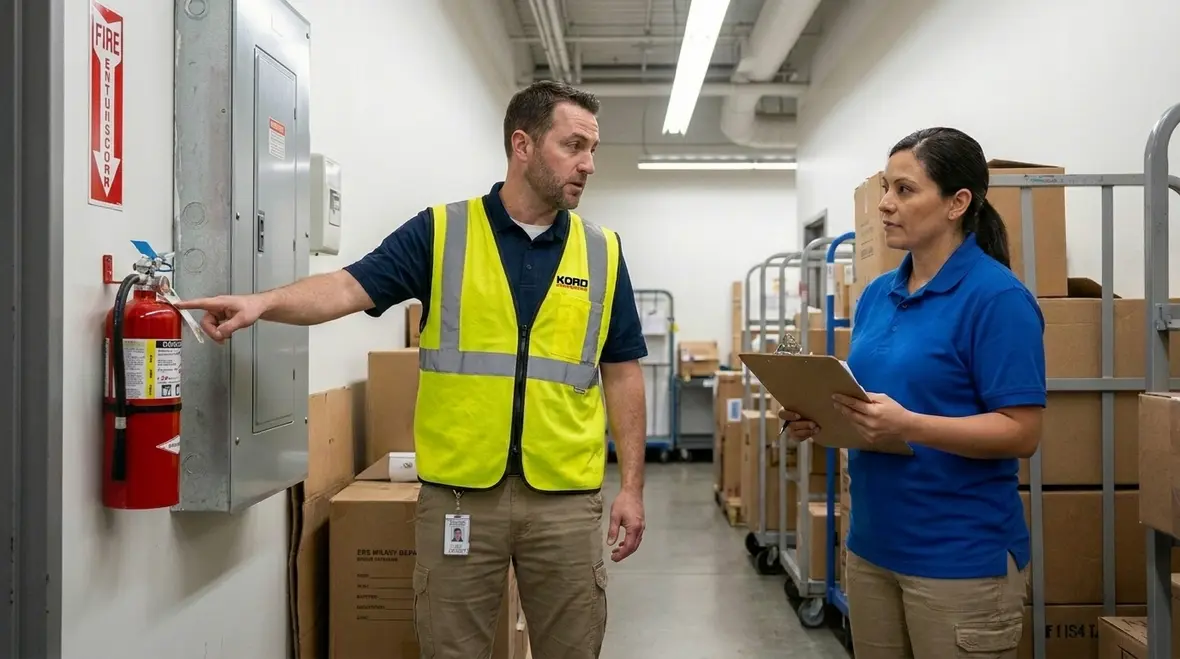
Fire extinguisher placement optimisation does not end when the last unit mounts on the wall. It also depends on what the facility does next: signage, inspection records, maintenance schedules, and staff awareness.
Placement works better when people understand it
To strengthen readiness, facilities should ensure that:
- Locations appear clearly on floor plans used for training and drills
- Staff know which extinguisher types match the common risks in their area
- Inspection tags stay visible and the maintenance process remains on schedule
- Changes in layout trigger a reassessment, especially after renovations and new equipment installs
Kord Fire Protection becomes a vital partner here because it can help facilities maintain a system, not a one time fix. When documentation and placement align, audits feel less like an exam and more like a health check. And if someone asks, “Why is this here?” the facility can answer with evidence, not vibes.
Also, when staff understand the layout, training becomes faster. People learn where to look, which reduces hesitation and improves confidence during drills.
That training value is easy to underestimate. People are far more likely to act usefully when the equipment location feels familiar rather than vaguely remembered. The best placement plan in the world still depends on human behavior, and humans under stress are not famous for their love of scavenger hunts.
Common placement mistakes that quietly increase risk
Facilities across Australia often spot problems only after an incident, or worse, after a near miss. Therefore, it helps to review the typical mistakes that undermine extinguisher effectiveness.
Small errors become big delays
Some frequent issues include:
- Placing extinguishers behind doors that staff forget to open under stress
- Mounting units where forklifts, trolleys, or racks block access
- Using inconsistent signage so units blend into the wall like background characters in a sitcom
- Ignoring change, such as new storage layouts or updated equipment that creates new hazard zones
- Overcrowding certain areas while leaving larger zones under covered
When these problems persist, response time increases and the first attempt at control can fail. However, they often fix quickly when a facility applies fire extinguisher placement optimisation with a clear method. Kord Fire Protection can help identify these weak points during site reviews, then guide practical improvements that match operations.
Another common mistake is assuming that because an extinguisher passed inspection, its location must also be fine. Those are not the same question. Equipment can be fully serviceable and still be awkwardly placed, visually hidden, or effectively trapped by daily operations. A compliant tag does not magically give the unit teleportation powers.

How Kord Fire Protection helps facilities across Australia
For industrial, retail, and commercial sites, a reliable partner makes the process smoother. Kord Fire Protection supports facilities by bringing practical fire safety knowledge to the layout question, and then following through on readiness.
A practical partner beats guesswork
In many cases, Kord can assist with:
- On site assessment of hazards and access routes to strengthen coverage decisions
- Recommendations that align extinguisher locations with how staff move during the shift
- Guidance on signage and practical placement considerations that staff can actually follow
- Ongoing support so inspections and maintenance remain consistent with the site reality
So, instead of treating extinguisher placement like a “set and forget” task, facilities build a living safety system. And that matters, because the most dangerous fires do not announce themselves with a dramatic soundtrack.
Facilities looking at broader coordination may also benefit from Kord Fire Protection’s article on fire alarm integration for smarter building safety, especially where extinguisher placement, alarms, and building response planning all need to work together instead of as separate little kingdoms.
FAQ
Ready to tighten safety coverage in your facility?
If a fire ever starts, your best defense is speed, access, and clarity. Kord Fire Protection can help your site apply fire extinguisher placement optimisation in a way that fits how your staff work across industrial, retail, and commercial spaces in Australia. Contact Kord today for an on site review and practical recommendations that keep protection strong and response calmer when it matters most.
The strongest layouts are not just technically acceptable. They are obvious, reachable, and usable when stress is high and time is short. That is the real difference between equipment that looks good on a wall and equipment that helps people act fast when the situation turns serious. Good placement does not eliminate risk, but it absolutely gives your team a better chance to meet it well.

Join Our Newsletter!
Get the latest fire safety tips delivered straight to your inbox From our Newsletter.