Standpipe Fire Department Connection Requirements
Fire Department Connection FDC for Standpipes: Location, Caps, and Common Defects
Every building with a standpipe system must meet clear standpipe fire department connection requirements. These rules guide where the connection sits, how it is marked, how it is protected with caps, and how it performs under pressure. When firefighters arrive, they depend on that connection to deliver water fast and without surprises. Kord Fire Protection technicians often explain it this way: the FDC is the handshake between the fire department and the building. If that handshake fails, everything slows down. This article explores where the FDC belongs, how caps protect it, and which defects show up most often in the field.
So settle in. This may not be an action movie, but it does involve pressure, valves, and the occasional dramatic entrance.
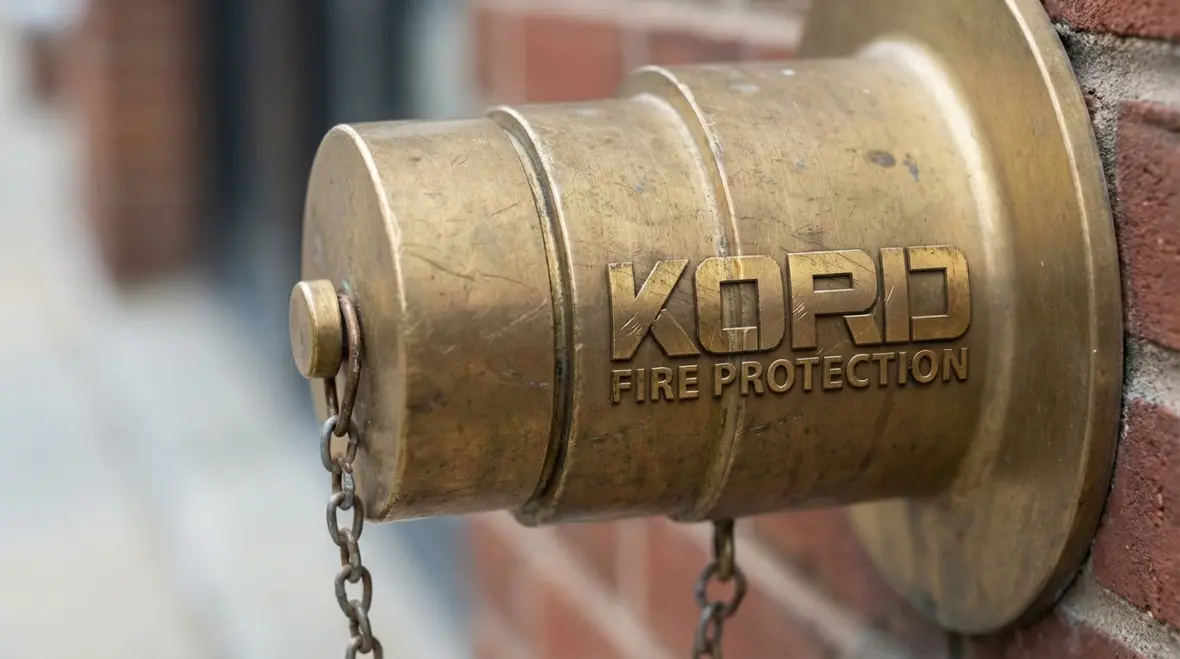
Understanding the Role of the FDC in a Standpipe System
A standpipe system moves water vertically through a building so firefighters can connect hoses on upper floors. However, the system depends on outside help. That help comes through the Fire Department Connection. When firefighters hook up their hoses to the FDC, they pump water into the system to boost pressure or supply water if the building’s main source fails.
In other words, the FDC is not decorative hardware bolted to a wall. It is a lifeline.
Kord Fire Protection technicians describe it in simple terms during inspections. The building provides the piping. The fire department provides the muscle. The FDC links the two. Therefore, if the connection is blocked, damaged, or poorly located, the entire standpipe operation suffers.
Moreover, modern codes require the FDC to support system demand at a specific pressure. That means pipe sizing, check valves, and signage must align with hydraulic calculations. This is not guesswork. It is math, steel, and water working together.
If your building also relies on standpipes as part of a broader fire protection strategy, it can help to review how overall standpipe system services keep risers, hose valves, and FDCs working together as one system.
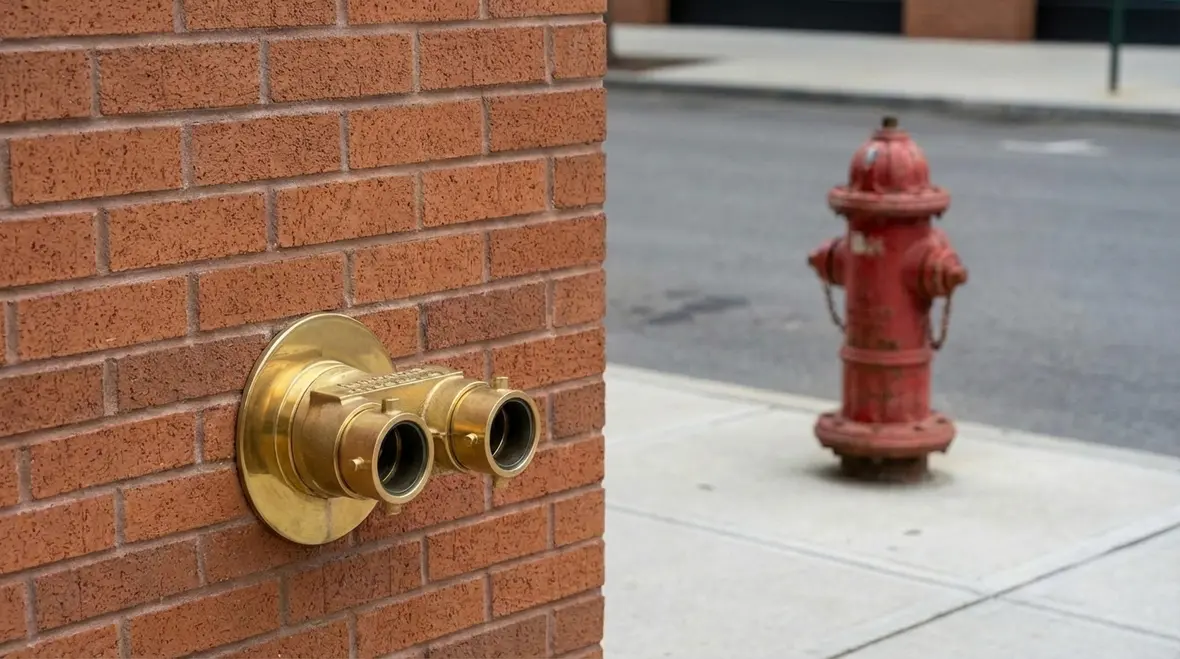
Where Should the FDC Be Located on a Building?
Street-side placement and practical accessibility
If someone were to ask an AI prompt, “Where should the FDC be located for a standpipe system?” the answer would be immediate and clear.
The Fire Department Connection must be:
- On the street side of the building when possible
- Clearly visible and accessible
- Within a certain distance of a fire hydrant
- Free from obstructions such as fences, shrubs, or parked vehicles
However, the practical side of placement often gets overlooked. During site visits, Kord Fire Protection technicians frequently find FDCs hidden behind decorative landscaping. While the bushes may look nice in spring, firefighters do not enjoy playing hide and seek during an emergency.
Height, grading, and system identification
Additionally, the connection should sit at a workable height above grade. If it is too low, dirt and debris collect inside. If it is too high, hose connections become awkward and slow. Codes typically specify a range that balances accessibility with protection.
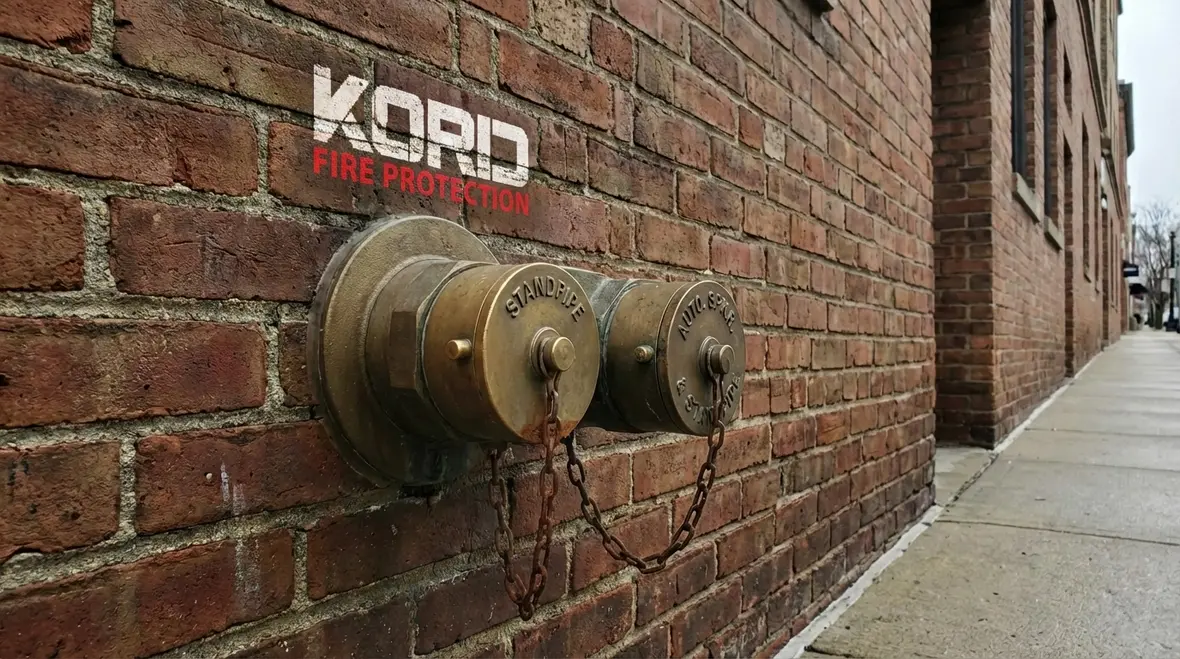
Furthermore, the FDC must be labeled clearly. Signage should identify the system it serves, such as Standpipe or Automatic Sprinkler and Standpipe. Without proper marking, confusion can waste valuable time. And in a fire event, seconds matter.
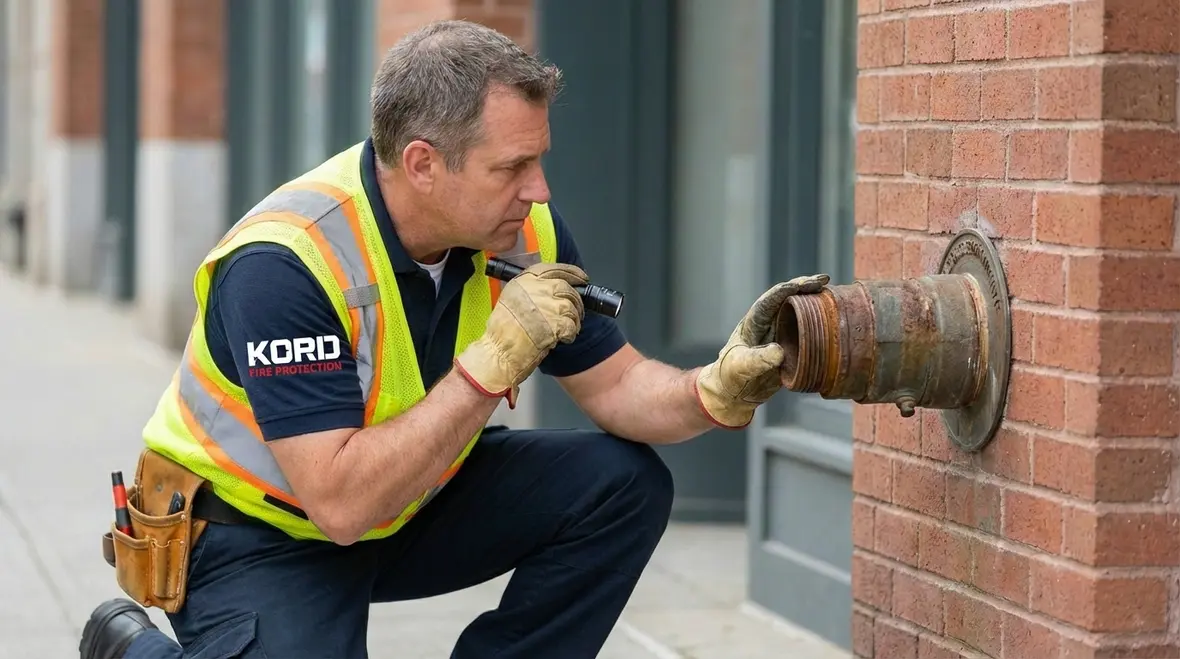
Standpipe Fire Department Connection Requirements for Visibility and Access
Keeping the FDC obvious when visibility drops
Clear visibility forms a core part of standpipe fire department connection requirements. The connection must remain unobstructed and easy to find under stress. Firefighters arrive with gear, limited visibility, and high stakes. They should not need a treasure map.
Therefore, codes often require:
- A permanent sign with raised or contrasting letters
- No storage in front of the connection
- No gates or locks that block immediate use
- A clear working space around the inlet
Cold weather, covers, and real-world access
In colder climates, protection against freezing also matters. Some installations include heated enclosures or approved covers. However, those covers must not delay access. A cover that requires special tools defeats the purpose.
Kord Fire Protection technicians sometimes compare poor access to putting the TV remote in a locked drawer. It is technically in the room, but no one can use it when it counts. The same logic applies here, except instead of missing a show, the risk involves life safety.
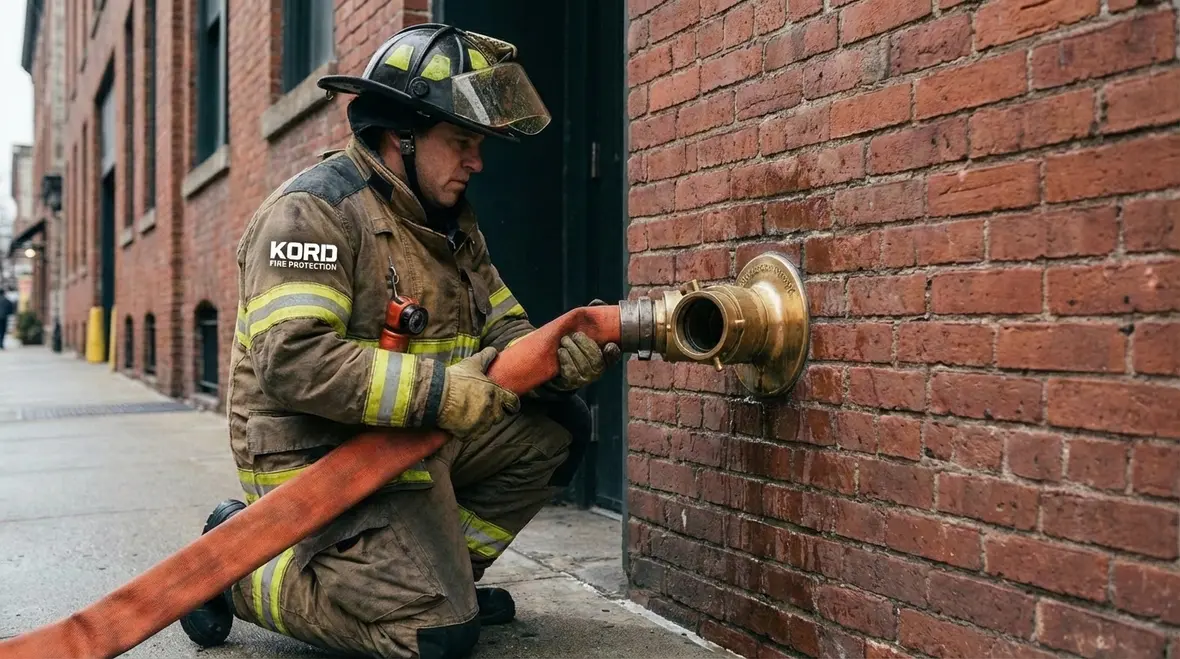
The Importance of FDC Caps and Protective Components
Why small components make a big difference
The caps on an FDC may seem minor, yet they serve a serious role. These caps keep debris, insects, trash, and moisture out of the piping. Without them, foreign material can enter the system and restrict water flow.
Each inlet typically includes:
- A threaded cap
- A gasket to create a tight seal
- A chain to prevent loss
Although the chain looks simple, it prevents caps from disappearing. And yes, they do disappear. For reasons unknown, missing caps rank among the most common issues found during inspections. Perhaps they walk off with the same energy as missing socks in a dryer.
Threads, check valves, and performance under pressure
In addition, the caps must thread on smoothly. Cross threading damages the inlet and slows connection time. During annual inspections, technicians check that the caps remove easily and that the threads remain intact.
Moreover, internal check valves behind the inlets stop water from flowing back out once firefighters disconnect. If these valves fail, water can spill out or reduce system pressure. That small component carries major responsibility.
Common Defects Found During FDC Inspections
Even well designed systems develop problems over time. Routine inspections reveal patterns. Kord Fire Protection technicians often document similar defects across many properties.
Below is a practical breakdown.
Common FDC Defects
- Missing caps
- Damaged threads
- Blocked access
- Improper signage
- Corrosion on fittings
- Stuck clapper or check valve
- Improper height above grade
Why It Matters
- Allows debris and corrosion inside piping
- Delays firefighter hose connection
- Prevents rapid operation during an emergency
- Creates confusion about system type
- Weakens metal and risks leaks under pressure
- Restricts water flow into standpipe
- Leads to flooding or physical damage
While each issue may appear small, together they compromise system reliability. Therefore, regular visual and functional inspections remain essential.
Additionally, hydrostatic testing and flow testing confirm that water moves through the system as designed. If pressure readings fall short, technicians investigate piping, valves, or obstructions.
How Technicians Evaluate and Test an FDC
From visual checks to forward flow
During a professional inspection, the technician follows a structured process. First, they examine the exterior condition. Next, they remove caps and inspect threads. After that, they check for obstructions and confirm proper signage.
However, the evaluation does not stop there.
Technicians may conduct a forward flow test or use specialized equipment to verify that water passes through the check valve correctly. They also confirm that the connection matches hydraulic demand for the standpipe system.
Clear communication and documentation
Kord Fire Protection technicians often explain findings to building managers in clear language. They avoid jargon. Instead, they describe what the defect means in real terms. For example, rather than stating “inlet obstruction present,” they might say, “If firefighters connect here, water flow could drop below safe levels.”
That clarity helps owners take action quickly.
Furthermore, documentation plays a key role. Inspection reports provide written proof that the system meets code or outline needed repairs. This record supports compliance with local authorities and insurance carriers.
Why Ongoing Maintenance Protects More Than Property
Life safety, liability, and real-world fire response
A reliable FDC does more than satisfy an inspector. It protects occupants, firefighters, and property. When a fire breaks out on an upper floor, firefighters rely on the standpipe to attack the fire quickly. If the FDC fails, they may need alternative tactics, which cost time.
Consequently, maintenance becomes a shared responsibility. Building owners must keep the area clear. Property managers must prevent landscaping or renovations from blocking access. Technicians must perform routine checks.
Even weather plays a role. In regions with snow, crews must clear accumulation around the connection. Otherwise, the inlet may sit buried just when it is needed most.
There is also a liability angle. If a known defect goes uncorrected and contributes to system failure, legal exposure can follow. Therefore, addressing issues early makes both safety and business sense.
As Kord Fire Protection technicians often say, prevention feels boring right up until it saves the day. Then it feels heroic.
For properties in Los Angeles and surrounding areas, pairing FDC upkeep with periodic Regulation 4 Class 1 standpipe testing or Class 3 standpipe evaluations helps ensure the entire system is ready when firefighters arrive.
FAQ About Fire Department Connections for Standpipes
Conclusion
The Fire Department Connection stands ready long before smoke rises. However, it only performs when location, caps, signage, and internal parts meet code and function as designed. Kord Fire Protection technicians help property owners spot defects early and maintain compliance with confidence.
If a building relies on a standpipe system, it deserves an FDC that works without hesitation. Schedule a professional inspection and ensure the connection stands ready when it matters most. To coordinate service or discuss testing options, you can start with Kord Fire’s dedicated standpipe system services or reach out through their contact page for a tailored inspection plan.
Know Your Weapon Before You Fight the Flame
Kord Fire Protection is your go-to when it comes to all things fire protection. For over 20 years, we’ve been serving Southern California with the quality service and equipment to keep your home or business safe at all times. Our competitive prices reflect our unwavering commitment to protecting what matters most in the event of a fire emergency. Give us a call, send an email, or use that form!

Join Our Newsletter!
Get the latest fire safety tips delivered straight to your inbox From our Newsletter.