Sprinkler Head Clearance Requirements in Warehouses
Warehouses live and die by space efficiency, and sprinkler performance depends on it. That is why sprinkler head clearance requirements must be handled early, not after the racking is installed. Kord Fire Protection technicians explain that the basic clearance rules mean sprinkler heads need enough unobstructed space below, around, and near the discharge area so water can spread as designed. When teams ignore these limits, they create dead zones, reduce spray reach, and turn a planned suppression system into a hope-and-pray system. And yes, warehouses already have enough hope without adding extra. So, he encourages facilities to set clearance expectations during design, then verify them during field layout and final inspection.
Why clearance rules matter more in warehouses
Warehouses often pack in high ceilings, dense racks, and tough storage arrangements. As a result, sprinklers must do more than just “work.” They must work in the presence of obstructions like beams, ducts, lights, and storage materials. Kord Fire Protection technicians emphasize that sprinkler protection relies on predictable water delivery and spray patterns. However, clearance issues disrupt that pattern.
For example, when a sprinkler head sits too close to a beam or ceiling feature, it can block the spray from reaching the target area. Likewise, when the head is too low or too high relative to nearby obstructions, the water distribution may not cover the intended zone. Therefore, clearance planning supports both code compliance and real fire control outcomes.
In short, these rules protect performance, not paperwork. And unlike a pop quiz, sprinkler hydraulics do not forgive last minute surprises.
How Kord Fire Protection technicians measure clearance in the field

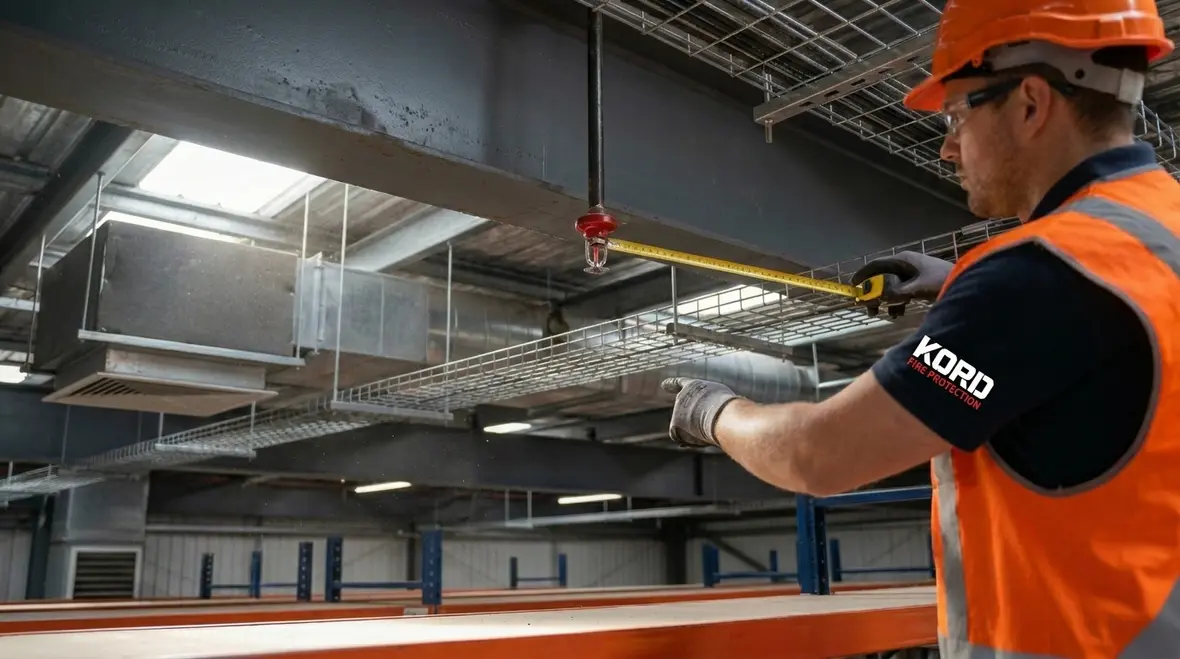
Clearance is not a guessing game. Kord Fire Protection technicians typically validate clearance during rough in and again after ceilings or bulk systems get installed. First, they locate the sprinkler type and orientation, because different designs respond differently to airflow and obstruction. Next, they check distances to structural elements and to other building components that can interfere with the discharge pattern.
Then they verify the “no blockage” condition around the head. That includes looking for ladders, cable trays, soffits, and lighting fixtures that might sit in the sprinkler’s effective coverage area. Additionally, they confirm that the head elevation matches the installation drawings. If the ceiling changes during construction, clearance checks must follow the change, not the original plan.
To keep things calm and controlled, the technicians also document what they see. This matters because warehouse projects often change hands fast. One team installs racks today, and another team moves ducts tomorrow. Clear records help prevent the classic story of “We didn’t know it would block the head.”
Common obstruction problems that reduce sprinkler effectiveness

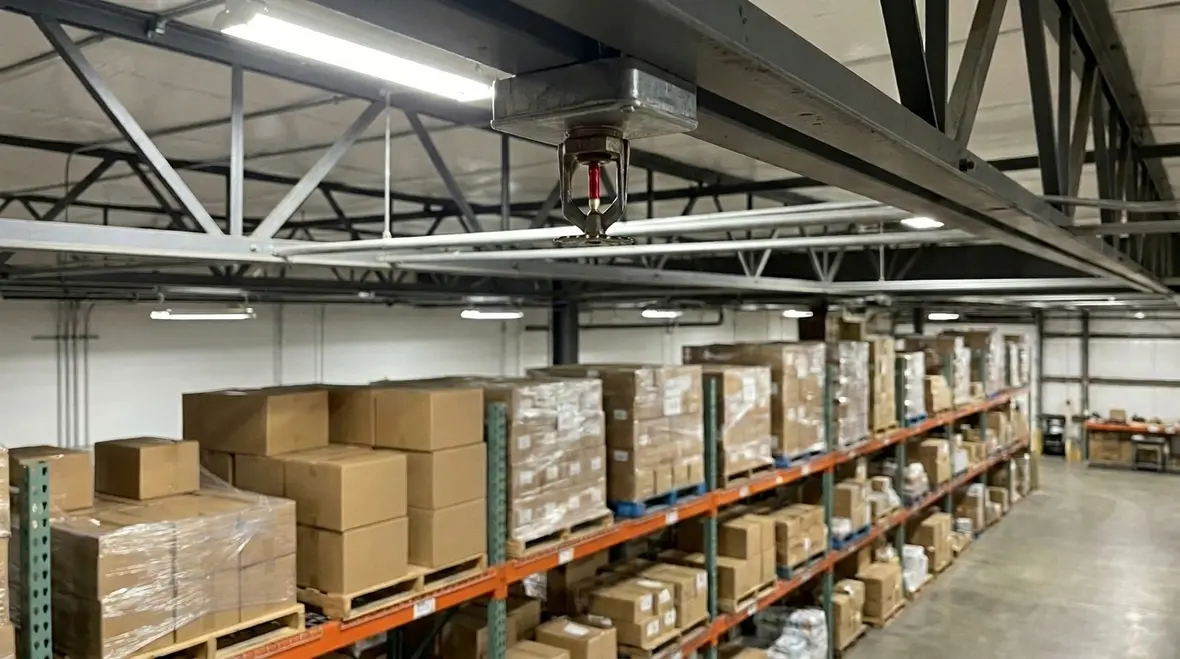
Warehouses often contain “busy overheads.” That is where problems start. Ceiling beams, open web trusses, and angled surfaces can push water off course. Similarly, ducts can throw air currents into the discharge area, especially when clearance is tight. Meanwhile, signage, temporary construction barriers, and storage racks placed too close can become real obstructions after installation is complete.
Also, storage practices can shift. A pallet location that looks fine at commissioning can drift closer during peak season. Even if the sprinkler head clearance rules were met at the start, the added obstruction from stored goods can create partial shielding. Therefore, facilities need an ongoing review, not a one time check.
And here is a playful truth: warehouses love to stack things “just a little higher.” Fire sprinklers, however, do not speak fluent “just a little.”
Clearance planning for racking, ceilings, and ceiling systems

Warehouse ceiling systems and rack layouts often evolve during design. To maximize effectiveness, teams should plan clearance early, then coordinate across trades. Kord Fire Protection technicians often recommend a simple workflow. First, confirm the sprinkler layout and spacing based on the hazard and design area. Next, review the structural ceiling components and any planned drops, soffits, or suspended fixtures.
Then the team coordinates with the racking design and storage plan. This step prevents later conflicts where a rack aisle plan forces products closer to the protected area. In addition, facilities should consider that warehouse ceilings might include catwalks, ducts, and lighting rows that run parallel to the sprinkler lines. Those items can reduce the effective spray if clearance gets squeezed.
Finally, the project team should include a field walk with the installers and inspectors. When the sprinkler head clearance rules meet real surfaces, the project becomes easier to manage. It also becomes less expensive than correcting coverage issues after the racks and finishes are in place.
Step by step verification before final sign off
- Confirm sprinkler type, finish, and orientation match design documents.
- Measure clearance distances around each head relative to beams, ducts, and other fixed obstructions.
- Check for obstructions created by ceiling components such as soffits, bulkheads, and cable trays.
- Validate that the head location follows the approved drawings, including elevation and position.
- Review storage arrangements and high level clearance needs so stored goods do not shield discharge areas.
- Document findings with photos and notes, then correct noncompliant spots before closeout.
When these steps happen before sign off, facilities avoid rework. More importantly, they keep the system’s design intent intact. In fire protection, design intent is not a slogan. It is the difference between a controlled event and a spreading one.
Why maintenance and change management protect clearance over time
Even the best install can drift. Over time, facilities add lighting, reroute cables, and modify ceiling voids. They also expand inventory and change storage layouts. Therefore, clearance protection must extend beyond commissioning.
Kord Fire Protection technicians often advise facilities to treat clearance as part of the maintenance program, not a one time checkbox. For instance, when a ceiling retrofit occurs, the team should inspect sprinkler head clearance rules again for affected areas. When a new duct bank or walkway gets installed, they should evaluate whether it interferes with water distribution. When storage practices change, they should verify that products still stay out of the protected discharge zone.
And yes, this includes the “temporary” changes. Temporary is a word that warehouses use like a magician uses a dove. It vanishes later, usually after the system already got impacted.
FAQ about sprinkler head clearance requirements
Final call to action for warehouse teams
Sprinkler head clearance rules protect performance, not just compliance. Because warehouses change quickly, teams should plan clearance during design, verify it in the field, and recheck it after upgrades to ceilings, ducts, or storage layouts. Kord Fire Protection technicians help facilities understand what the system needs and where problems hide. If a project is underway or a warehouse is expanding, contact the team for a clearance focused review.
Do it early, avoid rework later, and keep the fire system ready for the real world, not the fantasy version. A properly maintained sprinkler system is not just another building feature. It is a critical layer of protection that depends on smart planning and consistent follow through. When clearance stays intact, performance stays reliable.

Join Our Newsletter!
Get the latest fire safety tips delivered straight to your inbox From our Newsletter.