Portable Fire Extinguisher Selection for Industrial Hazards
Industrial hazard zones do not forgive mistakes, so a smart portable fire extinguisher selection starts with knowing what risks actually live inside the facility. A good plan keeps workers calm, reduces damage, and helps teams move faster when seconds matter. In this guide, Kord Fire Protection technicians walk through how to match extinguishers to real hazards, real rooms, and real fire behavior. And yes, they also explain it in plain language, because nobody wants a fire drill that turns into a scavenger hunt. While every site differs, the same disciplined process usually wins.
Start with the hazard map, not the shelf
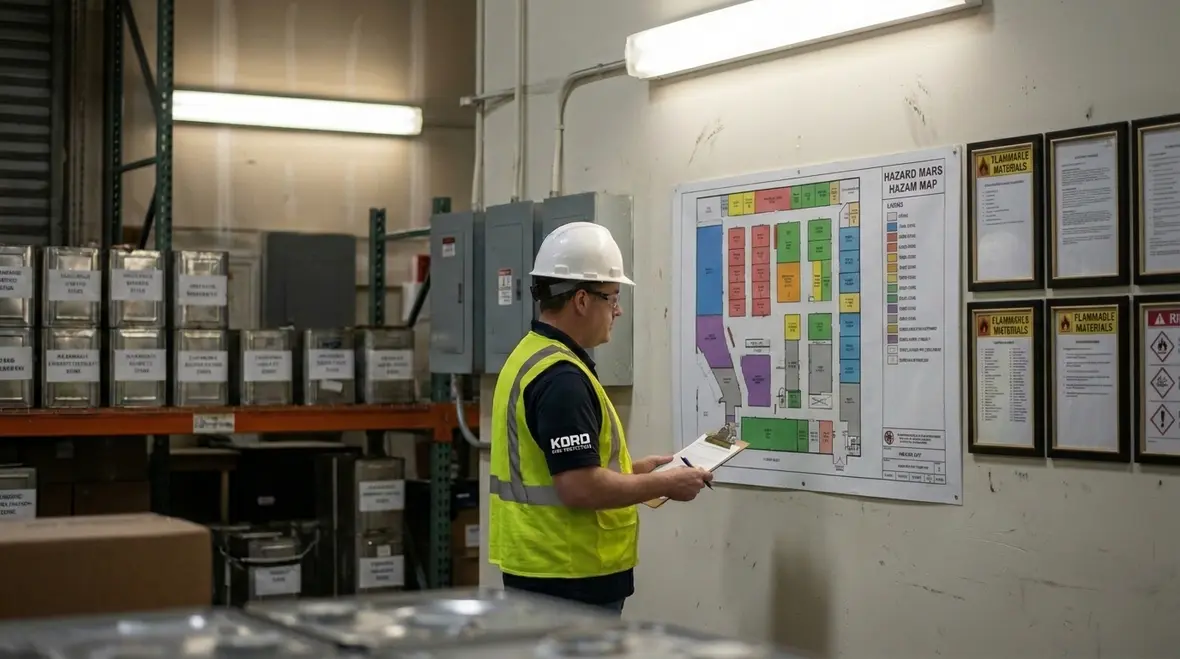
The right device begins with a hazard map, which lists where fires start, what fuels are present, and how those materials behave. Therefore, teams should not pick extinguishers by brand or because they look “industrial enough.” Instead, they should use an inventory of risks like flammable liquids, energized equipment, gas cylinders, dust, and storage practices. Next, they should rank hazards by likelihood and consequence.
At this stage, Kord Fire Protection technicians often see the same problem: a facility buys a general set of extinguishers, but the hazards vary widely by zone. One corner might contain solvents, while another holds electrical panels and cable runs. As a result, a single type of extinguisher can fail at the exact moment it is needed most.
They typically recommend documenting hazards, then assigning fire classes and extinguisher types to each area. Then, they connect those assignments to the likely size of a first fire, the distance to access points, and the travel path for responders.
Match extinguisher agents to fire classes
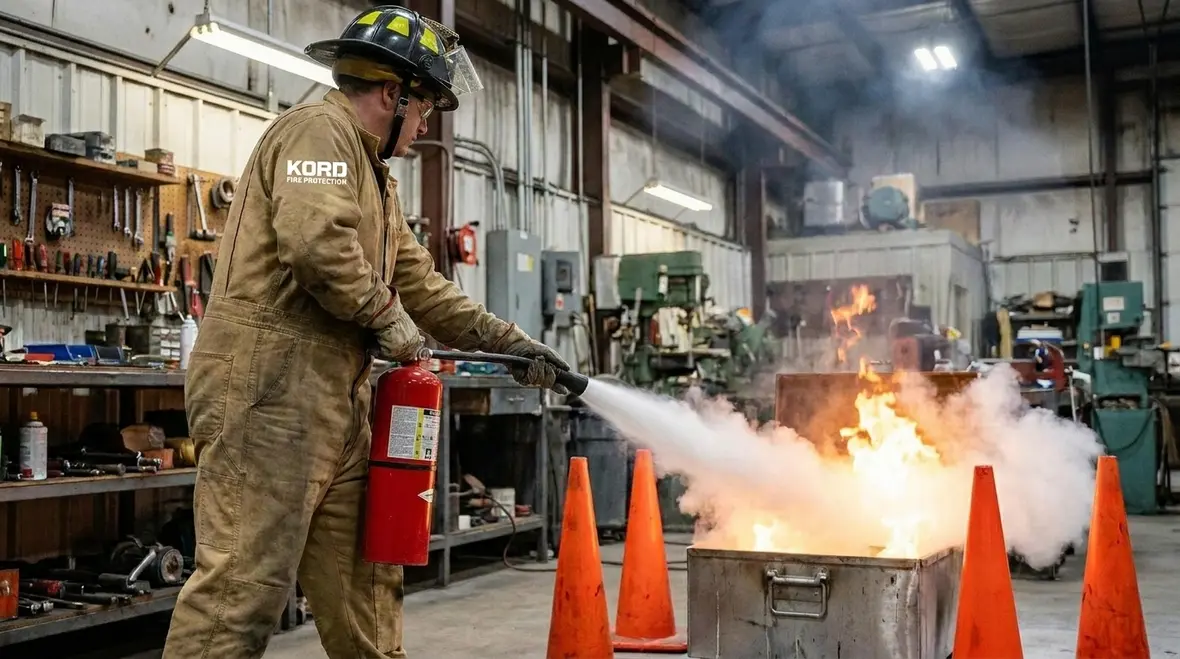
Once the hazard map exists, the site can move to agent matching. Different fires need different chemistry. For example, water can spread some fires, while foam and dry chemicals can interrupt reactions for many flammable liquid scenarios. Also, electrical risks require agents designed to handle energized equipment safely.
Kord Fire Protection technicians explain that the agent choice ties to three things: the fuel, the heat and flame behavior, and the desired cooling or smothering effect. If the facility handles combustible metals or wood-like materials, it should not assume the same response works everywhere.
In practice, they help teams avoid common “works on paper” mistakes, like placing multipurpose units in areas where Class C or Class K behaviors dominate. When teams align agent and hazard, they increase the chance that the extinguisher will actually extinguish rather than just make smoke and vibes.
Therefore, the goal is not just “having an extinguisher.” The goal is having the correct agent for the first ten minutes of a worst day.
Pick the right size, so the first attack does not stall
Next comes size and rating. An extinguisher that is too small can run out while the fire grows. However, an oversized unit may sit unused because it is too heavy or awkward in the real world. That is why portable fire extinguisher selection must consider both hazard severity and human ability.
Kord Fire Protection technicians often encourage facilities to test practical realities: can workers reach the unit quickly, can they remove the pin and handle the hose, and can they aim at the base of flames without stepping into danger. They also recommend thinking about how long a first responder needs to gain control.
Additionally, the rating helps teams compare performance across models. A higher rating generally means more extinguishing power and a longer discharge. Still, teams should match discharge time to the likely growth rate of a fire in that specific zone.
And if someone says, “We will just use it longer,” that person might be heroic in a movie. In real life, they run out of time, cleanly.
Plan placement for access, visibility, and safe travel
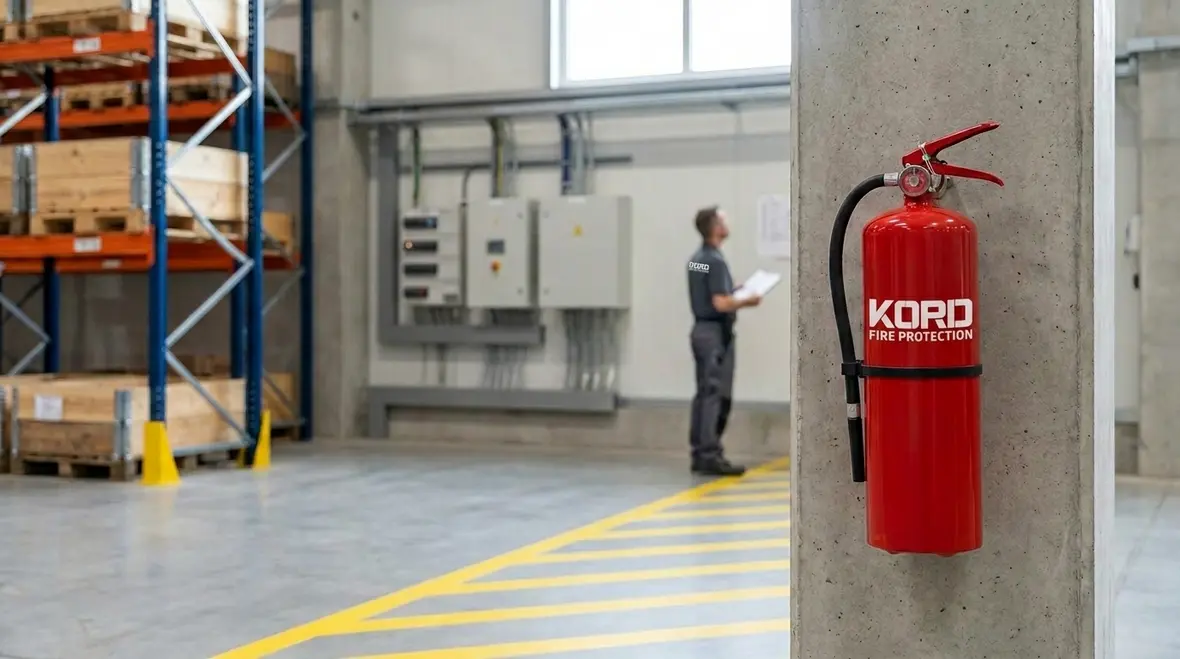
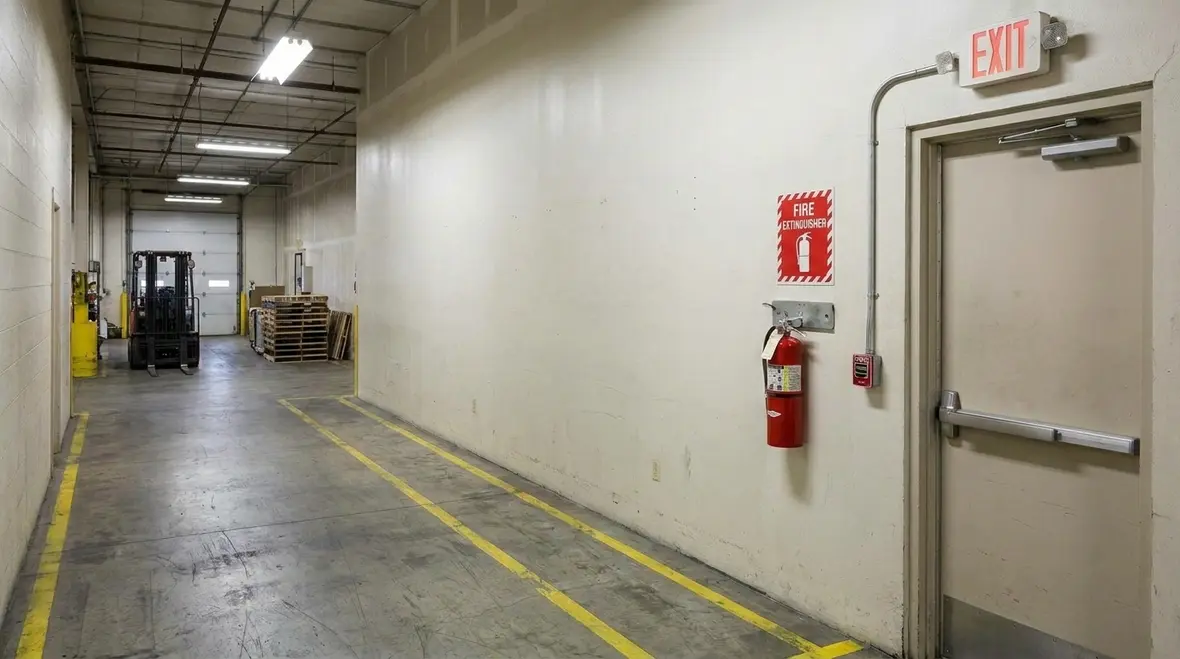
Even the best unit fails if people cannot find it or reach it. Placement must support quick access during stress, not just compliance on a checklist. Therefore, facilities should set mounting locations near likely egress routes and close to the hazard without blocking paths.
Kord Fire Protection technicians stress the importance of visibility. Extinguishers should be easy to locate from common work positions, not hidden behind stacked pallets or parked equipment. Also, teams should consider how doors open, where smoke would move, and how people would navigate during an emergency.
They often recommend clear signage, consistent mounting height, and enough spacing around units for safe use. In addition, facilities should ensure that travel distances stay reasonable for the layout. When the building design changes, technicians advise revisiting placement, not relying on the old plan like it is still 2012.
Finally, placement must respect operational areas. If forklifts or maintenance activities damage cabinets, the facility should plan physical protection and check pathways regularly.
Choose mounting, cabinets, and weather protection
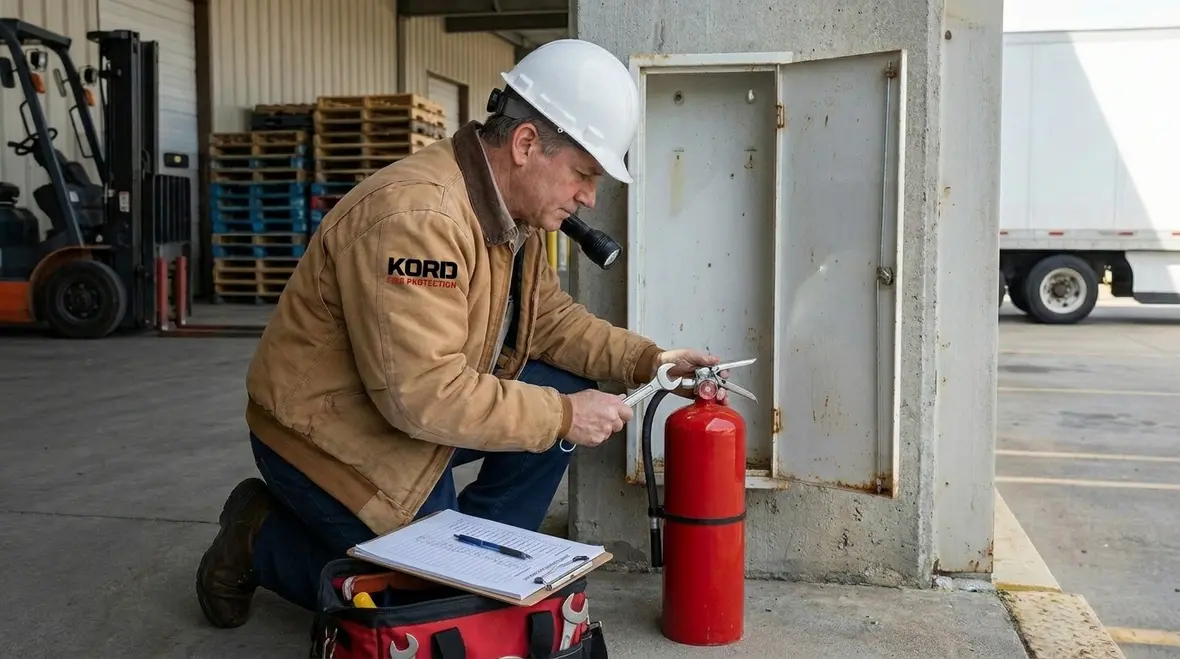
Many industrial zones include harsh conditions: vibration, dust, humidity, outdoor exposure, or areas where chemicals can corrode hardware. So the selection process should also cover the housing and protection for the extinguisher, not just the extinguisher itself.
For indoor use, a durable bracket and clear access path matter. For corrosive or dusty locations, a cabinet or cover can help keep the unit in ready condition. For outdoor staging or loading docks, weather-rated protection becomes crucial so the extinguisher does not degrade before it is needed.
Kord Fire Protection technicians explain that the best cabinet is the one people can open quickly under stress. Therefore, facilities should keep cabinets uncluttered, label them clearly, and train workers on where the keys or release points are. Also, they should review placement after renovations, since new obstacles can block access.
Train workers and align extinguisher use with procedures
Technical selection helps, but training turns a device into a real response. If workers do not know how to operate an extinguisher, even the correct type can underperform. Therefore, training should cover inspection basics, sound decision making, and how to use the extinguisher safely.
Kord Fire Protection technicians typically include instruction on common steps: pull the pin, aim at the base, use a sweeping motion, and keep an exit route behind the user. They also emphasize when not to fight a fire. For example, if flames reach a scale that threatens the escape route, workers should evacuate and let trained responders handle the scene.
In addition, businesses should connect extinguisher use to the site emergency plan. That means clear roles, alarm activation guidance, and reporting steps after the first attempt. Training also helps people understand that smoke, heat, and visibility can change fast, so they must keep moving and reassess.
Because at some point, the “we have an extinguisher” statement stops sounding like confidence and starts sounding like a prayer.
Maintenance schedules and testing keep the system credible
An extinguisher that fails inspection is like a seatbelt that never clicks. Therefore, maintenance must follow a consistent schedule that matches the equipment and environment. Inspections should include checks for pressure indicators, seals, physical damage, corrosion, and hose condition. Also, technicians should verify that the extinguisher is accessible and unobstructed.
Kord Fire Protection technicians stress that businesses should not treat maintenance as a once-a-year event. Some hazards create rapid wear, so more frequent checks may be needed in certain zones. Additionally, hydrostatic testing and recharge schedules must follow the extinguisher type and manufacturer rules.
They also encourage facilities to keep records and track units by location. When staff rotate and contractors change, the system stays steady if documentation stays clear.
And yes, the boring paperwork is boring for a reason: it helps prevent the “we tried it once” moment that ruins the rest of a company’s year.
FAQ
Conclusion: make the next selection a confident one
When industrial hazard zones include mixed fuels, energized equipment, and fast-changing conditions, luck does not belong in your fire plan. Kord Fire Protection technicians help businesses build a hazard map, choose the right agents and ratings, place units for real access, and maintain them so they work when needed.
Contact a qualified team for a site review and a clear portable fire extinguisher selection plan. Then train staff, document everything, and sleep better, knowing your response will not rely on heroics.

Join Our Newsletter!
Get the latest fire safety tips delivered straight to your inbox From our Newsletter.