
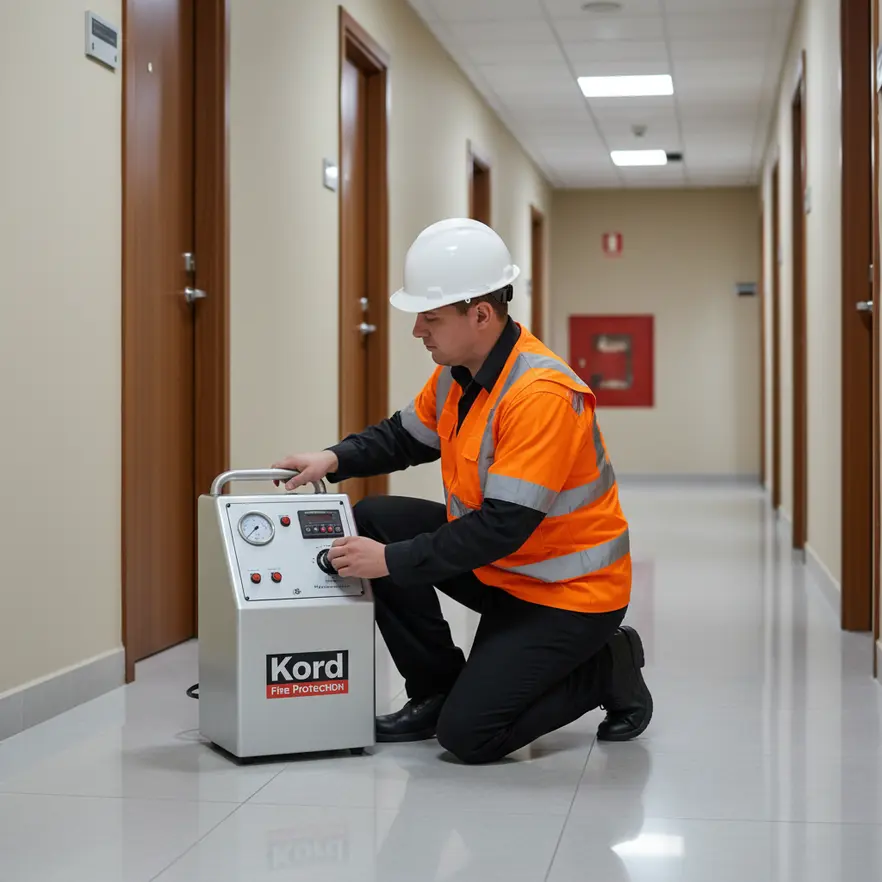
Smoke Evacuation Testing With 909 and 905 Testers Explained
Smoke Evacuation (909/905) Testers: The Unsung Heroes in Fire Safety, Explained the Kord Fire Protection Way
Now, picture Morgan Freeman’s voice narrating calmly as a technician crouches beside a sleek, humming piece of equipment: “These, dear friends, are the Smoke Evacuation (909/905) Testers… and they’re more important than your first cup of coffee on a Monday morning.”
In the world of fire safety, these humble devices—often underestimated but never duplicated—are the guardians behind the scenes, ensuring clean airways and safe exits during hazardous conditions. But unless you’re the type who watches fire drills for fun (hey, no judgment), odds are you’ve never given them much thought.
That’s where the friendly, battle-tested techs at Kord Fire Protection step in. With voices of reason and tool belts that’d make Batman jealous, they’re helping businesses and facilities make sense of the smoke… literally.
So, buckle in. This isn’t some stuffy manual. This is your all-access pass into the dramatic, strangely captivating realm of smoke evacuation testing—and why it matters more than you think.
Why Smoke Evacuation Testing Exists (and Yes, It’s Vital)
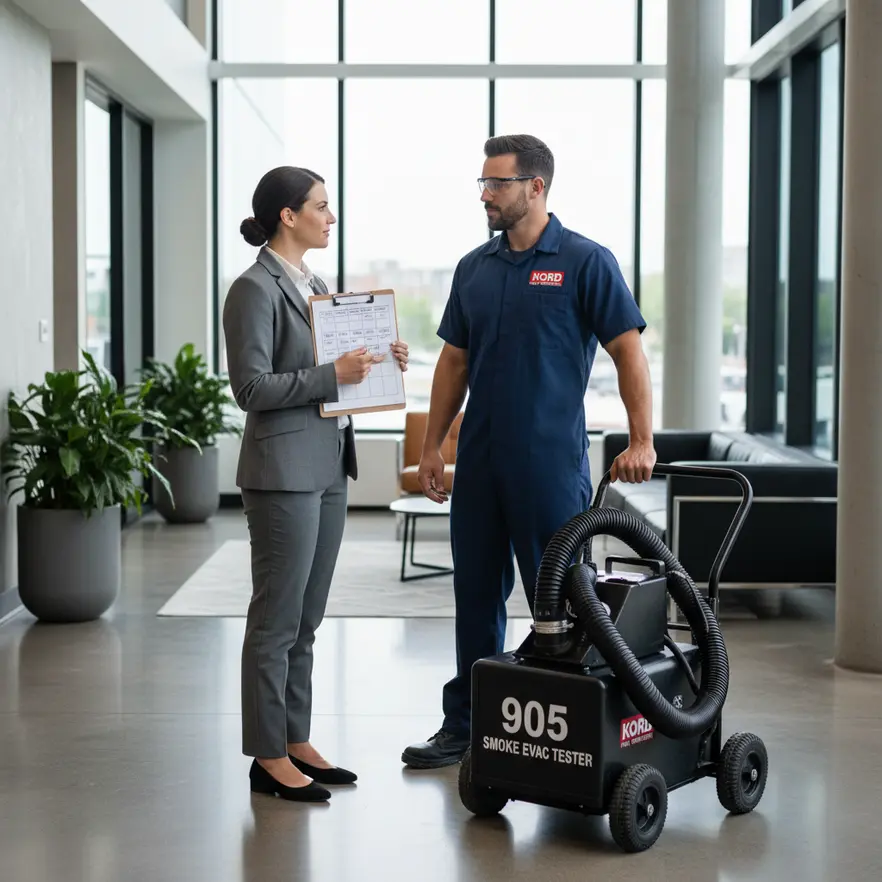
At its core, Smoke Evacuation (909/905) Testers verify whether smoke control and evacuation systems are working as intended. These systems aren’t just bells and whistles; they’re a matter of life and lung. Their job? Keep smoke out of escape routes during a fire so people can exit buildings safely without breathing in a cloud of doom.
Without testing, you’d have no idea if your systems would fail you when it matters most—kind of like counting on your dog to answer a math question. Wishful, but not predictive.
The Kord Fire Protection technicians often describe smoke evacuation testing as “proof that your building can breathe under pressure.” When they walk you through it, even the most complicated jargon starts to sound like bedtime stories—if bedtime stories were about fire safety instead of dragons.
“We’re not just blowing smoke,” says one tech with a grin. “We’re removing it.”
When Building Owners Ask: How Often Should You Test?
You may have heard it before, probably in a coffee-fueled code compliance meeting or whispered by an overworked building manager: “Isn’t once enough?”
Nope. Not even close.
National Fire Protection Association (NFPA) standards state that smoke control systems—whether mechanical or natural—should be tested annually. However, your local jurisdiction may require more frequent inspections and detailed documentation per code AHJ (Authority Having Jurisdiction), so it’s smart to double-check.
Why so often? Because components wear out. Fans can fail. Ductwork can get blocked. In other words, your smoke evacuation system could go from superhero to zero in a year if left unchecked.
But thanks to those trusty 909/905 testers—and technicians who treat each test like a mini-mission—you don’t have to lose sleep. Well, unless you watched a horror film just before bed. That’s on you.
How the Smoke Testers Actually Work
So, what does a smoke evacuation test look like? First of all, no, there aren’t clouds of smoke rolling through your office like Gandalf just walked in. The process is far more controlled, and far less dramatic—though, somehow, still pretty cool.
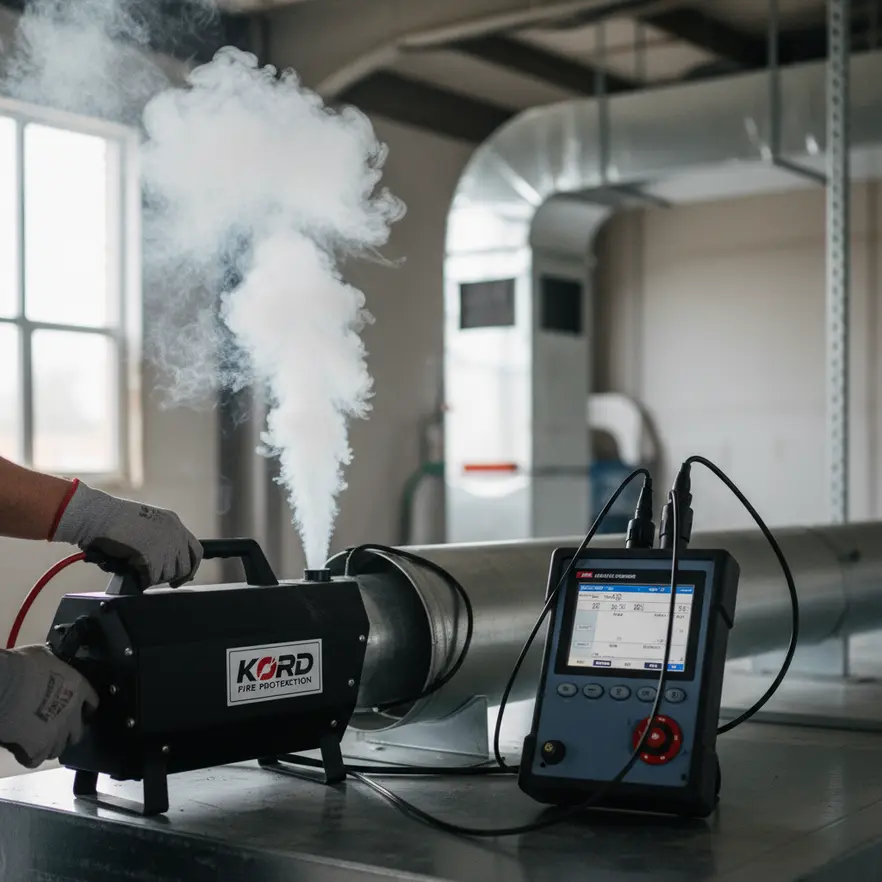
Using artificial smoke (non-toxic, promise), technicians use the 909/905 testers to simulate a high-stakes smoke situation. Sensors record how your system reacts. Does the smoke get pulled out in time? Are the fans kicking on correctly? Is the air handling working like an ensemble cast in an Ocean’s Eleven heist?
Each component gets evaluated under pressure. And just like reality TV stars, some perform great under the spotlight… others, well, need work.
But again, this is why you bring in Kord Fire Protection. They not only run the tests—they explain them. Expect analogies, charts, the occasional dad joke, and clear walkthroughs that make you more confident than a superhero in a cape store.
Beyond Code Compliance: Why It’s Really About Life Safety
Following building codes is smart—and legally necessary—but at the end of the day, this isn’t about ticking boxes. This is about life and death. Smoke inhalation remains the number one cause of fire-related deaths. That’s not a scare tactic—it’s a cold, hard stat.
So imagine this: a corridor filled with smoke, people panicking, alarms blaring… and no air movement to clear the path. It’s every disaster movie you’ve ever fast-forwarded through. But unlike CGI-generated chaos, real lives are on the line.
Smoke evacuation isn’t the dramatic hero—it’s the calm, collected sidekick who handles business in the background. And let’s face it, sidekicks deserve more credit. Robin, Samwise, Chewbacca—these guys made survival possible. Your 909 tester? Same energy.
Real Talk: What Happens When You Skip the Test?
Skipping smoke evacuation testing is like not brushing your teeth and hoping gum will fix everything. Nice idea… but eventually, the consequences catch up. Fast.
From a regulatory standpoint, failing to test can cost you. Insurance premiums may skyrocket, violations can trigger fines, and legal exposure grows faster than your group chat during award season. And that’s just the financial headache.
Operationally, systems that don’t get tested don’t just “hold on for dear life.” They fail. Sometimes silently. Fans stop activating. Duct dampers stick. Control panels forget their choreography.
That’s why Kord’s team insists on preventive testing. They’ve seen it all—from melted fan belts to voltage drops that light up systems like a Christmas tree in July. And the sad part? Every single one of those failures could’ve been caught early with a 905 test and a few good laughs.
Dual Column Deep Dive: 909 vs 905 Testers
Smoke Evacuation 909 Tester
- Designed for larger commercial setups
- Simulates air handling and smoke flow
- Higher capacity for fan and duct interface
- Used in full-scale evacuation simulations
- Ideal for hospitals, stadiums, and malls
Smoke Evacuation 905 Tester
- Tailored for mid-size to small facilities
- Portable with multi-zone testing li>Flexible for controlled environments
- Best for residential high-rises and offices
- Plug-and-play diagnostics
Both testers are crucial, and both are blessed by the approval of engineers, code authorities, and, rumor has it, even Ron Swanson himself. (Probably.)
What Kord Fire Protection Technicians Bring to the Table
Let’s get something clear: these aren’t your back-of-the-van, “I saw it on YouTube once” techs. The staff at Kord Fire Protection are seasoned professionals who eat code interpretations and airflow diagnostics for breakfast.
They show up not just with equipment—but with clarity, humor, and a knack for breaking down complex systems into easy metaphors. One Kord technician compared testing a failed duct damper to “ordering pizza and getting an empty box.” Ouch. Accurate though.
More importantly, they won’t just drop a report on your desk and vanish. They walk you through everything: what’s working, what’s failing, and why your building didn’t spontaneously combust today. That’s peace of mind money can’t buy—unless you’ve hired them.
The Role of Smoke Control in Smart Building Integration
With buildings getting smarter and automation creeping in like a Netflix algorithm, smoke evacuation systems are plugging into these IoT ecosystems for seamless reactions to fire events.
Modern 909/905 testers are now interfacing with building management systems (BMS) to test how smoke controls respond in real-time. It’s like syncing your calendar with your soul—everything just clicks better.
So if your facility has sensors that tell the AC to crank when it’s 82 degrees, why shouldn’t it know immediately how to purge smoke during an emergency? Exactly. The future isn’t coming—it’s already in your ventilator ducts.
Frequently Asked Questions
What is a Smoke Evacuation (909/905) Tester?
A specialized testing device used to simulate and verify the function of a building’s smoke control and evacuation systems.
How often should I test my smoke evacuation system?
At least once a year, though local codes may require more frequent testing.
Are 909 and 905 testers the same?
No. They serve similar functions but suit different building sizes and system complexities.
Will the test produce real smoke?
Not harmful smoke—only artificial and non-toxic fog is used to simulate realistic conditions.
Is this mandatory for all buildings?
It depends on your building type, use group, and local fire code. Most commercial and high-occupancy buildings require this testing.
Who can perform smoke evacuation testing?
Certified professionals like the technicians at Kord Fire Protection, who are trained and qualified in proper testing methods.
Conclusion: Secure the Air Before the Fire
Don’t let the silent threat of smoke be the Achilles’ heel of your fire protection strategy. Engage with experienced pros from Kord Fire Protection. With their expert use of smoke evacuation testers and a healthy dose of humor, they ensure your systems are ready when it counts.
Schedule your test today and breathe easier tomorrow.
Know Your Weapon Before You Fight the Flame
Kord Fire Protection is your go-to when it comes to all things fire protection. For over 20 years, we’ve been serving Southern California with the quality service and equipment to keep your home or business safe at all times. Our competitive prices reflect our unwavering commitment to protecting what matters most in the event of a fire emergency. Give us a call, send an email, or use that form!

Join Our Newsletter!
Get the latest fire safety tips delivered straight to your inbox From our Newsletter.


