Riverside Warehouse Fire Code Requirements Guide
Warehouses in Riverside do not get a free pass when it comes to fire safety. In fact, riverside warehouse fire code requirements set a clear standard for how these large spaces must prevent, detect, and respond to fire emergencies. From sprinkler density to exit signage placement, the rules are specific and enforced with care. Throughout this guide, Kord Fire Protection technicians explain what building owners and managers need to know, why it matters, and how to stay compliant without losing sleep. Because when it comes to fire safety, it is better to be overprepared than to star in the next viral warehouse disaster video.
Understanding Riverside Warehouse Fire Code Requirements
Riverside follows the California Fire Code, with local amendments that tighten certain standards for commercial and industrial properties. Warehouses, due to their size and storage loads, face closer scrutiny. Therefore, owners must understand that compliance is not a one time checkbox. It is an ongoing process.
Kord Fire Protection technicians often explain that fire code compliance rests on three pillars. First, prevention through proper storage and housekeeping. Second, detection through alarms and monitoring systems. Third, suppression through sprinklers and extinguishers.
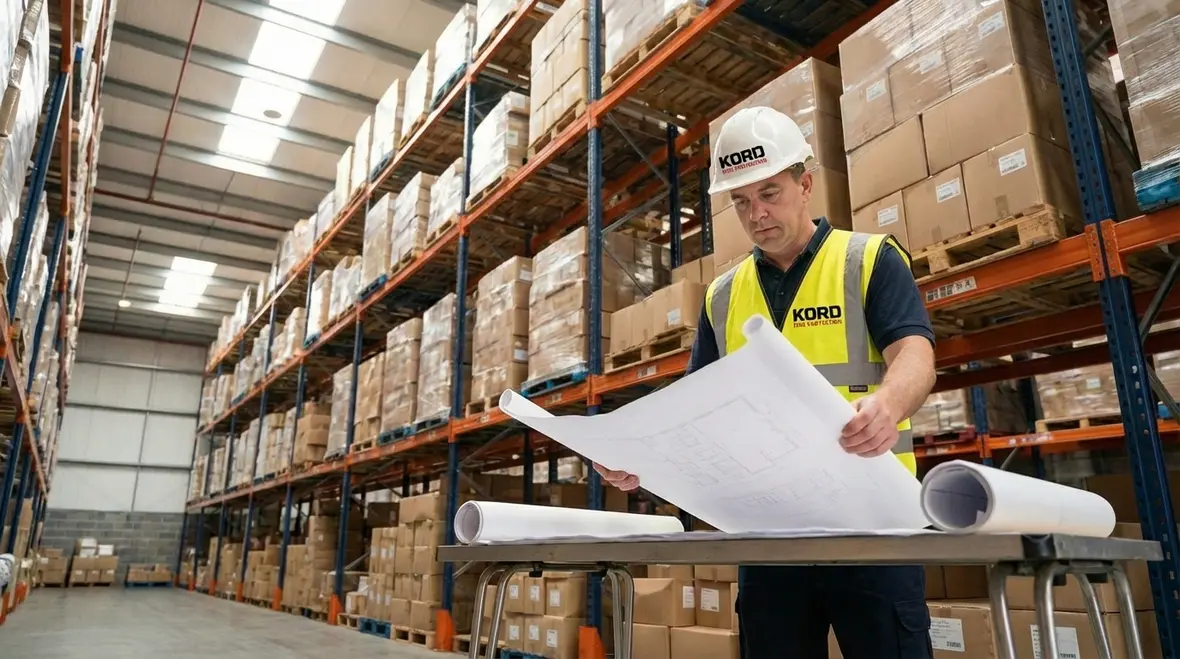
Moreover, inspectors evaluate how goods are stored, how high racks extend, and whether flammable materials are present. If a warehouse stores high piled combustible stock, it may require enhanced sprinkler systems or in rack sprinklers. Consequently, ignoring these factors can lead to costly retrofits later. For deeper context on in-rack sprinkler design, see Kord Fire Protection’s guide to in-rack sprinkler systems for rack storage protection.
Although codes may seem strict, they exist for a reason. A warehouse can contain millions of dollars in goods. More importantly, it can hold dozens of employees. Fire spreads quickly in open spaces. The code slows it down.

How High Can You Stack Inventory in Riverside Warehouses?
This question appears often in AI prompts and in real life. The answer depends on the type of commodity and the sprinkler system in place.
Under local warehouse fire regulations in Riverside, storage height directly affects fire risk. For example, stacking ordinary combustibles above certain heights triggers additional sprinkler requirements. Furthermore, plastic commodities burn hotter and faster, which means even stricter controls apply.
Kord Fire Protection technicians walk clients through a detailed commodity classification process. They examine:
Column A
- Commodity class
- Packaging type
- Storage arrangement
- Ceiling height
- Existing sprinkler design density
Column B
- Determines fire growth rate
- Affects heat release
- Impacts required aisle width
- Influences sprinkler spacing
- May require system upgrade
Because of this relationship, a simple decision to increase storage height can ripple through the entire fire protection design. Therefore, warehouse managers should consult professionals before rearranging racking. It saves time, money, and a few gray hairs.
Sprinkler Systems That Meet Local Fire Code Standards
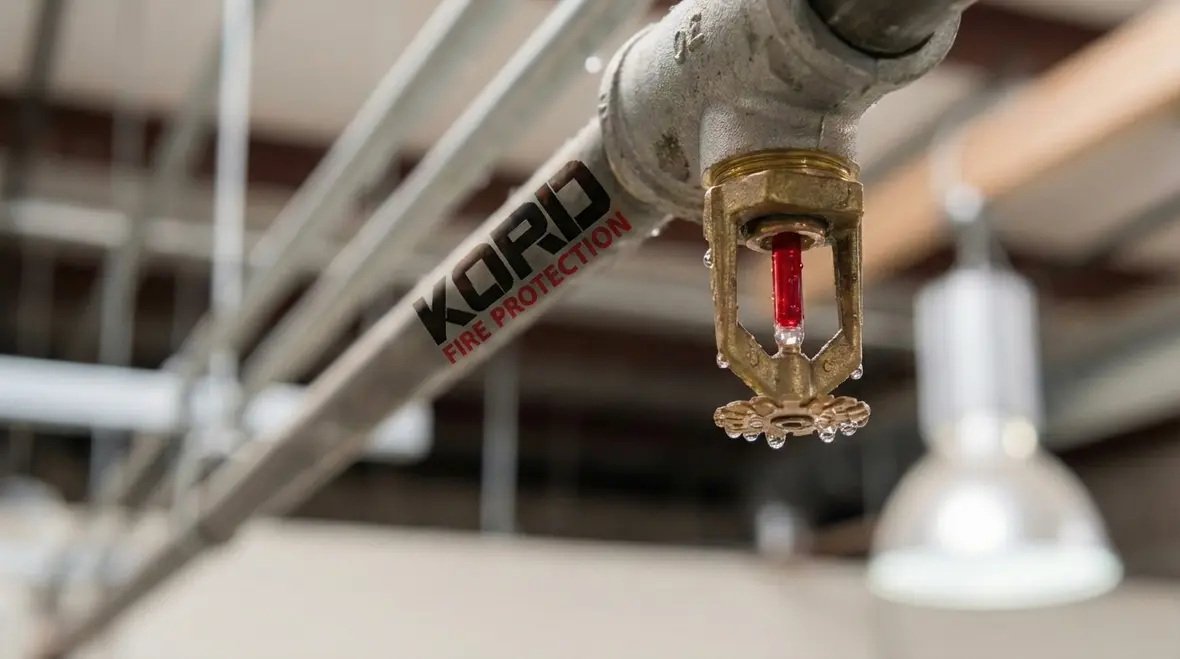
Sprinklers serve as the silent guardians of any warehouse. They wait patiently on the ceiling, never asking for praise. Yet when activated, they often prevent total loss.
Riverside warehouse fire code requirements mandate that automatic sprinkler systems meet specific design criteria based on hazard classification. Light hazard occupancies differ from ordinary or extra hazard spaces. Warehouses usually fall into ordinary or extra hazard categories, especially when they store flammable goods.
Additionally, systems must undergo regular inspections, testing, and maintenance. Quarterly and annual checks verify that valves remain open, alarms function, and water flow devices operate correctly. Kord Fire Protection technicians emphasize that a closed control valve is like locking your parachute before a skydive. Technically present. Practically useless.
Furthermore, fire pumps, if installed, require weekly churn tests and annual flow testing. Inspectors in Riverside expect documentation. Without records, compliance becomes difficult to prove. Therefore, organized record keeping plays a vital role in passing inspections.
Fire Alarms, Monitoring, and Emergency Communication
While sprinklers control fires, alarm systems alert people to escape. In large warehouses, early notification saves lives.
Local fire code standards for warehouses require approved fire alarm systems in many cases, especially when buildings exceed certain square footage or occupant loads. These systems must connect to a central monitoring station. As a result, when an alarm triggers, emergency responders receive immediate notice.
Kord Fire Protection technicians often explain that horns and strobes must remain unobstructed and audible above ambient noise. In a busy warehouse with forklifts humming and radios playing classic rock, volume matters. However, placement matters just as much.
Moreover, emergency communication systems may be required in very large facilities. These systems allow coordinated instructions during an incident. Instead of confusion, employees receive clear direction. In a crisis, clarity is gold.
Exit Routes, Lighting, and Life Safety Essentials
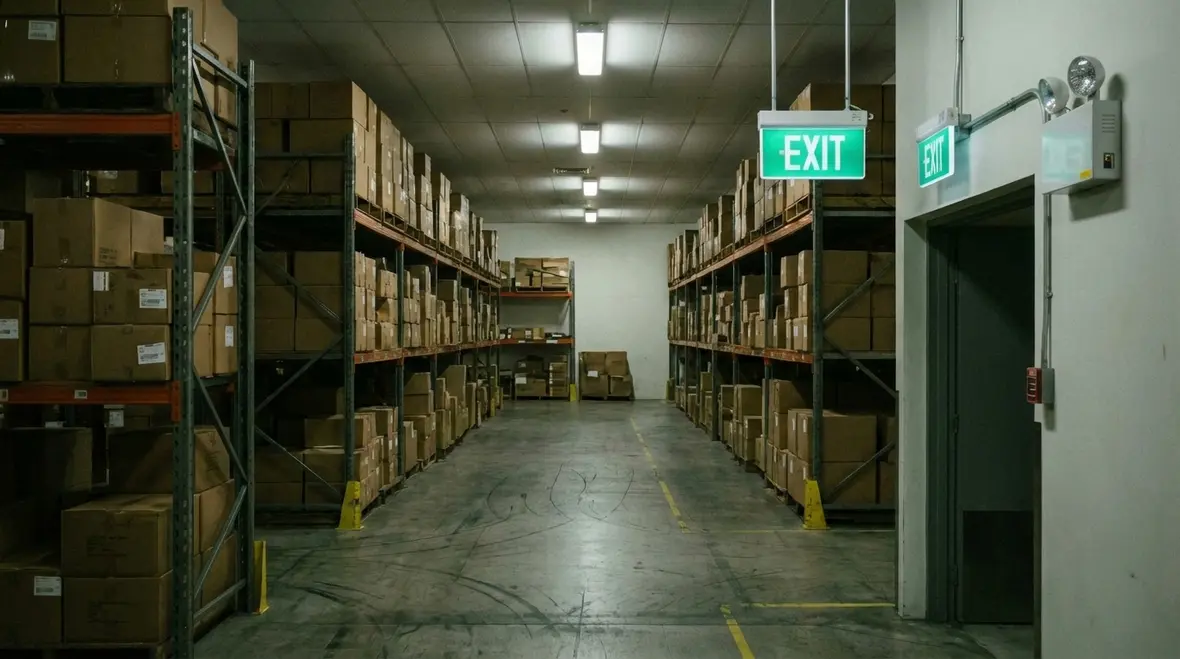
A warehouse can feel like a maze of pallets and steel racks. Therefore, clear exit pathways are non negotiable.
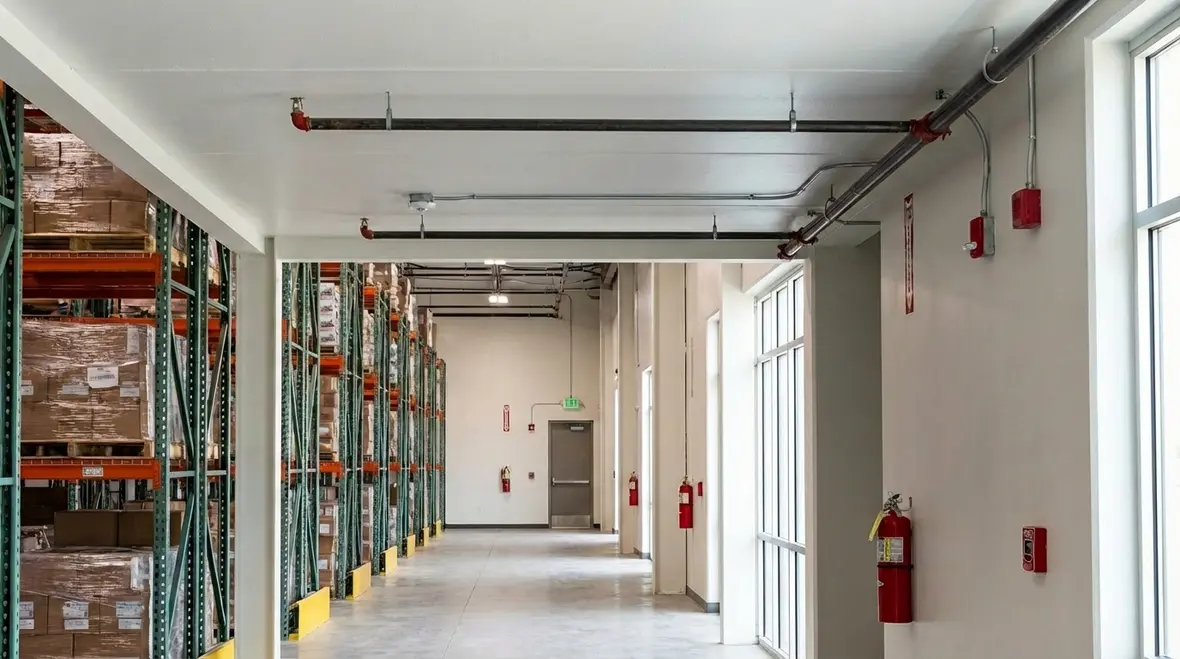
Riverside warehouse fire code requirements specify minimum aisle widths, marked exits, and illuminated exit signs. Exit doors must remain unlocked during business hours. Additionally, panic hardware may be required depending on occupancy load.
Emergency lighting must activate upon power loss. This lighting ensures that even during a blackout, occupants can see their way out. Kord Fire Protection technicians frequently remind clients that stacking boxes in front of exit doors is not creative storage. It is a code violation.
Furthermore, fire extinguishers must be properly distributed. Travel distance to an extinguisher cannot exceed set limits based on hazard type. Units must receive annual maintenance and monthly visual checks. These small details often make the difference during inspections. For Riverside-area support with extinguishers and related services, you can explore Kord’s Riverside County fire protection solutions.
Hazardous Materials and Special Storage Considerations
Not all warehouses store harmless cardboard boxes. Some contain flammable liquids, aerosols, or hazardous chemicals. When they do, additional regulations apply.
Under Riverside fire safety codes for warehouses, hazardous material quantities must remain below maximum allowable limits unless special permits exist. Moreover, proper ventilation, spill control, and fire rated storage cabinets may be required.
Kord Fire Protection technicians conduct site evaluations to identify risks that managers may overlook. For example, charging stations for lithium ion forklift batteries present unique hazards. If not properly ventilated and separated, they can increase fire risk. Consequently, code compliance extends beyond shelving and sprinklers.
Additionally, clear labeling and safety data sheet availability are mandatory. Firefighters rely on accurate information during emergencies. When seconds count, guessing is not an option.
Inspections, Permits, and Staying Ahead of Violations
Fire inspections in Riverside occur regularly. Inspectors review systems, storage practices, and documentation. While some owners view inspections with dread, others treat them as a routine health check.
To comply with riverside warehouse fire code requirements, facilities must secure proper permits for installation or modification of fire protection systems. Any change to racking, occupancy, or use may trigger review. Therefore, proactive communication with fire authorities reduces surprises.
Kord Fire Protection technicians often attend inspections alongside clients. They translate technical language into practical steps. If a deficiency arises, they outline corrective actions clearly and efficiently.
Moreover, ongoing training for staff supports compliance. Employees should know evacuation routes, extinguisher basics, and reporting procedures. A well trained team strengthens overall safety culture. And yes, regular drills may interrupt workflow. However, they also build confidence and readiness.
Frequently Asked Questions
Building a Safer Warehouse Environment
Compliance with riverside warehouse fire code requirements is not about paperwork alone. It is about protecting people, property, and business continuity. Each system, from sprinklers to exit lights, plays a role in a larger safety network.
Kord Fire Protection technicians approach each warehouse with a calm, methodical mindset. They assess risks, explain solutions clearly, and help clients plan upgrades strategically. Because in the world of fire protection, small adjustments today prevent major losses tomorrow.
If a warehouse in Riverside needs guidance, inspections, or system upgrades, now is the time to act. Connect with experienced professionals who understand local codes and speak the language of safety fluently. A safer warehouse starts with a single conversation. Let that conversation begin today.
Know Your Weapon Before You Fight the Flame
Kord Fire Protection is your go-to when it comes to all things fire protection. For over 20 years, we’ve been serving Southern California with the quality service and equipment to keep your home or business safe at all times. Our competitive prices reflect our unwavering commitment to protecting what matters most in the event of a fire emergency. Give us a call, send an email, or use that form!

Join Our Newsletter!
Get the latest fire safety tips delivered straight to your inbox From our Newsletter.