NFPA 25 6.3 Standpipe Testing Findings and Readiness
Quick Answer: NFPA 25 § 6.3 covers standpipe testing and the common service findings that show up during inspections. Teams confirm reliability, flow, and readiness so firefighters can trust the system. Kord Fire Protection can partner as a steady, on site service provider that helps facilities fix defects, document results, and stay audit ready.
For facilities that need broader support around water based fire protection, Kord Fire’s Standpipes and Combination Systems service fits naturally into this conversation. It gives teams a practical next step when testing findings need repairs, follow up, or a more structured maintenance plan.
NFPA 25 § 6.3 and what facilities should expect
Within the first 100 to 150 words, the most important point lands like a calm knock at the door. NFPA 25 § 6.3 focuses on standpipe testing and the common service findings that often appear when systems are exercised and verified. In practical terms, the standard pushes facilities to test so the standpipes will work when smoke starts writing the calendar for everyone else. That means checking operation, performance, and condition, not just paperwork.
From there, Kord Fire Protection helps organisations across industrial, retail, and commercial facilities in Australia treat standpipe testing as a living program. Consequently, the service becomes more than a task. It becomes a reliable safety workflow with documentation, corrective action, and repeatable processes. Teams that want a wider code context can also review Kord Fire’s NFPA 25 overview for complete water based fire protection systems maintenance, which connects standpipes to the larger maintenance picture.
How standpipe testing under NFPA 25 prevents “it should work” thinking
Why quiet systems still need proof
Standpipe systems often sit quietly while daily operations move around them. However, time does not stay still for valves, couplings, hose connections, gauges, and piping. Over time, small issues grow, and teams notice them only when a test forces the truth to show up.
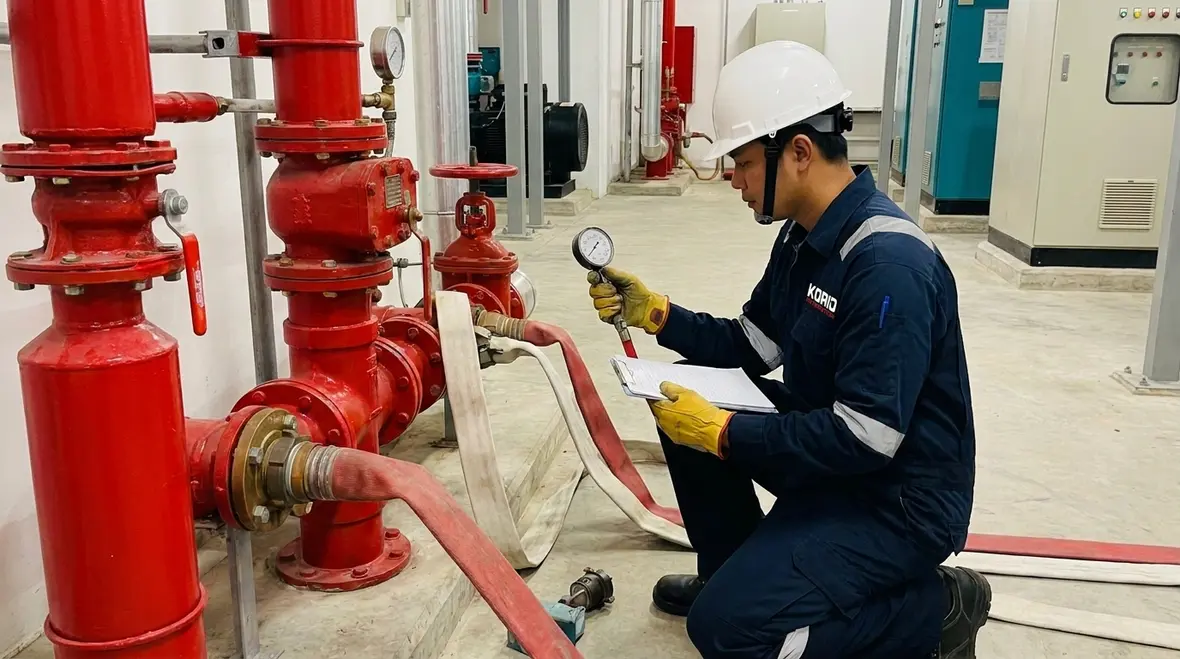
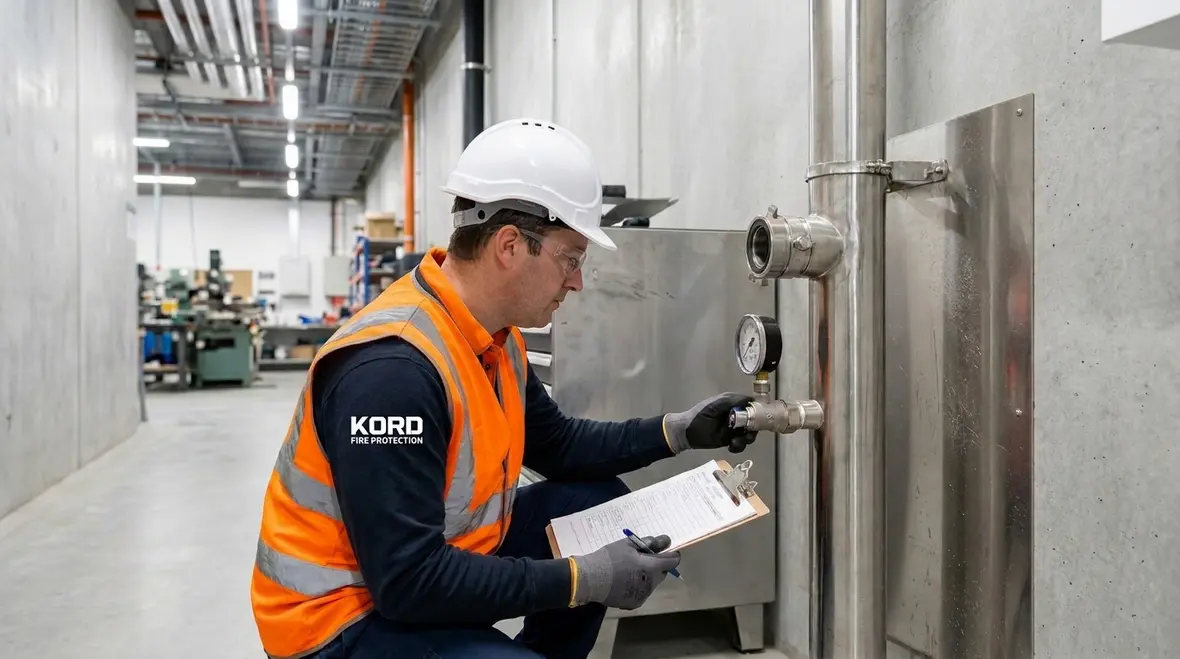
Therefore, NFPA 25 standpipe testing requirements guide what facilities must verify and how they should respond when service findings appear. Testing aims to confirm that the system supports firefighting operations with consistent performance. In addition, testing reveals maintenance needs before they turn into outages during an emergency drill or a real event.
And yes, the “it should work” mindset is common. It is also the same energy as saying the vending machine will stop eating coins when it feels like being nice. Testing removes that hope and replaces it with evidence. This is one of the biggest reasons a structured standpipe program matters. People do not need more crossed fingers. They need proof that valves move, pressure behaves, and water gets where it is supposed to go.
That proof becomes even more useful when a facility has multiple buildings, high activity periods, or competing contractor work. In those conditions, assumptions multiply fast. A valve may have been shut during repairs. A cabinet may now be blocked by stock. A gauge may still be mounted proudly while reporting nonsense. The test is where confidence gets promoted from a feeling to a fact.
Common service findings during standpipe testing, and why they matter
The repeat offenders facilities keep seeing
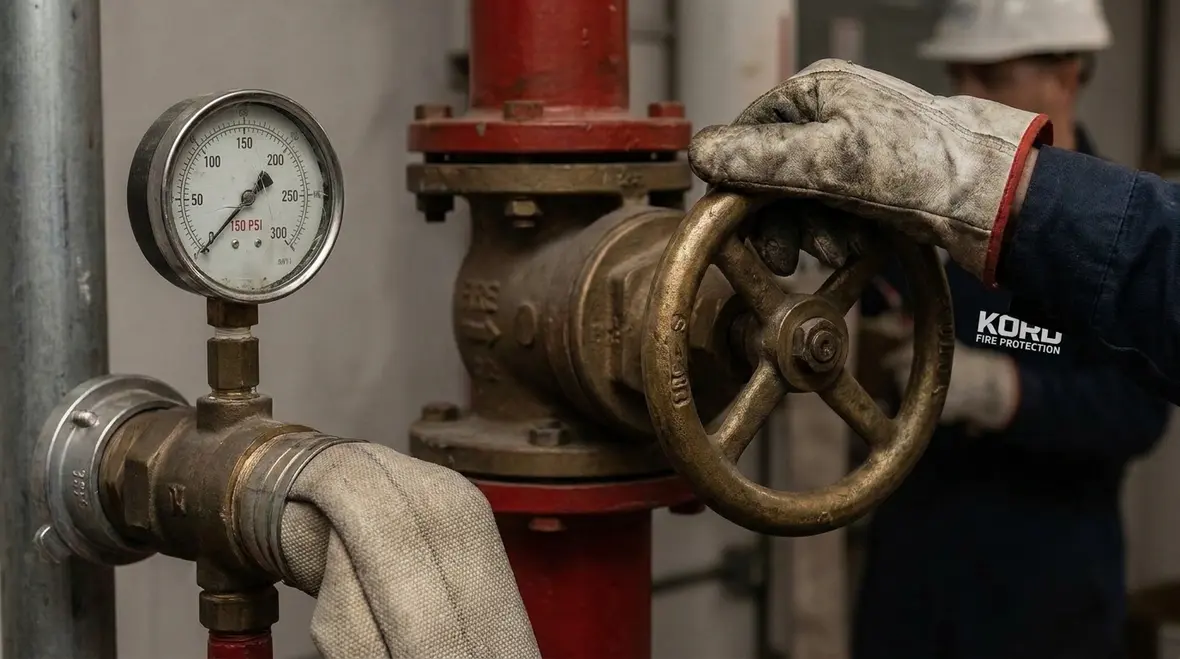
Most facilities see a pattern during standpipe testing. Certain findings repeat because the environment repeats. Dust collects, vibration happens, valves get touched during repairs, and seals age even if nobody ever talks about them.
Here are frequent standpipe service findings that teams often encounter, along with what they can indicate:
- Valve issues such as stiff operation or incomplete movement that affects readiness during activation.
- Water supply problems including pressure variation and flow limitations that reduce firefighting capability.
- Obstructions and condition concerns like debris or internal corrosion that interferes with normal flow.
- Hose connection and coupling defects that create delays when personnel need to connect quickly.
- Gauge and indication inaccuracies that lead teams to trust numbers that are no longer reliable.
- Impairments from building changes where new partitions, storage, or plant alterations affect access and visibility.
Because these findings can affect performance under pressure, they matter more than most people expect. A standpipe might pass a cursory check and still fail when flow and operation get real.
That is also why findings should never be treated like harmless paperwork clutter. A sticky valve is not charming. A blocked hose connection is not quirky. An inaccurate gauge is not “close enough for jazz.” Each issue changes how crews may interact with the system during an emergency, and emergency conditions are famously rude about second chances.
Testing workflow that keeps Australian facilities audit ready
From pre test review to follow up closure
A strong testing workflow reduces confusion and speeds up corrective action. When facilities plan the process, they protect uptime, coordinate access, and keep records clear for auditors, insurers, and internal safety teams.
Kord Fire Protection supports clients by structuring the job so the test and the fix do not feel like two different worlds. For example, a team can schedule testing in a sequence that aligns with building operations in industrial sheds, busy retail floors, and multi site commercial campuses.
A practical workflow often includes the following steps:
- Pre test review of system layout, recent modifications, and access routes.
- On site verification of valves, outlets, and indicators to confirm condition before operation.
- Performance checks focused on how the system behaves, not just whether components respond.
- Findings capture with clear notes that link each issue to a corrective path.
- Follow up and closure tracking so repairs happen before the next cycle.
As a result, the facility gains continuity. The team does not restart from scratch every time the calendar hits testing season.
Just as importantly, workflow makes the handoff cleaner between operations staff, compliance leaders, maintenance crews, and outside service providers. Everyone sees the same sequence. Everyone understands where the findings live. Everyone knows what still needs to be done. That may not sound glamorous, but clean coordination is what keeps fire protection work from becoming a scavenger hunt with clipboards.
Where standpipe performance usually breaks down
Common weak points under real operating conditions
Standpipe problems often show up when facilities confront real operating conditions. That is when pressure, flow, and control interact. And that is also where service teams can spot the difference between a system that works on paper and one that works when it counts.
Some breakdowns include:
- Reduced flow due to internal restrictions such as scale or corrosion that narrows passages.
- Valve control weaknesses where manual operation does not match expected performance.
- Pressure instability caused by supply variation or system configuration changes.
- Access delays when outlets or cabinets get blocked by storage or temporary works.
Consequently, the goal is to catch the “small stuff” that affects the “big moment.” Kord Fire Protection can become a vital partner with this service job by bringing consistent field execution, practical recommendations, and documentation that helps facilities close gaps quickly.
Think of it like a good stage manager for a show. Nobody wants chaos backstage. Yet chaos loves to appear when a system test turns into a surprise scavenger hunt. With the right partner, the job runs like it should.
Using documentation to turn findings into action
Why reporting quality affects readiness
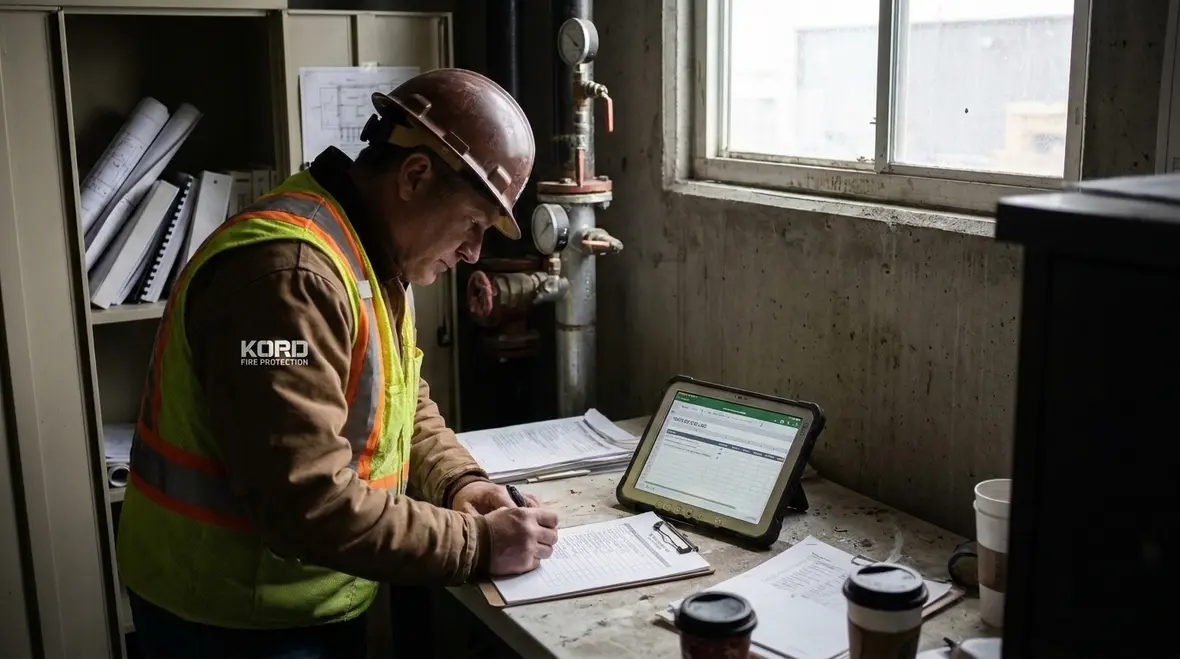
Testing without clear documentation creates extra work. It also creates a gap between the findings and the fixes. When facilities capture results in a structured way, they can prioritise repairs based on risk and impact.
For standpipe testing and common service findings, strong documentation usually includes the system identification, observed condition, and the specific corrective recommendations tied to each item. In addition, the report should support internal safety processes and external review requirements.
Kord Fire Protection helps clients manage that loop. So instead of receiving a pile of notes, the facility gets a pathway to closure. Then the next round of NFPA 25 standpipe testing requirements becomes less stressful and more predictable.
And if someone asks, “Do we really need to track all of that?” the best response is simple. Yes. Because fire protection is not a guessing game. It is a performance promise.
Good reporting also helps trend repeat issues over time. If the same outlet keeps showing condition problems, or the same valve keeps raising service concerns, the pattern tells a story. That story can inform budgeting, replacement timing, and future maintenance planning. In other words, documentation is not just about proving what happened today. It helps facilities make smarter decisions tomorrow.
Partnering with Kord Fire Protection for standpipe testing services
What a dependable service relationship changes
Facilities across Australia often want the same thing: fewer surprises, faster corrective action, and confident compliance. Kord Fire Protection can become a vital partner with this service/job by coordinating testing, capturing clear findings, and supporting practical next steps for repair and readiness.
In many cases, the real value shows up between tests. That is when facilities need dependable communication, consistent scheduling, and follow up. Therefore, clients benefit from a service relationship that treats standpipes as critical life safety equipment, not a checkbox.
When the work gets done with care, the facility gets peace of mind. And when the next test arrives, it will feel less like a storm cloud and more like a routine weather report.
FAQ
Call Kord Fire Protection to keep standpipes ready
Standpipe testing should not feel like an annual scramble. When a facility handles NFPA 25 standpipe testing requirements with a steady partner, it gains clarity, faster repairs, and stronger readiness. Kord Fire Protection helps Australian industrial, retail, and commercial sites plan the work, capture findings, and support closure.
Reach out today and make the next test smoother than the last one. When the process is organised, documented, and backed by people who know what to look for, standpipe readiness stops being a yearly stress event and starts acting like the safety program it was always supposed to be.

Join Our Newsletter!
Get the latest fire safety tips delivered straight to your inbox From our Newsletter.