Outdoor Fire Extinguisher Cabinet Corrosion Guide
Outdoor Fire Extinguishers: Corrosion, Cabinets, and Weather Protection
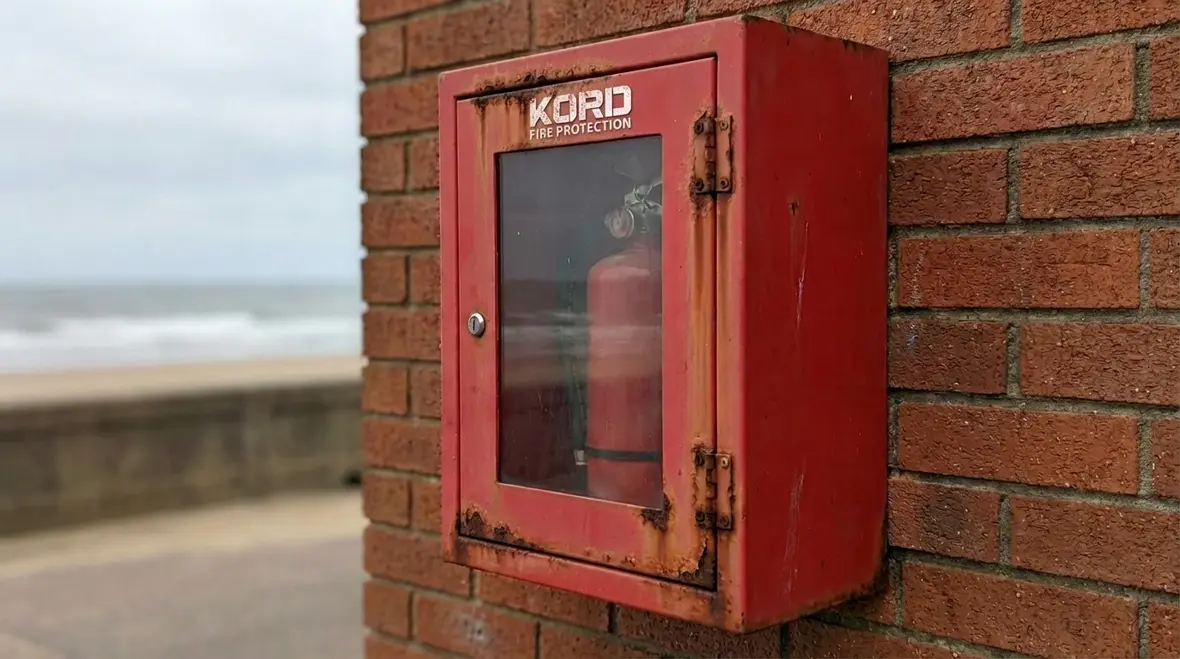
Outdoor environments are not polite. They do not knock. They do not ask permission. They simply arrive with rain, salt, wind, heat, and the slow, creeping problem known as outdoor fire extinguisher cabinet corrosion. Within the first few seasons, metal begins to pit, hinges stiffen, seals crack, and suddenly the very equipment meant to protect lives looks like it has survived a shipwreck.
Kord Fire Protection technicians often explain that most extinguisher failures outside do not start with the extinguisher. They start with the cabinet. And when the cabinet fails, access slows down. In a fire emergency, seconds matter. Rust does not care about seconds. However, planning does.
This guide explores how corrosion forms, how cabinets defend against it, and what weather protection truly means for long term safety. Because while fire safety is serious business, no one wants their emergency equipment aging faster than a Hollywood action hero in a reboot.
Why Outdoor Fire Extinguisher Cabinet Corrosion Happens Faster Than You Think
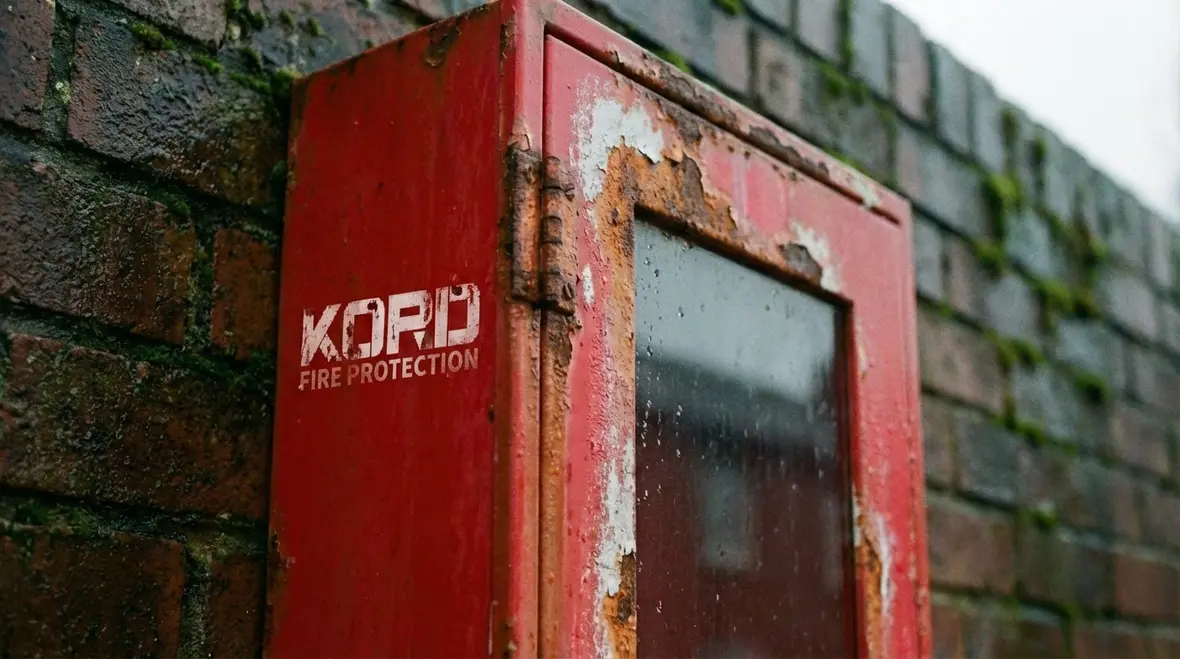
Metal and moisture have a complicated relationship. Add oxygen, salt, and temperature swings, and that relationship turns toxic. Outdoor cabinets face constant exposure to humidity, rainfall, snow, UV rays, and airborne contaminants. As a result, oxidation begins almost immediately once protective coatings weaken.
Kord Fire Protection technicians explain that coastal properties face accelerated rust due to salt in the air. Even facilities miles inland can experience corrosion if deicing salts, industrial pollutants, or fertilizer particles circulate nearby. Therefore, corrosion is not just a beach problem. It is a chemistry problem.
Temperature shifts make matters worse. During the day, metal expands. At night, it contracts. Over time, that movement weakens seals and paint layers. Consequently, microscopic cracks form. Water seeps in. Rust follows.
In addition, poor drainage around cabinet bases allows standing water to collect. That water sits patiently, like a villain waiting for the hero to leave town. Eventually, the bottom panel corrodes first. Hinges seize. Doors misalign. The extinguisher inside remains functional, but access becomes difficult.
Although corrosion may seem cosmetic at first, it compromises structural integrity. Once mounting hardware weakens, cabinets can detach from walls or posts. In high traffic areas, that becomes a liability risk as well as a safety issue.
If you are looking at exterior extinguishers around a property and wondering whether mounting and exposure are already working against you, pairing this corrosion guide with Kord Fire’s fire extinguisher mounting height guide can help you catch both placement and protection issues at the same time.
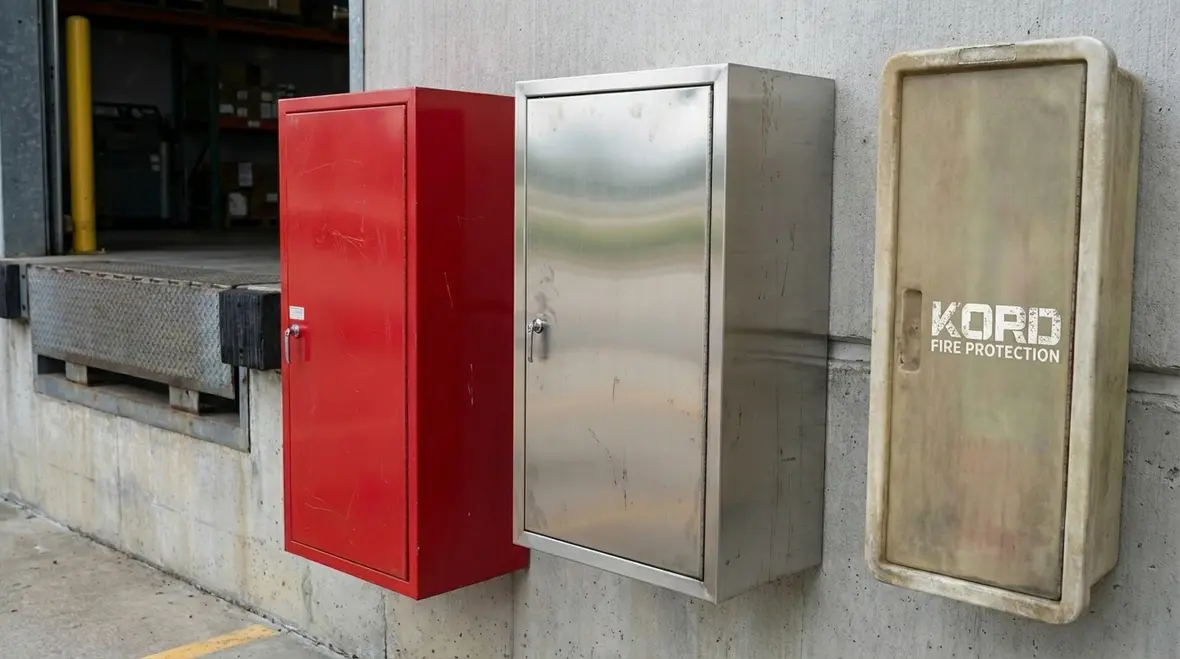
Choosing the Right Cabinet Material for Harsh Conditions
Material selection determines how well a cabinet resists environmental stress. While all metals can corrode, some handle exposure better than others.
Technicians from Kord Fire Protection often guide property managers through three primary cabinet materials:
1. Powder Coated Steel
Steel cabinets provide strength and cost efficiency. However, they require quality powder coating to resist moisture. Once the coating chips, corrosion can begin quickly. Therefore, steel works best in moderate climates with routine inspections.
2. Stainless Steel
Stainless steel contains chromium, which forms a protective layer against rust. It performs well in coastal and industrial settings. Although it costs more upfront, it reduces long term maintenance caused by outdoor fire extinguisher cabinet corrosion.
3. Non Metallic or Fiberglass Cabinets
Fiberglass and high impact polymer cabinets do not rust. Consequently, they eliminate oxidation concerns. However, they must still resist UV damage and temperature extremes. Quality construction matters.
Each option offers tradeoffs. Therefore, environment should guide the decision rather than price alone. Spending less today can mean replacing cabinets sooner than expected. As one technician joked, “Rust never sleeps. It just waits for budget season.”
Weather Protection Features That Actually Matter
Not all outdoor cabinets are built equally. Some look sturdy but lack key protective features. Others quietly outperform expectations because they address environmental stress at every seam.
Important weather protection elements include:
Sealed Gaskets
Rubber door gaskets prevent water intrusion. Without them, wind driven rain can enter and pool inside.
Sloped Tops
A slightly angled roof allows water and snow to slide off instead of collecting.
Drainage Holes
Properly placed weep holes prevent internal moisture buildup.
UV Resistant Coatings
Sunlight degrades paint and plastic. UV stabilized finishes extend cabinet life.
Corrosion Resistant Hinges and Latches
Hardware often fails before panels do. Stainless or coated components maintain smooth operation.
Additionally, clear viewing windows made from polycarbonate help personnel verify extinguisher presence without opening the door. This reduces unnecessary exposure to weather.
Kord Fire Protection technicians emphasize that weather protection must work as a system. A strong cabinet with weak hinges still fails. A sealed door with poor mounting still allows water entry. Therefore, comprehensive design wins every time.
How Kord Fire Protection Technicians Evaluate Outdoor Installations
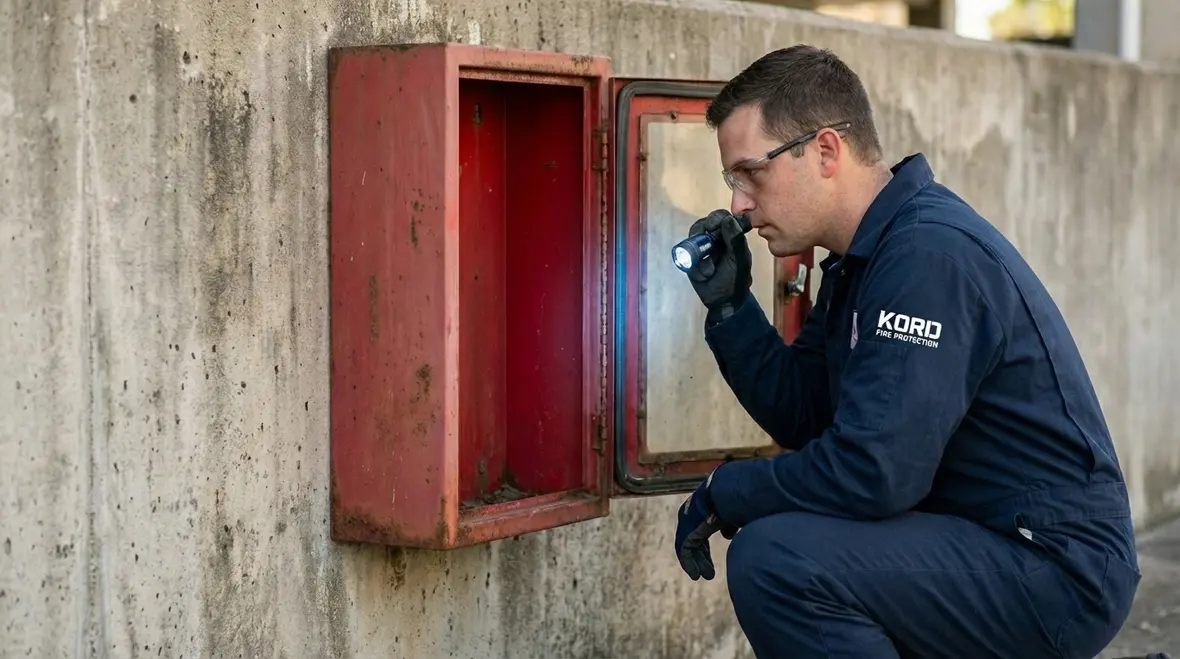
When technicians assess an exterior fire safety setup, they do not simply glance at the cabinet and nod approvingly. Instead, they conduct a deliberate evaluation process.
First, they inspect mounting height and surface stability. Cabinets mounted directly onto porous brick without proper anchors can loosen over time. Moisture infiltration behind the cabinet accelerates damage.
Next, they examine seal integrity. Even small gasket tears can allow water inside during heavy storms. Technicians test door alignment to confirm smooth closure.
They also check for early signs of outdoor fire extinguisher cabinet corrosion such as bubbling paint, rust streaks near seams, or discoloration around fasteners. Addressing minor surface rust early prevents full panel replacement later.
Furthermore, they verify that extinguisher pressure gauges remain within safe ranges. Extreme cold can reduce internal pressure. High heat can elevate it. Cabinets must shield extinguishers from temperature extremes whenever possible.
Finally, technicians review accessibility. Cabinets blocked by landscaping, snow accumulation, or parked equipment defeat their purpose. A beautifully protected extinguisher hidden behind shrubbery is about as helpful as a superhero stuck in traffic.
For many building owners, combining that field review with a broader look at their fire protection program through Kord Fire’s full-service fire protection services helps align cabinets, extinguishers, sprinklers, and alarms into one cohesive plan instead of a series of disconnected fixes.
Preventive Maintenance Strategies That Extend Cabinet Life
Regular maintenance keeps small problems from becoming expensive replacements. While corrosion seems inevitable outdoors, proactive care slows its progress significantly.
Kord Fire Protection technicians recommend the following routine practices:
- Quarterly Visual Inspections
Look for paint chips, rust spots, loose hardware, and gasket wear. - Surface Cleaning
Remove dirt, salt residue, and debris with mild detergent and water. Clean surfaces resist corrosion longer. - Touch Up Coating
Apply manufacturer approved paint to small chips before oxidation spreads. - Lubricate Hinges
Use corrosion resistant lubricant to maintain smooth door movement. - Check Drainage Paths
Ensure weep holes remain clear of insects and debris.
Additionally, facilities in high salt environments may benefit from semi annual professional inspections. Early intervention costs less than full cabinet replacement caused by advanced outdoor fire extinguisher cabinet corrosion.
Maintenance may not feel exciting. However, neither is explaining to an inspector why the extinguisher cabinet resembles an artifact from a pirate movie.
Comparing Cabinet Protection Methods
| Protection Method | Primary Benefit |
| Powder Coating | Creates durable outer barrier against moisture and minor impact |
| Stainless Steel Construction | Resists rust formation in humid or coastal regions |
| Fiberglass Enclosure | Eliminates metal oxidation risk entirely |
| Gasket Sealed Door | Blocks water intrusion during storms |
| Elevated Mounting | Prevents ground level water pooling damage |
This comparison shows that effective protection combines material choice and smart installation. One without the other leaves gaps. And as any action movie fan knows, the villain always finds the gap.
Can Weather Damage the Fire Extinguisher Inside the Cabinet?
Yes, it can. Although cabinets offer protection, extreme temperatures still influence extinguisher performance.
Dry chemical extinguishers typically operate within specific temperature ranges. Prolonged freezing conditions may reduce internal pressure. On the other hand, excessive heat can increase pressure and stress components.
Kord Fire Protection technicians often recommend climate appropriate extinguishers for outdoor use. In colder regions, specialized units designed for low temperature operation provide added reliability.
Moreover, moisture intrusion can cause caking of dry chemical agents over time. If powder compacts, discharge performance may decline. Therefore, cabinet integrity directly affects extinguisher readiness.
Regular professional servicing ensures that extinguishers remain fully charged and mechanically sound. Because in a fire emergency, no one wants surprises. Especially the kind involving a handle squeeze and nothing happening.
Long Term Cost Savings Through Smart Cabinet Investment
Some property owners hesitate to invest in higher grade cabinets. Initially, budget models seem sufficient. However, replacement cycles tell a different story.
When outdoor fire extinguisher cabinet corrosion progresses unchecked, facilities face repainting, part replacement, or full unit removal. Labor adds cost. Downtime adds inconvenience. Inspection citations add stress.
Conversely, corrosion resistant materials and proactive maintenance extend service life significantly. Although the upfront investment may be higher, total ownership cost often decreases over ten years.
Kord Fire Protection technicians frequently provide lifecycle comparisons to help clients understand these savings. Data tends to calm hesitation faster than any sales pitch. Numbers do not exaggerate. They simply present reality.
In addition, maintaining professional appearance enhances brand image. Rusted cabinets signal neglect. Clean, well maintained equipment signals responsibility. Customers notice these details, even if subconsciously.
FAQ: Outdoor Cabinet Protection and Corrosion
Conclusion: Protect What Protects You
Outdoor fire safety equipment stands guard in silence. Yet without proper cabinet selection, maintenance, and weather protection, corrosion quietly undermines that protection. Kord Fire Protection technicians bring experience, careful inspection, and practical solutions to keep outdoor systems reliable year round. Do not wait for rust to make the first move. Schedule a professional evaluation today and ensure every extinguisher remains ready when it matters most.
If your facility needs help with extinguisher selection, cabinet upgrades, or coordinated inspections, you can connect with Kord Fire through their main fire protection services hub. From extinguisher cabinets and mounting to full system design, their team helps you turn “weather exposed and rusting” into “protected, compliant, and ready.”
Request fire extinguisher and cabinet service for your property and let corrosion prevention become a planned investment instead of an unpleasant surprise.
Know Your Weapon Before You Fight the Flame
Kord Fire Protection is your go-to when it comes to all things fire protection. For over 20 years, we’ve been serving Southern California with the quality service and equipment to keep your home or business safe at all times. Our competitive prices reflect our unwavering commitment to protecting what matters most in the event of a fire emergency. Give us a call, send an email, or use that form!

Join Our Newsletter!
Get the latest fire safety tips delivered straight to your inbox From our Newsletter.