NICET Level 4 and Large Fire Alarm Project Success
NICET Level 4 and how it shapes large fire alarm projects
In large commercial buildings, the fire alarm system is not a side quest. It is mission critical. And that is where NICET Level 4 shows up as a practical advantage, especially for teams who handle design, layout, programming, and inspection readiness. When a fire alarm project grows into the scale of high rises, hospitals, schools, or sprawling campuses, the difference between “it works” and “it passes scrutiny” gets real fast. Kord Fire Protection technicians often explain this in plain terms: Level 4 does not just mean experience. It means a higher level of control over documentation, compliance choices, and how the system behaves under real alarm conditions.
And yes, that also means fewer surprises at the worst possible moment, like the final walkthrough when everyone suddenly remembers they have feelings about drawings.
Why large scale projects demand higher standards
Large scale fire alarm work adds layers that smaller jobs rarely see. First, there are more floors, more devices, and more pathways for smoke, heat, and human behavior. Next, there are more stakeholders who want answers, including owners, architects, electricians, inspectors, and maintenance staff. As the complexity increases, so does the risk of delays caused by unclear submittals, missing correlation details, or inconsistent device placement.
That is where NICET Level 4 typically impacts day to day decisions. It guides how a technician approaches system layout, circuiting, zoning logic, and compatibility planning. Therefore, the team can reduce rework by addressing issues earlier, not after walls are closed and change orders have gained confidence.
Bigger buildings create bigger coordination demands
On a major project, nobody gets to work in a vacuum, even if they would really enjoy that for about fifteen minutes. The fire alarm system touches electrical distribution, architectural finish schedules, smoke control coordination, elevator logic, access controlled openings, and often the owner’s expectations for future serviceability. A stronger technical foundation helps the project team make decisions that hold up under pressure instead of looking clever for exactly one meeting.
That is one reason large-facility fire alarm planning matters so much on the front end. Kord Fire Protection also highlights large facility fire alarm system strategy in its related article on fire alarm systems for large facilities, where clear zoning, dependable supervision, and structured system communication are treated as practical necessities rather than nice ideas.
How NICET Level 4 changes design and layout decisions
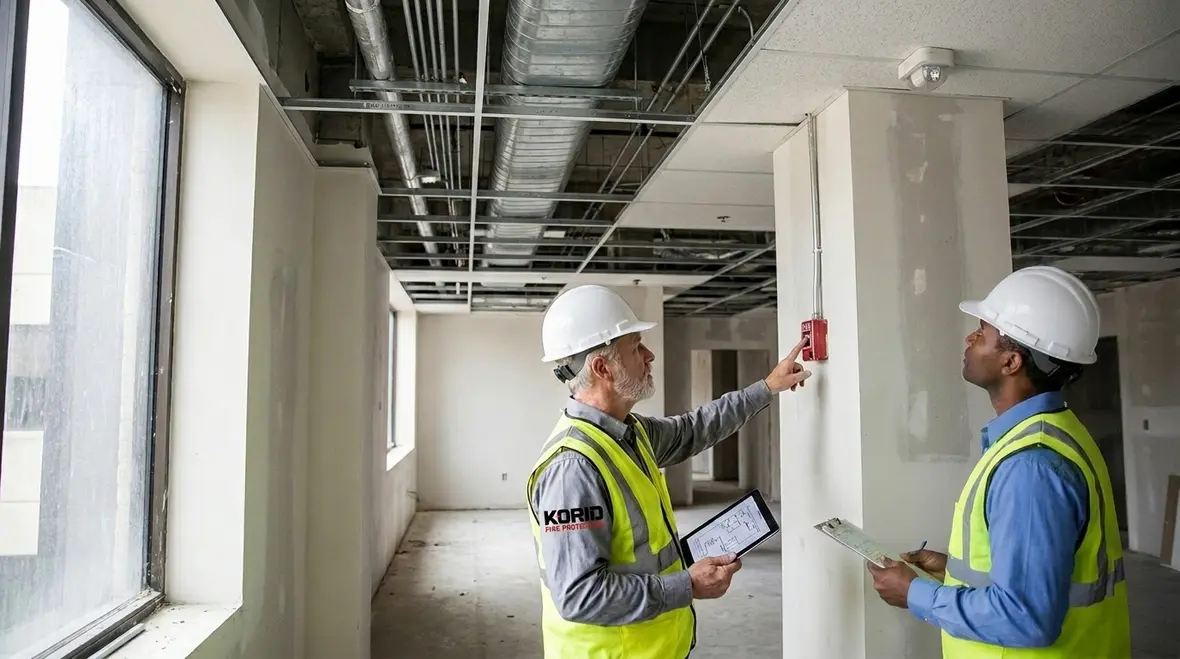
On big projects, the design is where the future problems either get prevented or politely invited. Kord Fire Protection technicians often point out that Level 4 understanding helps a team think in system behavior, not just device count. For example, the placement of initiating devices is tied to occupancy type, ceiling height, airflow patterns, and the way a building will respond during an alarm.
At this level, professionals also pay attention to notification appliance coverage and audibility planning. They consider where people will be during an event and how the system guides them. Additionally, they focus on interconnections and control functions so the fire alarm does more than beep. It coordinates with doors, HVAC release, elevator recall, and other life safety systems where required.
In short, Level 4 helps ensure that the design logic stays coherent from drawing to field. And coherent design logic saves time. It also saves money, which is something every project manager loves almost as much as they love deadlines.
Design logic has to survive contact with the building
A mature approach to design also means reviewing what happens after the device list is approved. Can technicians access components for testing later. Will labeling remain understandable after turnover. Does the sequence of operations read clearly enough that programming, field verification, and inspection all tell the same story. These are not glamorous questions, but they are the kind that keep a project from drifting into confusion halfway through construction.
What happens when paperwork meets the real world
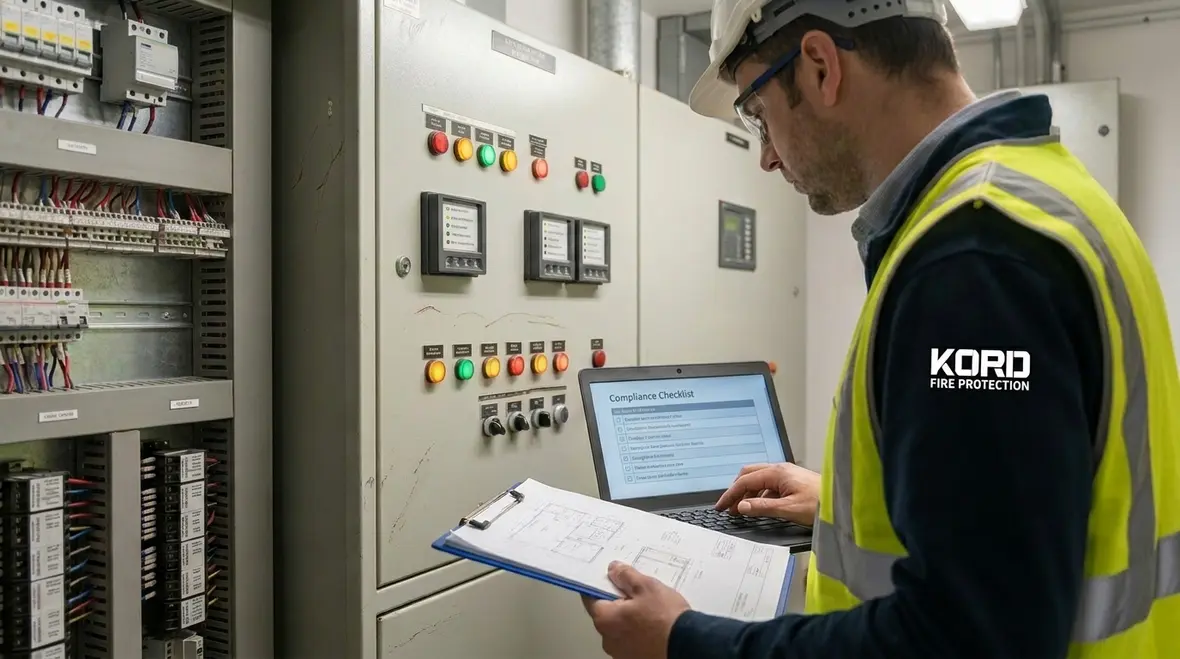
Large jobs do not fail only because devices fail. They fail because the documentation does not match the installed system. That mismatch can trigger costly corrections, delayed acceptance, and extra inspection cycles. With NICET Level 4 experience, teams tend to manage documentation with a steadier approach. They treat submittals like a contract, not a suggestion.
For instance, they align device types, quantities, and notation styles with what the field crew installs. They also ensure that software programming details, sequence of operations, and matrix forms reflect the system behavior. Consequently, inspectors see a consistent story, not a mystery novel where page five contradicts page one.
Kord Fire Protection technicians often explain that high level attention to detail reduces “interpretation gaps.” When those gaps shrink, the project moves with less friction. And when friction drops, timelines stop sliding like they are powered by gravity and poor coffee choices.
Documentation is what ties design, install, and approval together
The practical value here is simple. When drawings, battery calculations, risers, point lists, and programming intent all line up, the field team spends less time guessing and more time installing correctly. The inspector also walks into a cleaner process. Nobody wants acceptance testing to feel like a scavenger hunt written by three different people on three different deadlines.

Impact on testing, commissioning, and inspection readiness
Commissioning and testing turn a design into proof. On large scale projects, this step becomes a schedule event with real consequences. If acceptance testing runs long, the whole building timeline feels it. Therefore, a Level 4 technician approach supports planned test sequences, clearer acceptance criteria, and organized evidence collection.
For example, they often coordinate how zones and circuits get verified, how trouble signals get checked, and how alarms route to control panels and annunciation devices. They also pay attention to platform behavior, so that supervisory signals and alarm signals act correctly under stress scenarios, such as power loss or tamper conditions.
As the team prepares for inspection, they also help the customer understand what they are seeing and why. That communication matters. It reduces confusion during walk downs and ensures maintenance staff can operate the system properly later.
In practice, that means fewer rounds of “try again” and fewer last minute changes that make everyone look at the ceiling like it might have answers.
For teams thinking beyond one inspection date, it also helps to view commissioning as part of the larger service lifecycle. Kord Fire Protection explores that broader perspective in its article on the full lifecycle of fire protection servicing, where planning, testing, maintenance, and long-term readiness all support one another.
System coordination across trades and phases
Fire alarm work lives in the middle of other work. Electrical rough ins, device mounting, ceiling builds, sprinkler coordination, and schedule phases all influence one another. A Level 4 mindset helps a team coordinate interfaces without assuming the other trades will guess correctly.
For example, Kord Fire Protection technicians explain that coordination includes knowing who controls what. They clarify interface responsibilities for door holders, HVAC shutdown, elevator recall, fire control panels, and any required supervisory points. Then they build installation checks that confirm those interfaces early, before the ceiling grid disappears forever.
Additionally, they plan for future maintainability. They consider access panels, labeling, and how techs will service devices later. Thus, large scale projects get systems that are not only compliant today, but also manageable next year.
And honestly, if a system becomes a maze, the maintenance team will eventually write a strongly worded email. Better to prevent that before it turns into a saga.
Phasing matters as much as hardware
Multi phase work can quietly create risk when portions of the system are energized, revised, or expanded at different times. A Level 4 perspective helps teams keep temporary conditions, tie-ins, and later additions from creating blind spots. It is not just about finishing the current floor. It is about making sure the next phase does not inherit a puzzle nobody wanted.
Risk reduction and cost control on big campuses
In large facilities, risk hides in the details. A single wrong mapping, a missed device type, or a programming mismatch can cause delays. Over time, those delays compound into budget pressure and compressed schedules. NICET Level 4 influence often shows up as steady risk control: fewer rework loops, tighter change management, and more predictable commissioning.
Instead of responding to issues after they happen, teams with Level 4 understanding tend to look ahead. They verify design assumptions during submittal reviews, confirm device selection during procurement, and check circuit layouts during installation. This reduces the odds that the system will fail an acceptance step due to preventable inconsistencies.
As a result, owners see fewer disruptions and contractors see less time lost to troubleshooting. That is not just good engineering. It is good business. And in the world of large scale projects, good business keeps people smiling, even when the schedule looks like it lost a fistfight.
Predictability is a project advantage
Owners and contractors rarely ask for drama. They ask for schedules that hold, documentation that makes sense, and systems that do what the approved design says they should do. That is why advanced technical oversight matters on large campuses. It keeps risk from snowballing into expensive schedule compression, overnight fixes, or those meetings where everybody speaks very calmly while clearly not feeling calm at all.
FAQ
Ready to strengthen your next fire alarm project?
Large scale fire alarm work rewards teams that plan, document, and test with confidence. If your project needs smoother commissioning, clearer submittals, and fewer late surprises, Kord Fire Protection can help. Their technicians explain the details up front, align the system to the approved design, and support inspection readiness with care.
To move from planning to action, explore Kord Fire Protection’s fire alarm services and systems for support with installation, monitoring, maintenance, inspections, and repairs. You can also review broader fire protection services if the project scope reaches beyond alarm work. Reach out to review your scope and timeline, and make your next project run like it was supposed to from day one.

Join Our Newsletter!
Get the latest fire safety tips delivered straight to your inbox From our Newsletter.