NICET Level 3 Fire Alarm Systems: Field Ready Prep
To reach NICET Level 3 in Fire Alarm Systems, a technician has to do more than memorize diagrams and pass tests. In the real world, they must prove they can plan, apply, and verify fire alarm work with consistent quality. Kord Fire Protection technicians often explain it this way: the job is not “push the button and hope.” It is a methodical process built on safety, code knowledge, and solid field judgment.
And yes, it can feel like leveling up in a video game. You start with simple tasks, you learn the rules, then you earn the right to tackle tougher problems. However, unlike most games, you do not get extra lives if the panel goes wrong. You get learning, documentation, and better habits.
What NICET Level 3 really demands in fire alarm work
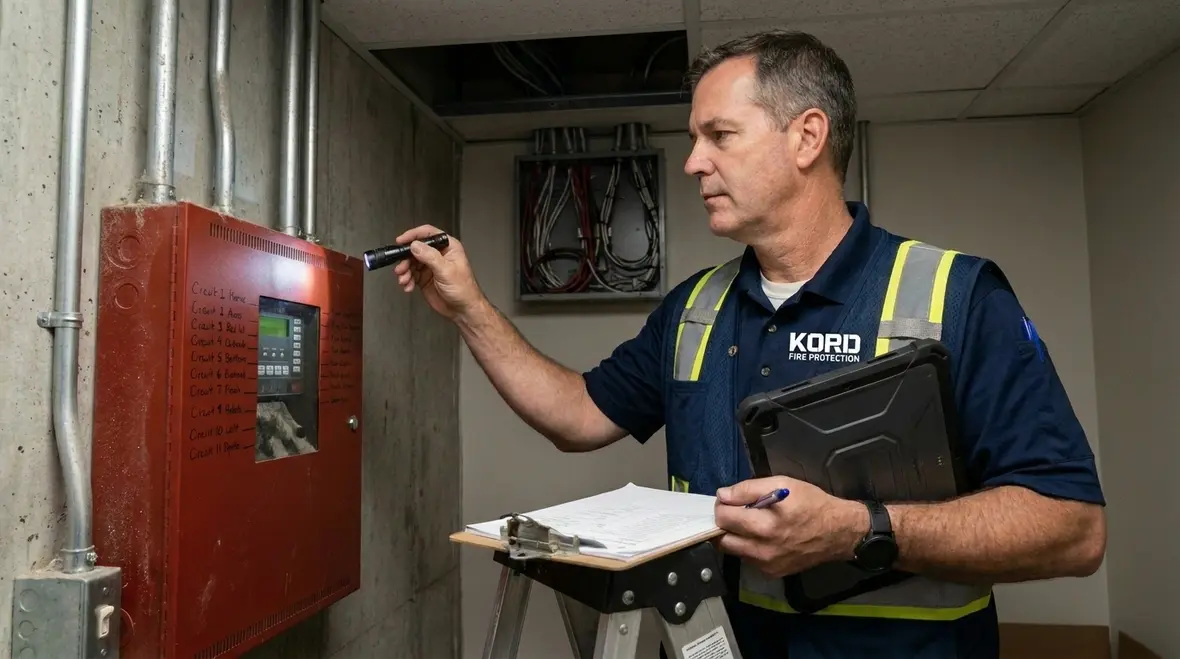
NICET Level 3 focuses on practical competency for fire alarm systems. Technically, candidates must show they understand how systems function and how to apply requirements correctly. This includes using proper design principles, reading codes, and selecting components for specific applications. Just as importantly, candidates must demonstrate they can think through troubleshooting and inspection outcomes.
From Kord Fire Protection technicians, the recurring theme is proof through work, not vibes. They encourage candidates to treat every project like a training session where the documentation matters as much as the install. Therefore, NICET Level 3 becomes less about a single day and more about how a person builds skill over time.
That is also why field readiness matters so much. A Level 3 candidate is expected to connect what is on the drawings, what the code requires, and what the installed system actually does. If one of those three is out of sync, the job gets messy fast. The technician who can spot that mismatch early is the one who saves time, avoids callbacks, and keeps the project from turning into a late-night troubleshooting saga.
Why practical judgment matters more than memorized answers
A lot of candidates can memorize terms. Fewer can explain why a supervision issue matters, why a device placement conflict creates risk, or why an acceptance test result should raise an eyebrow. NICET Level 3 leans toward the second group. It rewards technicians who can reason through field conditions instead of just repeating a line from a study guide.
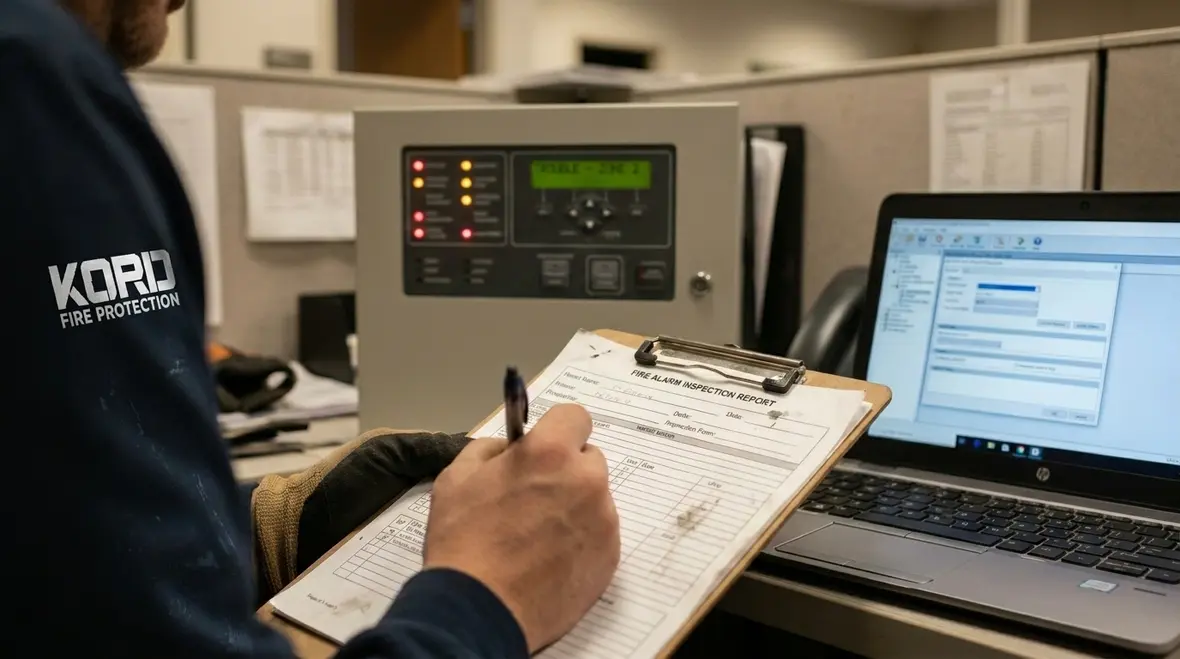
Build experience the way Kord Fire Protection technicians train it
Most candidates underestimate how much the path to NICET Level 3 relies on real job exposure. Experience should include tasks that touch system planning, installation coordination, verification, and system readiness. As a result, candidates develop the ability to connect what they see in the field to what the code expects on paper.
Kord Fire Protection technicians often recommend a steady routine:
- Document everything during inspections, testing, and closeout so the work tells a clear story
- Track problem patterns so troubleshooting becomes faster and more accurate each time
- Learn device behavior so the tech understands how notification, initiating, and supervision interact
- Practice clear communication so stakeholders get accurate guidance
Heck, even the best tech can forget details after a busy week. So, building a habit of notes and photos early saves stress later, and it makes the application process feel less like running from a plot twist.
This experience-building mindset lines up with how strong service teams operate in the field. Kord Fire Protection’s broader fire protection approach emphasizes inspection readiness, system performance, and documented service across life safety systems, which reinforces the same habits NICET candidates need to develop. Explore Kord Fire Protection’s full fire protection services to see how those real-world expectations show up across active projects.
How to turn daily work into exam-worthy evidence
The trick is not just doing the work. The trick is recording enough detail that someone else can understand what you did, why you did it, and what result you confirmed. That means dates, task types, systems involved, observations, corrective actions, and outcomes. Boring? Sometimes. Helpful when you are pulling together proof of competency? Absolutely.
Pick the right codes and standards without drowning in them
Fire alarm work depends on code language, but candidates must not treat codes like a maze with no exit. Instead, they should learn how standards connect to specific system elements: detection, signaling, power, supervision, and control. Then they should apply those rules to scenarios that actually happen in commercial buildings.
NICET Level 3 expectations usually reward candidates who understand the “why” behind the requirements. For example, why supervision matters, why certain circuits need specific behavior, and why testing procedures confirm that the system will work in an emergency. Consequently, candidates who study for understanding move faster than candidates who only chase answers.
Kord Fire Protection technicians often suggest using a simple strategy. First, candidates read short sections. Next, they map the rule to a device or sequence in a plan. Finally, they verify the match in the field. This turns reading into usable skill.
A good rule of thumb is to avoid trying to conquer everything in one sitting. Study one concept, connect it to one field example, and write one short explanation in plain language. If a candidate cannot explain it simply, they probably do not own it yet. That is not a failure. That is just the study process being honest.

Master submittals, plans, and field verification
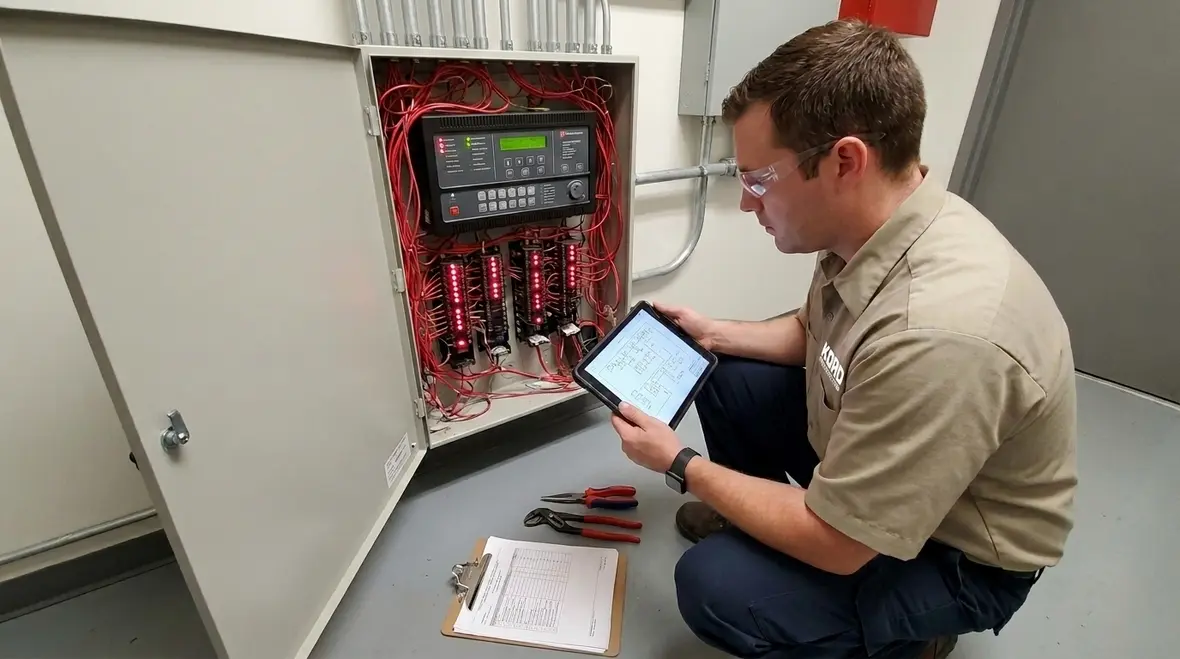
To reach NICET Level 3, a technician must handle more than installation. They must review submittals, interpret drawings, and confirm that the built system matches the approved intent. That includes verifying device placement, wiring methods, system configuration, and acceptance testing results.
Here is where the work becomes real. If a plan shows one thing but the field conditions change, a technician must respond with sound judgment. Therefore, candidates should practice how to document deviations and how to confirm the impact on system performance.
At Kord Fire Protection, technicians often use an approach similar to quality control. They check the details early, rather than waiting until a final acceptance walk. For example, they verify:
- Device addressing and layout so coverage and notification rules stay intact
- Circuit supervision behavior so faults create the correct signals
- Programming sequences so system actions match the intended emergency response
- Test results so the records support what the system can actually do
Some people treat verification like paperwork. Kord Fire Protection technicians treat it like insurance. It is calmer, cleaner, and it prevents the “surprise problem” that shows up after hours, the way a pop quiz shows up when you thought you were done with class.
Field checks that separate solid techs from guessers
Strong candidates make it a habit to compare plans, installed conditions, and panel behavior before someone else points out the mismatch. They look at addresses, sequences, labels, end-of-line supervision, and documentation consistency. None of that is glamorous, but it is exactly the kind of detail work that keeps a system reliable and a technician credible.
Dual column study plan for NICET Level 3 readiness
This is a practical way to organize time while staying focused on the skills that matter. Because real preparation requires balance, the plan below mixes study, field practice, and documentation.
Weekly focus
- Review a small code topic
- Match it to one project element
- Write a short “what it means” summary
Field habits
- Capture device location evidence
- Record test outcomes consistently
- Note any mismatches and fixes
Skills to practice
- Interpreting wiring and supervision
- Understanding alarm and trouble behavior
- Confirming system configuration logic
Performance check
- Can the candidate explain a test result
- Can the candidate connect it to a rule
- Can the candidate describe the next step
Also, candidates should practice explaining decisions out loud. So, when an evaluator asks for reasoning, the candidate does not freeze like a deer in the headlights. They speak clearly, reference the rule, and connect it to field reality.
Common mistakes that slow candidates down
Even strong technicians can get stalled. Common mistakes include studying only the test outline, relying on memory instead of job notes, and skipping the “system behavior” layer. For example, a candidate might know what a device is, but not how it communicates with the panel during alarms and troubles. Then, the candidate struggles when scenarios get more detailed.
Another slow down comes from poor documentation habits. Candidates sometimes collect paperwork without organizing it by task type or system feature. Consequently, applications feel heavy and time consuming, and that drains motivation right when it matters most.
Kord Fire Protection technicians also point out a quieter issue. Some candidates avoid asking questions on new job sites because they fear looking inexperienced. Yet the real pros ask. They ask early, they verify assumptions, and they build confidence through accuracy. That behavior speeds up learning faster than any magic shortcut.
One more mistake is treating study and field work like separate worlds. The candidates who progress faster are the ones who connect them constantly. They read a requirement, see it in a real system, test it, document it, and then explain it back in plain language. That loop turns information into judgment, and judgment is the whole game at this level.
FAQ
Conclusion and next steps
Reaching NICET Level 3 in Fire Alarm Systems takes steady work, clear documentation, and code understanding that matches real job behavior. Kord Fire Protection technicians show that success comes from methodical habits: verify early, test correctly, and explain the “why” behind each decision. If a candidate wants momentum, they should start by organizing their project evidence this week and building a focused study routine.
Ready to move forward? Take the next step with support grounded in real system performance and documented service. Kord Fire Protection provides dedicated fire alarm services including installation, inspections, testing, repairs, and monitoring that align with the same field-first mindset discussed throughout this article. That makes it a smart next click for candidates and facility teams who want practical perspective, not fantasy version planning.

Join Our Newsletter!
Get the latest fire safety tips delivered straight to your inbox From our Newsletter.