
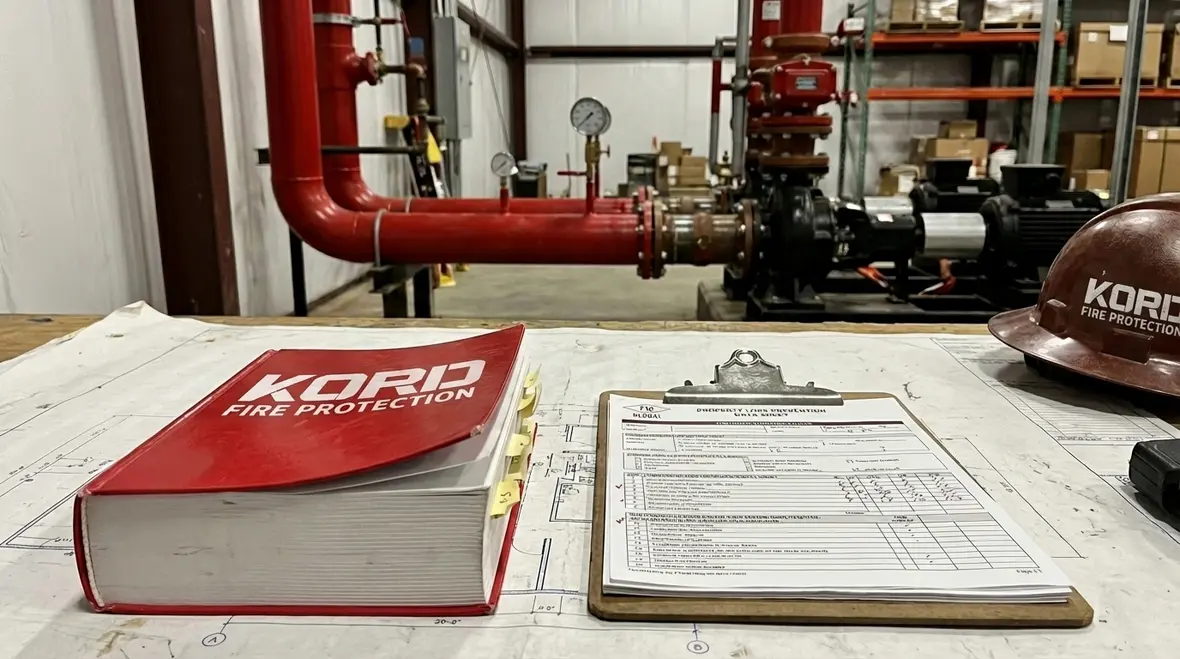
NFPA vs FM Global Requirements in Fire Protection
NFPA vs FM Global: How Property Insurers Influence Fire Protection Design
When engineers debate nfpa vs fm global requirements, they are not arguing over paperwork. They are shaping how buildings breathe, how sprinklers respond, and how millions of dollars stay protected. In fact, property insurers often influence fire protection design just as much as local code officials do. Therefore, understanding the tension and harmony between these standards becomes critical for owners, architects, and contractors alike. Kord Fire Protection technicians often explain that ignoring either side is like building a ship and forgetting to check the weather. It may float, but it may not survive the storm. This article explores how these two giants shape modern fire protection and why that matters more than most people realize.

The Authority Behind the Badge
First, it helps to understand who these organizations are. The National Fire Protection Association creates consensus based codes and standards. These documents guide installation, inspection, testing, and maintenance across the United States and beyond. Local governments often adopt NFPA standards into law. Therefore, compliance with NFPA frequently means legal compliance.
FM Global, however, operates as a commercial property insurer. It writes insurance policies and, in turn, develops its own technical standards known as FM Data Sheets. Because FM Global carries financial risk, it builds requirements around loss prevention and property protection rather than just life safety.
Although both groups focus on fire safety, their motivations differ. NFPA focuses on minimum acceptable safety for occupants. Meanwhile, FM Global focuses on reducing property loss and business interruption. As a result, designers often face layered expectations.
Kord Fire Protection technicians explain it in simple terms. NFPA tells you what the law requires. FM Global tells you what the insurer demands if you want coverage. In other words, one keeps you legal. The other keeps you insured. And in construction, staying insured tends to get everyone’s attention rather quickly.
Full-service fire protection programs from firms like Kord Fire help bridge that gap between what the code says and what insurers expect.

How NFPA Shapes the Baseline of Fire Protection
NFPA standards form the backbone of fire protection design. For example, NFPA 13 governs sprinkler system installation. It defines hazard classifications, pipe sizing methods, design densities, and obstruction rules. Because jurisdictions adopt these standards, engineers must comply to obtain permits and pass inspections.
Additionally, NFPA documents establish testing intervals, maintenance procedures, and inspection frequencies. Therefore, they influence the full life cycle of a system, not just installation. That long term view protects occupants and ensures reliability.
However, NFPA typically sets minimum thresholds. It asks what is reasonably necessary to prevent loss of life and reduce structural damage. It does not always require the most conservative design possible. Instead, it balances safety with practicality and cost.
Consequently, many buildings meet NFPA standards and operate safely for decades. Yet when an insurer enters the picture, the conversation often changes.
Where NFPA Shows Up in Day-to-Day Operations
Beyond design, NFPA standards dictate how systems must be tested and maintained. NFPA 25, for instance, outlines inspection, testing, and maintenance for water-based fire protection systems. That means weekly fire pump checks, monthly valve inspections, and annual flow tests that keep systems ready when they are needed most. Kord Fire’s teams routinely perform fire pump inspections and testing to keep facilities in alignment with those NFPA baselines.
How FM Global Raises the Bar on Property Protection
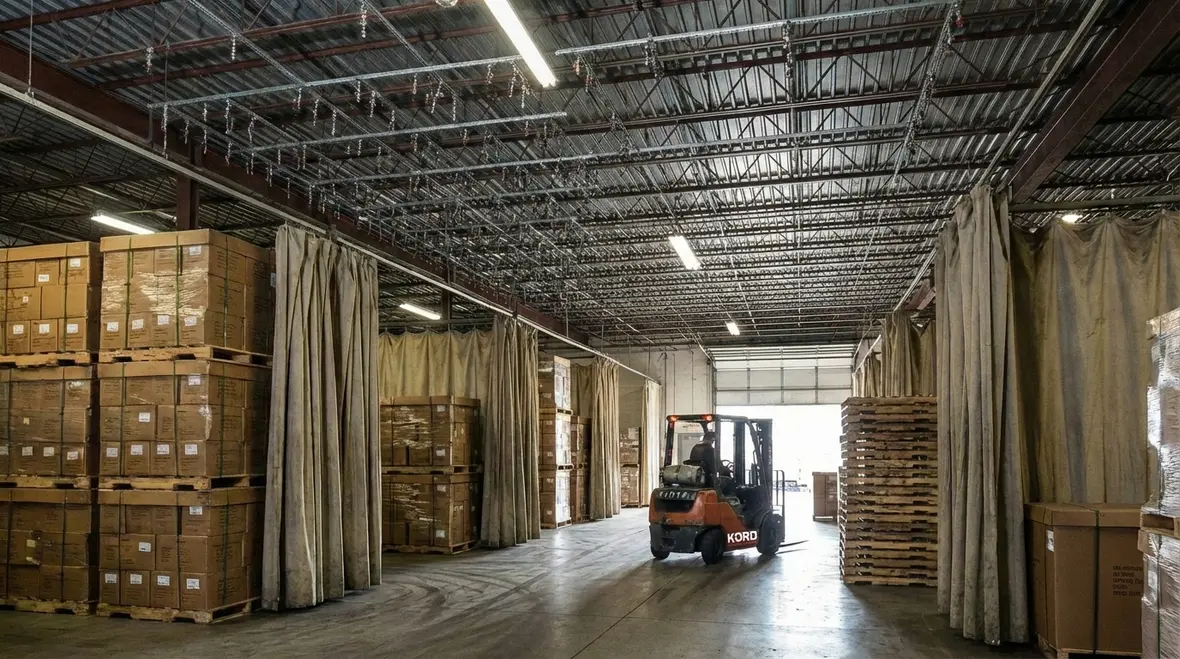
FM Global evaluates risk through a financial lens. Because it insures high value facilities such as warehouses, data centers, and manufacturing plants, it often demands stronger safeguards. For example, it may require higher sprinkler densities, additional draft curtains, or specific roof assemblies to reduce fire spread.
Furthermore, FM Global may reject certain materials that NFPA allows. Plastic commodities, high piled storage, and automated storage systems receive especially close scrutiny. As a result, engineers frequently redesign systems to satisfy insurer expectations.
Kord Fire Protection technicians often describe FM Global as the cautious friend who brings extra flashlights on a camping trip. You may not need them. However, if the power goes out, everyone appreciates the preparation.
Importantly, FM Global performs site visits and engineering reviews. Therefore, it does not simply rely on paperwork. It actively evaluates hazards and may issue recommendations that exceed local code.
NFPA vs FM Global Requirements in Real World Design Decisions
When comparing nfpa vs fm global requirements, differences usually appear in four areas:
1. Water Supply Demands
FM Global often requires higher flow rates or longer duration supplies. Consequently, designers may need larger fire pumps or water storage tanks.
2. Storage Configurations
While NFPA allows specific arrangements under defined criteria, FM Global may limit storage heights or require in rack sprinklers sooner.
3. Roof and Construction Materials
FM Global evaluates fire spread across roof decks and insulation. Therefore, it may demand FM approved assemblies that exceed NFPA minimums.
4. Equipment Approval
Both organizations maintain product approval listings. However, FM Global often requires FM approved equipment even if a UL listed alternative meets NFPA rules.
Because of these differences, project teams must coordinate early. Otherwise, late stage redesign can stall construction and inflate costs.
Designing a Warehouse Under Dual Standards
Imagine a large distribution center storing packaged goods. The local jurisdiction adopts NFPA 13. Therefore, the engineer calculates design density based on commodity class and storage height. Plans move forward smoothly.
Then, the owner secures coverage through FM Global. Suddenly, the insurer requests a higher density curve and additional hose stream allowance. Moreover, it calls for draft curtains at specific intervals.
At this point, the contractor must evaluate whether the existing water supply can handle the new demand. If not, a fire pump upgrade becomes necessary. Consequently, electrical loads increase and space planning shifts.
Kord Fire Protection technicians often walk owners through these moments. They explain that aligning insurer and code expectations early prevents expensive surprises. In their words, fire protection should not feel like a plot twist in a thriller movie.
Side by Side Comparison of Core Differences
NFPA Standards
Minimum life safety focus
Adopted into law by jurisdictions
Consensus driven committees
Allows multiple equivalent methods
Inspection frequency defined by code
FM Global Data Sheets
Property loss prevention focus
Enforced through insurance policy terms
Developed by insurer engineers
Often specifies narrower solutions
May add additional insurer audits
This side by side view highlights a key reality. Neither system exists in isolation. Instead, they overlap and sometimes compete. Therefore, effective design requires understanding both perspectives from the start.
Which Standard Takes Priority?
This question appears often in design meetings. The short answer is both. Legally, a building must satisfy adopted codes. Therefore, NFPA compliance remains mandatory where enforced by law. However, if an owner carries FM Global insurance, policy terms may require adherence to FM Data Sheets as a condition of coverage.
In practice, engineers typically design to the more stringent requirement. Although that approach may increase upfront cost, it reduces the risk of rework and coverage disputes. Additionally, it demonstrates due diligence to stakeholders and investors.
Kord Fire Protection technicians emphasize collaboration. They recommend involving the insurer during schematic design rather than after permit submission. That proactive step often saves months of revisions.
Financial Impact and Long Term Risk Strategy
Cost often drives decisions. Higher sprinkler densities require larger pipe, stronger pumps, and sometimes reinforced structural support. Therefore, owners may question the added expense.
However, insurers analyze long term loss data. They examine fire events, business interruption claims, and rebuild timelines. Consequently, FM Global requirements frequently reflect real world fire performance, not just theoretical models.
Moreover, enhanced systems may reduce premiums over time. Although savings vary, stronger protection can improve a facility’s risk rating. That financial benefit sometimes offsets initial capital costs.
In contrast, designing only to minimum code may save money upfront. Yet if a major loss occurs, downtime can eclipse any early savings. As many risk managers note, the cheapest system rarely feels cheap after a fire.
Guidance from Kord Fire Protection Technicians
Kord Fire Protection technicians approach these projects with calm authority. They translate technical language into clear guidance for owners and contractors. For example, they review water supply curves, evaluate commodity classifications, and coordinate with insurers before installation begins.
Additionally, they conduct thorough inspections and testing to ensure ongoing compliance. Because standards evolve, they monitor updates to both NFPA documents and FM Data Sheets. Therefore, facilities remain aligned with current expectations.
They often remind clients that fire protection design is not a box checking exercise. Instead, it serves as a risk management strategy that protects people, property, and reputation. And yes, sometimes that means installing a slightly larger pump than originally planned. As one technician joked, nobody has ever complained that their sprinkler system worked too well.
For facilities juggling complex storage, specialty suppression, and multiple insurers, partnering with a full-service provider that understands both NFPA and insurer expectations can be the difference between “passing inspection” and truly resilient protection. That is where Kord Fire’s fire pump services and full fire protection services come into play.
FAQ: NFPA and FM Global Requirements Explained
Conclusion: Align Protection with Purpose
Fire protection design stands at the crossroads of law and insurance. By understanding the balance between code compliance and insurer expectations, owners protect more than buildings. They protect continuity and peace of mind. Kord Fire Protection technicians help clients navigate these standards with clarity and confidence.
For projects facing complex risk profiles, partnering with experienced professionals ensures protection that satisfies both authority and insurer from day one. If your facility is wrestling with NFPA vs FM Global requirements—or simply needs a second set of eyes on its fire protection strategy—consider scheduling a review or contacting Kord Fire Protection to align your systems with your true level of risk.
Know Your Weapon Before You Fight the Flame
Kord Fire Protection is your go-to when it comes to all things fire protection. For over 20 years, we’ve been serving Southern California with the quality service and equipment to keep your home or business safe at all times. Our competitive prices reflect our unwavering commitment to protecting what matters most in the event of a fire emergency. Give us a call, send an email, or use that form!

Join Our Newsletter!
Get the latest fire safety tips delivered straight to your inbox From our Newsletter.



