
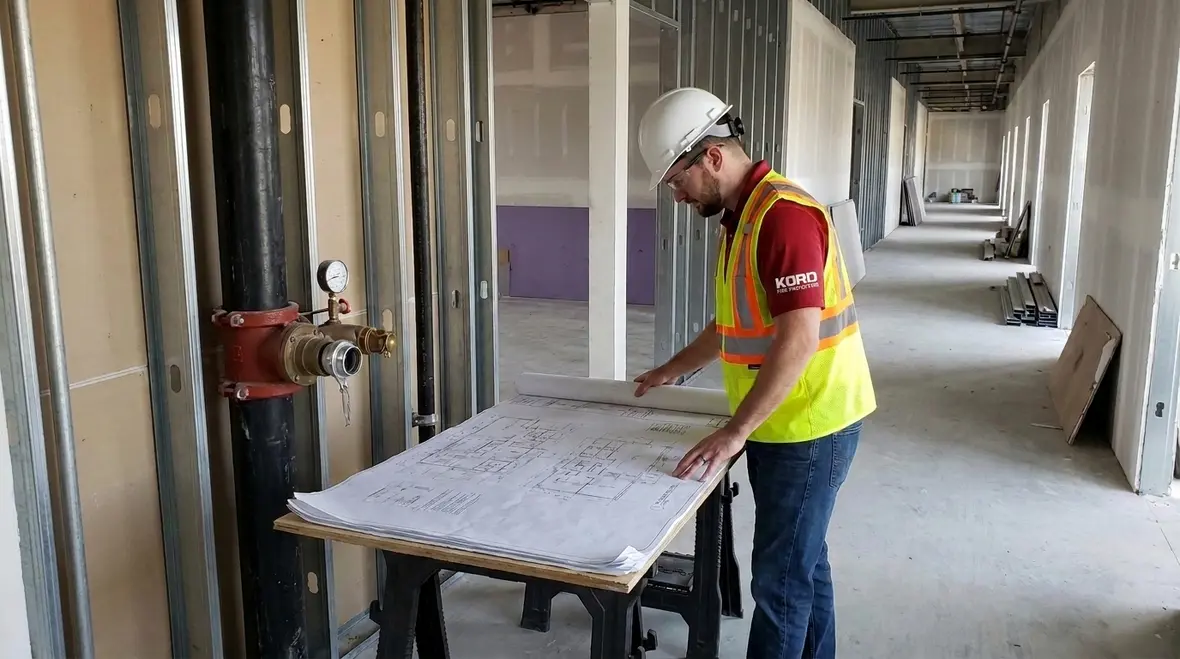
NFPA 14 Section 9.3: How Many Standpipes Does Your Building Require?
Quick Answer
NFPA 14 Section 9.3 determines standpipe quantity based on building layout, fire department access, and hose valve distribution to ensure effective reach. The “number” is not a guess. A qualified design review applies the NFPA 14 criteria to your hydraulics, floor plan, and hazard classification.
Before you get too far into layouts and assumptions, it helps to understand how fire protection services in Southern California can support early design review, inspections, repairs, and standpipe-related compliance planning.
Why Section 9.3 Changes the Standpipe Count
Many facility managers ask how many standpipes they need. The real answer depends on where fire exposure can occur and how quickly trained responders can reach those locations with usable hose streams. In practice, the number of standpipes required NFPA 14 is driven by coverage logic, standpipe arrangement, and the ability to reach protected areas without unacceptable hose travel. Early assumptions based only on building height or stories often fail during plan review.
For commercial, industrial, and retail properties, the design review and subsequent inspection process should treat NFPA 14 Section 9.3 as a coverage and operability requirement, not a paperwork step. That approach also reduces late-stage rework when inspectors verify accessibility, signage, valve locations, and functional performance.
What NFPA 14 Section 9.3 Actually Evaluates
Section 9.3 focuses on ensuring the standpipe system delivers hose connections with practical access and adequate coverage. This includes how many standpipes are needed and how they connect to the system configuration so responders can reach more than one critical location without relying on improvised routing.
Key planning inputs that affect your required count
- Building geometry and floor layout including long corridors, irregular bays, and large open floor plans that change hose routing efficiency.
- Standpipe placement strategy to reduce hose travel distance and improve access to hose valves.
- Hose valve and outlet distribution so responders can connect hoselines at locations that support fire attack plans.
- System type and configuration such as standpipe type, configuration, and how water supply performance supports practical firefighting flow.
- Fire department operations assumptions including access limitations and the likely operational approach for the building.
Because these inputs vary widely by occupancy and tenant improvements, the standpipe count often changes after architects finalize room dimensions, egress paths, and structural grid lines. That is why effective compliance begins before demolition walls or temporary partitions limit access.
How Designers Translate Coverage Into Standpipe Quantity
To determine the number of standpipes required NFPA 14, designers typically follow a disciplined process: they map protected floor areas, identify where hose valves must be available for practical reach, and then place standpipe locations to support that reach. The goal is to avoid “dead zones” where hose connections exist but routing becomes impractical due to distance, obstructions, or access constraints.
Common compliance pitfalls that increase the standpipe count
- Overreliance on assumptions such as equal spacing without considering corridor length, stair arrangement, and door locations that constrain movement.
- Late design changes after structural and tenant layouts finalize, leading to coverage gaps that force additional standpipes.
- Accessibility conflicts where a planned standpipe location interferes with mechanical equipment rooms, ceiling construction, or code-required clearances.
- Unverified hose valve elevation and location resulting in placement that cannot be used effectively during an emergency.
- Hydraulic mismatch where the system can technically deliver water but not at the pressure and flow needed for effective hose stream performance at the far ends.
Operationally, these issues show up during preconstruction reviews, acceptance testing, and routine inspections. A system that passes paperwork may still fail when it is time to demonstrate that the hose connections are usable in real conditions.
Once Installed, Standpipe Readiness Depends on Maintenance
Standpipe quantity is only one part of compliance. If the system does not operate as intended, responders may face degraded performance regardless of the number of standpipes required NFPA 14. Commercial facilities experience recurring failure points that should be addressed through a structured service program.
Operational mechanisms that require verification
- Valves and hose connections must rotate, seal, and label correctly. Sticking valves or missing caps directly reduce emergency usability.
- Standpipe risers and check components require inspection to confirm integrity and prevent leaks or partial blockages.
- Water supply condition must remain capable under real conditions. If supply performance changes, the system may not meet functional intent.
- Fire department connections (as applicable) must be accessible, unobstructed, and correctly configured for responder hookup.
Commercial inspection standards that protect your coverage intent
Regular inspections and flow or functional checks help confirm that the system can support actual firefighting use. Kord Fire Protection supports ongoing compliance with field-focused testing, documentation, and corrective action workflows designed to reduce repeat findings across inspection cycles.
For related guidance on design and safeguarding principles, see NFPA 14 safeguarding against fire hazards with standpipe and hose systems.
What Changes in Real Commercial Buildings
Standpipe planning differs by occupancy and renovation intensity. Retail tenant fit-outs, industrial process changes, and warehouse storage rearrangements can all affect practical hose access. For these facilities, the compliance strategy must include change management, not just initial installation.
Commercial and retail facilities
- Open sales areas can require standpipe placement that accounts for long travel paths.
- Tenant improvements may add partitions or merchandise staging that reduces practical access to hose valves.
- Service corridors and back-of-house layouts often change quickly, affecting cover and reach logic.
Industrial and warehouse facilities
- Large compartment-like zones and high bay configurations can create hose routing complexity.
- Operational clearance for fire attack and maintenance access must remain consistent with the design basis.
- Equipment vibration, storage reconfiguration, and floor plan changes increase the chance of valve obstructions over time.
Because these realities affect functional use, facility owners should treat the number of standpipes required NFPA 14 as part of a living compliance plan that includes periodic walkdowns and documentation updates.
How to Verify Your Standpipe Requirement Before Construction or Renovation
Verification prevents rework and helps ensure the system meets both code intent and operational use. A best practice is to align design review, hydraulic assumptions, and field access requirements early, then validate during preinstallation walkthroughs.
- Collect current floor plans with room dimensions, corridor lengths, door locations, and access constraints.
- Confirm occupancy and hazard classification so the design basis aligns with actual conditions.
- Map hose valve locations and evaluate reach feasibility across the entire floor.
- Confirm system configuration and supply performance assumptions match the installation.
- Review access requirements for clearances, signage, and obstructions that can impair operation.
- Plan inspection and maintenance integration so compliance does not degrade after turnover.
Kord Fire Protection works with commercial facilities to support design alignment, installation readiness, and sustained readiness through inspection and maintenance programs.
Frequently Asked Questions
Get a Standpipe Compliance Review That Matches Your Building Reality
To confirm the number of standpipes required NFPA 14 for your facility, rely on a methodical review of your layout, hose access, and operational intent, not rules of thumb. Kord Fire Protection helps commercial owners reduce inspection surprises through design support, field verification, and ongoing testing and maintenance. Schedule a compliance consultation today and establish a maintenance plan that keeps the standpipe system ready when it matters most.

Join Our Newsletter!
Get the latest fire safety tips delivered straight to your inbox From our Newsletter.



