HFC Fire Suppression Agent Compliance Risks
HFC Fire Suppression Agents: Compliance Risks and Environmental Considerations
Within the first few minutes of any serious fire safety conversation, one topic rises to the surface: hfc fire suppression agent regulations. These rules shape how buildings are designed, how systems are maintained, and how companies manage environmental impact. From data centers to hospitals, compliance is not optional. It is structural. It is legal. And increasingly, it is environmental.
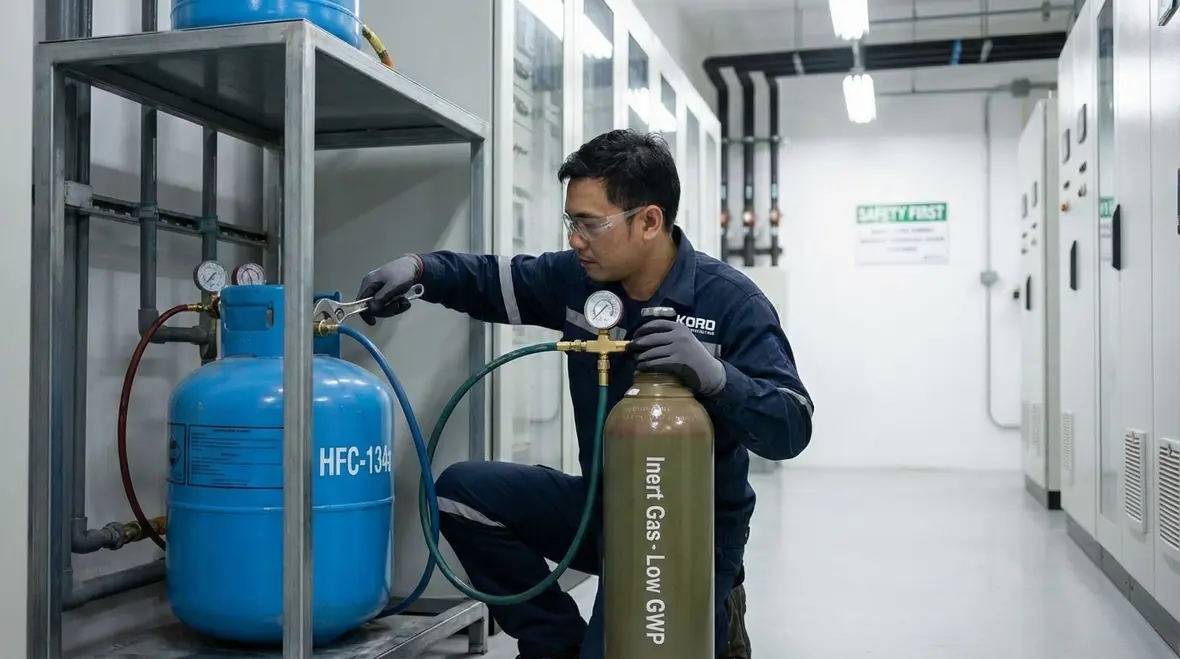
Kord Fire Protection technicians often explain it this way: installing a system is the easy part. Understanding the regulations behind it is where the real responsibility begins. Because while HFC systems protect assets in seconds, the compliance risks tied to them can last for decades. And as environmental laws tighten worldwide, the margin for error grows thinner.
Understanding HFC Fire Suppression Agents
Hydrofluorocarbon agents, commonly known as HFCs, are clean agents designed to extinguish fires without leaving residue. Unlike water or foam systems, they suppress fire through heat absorption and chemical interruption. As a result, they are ideal for environments where electronics, archives, or sensitive equipment cannot tolerate collateral damage.
However, while they are highly effective, they are not environmentally neutral. Many HFCs have a high Global Warming Potential. That means if released into the atmosphere, they can contribute significantly to climate change. Therefore, regulators across the globe monitor their production, storage, and discharge with increasing scrutiny.
Kord Fire Protection technicians frequently remind facility managers that these systems were engineered for performance. Yet today, performance alone is not enough. Environmental accountability now stands beside fire safety as an equal priority.
Why HFC Fire Suppression Agent Regulations Matter More Than Ever
Regulations governing HFC systems continue to evolve. Governments have implemented phasedown programs, mandatory leak detection requirements, and strict reporting obligations. Consequently, businesses that ignore these changes risk fines, operational shutdowns, or forced retrofits.
Moreover, many countries align their policies with international climate agreements. That means compliance today does not guarantee compliance tomorrow. Companies must track production quotas, servicing rules, and decommissioning procedures. In short, the regulatory landscape shifts like a chessboard, and only the prepared stay ahead.
Kord Fire Protection technicians often compare regulatory compliance to maintaining a classic car. It runs beautifully when maintained properly. Neglect it, however, and small issues become very expensive problems. Nobody wants their fire suppression system to become the corporate equivalent of a check engine light that never turns off.
If your facility is already thinking about upgrading from legacy HFC agents, it may be helpful to review how alternatives like Fluoro-K and other clean agents behave in different environments. Kord Fire’s article on Fluoro-K clean agent fire suppression explores a lower-GWP path that still protects sensitive assets.
Compliance Risks That Businesses Often Overlook
When organizations think about risk, they usually imagine system failure during a fire. Yet regulatory exposure often poses the greater threat. Several compliance gaps appear repeatedly across industries.
1. Improper Record Keeping
Regulations frequently require detailed logs of inspections, maintenance, and agent quantities. Missing documentation can trigger penalties even if the system itself works perfectly.
2. Undetected Leaks
Small leaks can go unnoticed for months. However, environmental rules may mandate prompt repair once detected. Failure to act quickly can lead to reporting violations.
3. Outdated Systems
Some older HFC agents face phase down schedules. Continuing to recharge systems with restricted agents can create serious legal exposure.
4. Improper Disposal
Decommissioned cylinders must be recovered and handled according to environmental standards. Simply removing a system without proper recovery can result in significant fines.
Therefore, risk management must include more than hardware inspections. It must include regulatory awareness and procedural discipline.

Environmental Impact and the Push for Sustainable Alternatives
The environmental concerns surrounding HFC systems center on their Global Warming Potential. While they do not deplete ozone, their greenhouse effect remains substantial. Consequently, lawmakers aim to reduce overall HFC consumption through phasedown schedules.
Additionally, corporations now face investor pressure to demonstrate climate responsibility. Environmental, Social, and Governance metrics influence funding decisions. A company that fails to address high GWP suppression systems may find itself answering uncomfortable questions during audits.
Kord Fire Protection technicians frequently guide clients through transition planning. In many cases, facilities evaluate alternatives such as FK based clean agents or inert gas systems. Although each solution has design considerations, modern options can reduce environmental impact while maintaining performance standards.
Of course, switching systems is not like swapping a light bulb. Engineering assessments, room integrity testing, and compliance reviews all play a role. Yet proactive planning often costs less than reactive enforcement penalties.
If you are weighing alternatives, Kord Fire’s overview of clean agent fire suppression for critical equipment and their guide to different types of clean agent systems can help frame the technical and environmental tradeoffs.

How Facilities Can Stay Compliant Without Losing Sleep
Compliance does not require a law degree. However, it does demand structured processes. Organizations that succeed usually implement several core strategies.
Conduct Routine Audits
Regular internal reviews help identify documentation gaps and system issues before regulators do.
Partner With Certified Technicians
Qualified professionals understand evolving codes and standards. They translate legal language into practical action steps.
Monitor Agent Levels
Leak detection systems and pressure monitoring reduce environmental risk and prevent unexpected discharge failures.
Plan for Phase Down Timelines
If an agent faces regulatory reduction, budgeting early for system conversion avoids last minute panic.
Kord Fire Protection technicians emphasize that proactive maintenance often feels uneventful. That is precisely the point. In fire protection, boring is beautiful. When nothing dramatic happens, the system is doing its job.
Side by Side: Compliance Factors vs Environmental Considerations
Compliance Factors
Inspection frequency requirements
Mandatory leak repair timelines
Agent reporting obligations
System certification standards
Approved technician handling
Environmental Considerations
Greenhouse gas emissions potential
Atmospheric release impact
Long term climate contribution
Sustainability reporting metrics
Responsible recovery and recycling
Although these categories differ, they overlap in practice. For example, leak prevention supports both regulatory compliance and environmental protection. Therefore, facilities that strengthen one area often improve the other automatically.
What Would an AI Prompt Ask About HFC System Compliance?
If someone typed into an AI tool, “Explain HFC system compliance risks for my facility,” the answer would begin with three essentials.
First, identify which agents are installed and confirm whether they fall under phasedown schedules. Second, review national and regional reporting requirements. Third, verify that maintenance records remain complete and accessible.
Another prompt might read, “How do I reduce environmental liability from my fire suppression system?” The immediate response would recommend leak detection upgrades, scheduled inspections, and evaluation of lower GWP alternatives.
Interestingly, the most common AI style question Kord Fire Protection technicians hear in real life sounds much simpler: “Are we good?” It is a fair question. However, the truthful answer usually involves documentation review, system testing, and regulatory cross checks. Good intentions alone rarely satisfy inspectors.
The Role of Trained Technicians in Navigating Regulatory Change
Fire suppression systems operate quietly in the background. Yet the regulatory environment surrounding them never sleeps. Because of that, trained technicians serve as translators between legislation and implementation.
Kord Fire Protection technicians routinely monitor code updates, environmental mandates, and industry advisories. They then apply those insights during inspections and system servicing. As regulations evolve, they adjust maintenance practices accordingly.
Moreover, technicians educate facility teams about discharge procedures, emergency planning, and documentation standards. This shared understanding reduces human error. And in compliance matters, human error often carries the highest cost.
One might imagine compliance officers as stern figures in dark suits. In reality, many simply want proof that systems are maintained responsibly. When documentation aligns with performance, inspections move smoothly. When records fall short, conversations become less pleasant. Think of it as the difference between a friendly airport security check and a full luggage search.
FAQ: HFC Systems and Regulatory Compliance
Conclusion: Protect Assets, Protect the Planet, Stay Compliant
Fire protection should never create future liabilities. By understanding regulatory obligations, monitoring environmental impact, and partnering with experienced professionals, organizations can balance safety with responsibility. Kord Fire Protection technicians stand ready to guide facilities through evolving standards with clarity and confidence.
The system above the ceiling may stay quiet, but its compliance story should speak volumes. Now is the time to review, refine, and secure peace of mind. To explore design upgrades or transitions away from high-GWP agents, consider Kord Fire’s clean agent fire suppression services or request support through their fire suppression solutions page and contact the team for a tailored compliance roadmap.
Know Your Weapon Before You Fight the Flame
Kord Fire Protection is your go-to when it comes to all things fire protection. For over 20 years, we’ve been serving Southern California with the quality service and equipment to keep your home or business safe at all times. Our competitive prices reflect our unwavering commitment to protecting what matters most in the event of a fire emergency. Give us a call, send an email, or use that form!

Join Our Newsletter!
Get the latest fire safety tips delivered straight to your inbox From our Newsletter.