NFPA 52 Section 9.2 General: CNG Major Fueling Equipment Requirements Overview
Quick Answer: NFPA 52 Section 9.2 establishes baseline safety expectations for CNG major fueling equipment, including siting, installation, protection of components, identification, and operational control. The intent is to prevent abnormal conditions, enable safe inspection and maintenance, and maintain performance over the equipment life cycle.
Facilities that need a broader compliance partner for inspection, testing, and maintenance can also review commercial fire suppression systems and services from Kord Fire Protection.
Why Section 9.2 Matters for Major CNG Fueling Systems
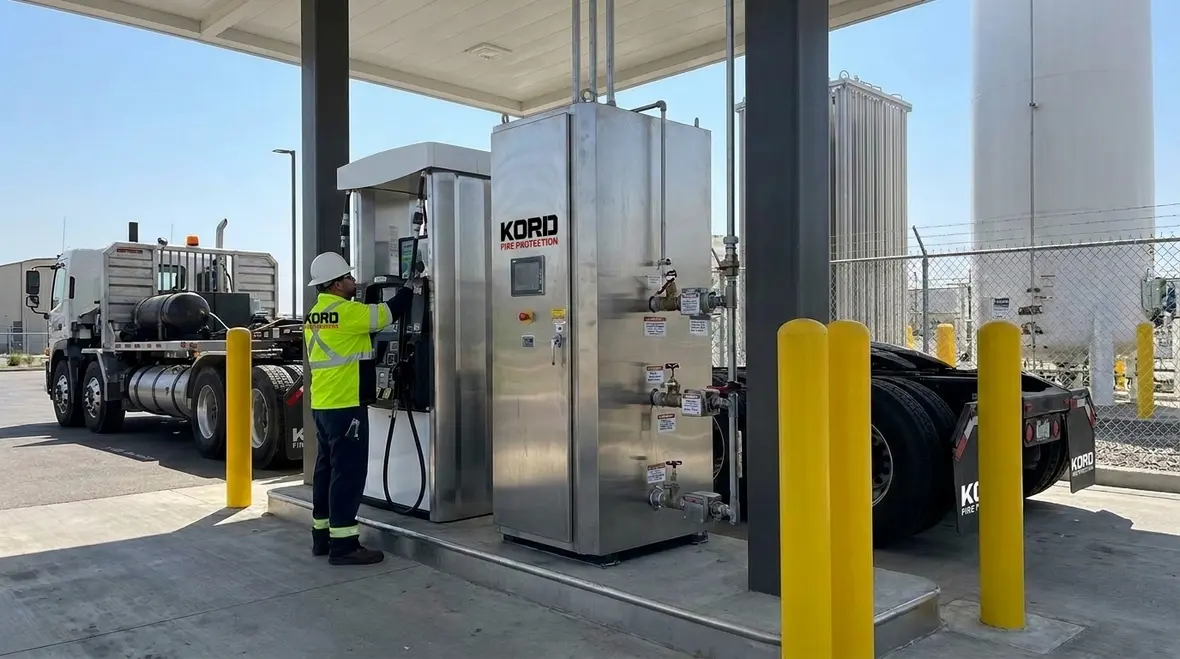
Commercial, industrial, and retail sites that operate CNG fueling must manage fuel hazards with consistent engineering discipline. NFPA 52 CNG major fueling equipment general requirements provide the “foundation layer” for major equipment, defining how systems are assembled, protected, operated, and kept ready for inspection. For facility owners and safety managers, Section 9.2 influences practical items like access pathways for maintenance, the visibility and labeling of critical shutoffs, and the integrity of protective barriers and component arrangements.
In real operations, compliance gaps often appear when equipment is installed, modified, or maintained without aligning field work to the original safety intent. The result can be inadequate access for inspection, unclear control sequences, or components left exposed in ways that undermine safe response to abnormal conditions. A commercial fire protection partner like Kord Fire Protection helps translate code expectations into repeatable inspection and maintenance routines.
What NFPA 52 Typically Requires Under “General” Provisions
Section 9.2 “General” is designed to set baseline expectations for major CNG fueling equipment before more specific subsystem requirements apply. The general provisions usually address how equipment is arranged and controlled so that fuel handling remains safe under normal, abnormal, and maintenance conditions.
1) Equipment arrangement that supports safe operation
Major fueling hardware must be located and configured to reduce the likelihood that release, heat exposure, impact, or environmental factors will compromise system function. This affects how hoses, valves, regulators, filtration devices, and pressure limiting components are positioned relative to vehicle interfaces, traffic exposure, and surrounding hazards.
2) Operational controls and shutdown capability
Facilities need reliable ways to stop fueling quickly and safely when a fault is detected or a maintenance condition exists. Section 9.2 general expectations typically reinforce that controls and shutdown arrangements must be accessible, clearly identifiable, and consistent with safe operating procedures.
3) Protection of critical components
Fueling equipment depends on the integrity of pressure-containing components and the reliable performance of valves and regulators. General requirements emphasize protective measures that guard against physical damage, contamination, and conditions that can lead to leaks or malfunction.
How Major Equipment Interfaces Affect Compliance
Even when individual components are suitable, failures often originate at interfaces: connection points, transitions between subsystems, and the locations where service activities occur.
Vehicle fueling interfaces and operational workflow
The physical and procedural boundary between the fueling dispenser and the vehicle determines many day to day risk drivers. NFPA 52 general expectations typically require that the fueling interface remains suitable for inspection and safe continued use, including conditions that help prevent unintended contact with energized or pressurized components.
Shutoff locations, labeling, and confusion risk
Commercial facilities frequently experience delays during abnormal events because staff cannot quickly confirm which control applies to the affected equipment. Section 9.2 general requirements support clear identification and appropriate accessibility for critical shutoffs and operating controls. For fleet and retail sites, this matters during both emergency response and routine maintenance, when personnel must isolate the correct section of the system.
Separation, barriers, and exposure management
Where major equipment could be impacted by vehicles, forklifts, or routine operations, protection measures become part of the safety design. General provisions are intended to ensure that protection is not treated as optional after installation, especially where equipment is located near loading docks, storage areas, or public access routes.
Inspection and Maintenance: Where “General” Becomes Real
NFPA 52 Section 9.2 establishes baseline conditions that make later inspection and maintenance effective. If equipment is hard to access, labels are degraded, or protective measures are inconsistent, compliance becomes difficult even if the equipment was originally installed correctly.
Common failure points linked to maintenance gaps
- Loose or damaged connections during service activities, especially where components are repeatedly detached for filter or valve servicing.
- Degraded labeling that causes incorrect isolation steps during troubleshooting.
- Physical damage to protective covers or barriers, leaving components exposed to impact or contamination.
- Unexpected contamination from environmental ingress into filtration and pressure regulation assemblies.
- Unauthorized modifications that change access, routing, or control logic without an engineering review.
Practical inspection readiness for commercial sites
Major equipment must remain inspection ready. That means facilities should maintain clear access routes, protect measurement ports and inspection points from damage, and keep the equipment configuration aligned with documentation. Kord Fire Protection supports owners by building compliance-ready inspection and maintenance workflows that match how facilities actually operate, including how work permits, lockout practices, and abnormal condition procedures are executed.
For additional guidance on property and commercial fire protection risk management, see Kord Fire Protection resources here: Kord Fire Protection.
A related read that fits naturally here is Fire Suppression System Maintenance Basics for Owners, especially for teams building inspection routines that actually hold up outside the binder.
Operational Controls and Documentation That Hold Up Under Audit
Audits often focus on whether the facility can demonstrate that equipment remains compliant over time, not just at the time of installation. Section 9.2 general expectations drive documentation discipline because general provisions set the baseline for later compliance evaluation.
What good documentation looks like
- Commissioning records and equipment identification, including the configuration of major fueling equipment.
- Maintenance history linked to component replacement, repair, and functional verification.
- Inspection checklists that reflect the equipment arrangement and access needs created by the design.
- Abnormal event records showing corrective actions and any equipment changes.
Training and procedural alignment
Even the best engineered setup fails when operational procedures do not match field reality. Facilities should ensure staff understand which controls apply to which parts of the major fueling system and that staff can perform safe isolation for maintenance without bypassing protective intent.
Implementation Checklist: NFPA 52 CNG Major Fueling Equipment General Requirements
The following checklist supports a practical compliance approach aligned to NFPA 52 CNG major fueling equipment general requirements. It is not a replacement for code language, engineering judgment, or applicable authority having jurisdiction requirements. It helps organizations verify that the “general” safety intent remains intact from design through day to day operations.
| Area | What to Verify | Why It Matters |
|---|---|---|
| Equipment arrangement | Access pathways, protection from impact, and exposure control | Prevents damage and enables effective inspection |
| Control and shutdown | Clear identification, correct accessibility, safe isolation logic | Reduces response time and operational confusion |
| Component protection | Protective barriers and covers remain in place and functional | Maintains integrity of pressure and regulation components |
| Maintenance readiness | Labels readable, ports accessible, and configuration matches records | Improves inspection quality and audit defensibility |
| Modification control | Engineering review and documentation for changes | Prevents unintended safety and performance drift |
Frequently Asked Questions
Conclusion and Call to Action
NFPA 52 Section 9.2 general requirements establish the baseline for safe operation, protection, and inspection readiness of CNG major fueling equipment. Commercial sites reduce compliance risk when they manage access, labeling, shutdown capability, protective measures, and documented maintenance as an integrated system. Kord Fire Protection can help your facility verify readiness, strengthen inspection quality, and maintain ongoing compliance through structured testing and maintenance support. Contact Kord Fire Protection to schedule a compliance-focused review for your major CNG fueling equipment.

Join Our Newsletter!
Get the latest fire safety tips delivered straight to your inbox From our Newsletter.