NFPA 52 Section 9.4: Outdoor Non-Public Fueling From Transport Vehicles and Marine Vessels
Quick Answer
NFPA 52 Section 9.4 establishes safety requirements for outdoor non-public fueling activities when fuel is delivered by transport vehicles and marine vessels. The section focuses on hazard controls, equipment integrity, operating procedures, and maintenance practices to reduce ignition, spill, and impact risks during fueling.
Facilities that need broader compliance support across related system oversight can also benefit from full lifecycle fire protection servicing, especially when inspection, maintenance, and documentation have to stay aligned across multiple operational risks.
What does NFPA 52 Section 9.4 cover?
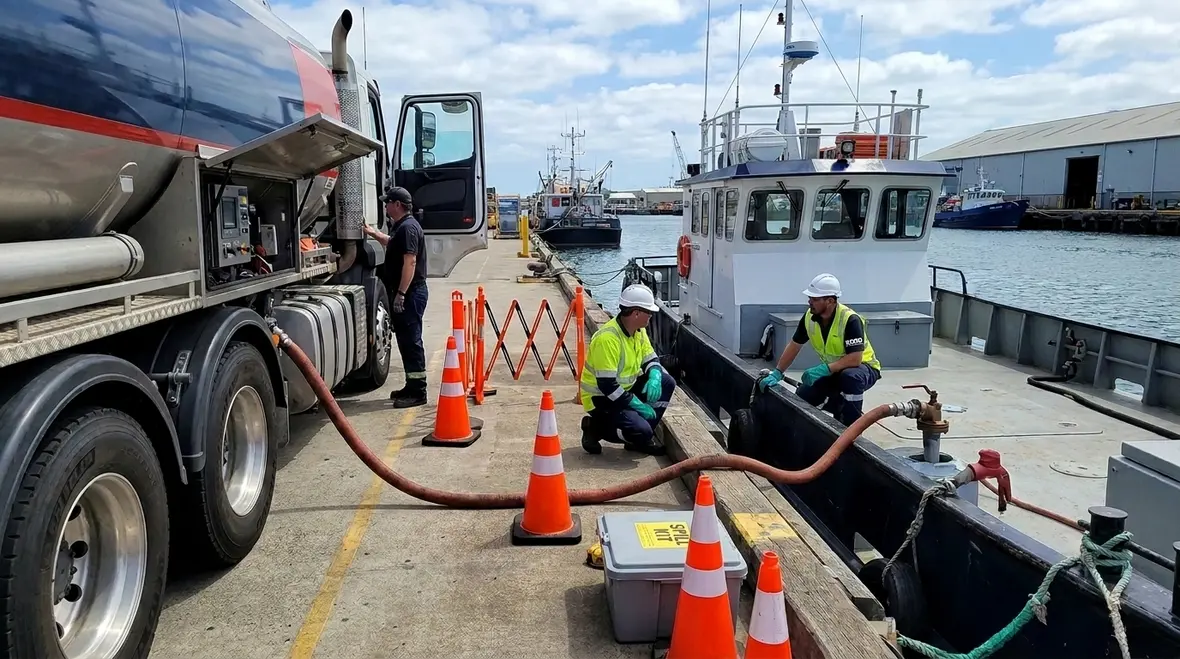
NFPA 52 Section 9.4 addresses outdoor non-public fueling performed using transport vehicles and marine vessels. In practical terms, it sets expectations for how commercial and industrial sites manage risks when fuel is delivered on-site but not via a permanent public dispensing system. Many facilities treat these operations as “routine deliveries,” yet the fueling interface introduces unique hazards, including hose handling damage, static discharge, control valve failure, loading and unloading impacts, and spill containment gaps.
For teams managing compliance across multiple delivery modes, the phrase NFPA 52 outdoor non-public fueling transport vessels becomes a useful framing device: it highlights that the primary compliance boundary is not the vehicle or vessel alone, but the entire fueling arrangement and operational control at the receiving site.
Compliance boundary: site responsibilities during transport fueling
Section 9.4 requirements place pressure on both the supplier and the receiving facility to coordinate safe practices. Commercial facilities often underestimate the receiving side. A compliant program typically includes site-specific procedures aligned to the activity type, defined fueling areas, and controlled access to ignition hazard zones.
Define the fueling location and access control
- Designate a fueling area with clear boundaries for vehicles, hoses, spill response equipment, and personnel staging.
- Control access during fueling through signage, barriers, and trained escorts when required by internal policy or local enforcement.
- Confirm the area supports safe hose routing without pinch points, trip hazards, or exposure to vehicle traffic.
Coordinate fueling interface details
- Assign a responsible party for start and stop authority during transfer operations.
- Confirm that the fueling arrangement, including couplings and connectors, matches the intended fuel type and service conditions.
- Verify that emergency shutdown and isolation actions are understood by both the supplier driver and the facility contact.
Operating procedures that reduce ignition and spill incidents
Fuel transfer failures often originate from predictable operational breakdowns: improper connection steps, rushed hose placement, incomplete verification of valve positions, or inadequate supervision during critical transfer moments. NFPA 52 Section 9.4 drives procedures that treat fueling as a controlled process, not an ad hoc task.
Connection, verification, and safe start
Site personnel typically influence safe outcomes by enforcing a stepwise start procedure. A strong program requires confirmation of:
- Correct equipment for the intended transfer, including hose condition and connector compatibility.
- Secure coupling engagement and proper alignment to prevent leaks under pressure.
- Valve positions verified before flow begins, with clear direction on who performs each check.
During transfer: manage hazards that build over time
- Monitor hose movement and prevent abrasion against fixed structures.
- Maintain separation from ignition sources, including engine ignition during coordination steps.
- Keep personnel out of high risk zones during peak flow and connection changes.
- Use controlled communication protocols, especially when fueling occurs near other operations such as loading docks or marine staging.
End of transfer and safe disconnection
Many leaks occur during disconnect. A compliant end-of-transfer sequence typically includes:
- Stop flow using the approved method for the transfer system.
- Relieve residual pressure and confirm drainage actions as intended by the equipment design.
- Reduce exposure time for open connections and apply protective measures where required.
- Inspect hoses and couplings for damage immediately after use and remove defective equipment from service.
Equipment integrity and common failure points
NFPA 52 Section 9.4 emphasizes that safe fueling depends on reliable equipment and maintained transfer components. Commercial sites frequently face “borderline” conditions that still pass basic visual inspection but fail under operational stress.
Hoses, couplings, valves, and fittings
- Hose aging issues: surface cracking, stiffness, delamination, and abrasion damage.
- Connector wear: damaged gaskets, thread or coupling misalignment, and compromised seals.
- Valve function problems: sticky valves, incomplete closure, and failures caused by contamination.
Facilities should require documented checks before and after each fueling event, including removal criteria for damaged components. Where vehicles or marine vessels supply fuel, the receiving site should still verify that transfer components meet the program standard for the fueling scenario.
Grounding and static control considerations
Static discharge and improper grounding can contribute to ignition risk. Procedures should ensure static control measures are consistent with the transfer setup and maintained as part of routine pre-fueling checks. For marine operations, grounding and bonding verification requires additional attention because hardware routing and contact points can change between berths.
Marine vessel fueling: added complexity and tighter controls
Outdoor fueling from marine vessels introduces operational variability: mooring movement, hose routing over or along dock surfaces, and coordination across multiple crews. NFPA 52 Section 9.4 requires facilities to manage these conditions so that transfer remains controlled and equipment is not exposed to mechanical damage.
Dock interfaces and hose routing
- Plan hose paths to avoid pinch zones created by line tension changes and vessel motion.
- Use protective guards where abrasion risks exist due to dock edges or equipment contact.
- Ensure that communications and stop signals remain effective despite background noise and crew movements.
Coordination across stakeholders
For compliance readiness, the receiving facility should establish a delivery coordination checklist that covers vessel identification, fueling area verification, emergency contact alignment, and documentation of transfer controls. This is where many sites fail because the fueling plan exists in one organization but not in the operational playbook of the other.
Inspection, testing, and maintenance program alignment
NFPA 52 compliance for outdoor non-public fueling does not end at procedure writing. It depends on inspection routines, maintenance tracking, and evidence retention that supports continued safe operation. A practical program aligns fueling procedure controls with component-level condition management.
What to inspect and how often
- Pre-use hose and coupling inspection, including seal integrity and visible damage.
- Post-use inspection and removal from service criteria for defective items.
- Verification of emergency equipment readiness, including spill response readiness and accessibility during fueling events.
- Periodic review of training records and competency for facility and contractor personnel.
Where third party support adds value
Many facilities can draft procedures but struggle with consistent verification and documentation across multiple fueling contractors and delivery patterns. Kord Fire Protection supports commercial, industrial, and retail clients with ongoing compliance services, including risk-informed review support, practical inspection coordination, and maintenance program alignment. For organizations seeking a reliable path to sustained readiness, Kord Fire Protection can help convert NFPA 52 expectations into an auditable operational system.
If you also manage other life safety and fire protection program elements, you may find additional guidance helpful through Kord Fire Protection for commercial fire safety support.
Frequently Asked Questions
Conclusion and call to action
NFPA 52 Section 9.4 requires disciplined control of outdoor non-public fueling when using transport vehicles and marine vessels. Facilities should strengthen fueling-area controls, enforce stepwise operating procedures, and implement evidence-based inspection and maintenance for hoses, couplings, valves, and emergency readiness. Partner with Kord Fire Protection to validate your program for ongoing compliance, operational consistency, and safer delivery outcomes. Schedule a practical review before the next fueling season to prevent avoidable interruptions and risk.

Join Our Newsletter!
Get the latest fire safety tips delivered straight to your inbox From our Newsletter.