NFPA 52 Section 9.1 Application: CNG Major Fueling Equipment Coverage
Quick Answer
NFPA 52 Section 9.1 governs how major CNG fueling equipment is applied, operated, inspected, and maintained for ongoing safety. The NFPA 52 CNG major fueling equipment application focuses on integration details, fire and gas hazard controls, and compliance documentation to support safe public and workplace fueling operations.
What does NFPA 52 Section 9.1 cover for major CNG fueling equipment?
NFPA 52 Section 9.1 addresses the practical application requirements for major CNG fueling equipment. In commercial settings, “major” equipment typically includes components and systems that significantly influence release control, fuel delivery reliability, and hazard mitigation during normal operation and credible abnormal conditions. The intent is not only design-time compliance, but also the ability to verify that the installation continues to function as intended throughout its lifecycle.
In practice, the NFPA 52 CNG major fueling equipment application becomes a facility readiness program. It ties equipment selection and arrangement to operational controls, inspection expectations, and documented maintenance. Fire prevention staff, mechanical contractors, and fuel system owners all need a shared understanding of what must be verified, how frequently it must be checked, and what failure modes trigger correction.
For a related look at how Kord Fire Protection approaches ongoing inspection readiness and documentation support, review their other fire protection services page.
How Section 9.1 requirements affect commercial fueling operations
Commercial and industrial fueling operations face recurring compliance pressure points that directly affect ongoing safety. Section 9.1 coverage is typically applied through disciplined operational procedures and inspection frameworks that map equipment performance to hazard controls. Common operational areas that facilities must align with Section 9.1 include:
Fueling system readiness: Confirming equipment is configured and controlled so that fueling occurs only under safe conditions and within defined operating parameters.
Release response: Ensuring that credible gas release scenarios trigger the intended protective actions, including emergency shutdown logic, isolation, and safe venting or evacuation practices.
Operational controls: Maintaining procedures for startup, fueling, shutdown, and abnormal condition handling that support consistent, repeatable safe operation.
Recordkeeping: Keeping evidence that inspections, functional testing, and maintenance activities align with the required acceptance and verification expectations.
Facilities that treat Section 9.1 as a one time install obligation often face audit failures during periodic reviews. Inspectors and AHJs commonly look for continuity: the system must not only be built correctly, it must be proven to continue performing correctly.
Major equipment integration: where compliance can break down
NFPA 52 Section 9.1 application is heavily dependent on how major CNG fueling equipment is integrated into the overall site safety strategy. The following integration points represent frequent field issues that increase risk if not managed through inspection and maintenance.
1) Pressure regulation and flow control reliability
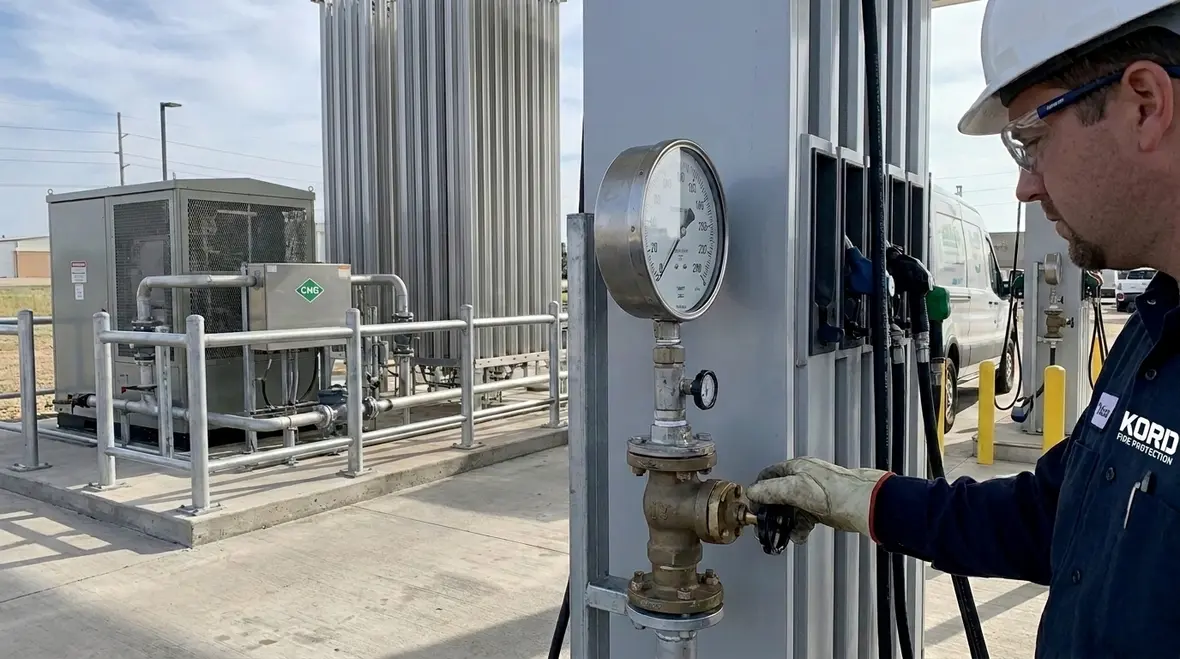
Regulators and flow controlling devices directly shape outlet pressure behavior and transfer reliability. Drift, contamination, or degraded components can cause unstable fueling performance, unexpected pressure excursions, or delayed fault responses. Compliance depends on verifying that the system remains within the intended operating envelope after maintenance and over time.
Common failure points: Worn regulator internals, blocked filters, moisture or debris contamination, and incorrect reassembly after service.
What inspectors expect: Evidence that functional checks and corrective actions restore the required operating behavior.
2) Valves, isolation, and emergency shutdown coordination
Major fueling equipment includes valves that isolate sections of the system and emergency shutdown components that limit the impact of abnormal events. If isolation is not correctly coordinated, a small fault can escalate into a wider release scenario.
Common failure points: Miswired actuators, incorrect setpoints, impaired solenoids, and valve actuator binding after environmental exposure.
What compliance should cover: Shutdown and isolation behavior must match the intended sequence and operational logic, not just the presence of components.
3) Gas detection, alarm thresholds, and protective action timing
CNG detection systems are only effective when they reliably detect abnormal concentrations, communicate alarms to the right responses, and support a protective action timeline consistent with the hazard assessment. Section 9.1 application is typically enforced through functional verification and ongoing maintenance discipline.
Common failure points: Sensor drift, obstructed sensors, wiring degradation, and alarm setpoint changes not backed by validated documentation.
Practical compliance challenge: Facilities must manage calibration schedules and ensure detectors remain representative of the actual site conditions.
4) Hoses, connectors, and fueling interface integrity
Even when “major” equipment defines the core fueling system, the fueling interface controls how energy and gas flow move between the station and the vehicle. Worn or improperly maintained hoses and connectors can lead to leaks, improper coupling, or failed flow initiation under real operating conditions.
Common failure points: Surface abrasion, damaged end fittings, compromised seals, and undocumented replacement history.
What good compliance looks like: A structured inspection and replacement program paired with clear documentation of outcomes.
Inspection and maintenance practices that support NFPA 52 compliance
NFPA 52 Section 9.1 compliance is best achieved through a repeatable inspection and maintenance system that ties specific checks to specific risk drivers. Facilities that succeed typically implement the following operational controls.
Build a system map and verification matrix
A system map shows how major components connect to hazard controls. A verification matrix links each component to its inspection method and acceptance criteria. This approach reduces “tribal knowledge” and supports consistent audits across shifts, contractors, and site changes.
Use functional testing, not only visual checks
For major CNG fueling equipment, visual verification often does not confirm that protective actions will function correctly. Functional testing validates the complete chain of performance, including response timing, control logic, and controlled shutdown behavior.
Document maintenance decisions and corrective actions
Documentation should include what was found, what was changed, what was tested, and the test results. If repairs alter configuration, the documentation should show how the station returns to the required safe operating behavior.
Train operators on abnormal event handling
Operators should understand the station sequence for normal fueling, what constitutes an abnormal condition, and which actions prevent escalation. Training should align with station procedures and match the behavior expected by emergency shutdown and isolation systems.
For an evidence based compliance program, many facilities partner with Kord Fire Protection to manage ongoing inspection readiness, testing, and documentation support. This helps commercial, industrial, and retail sites demonstrate that their major CNG fueling equipment continues to meet safety expectations after maintenance and over time.
Where Kord Fire Protection fits into Section 9.1 readiness
Commercial fueling systems require more than installation verification. They require continuous assurance that major CNG fueling equipment remains dependable, properly maintained, and able to execute protective actions when needed. Kord Fire Protection supports facilities by providing structured compliance services that align inspection scope, testing approach, and documentation practices with real operational requirements.
If you want to strengthen your station compliance workflow, consider reviewing Kord Fire Protection for commercial fire protection services and ongoing support strategies for fueling and industrial hazard environments.
Frequently Asked Questions
Next step: make your NFPA 52 coverage measurable
Ensure your NFPA 52 CNG major fueling equipment application is supported by a verification matrix, functional testing evidence, and maintenance documentation that reflects real station performance. Contact Kord Fire Protection to review your current inspection and testing workflow, identify coverage gaps, and build an ongoing compliance plan that stands up during internal reviews and AHJ audits.

Join Our Newsletter!
Get the latest fire safety tips delivered straight to your inbox From our Newsletter.