
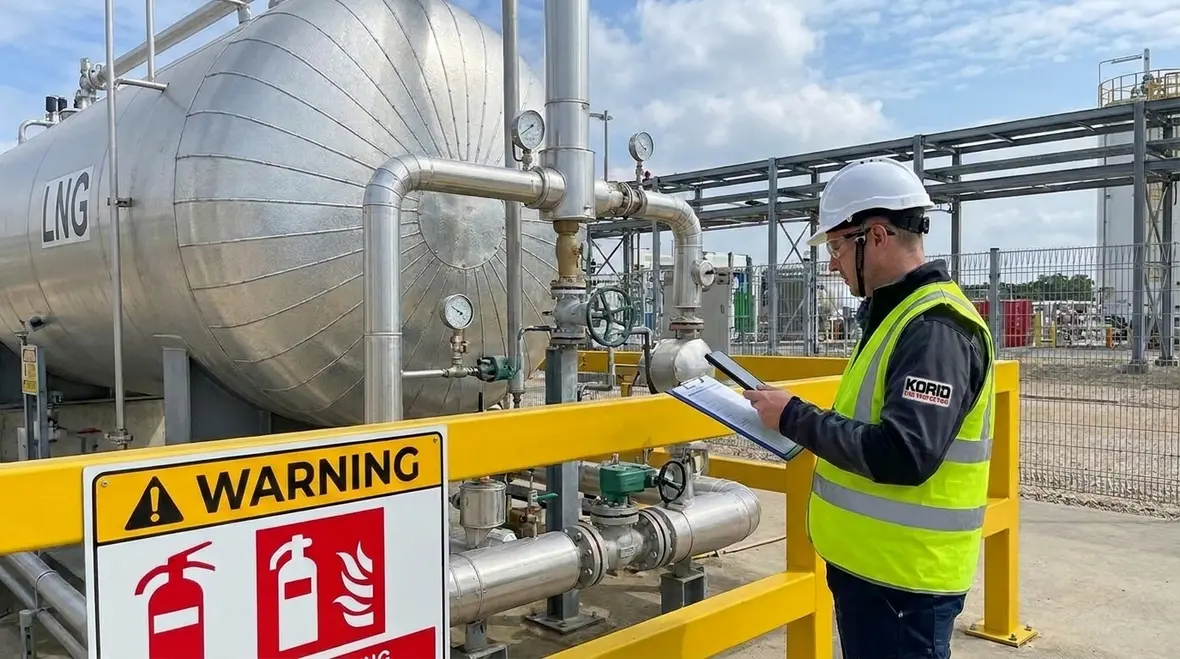
NFPA 52 Section 16.9: LNG Supplemental Site Safety and Protection Requirements
Quick Answer: NFPA 52 Section 16.9 sets supplemental safety and protection requirements for LNG sites beyond baseline code provisions. It focuses on maintaining safe conditions through site safeguards, reliable protective measures, and verifiable operational readiness, supported by inspection, documentation, and maintenance routines.
What NFPA 52 Section 16.9 Requires for Supplemental LNG Site Safety
NFPA 52 Section 16.9 addresses supplemental site safety and protection for LNG facilities when conditions, configurations, or risk profiles require additional measures. For operators, the key compliance objective is straightforward: implement protective safeguards that remain effective during normal operations, credible abnormal events, and emergency response activities. In practice, this means systems must not only exist, but also perform as intended over time, with documented inspection and maintenance.
Commercial operators often discover that “supplemental” provisions become the most audit intensive elements because they require continuous readiness. The phrase NFPA 52 LNG supplemental site safety protection requirements is commonly used during compliance reviews because the requirements frequently connect site layout controls, protective device reliability, and ongoing verification activities.
Teams tightening documentation and verification routines can also benefit from reviewing fire safety system documentation for compliance, especially when audit readiness depends as much on records as it does on field performance.
How Section 16.9 Impacts Real-World LNG Operations
Section 16.9 typically manifests in three operational domains that matter to commercial, industrial, and retail-adjacent properties hosting or supporting LNG operations. Those domains include:
- Protection of people and assets: supplemental measures help reduce exposure pathways, limit escalation, and support safe evacuation and response.
- Integrity of safety functions: protective features must work when called upon, not just during initial commissioning.
- Sustained compliance readiness: ongoing inspection and maintenance controls ensure performance remains within acceptable tolerances.
In many facilities, the biggest gap appears after turnover from construction to operations. Temporary conditions, incomplete handover documents, deferred corrective actions, and insufficient testing intervals can cause supplemental safeguards to drift out of compliance. A mature program treats these safeguards like operational life safety systems: engineered, verified, and monitored.
Site Safeguards, Protective Measures, and Common Failure Points
NFPA 52 supplemental site protections often rely on coordinated components that fail in predictable ways. Understanding those failure points helps facilities reduce risk and reduce inspection findings.
1) Boundary and access control weaknesses
Supplemental protections frequently depend on managing access and preventing inadvertent interference with safety-critical areas. Common issues include damaged signage, missing or misaligned physical barriers, door hardware that does not close as designed, and access points that allow equipment or pedestrians into hazardous zones.
Operational consequence: unauthorized access and delayed response, especially when access controls fail during shift changes or storm events.
2) Detection and notification reliability problems
When supplemental protections rely on alarms, annunciation, or detection pathways, the system must remain properly calibrated and configured. Typical breakdowns include detector drift, incorrect setpoints, software or controller configuration changes, and wiring integrity degradation in harsh environmental conditions.
Operational consequence: alarms do not initiate at the intended thresholds, creating confusion during evacuation and emergency decision making.
3) Protective equipment availability and degraded components
Protective devices tied to safety actions can lose effectiveness due to deferred maintenance, worn actuators, clogged strainers or filters, failed solenoids, and aging components. Another frequent issue involves incomplete functional testing, where equipment is visually inspected but not exercised to verify control logic and actuation performance.
Operational consequence: protective systems appear present but cannot execute the intended protective action under real conditions.
4) Documentation and traceability gaps
Section 16.9 style requirements often expect the operator to prove that supplemental safeguards remain in service. Audits usually fail on the paperwork side first, including missing inspection records, incomplete test reports, absent calibration certificates, or unclear corrective action closure.
Operational consequence: even when hardware performs acceptably, the facility struggles to demonstrate ongoing compliance.
Inspection, Testing, and Maintenance Practices That Stand Up to Audits
To meet NFPA 52 LNG supplemental site safety protection requirements, organizations need a systemized approach that mirrors how safety equipment actually behaves in the field. A strong compliance program typically includes:
- Defined inspection intervals: align checks to device manufacturers, site risk, and operating cycles.
- Functional testing where it matters: verify that safety actions actually occur, not just that components are present.
- Corrective action discipline: establish response times, impact grading, and documented closure criteria.
- Calibration and verification controls: maintain traceability and confirm setpoints match the approved design.
- Maintained access to records: keep test results, work orders, and as built updates readily retrievable.
Many compliance teams benefit from an outside service partner that can deliver repeatable field verification and generate clean, audit ready documentation. Kord Fire Protection supports commercial facilities with ongoing testing, maintenance coordination, and documentation practices that help maintain inspection readiness.
If the facility also manages fire and life safety systems in parallel with LNG operations, consolidating service scopes can reduce schedule conflicts and prevent incomplete handovers between contractors. For related fire protection guidance, see proactive maintenance for fire pump system reliability.
Planning for Compliance: Implementation and Operational Readiness
Facilities typically struggle most when they wait until the inspection window to address supplemental safeguards. A compliance plan that works begins before operational acceptance and continues through day to day operations.
Operator readiness checklist (practical starting point)
- Confirm the site-specific LNG configuration and identify which supplemental safeguards apply based on layout and risk.
- Verify inspection and testing intervals for each safety related component tied to supplemental protections.
- Establish a documentation trail that links device ID, test results, corrective actions, and final verification.
- Train operations teams on what to observe during rounds, and what triggers escalation.
- Run periodic internal reviews to validate record completeness and ensure corrective actions do not remain open.
Commercial facility considerations
For commercial, industrial, and retail facilities that interface with LNG operations, supplemental protections must integrate with normal business operations. That integration includes maintaining safe traffic flow, ensuring contractor access is controlled, and coordinating work permitting so that safety functions are not bypassed or left in a degraded state during routine maintenance.
Frequently Asked Questions
Conclusion and Call to Action
NFPA 52 Section 16.9 supplemental protections succeed only when they remain operationally effective and auditable over time. If your LNG site includes supplemental safeguards, schedule a compliance readiness review focused on inspection records, functional testing, and corrective action closure. Contact Kord Fire Protection to support ongoing testing, maintenance coordination, and documentation practices that help protect people, property, and your compliance posture.

Join Our Newsletter!
Get the latest fire safety tips delivered straight to your inbox From our Newsletter.


