
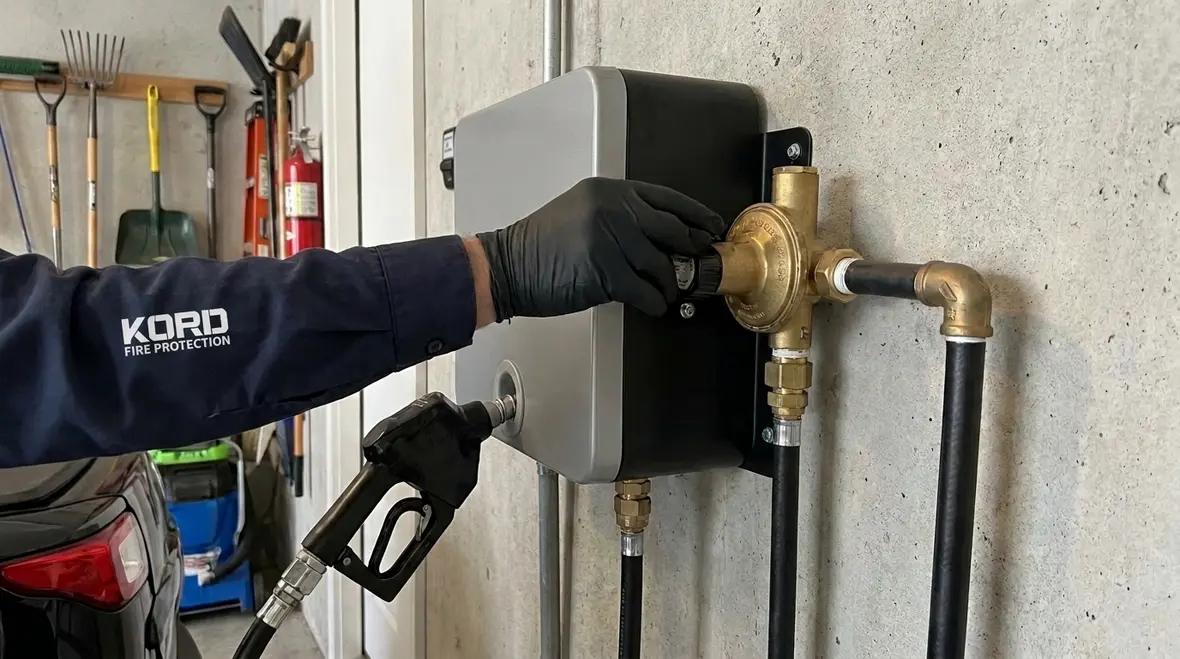
NFPA 52 Section 13.7: Pressure Regulation for Residential CNG Fueling
Quick Answer
NFPA 52 Section 13.7 sets safety-focused requirements for pressure regulation in residential CNG fueling systems, covering regulator selection, installation practices, controls, and operational safeguards. Compliance depends on proper sizing, venting, monitoring, and maintenance of regulators and related components to prevent unsafe pressure excursions.
For teams building a stronger inspection program around these controls, a useful related resource is fire protection compliance auditing, which fits naturally with documenting regulator setup, verification, and ongoing maintenance.
What NFPA 52 residential CNG pressure regulation requirements actually target
NFPA 52 residential CNG pressure regulation requirements focus on keeping CNG delivery pressures within safe design limits during steady operation, demand changes, and upset conditions. Section 13.7 is not limited to choosing a regulator. It governs how pressure reduction is achieved, how pressure is controlled and limited, how the system handles venting, and how the installation maintains safe flow paths and reliable operation over time.
From a fire safety and inspection standpoint, the intent is straightforward: minimize the likelihood of regulator malfunction leading to high pressure at end-use equipment, uncontrolled discharge, or unsafe venting into occupied or ignition-exposed areas. Commercial and retail fueling operators often recognize these hazards immediately because the same failure modes commonly appear in field investigations: incorrect regulator sizing, improper vent routing, missing or defective relief protection, and inadequate maintenance intervals.
Section 13.7 scope and where pressure regulation fits in the residential fueling chain
Residential CNG fueling systems typically include components that control pressure and ensure predictable delivery to the appliance or vehicle interface. Pressure regulation serves as the bridge between high-pressure storage and the lower, controlled pressures used by downstream equipment.
Within the broader system, Section 13.7 pressure regulation requirements typically intersect with the following operational layers:
- Source pressure management: regulating from storage pressure down to a controlled setpoint suitable for the fueling demand profile.
- Control and stability: preventing oscillation or instability during varying flow rates.
- Protection against abnormal conditions: ensuring the system has a safe method for handling pressure excursions or component failures.
- Safe discharge and ventilation: managing regulator vents and any pressure-relief discharge locations.
Even when a residential setup appears “simpler” than a public station, the core hazard remains. Gas pressure regulators are mechanical and can fail due to debris, contamination, diaphragm deterioration, freeze or icing conditions, or improper installation. For that reason, compliance requires attention to both initial setup and ongoing verification.
Core compliance controls: regulator selection, installation, and setpoint discipline
Regulator selection and sizing: avoiding the most common compliance failures
One of the most frequent root causes behind noncompliance findings is incorrect regulator sizing relative to flow demand and pressure differentials. A regulator that is too small can operate at its limits, increasing the risk of instability, excessive cycling, or inadequate pressure control. A regulator that is not matched to the expected inlet and outlet pressure ranges can also create conditions that push the system toward safety device activation or unsafe excursions.
NFPA 52 Section 13.7 compliance is strengthened when installers document the design basis, including:
- Expected operating inlet pressure range.
- Required outlet pressure and acceptable operating tolerances.
- Maximum and minimum flow conditions, including likely demand transients.
- Evaluation of regulator response characteristics for the system’s fueling pattern.
Installation practices that directly affect safe operation
Pressure regulation performance depends on installation details that inspection teams often scrutinize. Compliance risk increases when vent piping is omitted or improperly routed, when regulators are exposed to water intrusion, or when discharge points can become obstructed.
Typical installation factors that require strict discipline include:
- Vent location and routing: regulator vents must discharge to safe locations and remain unobstructed.
- Orientation and protection: regulators should be installed in orientations consistent with manufacturer requirements and protected from physical damage and weather exposure.
- Clean pressure paths: upstream filters, strainer elements, and piping cleanliness affect regulator internal wear and stability.
- Correct materials and connections: fittings and piping must be compatible with CNG service and installed to withstand pressure and thermal cycling.
For commercial, industrial, and retail facilities, these same installation factors drive inspection results. Residential fueling systems still require consistent workmanship because regulator performance influences downstream safety equipment behavior and failure outcomes.
Operational safeguards: monitoring, relief protection, and safe venting behavior
Preventing dangerous pressure excursions
NFPA 52 Section 13.7 centers on pressure control reliability and safe handling of abnormal conditions. Regulators can fail, and systems must remain capable of limiting hazards even when regulation becomes unstable or components degrade.
In practical terms, compliance often depends on ensuring the system design includes appropriate pressure limiting or relief protection aligned with the regulated outlet. When pressure rises beyond safe thresholds, protection devices must function as intended and direct discharges away from ignition sources and occupied exposure points.
Vent discharge management and ignition risk control
Regulator vents and any relief discharge are often treated as “secondary details,” yet they frequently become the failure trigger in real incidents. Common field problems include vent terminations within recirculation zones, vent paths that allow moisture accumulation, and vent discharge points located near openings where gas could migrate.
Compliance requires that vented gas discharge does not introduce new hazards. Facilities should verify that:
- Vent termination points remain accessible and unobstructed.
- Discharge routes avoid pathways to buildings, basements, pits, or other confined spaces.
- Vent outlets follow the required separation and location intent of the applicable code and the manufacturer’s installation instructions.
Maintenance and inspection: how compliance stays real after installation
Why regulator maintenance schedules matter
Pressure regulation systems change over time. Contamination can accumulate, diaphragms can harden, seals can degrade, and vent passages can collect debris. Even systems that start within specification can drift out of compliance as components age.
Commercial facility standards and warranty programs often require documented maintenance, calibration checks, and functional testing. Residential systems should receive the same mindset, even if inspections are less frequent. A practical maintenance program verifies:
- Outlet pressure remains within allowable limits under representative flow conditions.
- Regulator vent paths are clear and discharge locations remain safe.
- Any pressure limiting or relief protection devices function or reset correctly as applicable.
- Signs of regulator wear, icing, contamination, or abnormal cycling are addressed promptly.
Common failure points inspection teams identify
When NFPA 52 residential CNG pressure regulation requirements are not met, inspection findings often reflect predictable failure categories:
- Evidence of icing or freezing: suggests an operational environment that affects regulator performance and may require design or maintenance adjustments.
- Vent obstruction: caused by debris, improper termination location, or poor weather protection.
- Incorrect setpoints or maladjustment: often linked to undocumented calibration changes.
- Regulator cycling or instability: points to wrong sizing, downstream restrictions, or internal contamination.
- Missing documentation: design basis and test evidence that cannot demonstrate safe operation.
For facilities that manage multiple CNG systems, repeatable verification procedures reduce variation and improve audit readiness. Kord Fire Protection supports compliance by providing ongoing technical services that align inspection expectations with real operational risk.
Related resource: For broader inspection planning and compliance support across gas and fire protection systems, see Kord Fire Protection and discuss how periodic verification can reduce downtime and inspection deficiencies.
If your team wants a stronger paperwork trail to support inspections, fire safety system documentation for compliance is another practical read that fits neatly with regulator setpoint records, testing logs, and maintenance history.
How commercial teams translate residential pressure regulation into field-ready compliance
Residential fueling systems operate on the same physical principles as larger installations. Commercial, industrial, and retail teams often apply a disciplined approach that also works well for residential setups:
- Design and documentation: preserve calculations, regulator selection data, and setpoint basis for traceable compliance.
- Commissioning verification: confirm outlet pressure stability and safe venting behavior under representative fueling demand.
- Change control: restrict adjustments and require documentation when any regulator or downstream component configuration changes.
- Preventive maintenance: implement time-based and condition-based checks, including vent inspections and functional verification.
- Training and housekeeping: ensure on-site personnel understand vent safety, obstruction prevention, and what abnormal regulator behavior signals.
This approach directly reduces the most common inspection gaps tied to NFPA 52 residential CNG pressure regulation requirements, especially those that develop after the initial installation phase.
Frequently Asked Questions
Call to action: keep pressure regulation compliant year-round
Pressure regulation compliance succeeds or fails in the field, not on paper. Kord Fire Protection helps commercial, industrial, and retail teams translate NFPA expectations into practical commissioning checks, inspection readiness, and recurring maintenance verification. Contact Kord Fire Protection to schedule a compliance review or testing plan tailored to your CNG fueling setup and your operational risk profile.

Join Our Newsletter!
Get the latest fire safety tips delivered straight to your inbox From our Newsletter.


