NFPA 52 Section 10.5: Siting Requirements for Outdoor CNG Station Equipment
Quick Answer: NFPA 52 Section 10.5 sets the minimum safety distances, placement rules, and separation concepts that govern how outdoor CNG equipment is located relative to buildings, ignition sources, and other hazards. Compliance depends on correct equipment classification, documented siting, and ongoing inspection readiness.
A strong companion to this topic is NFPA 52 Section 4.5: Operations and Maintenance Programs for CNG Facilities, especially if your team is trying to connect siting decisions to day to day inspection, maintenance, and documentation practices.
What NFPA 52 outdoor CNG station siting requirements actually control
NFPA 52 Section 10.5 addresses how outdoor CNG station equipment must be located to reduce the risk to people, property, and critical systems. These requirements function as a layered safety strategy. They focus on separation, limitation of exposure pathways, and controlling the consequences of a release by preventing hazardous zones from overlapping with ignition sources and occupied areas.
For facility operators, the most common compliance challenge is not a lack of awareness of “setbacks,” but inconsistent application of equipment identity and condition. Technically similar components can have different siting implications depending on configuration, operating state, and where release pathways could realistically direct gas accumulation.
Section 10.5 basics: separation concepts, not just distance
NFPA 52 outdoor CNG station siting requirements drive three practical outcomes. First, they limit how far hazardous gas could migrate toward people, vehicles, or critical structures in the event of a leak. Second, they reduce ignition potential by controlling proximity to ignition sources and operational heat. Third, they support safe access for emergency response, routine maintenance, and inspection activities.
Commercial, industrial, and retail environments often complicate siting because they introduce more variables than a standalone station. Examples include adjacent storefront HVAC intakes, loading docks, generator enclosures, rooftop utilities, lighting mast bases, and pedestrian circulation patterns.
When Section 10.5 is applied well, siting becomes a repeatable engineering and operations process. When it is applied poorly, teams find themselves reworking layouts after permitting, after vendor submittals, or after a first operational inspection reveals missing separation documentation.
How equipment type changes the siting outcome
Section 10.5 siting is tightly linked to what the station equipment does and how it can fail. The same physical footprint can be acceptable for one configuration and unacceptable for another. Teams must verify each component’s installation intent and operating interface before finalizing distances.
Compressors, dispensers, and related outdoor equipment
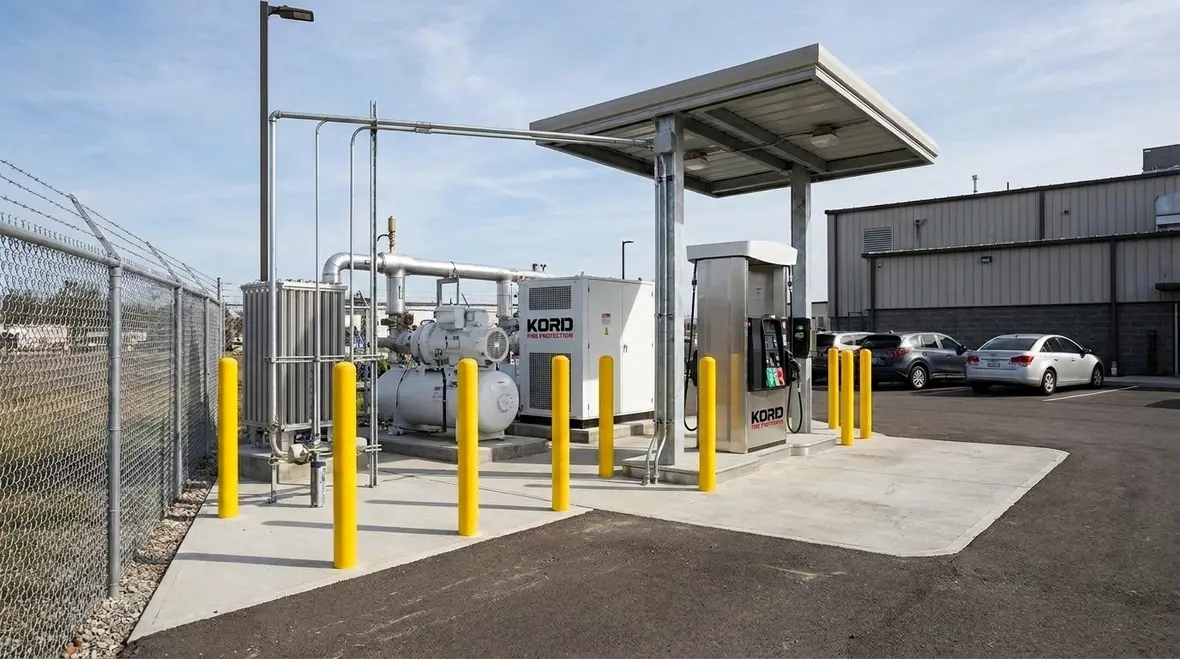
Outdoor equipment that can generate heat, create ignition potential, or produce pressure transitions typically receives more conservative placement treatment. The siting effort should map not only the equipment body, but also associated exhaust paths, cabling routes, control enclosures, and any nearby obstructions that could influence gas dispersion.
Commercial facilities often add windbreaks and barriers, such as temporary fencing, product racks, or seasonal decor. These can unintentionally disrupt dispersion behavior and change where accumulated gas might migrate. A robust siting review accounts for future site conditions, not only the as-built drawings.
Piping, valves, regulators, and release pathway realism
Operators sometimes assume that because a component sits within a specified distance, it is automatically compliant. In practice, siting decisions must consider release pathway realism. For example, venting, relief discharge points, and the location of breakable connections influence where gas can accumulate under calm conditions.
A frequent operational failure point involves assumptions during commissioning. If relief devices or vent discharge routing is changed after preconstruction drawings, the original siting basis can become invalid. Maintenance teams should treat any modification to vent routing, manifold arrangement, or control circuitry proximity as a triggering event for a compliance recheck.
Common commercial compliance gaps during inspections
Even when layouts look correct at commissioning, the real compliance risk tends to appear later through change management gaps. In day to day operations, the following issues repeatedly surface during audits, re-inspections, and contractor walkdowns.
As-built drift: Minor placement changes during installation that are not reflected in the final equipment siting documentation package.
Unknown ignition sources: New electrical components added by property teams, such as receptacles, heaters, or replacement lighting, placed without checking siting impacts.
Blocked access or altered dispersion: Bollards, signage, snow storage, landscaping, and temporary barriers that are not addressed in the siting basis.
Incomplete maintenance visibility: Maintenance contracts that do not explicitly require verification of separation and access around vent points, regulators, and control equipment.
These gaps become critical when emergency response planning and maintenance procedures rely on access lanes and clear surroundings. If teams cannot safely reach valves, regulators, or isolation points without violating separation principles, the station can fail practical safety expectations even if it passes a narrow checklist.
Inspection readiness: what operators should document and verify
NFPA 52 Section 10.5 siting requirements should be treated as a living compliance artifact. A strong program ties engineering drawings, manufacturer placement guidance, and on site inspection findings into one traceable system.
Recommended documentation package
Stamped site plan with equipment locations, distances, and clearly labeled reference points.
Equipment identification list that matches each physical unit to vendor submittals and operating modes.
Vent and discharge point mapping, including routing direction, termination locations, and any deflectors.
Ignition source inventory within the siting influence area, including electrical, mechanical, and operational heat sources.
Maintenance and access analysis that confirms safe clearances for inspection, regulator service, and emergency isolation.
Operational verification checks
Operators should implement routine checks that confirm the physical reality still matches the engineered siting basis. These checks should include verifying that any recent work did not relocate or obscure equipment, that temporary changes have not become permanent, and that inspection access remains unobstructed.
For ongoing risk reduction, commercial facilities benefit from a third party compliance and maintenance partner that can validate siting integrity over time, not only at initial acceptance.
For additional compliance support tailored to fire protection and safety systems, Kord Fire Protection provides ongoing commercial guidance, testing, and maintenance services that help facilities sustain safe operational conditions. For more information, visit Kord Fire Protection.
If your broader compliance program also needs structured service support, Kord Fire Protection’s full lifecycle of fire protection servicing is a helpful reference for connecting inspections, testing, preventive maintenance, repairs, and documentation into one practical workflow.
Design and change management: keeping siting compliant after construction
Outdoor CNG station siting is vulnerable to change because station environments are dynamic. Retail and industrial properties frequently add rooftop equipment, reconfigure parking and pedestrian flow, and update electrical infrastructure. Each change can affect separation assumptions and ignition source placement.
A practical change management approach links construction change orders and maintenance work orders to a siting impact review. This approach should evaluate whether modifications affect any of the following:
Equipment location, mounting elevation, or orientation
Vent termination points and discharge direction
Nearby ignition sources, including replaced lighting or added power panels
Access routes required for emergency operations and inspection
By treating siting as an operational requirement rather than a one-time approval, operators reduce the likelihood of recurring nonconformities and costly layout rework.
Frequently Asked Questions
Conclusion and call to action
NFPA 52 Section 10.5 siting compliance protects personnel, property, and operational continuity by controlling separation, ignition risk, and access. To keep your outdoor CNG installation inspection-ready, validate equipment identity, verify vent and discharge points, and manage site changes with traceable documentation. Contact Kord Fire Protection to support ongoing compliance reviews, testing, and maintenance that sustain safe performance over time.

Join Our Newsletter!
Get the latest fire safety tips delivered straight to your inbox From our Newsletter.