
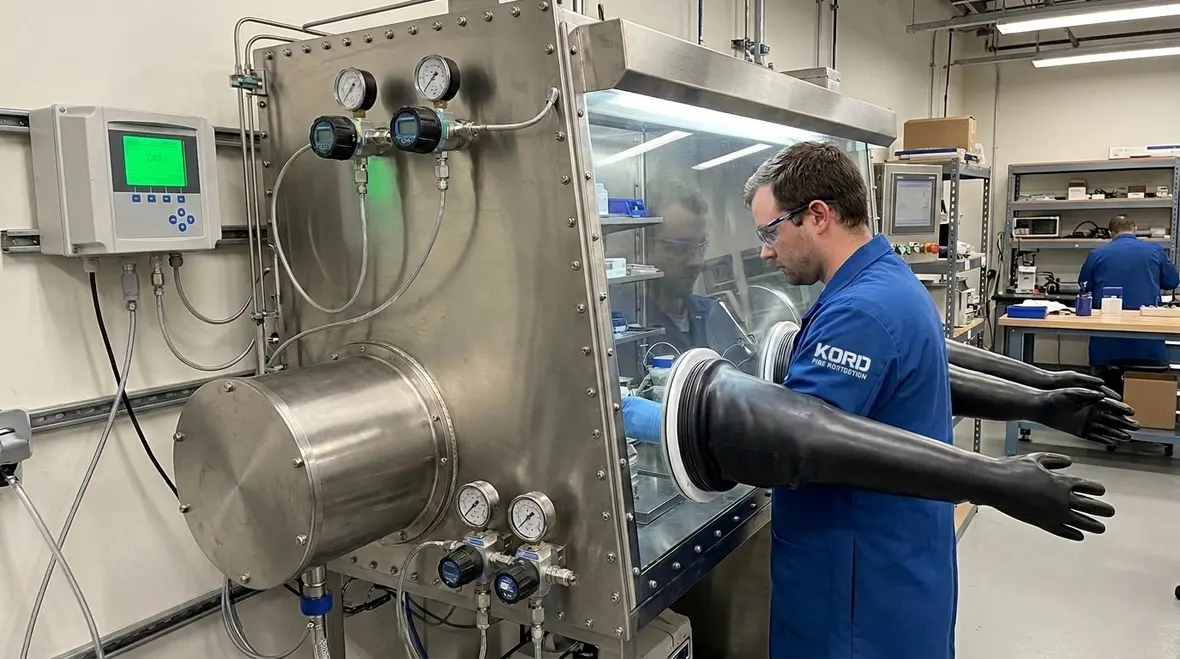
NFPA 45 Section 7.11: Inert Atmosphere Glove Box Requirements
Quick Answer
NFPA 45 Section 7.11 sets performance and safety expectations for glove boxes operated with an inert atmosphere. Facilities must control oxygen and flammable atmospheres, maintain enclosure integrity, and verify protective systems remain reliable through inspection, testing, and documented maintenance.
Why NFPA 45 inert atmosphere glove box requirements matter for real facilities
In commercial and industrial environments, glove boxes support controlled handling of reactive or hazardous materials while reducing ignition risk. NFPA 45 Section 7.11 drives the technical approach: keep the enclosure atmosphere inert, prevent air ingress, and ensure monitoring and protective functions perform as intended. The practical challenge for facility teams is that glove box compliance is not a one time installation task. It depends on ongoing verification of atmosphere quality, mechanical integrity, instrumentation accuracy, and maintenance discipline across normal operating modes.
For teams trying to align with NFPA 45 inert atmosphere glove box requirements, the compliance effort typically fails at the interface between “paper compliance” and day to day reliability: sensors drift, door seals harden, interlocks get bypassed during service, and purge systems lose effectiveness without trending and alarms review.
What NFPA 45 Section 7.11 requires for inert operation
NFPA 45 Section 7.11 addresses glove boxes that rely on an inert atmosphere to control hazards. Although specific sub requirements depend on glove box design and operating conditions, the intent remains consistent: the glove box must maintain an atmosphere that is non oxidizing and non ignitable for the materials handled, with systems configured to prevent hazardous conditions during normal use and foreseeable abnormal conditions.
In practice, compliance programs use three technical pillars:
- Atmosphere control: inert gas supply, purge and recovery behavior, and oxygen management to keep the glove box environment within safe limits.
- Physical enclosure integrity: leak resistance of seals, penetrations, viewing windows, and glove interfaces.
- Functional protection and verification: monitoring of atmosphere and system status, alarms, interlocks, and proof testing during inspections.
Facility owners and fire safety leaders also treat Section 7.11 as a lifecycle requirement. That means maintenance records, calibration documentation, and inspection findings stay linked to the ongoing risk assessment for the process materials stored and handled inside the enclosure.
How inert atmosphere is maintained, monitored, and proven
Inert atmosphere glove boxes rely on oxygen exclusion and atmosphere stability. The design typically includes inert gas delivery, purge controls, and an oxygen measurement approach that supports automatic control actions and operator alerts. Strong compliance programs connect the monitoring strategy to operating modes such as purge, standby, loading, unloading, and maintenance.
Oxygen measurement and alarm logic
Organizations commonly install oxygen analyzers or equivalent sensing devices to verify inert conditions. NFPA 45 inert atmosphere glove box requirements align with the expectation that monitoring remains trustworthy. That requires:
- Periodic calibration per manufacturer specifications and documented calibration intervals.
- Correct sensor placement and sampling pathway design to represent the breathing or breathing equivalent atmosphere inside the glove box volume.
- Alarm thresholds that trigger meaningful operator action, such as stopping operations, initiating purge, or preventing gas introduction during unsafe conditions.
- Interlocks that enforce safe states when monitoring indicates loss of inert atmosphere or system fault.
Purge and recovery performance
Purge systems must recover the target inert atmosphere after disturbances such as door openings, component replacement, glove changes, or planned maintenance. Compliance requires that operators understand disturbance events and that the facility can demonstrate the glove box returns to safe conditions within an established time window. Without recovery verification and trending, facilities can meet initial acceptance but fail in practice after service cycles or regulator changes.
Common compliance failure points
- Sensor drift: oxygen readings appear stable while accuracy degrades, leading to false confidence in compliance.
- Improper calibration gas handling: using expired calibration standards or skipping multi point checks.
- Alarm set points not coordinated with procedures: alarms activate but operators do not have defined actions that restore compliance.
- Purge capacity changes: blocked lines, regulator wear, or restricted filters reduce purge effectiveness over time.
Glove box integrity: seals, gloves, penetrations, and pressure behavior
Atmosphere control cannot compensate for enclosure failure. NFPA 45 Section 7.11 treats the glove box as an engineered barrier, so leak tightness and mechanical integrity drive the ability to maintain inert conditions. Operational reality shows that gloves and seals degrade, penetrations loosen, and maintenance activities create new pathways for air ingress.
Glove interfaces and seal maintenance
Glove replacement programs need defined inspection intervals and acceptance criteria. Facilities typically verify glove condition before each shift or after any disturbance. They also document replacement frequency and reasons, since repeated replacements can signal deeper enclosure sealing issues or operational mishandling.
Penetrations, ports, and access points
Ports for material transfer, power and instrumentation penetrations, and viewing windows require ongoing attention. Common program gaps include:
- Missing torque checks on fittings after service.
- Inadequate replacement parts control for seals and gaskets.
- Failure to re establish inert conditions after penetrations are opened.
Pressure or flow behavior during operations
Many glove boxes use controlled internal pressure relative to surrounding air to resist ingress. Compliance requires that the facility understands and verifies the behavior during each operating mode, especially during loading and unloading. A glove box may appear inert under steady conditions but allow air ingress during transient events when pressure and flow dynamics shift.
Inspections, testing, and records that stand up to audits
Commercial facility compliance depends on traceable evidence. NFPA 45 inert atmosphere glove box requirements should translate into an inspection and testing matrix that covers atmosphere performance, system interlocks, and mechanical integrity. This matrix often supports internal audits, third party reviews, and insurance or regulatory inquiries.
For a broader look at how structured testing and documentation programs are managed in real facilities, see this complete inspection, testing, and maintenance guide.
What to include in a practical compliance inspection plan
- Functional checks: verify that alarms trigger, interlocks engage, and operators receive clear prompts.
- Atmosphere verification: confirm oxygen readings and recovery performance meet documented criteria.
- Calibration documentation: include sensor calibration certificates, test dates, and results trending.
- Leak and integrity checks: evaluate seals and glove condition, and verify that any maintenance returns the glove box to safe operating condition.
- Maintenance effectiveness: track recurring faults, nuisance alarms, and repeated glove failures to identify root causes.
Operational discipline that prevents drift from compliance
Even the best engineered glove box can fall out of compliance without operating discipline. Facility procedures should include control of:
- Door opening and transfer steps, including restart and re purge instructions.
- Maintenance lockout and restart validation before return to service.
- Alarm response time and escalation paths when oxygen conditions shift.
To support ongoing compliance, Kord Fire Protection helps commercial facilities build maintainable testing and documentation routines, including scheduled verification support and maintenance coordination for inert atmosphere systems. For more on structured fire protection compliance workflows, see Kord Fire Protection.
How facilities implement NFPA 45 requirements without disrupting production
Glove boxes support processes that often cannot stop abruptly. Implementation success comes from integrating compliance work into operational windows and controlling change. A well managed approach reduces downtime while strengthening defensibility.
Change management for service, sensors, and parts
Replace components using controlled procedures. Facilities should define which changes require re verification of atmosphere performance, which changes only require local inspection, and which changes trigger full functional testing. Calibration and seal replacement should always link back to the acceptance criteria used for atmosphere inert operation.
Trending and performance monitoring
Instead of relying on pass fail results alone, many high performing facilities trend oxygen readings, purge recovery times, and alarm frequency. Trending catches degradation early, such as slow sensor response changes or small leak development that still meets short term thresholds but could fail during a transfer event.
Training and competency
Operators require clear competency expectations for inert condition verification, response to alarms, and correct return to service after maintenance. The most common operational weakness is informal handling of alarm conditions, including bypassing steps intended to restore inert atmosphere.
Frequently Asked Questions
Next step: make NFPA 45 inert atmosphere glove box compliance measurable
Facilities can reduce audit risk by converting NFPA 45 Section 7.11 intent into a repeatable test and maintenance program tied to operating modes, calibration records, and integrity verification. Kord Fire Protection supports commercial owners with structured compliance planning, verification activities, and maintenance coordination so inert atmosphere performance stays reliable. Contact Kord Fire Protection to review your current glove box testing matrix and close the most common failure points before they impact production or safety.

Join Our Newsletter!
Get the latest fire safety tips delivered straight to your inbox From our Newsletter.



