
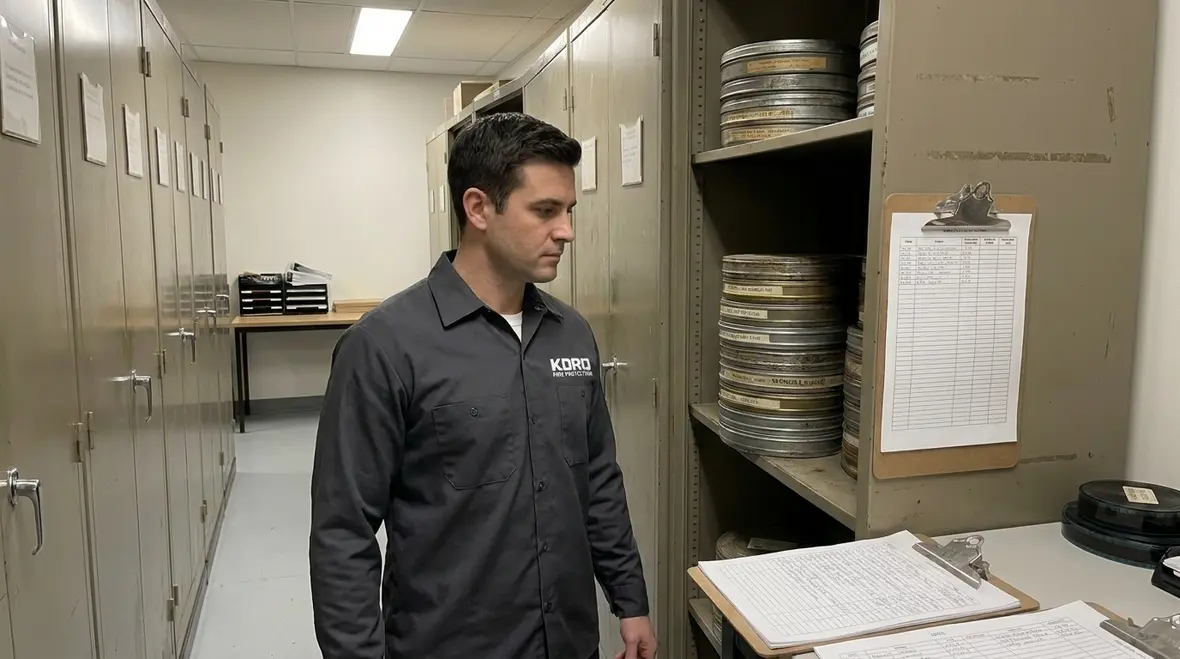
NFPA 40 Section 1.4 Retroactivity: Existing Nitrate Film Storage and the 2025 Edition
Quick Answer
NFPA 40 Section 1.4 addresses how the 2025 edition applies to existing nitrate film storage. In most cases, the standard emphasizes safety upgrades where conditions create unacceptable risk, rather than automatic full retroactive compliance. Facility documentation, hazard evaluation, and maintaining existing safeguards drive the outcome.
If your team is reviewing detection, alarm, and inspection readiness tied to storage hazards, Kord Fire Protection’s commercial fire alarm services in Southern California offer a practical service path for testing, maintenance, repairs, and documentation support that fits naturally into retroactivity risk management. ([kordfire.com](https://kordfire.com/socal-fire-alarm-services/?utm_source=openai))
What does NFPA 40 Section 1.4 mean for existing nitrate film storage?
NFPA 40 Section 1.4 sets the framework for retroactivity in the 2025 edition. For operators of commercial, industrial, and retail facilities that store nitrate film, the practical takeaway is straightforward: the standard does not treat every change as a blanket mandate to rebuild the storage system. Instead, it focuses enforcement on the current level of fire and life safety risk presented by the existing installation.
In practice, NFPA 40 retroactivity existing nitrate film storage typically requires demonstrating that the facility’s storage arrangement, control of ignition sources, and protection measures continue to operate as designed and as required by the applicable provisions for the current configuration, with upgrades considered when conditions fall short of safety intent.
How Section 1.4 drives compliance decisions during inspections
Because Section 1.4 is a retroactivity clause, it affects how authorities having jurisdiction (AHJs), insurers, and internal safety teams interpret the 2025 edition against what is already in place. That interpretation usually follows a risk based logic:
- Existing system condition: The AHJ evaluates whether the nitrate film storage area remains in safe operating condition, including doors, seals, ventilation or vapor control features (where applicable), and fire resistance of boundaries.
- Existing protective features: Inspectors confirm that protection features are present, functional, and maintained, not merely installed historically.
- Hazard changes over time: Even if the storage arrangement has been unchanged, changes in loading practices, storage quantities, container condition, or housekeeping can increase hazard.
- Code adoption realities: The facility may be grandfathered for certain layout aspects but still expected to address clear safety deficiencies when identified.
The most common compliance failure point is not the original design. It is deterioration, maintenance gaps, or operational drift that undermines the effectiveness of safeguards that the retroactivity clause assumes remain protective.
Operational and maintenance details that determine whether “existing” stays acceptable
For nitrate film storage, day to day operational practices and maintenance execution often decide whether the system continues to meet the safety intent behind Section 1.4. The following areas regularly trigger follow up items during commercial facility inspections:
1) Storage containers, loading, and handling controls
AHJs typically focus on container condition, correct loading methods, and controls that prevent damage to film reels or cans. Improper stacking, damaged containers, or inconsistent labeling can increase exposure to ignition sources and complicate safe removal in an emergency.
Common failure points: missing or illegible labels, damaged film containers, inconsistent segregation practices, and inadequate procedures for transferring film in and out of storage.
2) Integrity of the storage enclosure and boundaries
Section 1.4 does not remove the requirement to maintain protective boundaries. Inspectors verify that walls, rated doors, closures, and penetrations remain intact and sealed.
Common failure points: door gaps, failed latching hardware, deteriorated seals, unsealed penetrations from facility modifications, and worn door closers that delay closure.
3) Ventilation, vapor control, and air movement assumptions
Even when a facility’s ventilation configuration is “existing,” the operation must remain aligned with the intent of preventing conditions that increase hazard. Facilities that retrofit HVAC sequences without considering nitrate storage needs often create unacceptable risk.
Common failure points: HVAC mode changes that increase airflow through storage areas, failed sensors or dampers, and lack of documentation for operational changes.
4) Detection, alarm notification, and emergency response readiness
Whether detection and alarm systems are installed to code requirements or historical standards, they must be maintained so that they function as intended. Section 1.4 enforcement often surfaces when testing history shows gaps or when notification audibility fails to meet the site’s current conditions.
Common failure points: missed inspection testing windows, disabled devices, lack of current device mapping, and response plans that do not reflect actual storage hazards.
How facilities document retroactivity compliance for the 2025 edition
Successful retroactivity outcomes depend heavily on documentation. Facilities that manage nitrate film storage effectively treat compliance as an evidence based program. They maintain a complete file that supports the story of “existing condition plus controlled risk.”
| Documentation element | Why it matters for Section 1.4 | What inspectors typically look for |
|---|---|---|
| Current storage drawings and narratives | Shows boundaries, arrangement, and control strategy | As built alignment, room function clarity, boundary details |
| Inspection, testing, and maintenance records | Demonstrates that safeguards remain effective | Device test history, corrective action closure, frequency compliance |
| Operations and handling procedures | Prevents operational drift that increases ignition likelihood or hazard | Training records, handling steps, segregation practices |
| Change management logs | Highlights impacts from facility upgrades | HVAC changes, door replacements, penetration sealing updates |
| Emergency response plans | Aligns response with nitrate film hazards | Evacuation triggers, roles and responsibilities, storage hazard references |
When these documents do not exist or are outdated, Section 1.4 retroactivity becomes harder to justify because it relies on whether the facility maintains protective conditions that the existing installation assumed.
When upgrades become unavoidable under retroactivity
While Section 1.4 generally prevents automatic full retroactive rebuilds, upgrades commonly become necessary when the facility cannot demonstrate safe performance. Upgrades may be required when any of the following conditions appear:
- Systems fail maintenance expectations: Testing or inspections reveal persistent deficiencies not corrected in a timely way.
- Boundaries degrade: Doors, seals, and penetrations no longer maintain protective integrity.
- Operational hazards increase: Higher storage quantities, more frequent film transfers, or poor housekeeping elevate risk.
- Equipment becomes outdated or unreliable: Detection or notification coverage cannot be proven or fails acceptance testing.
- Modifications change hazard assumptions: Renovations alter access, ignition source control, or ventilation behavior without equivalent safety controls.
For many commercial facilities, this translates into targeted improvements rather than full replacements. The most cost effective approach is to identify the highest risk gaps first, document the mitigation strategy, and schedule corrective actions aligned with inspection cycles.
Why Kord Fire Protection helps facilities manage retroactivity risk
NFPA 40 retroactivity for existing nitrate film storage depends on a facility’s ability to prove ongoing protection through maintenance, testing, and controlled operations. Kord Fire Protection supports commercial and industrial operators by helping them build defensible compliance evidence and keep protective systems performing as intended. ([kordfire.com](https://kordfire.com/?utm_source=openai))
For example, facilities often need assistance coordinating inspection readiness, addressing corrective action closure, and maintaining reliable performance of detection, alarm, and supporting life safety systems. When outages or device impairments occur, a structured program prevents small failures from turning into retroactivity escalations. Kord Fire highlights scheduled inspections, routine testing, preventive maintenance, repairs, and documentation-minded service across alarm and broader fire protection scopes. ([kordfire.com](https://kordfire.com/?utm_source=openai))
If you want a practical starting point for evaluating your current program, explore Kord Fire Protection resources here: Kord Fire Protection. ([kordfire.com](https://kordfire.com/?utm_source=openai))
Frequently Asked Questions
Next step: confirm your Section 1.4 retroactivity risk profile
Facilities storing nitrate film should conduct a focused gap assessment against NFPA 40 Section 1.4 expectations: verify boundary integrity, validate detection and alarm reliability, confirm operational controls, and update documentation. Then prioritize corrective actions based on risk and inspection timing. Engage Kord Fire Protection to support testing readiness, maintenance quality, and defensible compliance evidence before the next AHJ review.

Join Our Newsletter!
Get the latest fire safety tips delivered straight to your inbox From our Newsletter.



