
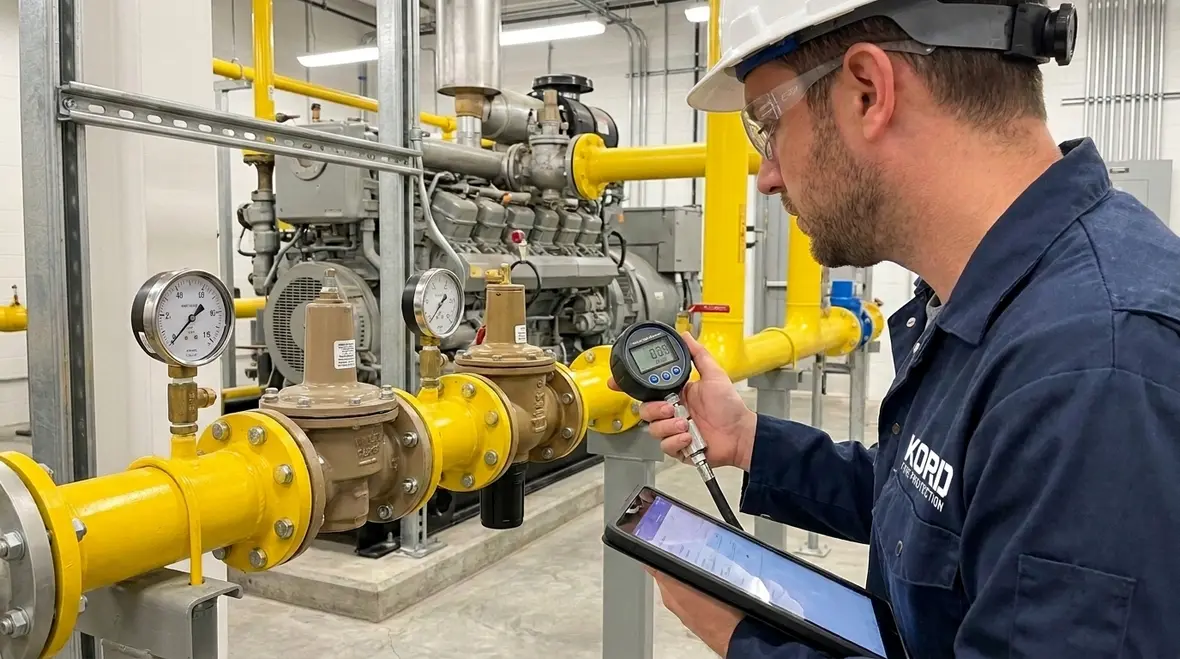
NFPA 37 Section 5.7: Overpressure Protection for Engine Gas Systems
Quick Answer: NFPA 37 Section 5.7 requires engine gas systems to include reliable overpressure protection so fuel gas cannot exceed safe limits. Compliance focuses on proper relief sizing, controlled discharge, maintained set points, and verified operation through inspection and testing.
For a closely related look at how pressure control components support system safety in practice, see Kord Fire Protection’s pressure relief valves in fire protection systems guide. ([kordfire.com](https://kordfire.com/pressure-relief-valves-in-fire-protection-systems-explained/?utm_source=openai))
What NFPA 37 gas overpressure protection requirements engines actually target
Commercial facilities use engine gas systems to supply fuel to engines for power generation, mechanical drive, or energy recovery. NFPA 37 Section 5.7 exists to prevent dangerous pressure excursions that can lead to regulator failure, hose or piping rupture, manifold damage, ignition hazards, and unsafe venting conditions.
In practical terms, NFPA 37 gas overpressure protection requirements engines aim to ensure that whenever abnormal pressure conditions occur, the system either safely limits pressure or safely relieves it in a controlled way. The standard pushes facilities toward engineered protections rather than ad hoc “set and forget” adjustments.
Scope and intent of Section 5.7
NFPA 37 Section 5.7 covers overpressure protection for engine gas systems, with emphasis on protecting downstream components and engine gas trains. The intent is not only to prevent gross overpressure but also to address credible failure modes such as:
- Regulator lockup or drift that raises outlet pressure
- Control valve malfunctions that fail to close or fail to regulate
- Upstream pressure spikes that exceed design limits
- Blocked vents or constrained discharge paths that eliminate safe relief capacity
- Incorrect installation, damaged relief devices, or improper vent termination
Facilities often miss the real-world issue: even a properly selected relief device can fail to perform if the discharge routing is restricted, the vent terminates incorrectly, or maintenance does not validate set points and operational conditions.
How overpressure protection is implemented in engine gas trains
Section 5.7 typically drives the use of dedicated protective components that function independently of the normal pressure regulation path. Most compliant systems follow a layered approach:
1) Primary regulation plus independent overpressure limiting
The system regulates gas pressure during normal operation. Overpressure protection provides an independent safeguard if regulation does not control. Depending on the design, this may include a relief device, an overpressure shutoff strategy, or a combination where the protection mechanism acts when pressure exceeds an established limit.
2) Relief discharge design that stays safe under fault conditions
Relief discharge must be handled so that released gas does not create an ignition source, an oxygen displacement hazard, or a pathway to occupy a hazardous zone. Commercial facilities must also ensure the discharge cannot be blocked by construction, accumulated debris, or improper routing. A common failure point during renovations is the inadvertent relocation or obstruction of discharge terminations.
3) Correct set points, sizing, and installation practices
NFPA 37 Section 5.7 compliance is not limited to the presence of a relief device. It requires that devices are installed and arranged to perform as intended. Set point verification, correct pressure boundary placement, and proper piping practices directly influence whether the protection activates before unsafe pressures develop.
Because engine gas trains vary by vendor and fuel system configuration, facilities should treat NFPA 37 Section 5.7 as a design verification requirement and not just a maintenance checklist item. Documented calculations, as-built drawings, and sequence-of-operation documentation support the verification process.
Common compliance challenges in commercial facilities
Even when equipment is originally installed to meet NFPA requirements, recurring operational and maintenance issues can erode compliance over time. The most frequent problem areas include:
- Set point drift: Regulators and protective devices can drift due to wear, contaminants, vibration, and temperature cycling.
- Blocked or restricted discharge: Vent lines can accumulate debris or be inadvertently capped during maintenance or upgrades.
- Incorrect inspection intervals: Facilities often inspect pressure regulators but do not verify relief activation conditions and operational integrity at the frequency the standard expects.
- Inadequate test instrumentation: Pressure measurements taken at the wrong location can mask system behavior and lead to nonconforming conclusions.
- Piping and connection errors: Improper orientation, incorrect thread sealant, or damaged fittings can compromise the pressure boundary.
Retail, industrial, and commercial energy installations also experience “shared asset” risk. For example, a maintenance contractor may work on ventilation or outdoor exhaust routing, and the resulting modifications can unintentionally affect relief discharge pathways. This is why disciplined change management and documented verifications matter.
Inspection, testing, and maintenance expectations
To sustain compliance with NFPA 37 Section 5.7, facilities should plan overpressure protection work around three outcomes: verified readiness, verified activation behavior, and verified safe discharge. A defensible program typically includes:
Visual and physical verification
- Confirm relief device condition and labeling
- Verify discharge routing and termination location
- Check for corrosion, tampering indicators, or physical damage to valves, piping, and fittings
- Confirm relief vent lines are unobstructed and properly supported
Pressure set point and response verification
- Verify regulator and protective device set points using calibrated instruments
- Validate that pressure at the correct system boundary does not exceed safe design limits
- Confirm that protective devices respond before unsafe pressure conditions develop
Operational testing and functional validation
- Conduct functional tests according to equipment manufacturer requirements and site procedures
- Document results, tolerances, and any corrective actions
- Verify alarm or shutdown sequence impacts if overpressure protection includes shutoff logic
For many organizations, the biggest gap is documentation quality. Auditors and insurers commonly look for traceable evidence that each protective element remains within acceptable limits after maintenance and that discharge arrangements remain unchanged and safe.
Internal resource recommendation: For ongoing gas system readiness and inspection documentation support, Kord Fire Protection can assist with commercial fire and life safety compliance workflows. Learn more via Kord Fire Protection.
When NFPA 37 Section 5.7 intersects engineering changes
NFPA 37 gas overpressure protection requirements engines become especially critical during design changes, fuel switching, or equipment replacement. Common triggers include:
- Engine swap to a different model or output class
- Fuel supply changes that alter upstream pressure characteristics
- Modifications to piping runs, manifold layout, or discharge routing
- Changes to control schemes or valve assemblies
Facilities should treat these changes as a re-verification event. Even when the relief device remains the same, the system demand, flow path, and pressure boundary can shift. A compliant program captures these updates through revised calculations, updated drawings, and documented functional checks.
Frequently Asked Questions
Conclusion and call to action
NFPA 37 Section 5.7 demands more than installed hardware. It requires engineered overpressure safeguards, safe discharge arrangements, and ongoing verification through inspection and testing. Kord Fire Protection helps commercial facilities maintain defensible compliance with practical maintenance planning, functional validation support, and documentation readiness for audits. Schedule a compliance review to confirm your engine gas system overpressure protection strategy, discharge pathways, and maintenance records align with NFPA 37 expectations.
If you want additional context on gas safety system planning, Kord Fire Protection also covers gas safety and fire protection systems in a way that fits naturally with this topic. ([kordfire.com](https://kordfire.com/flamefast-gas-safety-and-fire-protection-systems-explained/?utm_source=openai))

Join Our Newsletter!
Get the latest fire safety tips delivered straight to your inbox From our Newsletter.



