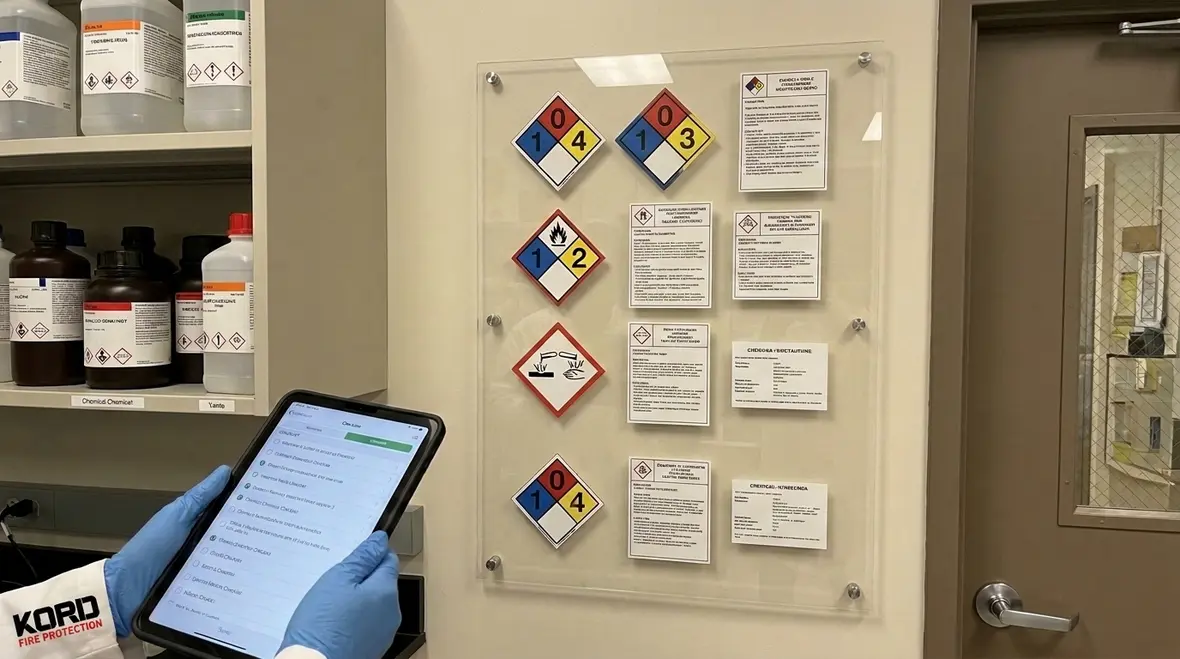
NFPA 45 Section 13.5: Laboratory Hazard Identification Systems
Quick Answer
NFPA 45 Section 13.5 requires laboratory hazard identification systems that reliably communicate chemical and physical hazards to employees, responders, and facility staff. The system must be clear, durable, maintained, and aligned with the laboratory’s actual operations, inventories, and changes over time.
For a broader look at documentation and inspection readiness, Kord Fire Protection’s fire safety system documentation for compliance resource fits naturally with the day to day recordkeeping that supports accurate hazard communication.
What does NFPA 45 Section 13.5 require for hazard identification?
NFPA 45 Section 13.5 focuses on ensuring laboratory hazards do not remain hidden behind labels, outdated signage, or incomplete hazard communication. In practice, NFPA 45 laboratory hazard identification systems must provide consistent, legible, and operationally relevant information about hazardous materials and conditions within the laboratory environment.
Commercial and industrial facilities also need this section to work across day to day operations: new experiment setups, seasonal chemical changes, contractor activities, and ongoing space turnover. Compliance fails when a facility treats hazard identification as a one time labeling project rather than a managed system with inspection, documentation, and corrective actions.
How hazard identification systems typically work in real laboratories
NFPA 45 does not exist in isolation. Laboratory hazard identification systems usually combine multiple layers of information so people can find the right guidance quickly, even under stress. These layers commonly include:
Container and process labeling that matches the material present, including concentration where applicable and consistent hazard communication language.
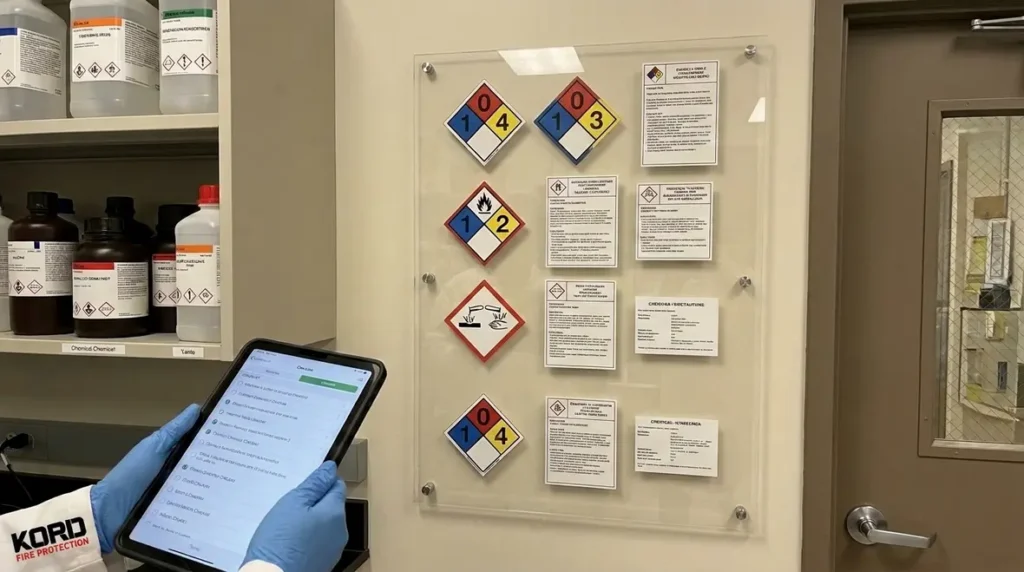
Room and area hazard signage for the laboratory space, including general hazard categories and emergency response cues.
System status and location information that helps responders understand where hazards are likely concentrated (for example, flammable storage areas, corrosives, oxidizers, cryogens).
Access and reference documentation such as readily available safety data resources and internal hazard listings that support rapid decision making.
For compliance readiness, the system should remain accurate as experiments evolve. A common failure point occurs when labels do not update after process changes, or when the posted room information lags behind actual in use inventories.
Common compliance challenges facilities face
Facilities often meet the letter of the initial installation but struggle with ongoing accuracy and operational integration. The most frequent issues include:
1) Outdated or mismatched chemical information
When chemical inventories change, signage and container labels can become inconsistent. This includes wrong hazard categories, missing constituents, or room postings that reflect last quarter’s operations. The hazard identification system must reflect what is actually present and active.
2) Poor legibility and physical durability
Laboratories experience chemical vapor exposure, cleaning cycles, abrasion, and fluorescent lighting glare. Labels that fade, peel, or become unreadable undermine the intent of NFPA 45 Section 13.5. Durable label media and placement strategies matter, especially near sinks, fume hoods, and hazardous storage locations.
3) Lack of ownership and inspection cadence
A hazard identification system needs a defined owner, routine checks, and corrective workflows. Without a scheduled inspection routine, small labeling defects turn into systemic noncompliance and reduce responder effectiveness.
4) Incomplete coverage across spaces and change zones
Some facilities cover main lab rooms but miss adjacent support areas such as chemical storage rooms, instrument rooms, cold storage, waste handling zones, and temporary work areas. A compliant approach maps hazards across all laboratory related spaces, not just the primary benches.
Operational procedures and maintenance: what “good” looks like
Commercial safety programs usually succeed when hazard identification systems operate like an asset management process. NFPA 45 Section 13.5 is best supported by documented procedures that address installation, updates, verification, and corrective maintenance.
Recommended inspection and update workflow
Initial baseline: verify signage, labels, and reference materials match the lab’s documented chemical categories and storage practices.
Change management: require updates when chemicals, concentrations, or hazard controls change, including after experiment turnover.
Routine field verification: conduct periodic walkdowns focused on legibility, placement, completeness, and alignment with actual conditions.
Corrective action tracking: document defects and verify closure. Label replacements should follow the same standard as initial installation.
Responder readiness checks: confirm that the information is findable and understandable during normal and off normal conditions.
Equipment and labeling mechanisms to consider
Effective laboratory hazard identification often uses a combination of permanent and changeable elements. For example:
Fixed room hazard signage anchored for chemical exposure and routine cleaning.
Changeable hazard boards or overlays for temporary experiment setups, ensuring fast updates without scrambling during inspections.
Consistent label standards for containers and secondary containment, aligned across departments and contractors.
Where Kord Fire Protection fits into ongoing compliance
Laboratory hazard identification systems are only as strong as the maintenance program behind them. Kord Fire Protection helps commercial facilities keep NFPA 45 Section 13.5 aligned with real world operations through practical testing, verification, and documentation support. This includes identifying labeling gaps, verifying that hazard information remains accurate as inventories change, and supporting inspection readiness across shifts and departments.
Facilities that want a broader readiness view can also explore Kord’s fire protection compliance auditing guide for added context on verification, corrective actions, and inspection preparation.
For more insights into integrated fire safety and compliance documentation, visit Kord Fire Protection.
Frequently Asked Questions
Conclusion and next step
NFPA 45 Section 13.5 demands hazard identification systems that remain accurate, visible, and operationally useful. Facilities should not wait for a survey or internal audit to find labeling gaps. Partner with Kord Fire Protection to assess your laboratory hazard identification coverage, verify legibility and completeness, and build a maintenance and inspection workflow that keeps compliance current as experiments and chemical inventories change.
When you’re ready for a direct next step, Kord’s fire protection services in Southern California page is a practical place to start.

Join Our Newsletter!
Get the latest fire safety tips delivered straight to your inbox From our Newsletter.