
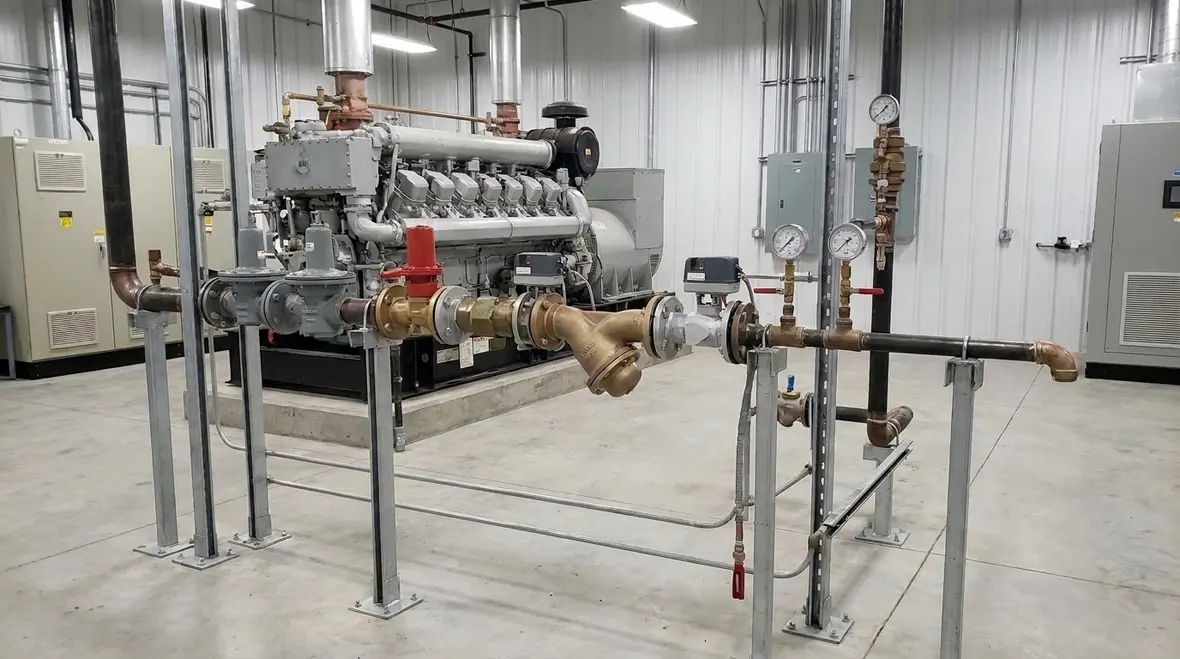
NFPA 37 Section 5.2: Building a Code-Compliant Gas Train
Quick Answer: NFPA 37 Section 5.2 outlines how to design and install gas trains that control, monitor, and safely deliver fuel to stationary engines. Compliance focuses on correct component selection, proper piping and supports, required valves and regulators, and inspection-ready installation practices.
For facilities tightening inspection readiness, a related resource on commercial fire safety audits can help frame how documentation, verification, and corrective actions fit into a stronger compliance program.
What NFPA 37 Section 5.2 Actually Demands for Stationary Engine Fuel Trains
NFPA 37 Section 5.2 sets performance expectations for building a safe, reliable gas train that supports combustion equipment. For facilities with stationary engines, the NFPA 37 gas train requirements stationary engines are not just “equipment specs.” They define how the fuel path is controlled, how hazards are prevented, and how the system stays testable and serviceable over time.
In day-to-day commercial operations, the most common compliance gaps happen during commissioning and later maintenance: wrong pressure settings, missing test ports, degraded regulators, incorrect orientation of components, or piping that cannot support safe inspection and reassembly. Section 5.2 requirements help close those gaps by directing attention to the functional design of the gas train and the practical realities of installation quality.
Why Gas Train Compliance Matters More Than Many Facilities Expect
Commercial and industrial sites often treat fuel gas systems as “set and forget” infrastructure. That mindset increases risk. A gas train is a safety-critical control system that can be stressed by vibration, temperature cycling, condensate, dirt intrusion, and minor miscalibration that accumulates into major deviations.
Common real world failure points include:
- Regulator drift that changes set pressure and affects combustion stability.
- Valve leakage that defeats the train’s isolation intent during abnormal conditions.
- Clogging of strainers or filters that causes starvation or unstable control.
- Blocked test points from poor labeling or nonstandard fittings that prevent required verification.
- Improper supports that transmit vibration into regulator bodies and valve stems.
Kord Fire Protection supports ongoing compliance by helping commercial facilities verify installation and maintenance practices, document inspection outcomes, and schedule functional testing before small issues become operational hazards.
NFPA 37 Section 5.2 Design Controls: Components, Isolation, and Safety Function
NFPA 37 Section 5.2 focuses on ensuring the gas train can safely control and deliver fuel while maintaining the ability to monitor and verify performance. While exact train layouts vary by engine type and fuel supply conditions, the section’s approach generally requires that the train provides isolation, appropriate pressure control, and reliable monitoring and testing.
1) Fuel path control and isolation readiness
A code compliant train must support safe isolation during maintenance and emergency scenarios. Facility teams frequently fail compliance when they remove or relocate valves during retrofit, or when system modifications reduce access to shutoff and bleed functions. Build the arrangement so isolation devices remain reachable and rebuildable without disturbing adjacent components.
2) Pressure regulation and stability
Regulators are a primary control element in most stationary engine fuel trains. Compliance depends on correct regulator selection for the service conditions, correct piping connections, and a stable configuration that resists vibration and thermal effects. Where pressure drops occur, the train must still provide the intended set pressure and maintain predictable control behavior under operating load changes.
3) Testability by design
Section 5.2 compliance cannot be achieved if verification relies on guesswork. A gas train should include test points and arrangement that allow functional checks without bypassing safety functions. If test points are capped, buried, or hard to access, the facility tends to skip verification, which defeats the purpose of the safety design.
Installation and Maintenance Practices That Commonly Break Compliance
Even when the correct components are specified, installation and maintenance practices often cause nonconformance. For commercial, industrial, and retail facilities, the biggest pressure comes from minimizing downtime, which can lead to shortcuts during valve swaps, regulator replacement, or piping modifications.
Piping routing, supports, and vibration management
Stationary engines generate vibration that transmits through connected piping. If supports are absent, mislocated, or improperly installed, components experience stress that leads to leaks or sticking valves over time. A code compliant approach ensures piping is supported to avoid strain on regulators and valve bodies.
Leak prevention and connection quality
Gas trains require connection methods and assembly quality that support long term leak prevention. Over-torquing, under-torquing, mismatched fittings, and improper thread sealant use can all contribute to leakage that may only become evident during pressure tests or demand operation.
Maintenance procedures and recordkeeping
Compliance is easier to defend when maintenance follows repeatable procedures and documented results. Facilities commonly fall behind when they cannot show maintenance history for regulators, strainers, or valves, or when they cannot link inspection findings to corrective actions.
Kord Fire Protection can help commercial facilities align maintenance workflows with code expectations by supporting inspection readiness and maintaining clear documentation for ongoing compliance.
Inspection Readiness: How Facilities Should Verify NFPA 37 Gas Train Performance
Operational verification protects more than the engine. It protects the surrounding building occupants, operations continuity, and insurance and authority having jurisdiction expectations. For many facilities, the practical approach is to build an inspection package that includes photos, component identification, test port access, and pass fail evidence from functional checks.
Operational checks that should be part of routine verification
- Pressure verification against set points under operating conditions.
- Valve integrity confirmation including leak tightness checks during appropriate verification windows.
- Strainer and filter inspection to address clogging risk that can cause unstable fuel delivery.
- Regulator inspection for damage, fouling, and signs of drift.
- Test port access confirmation so scheduled testing is possible without unsafe bypassing.
Linking compliance to facility standards
Commercial facilities also operate under internal engineering standards, utility procedures, and maintenance schedules. The most defensible compliance program aligns these processes with NFPA 37 expectations for gas train performance and ongoing maintainability. When facilities integrate these workflows, they reduce “last minute” rework during inspections.
For broader facility support, Kord Fire Protection’s fire protection services in Southern California fit naturally into inspection planning, repairs, documentation support, and ongoing compliance work.
Frequently Asked Questions
Conclusion and Call to Action
Building a code compliant gas train under NFPA 37 Section 5.2 requires more than correct equipment selection. It depends on functional design, safe isolation, pressure control, and inspection-ready installation that supports ongoing verification. If your stationary engines serve critical operations, engage Kord Fire Protection to assess readiness, support functional testing, and maintain documented compliance so your system performs safely between inspections.

Join Our Newsletter!
Get the latest fire safety tips delivered straight to your inbox From our Newsletter.



