
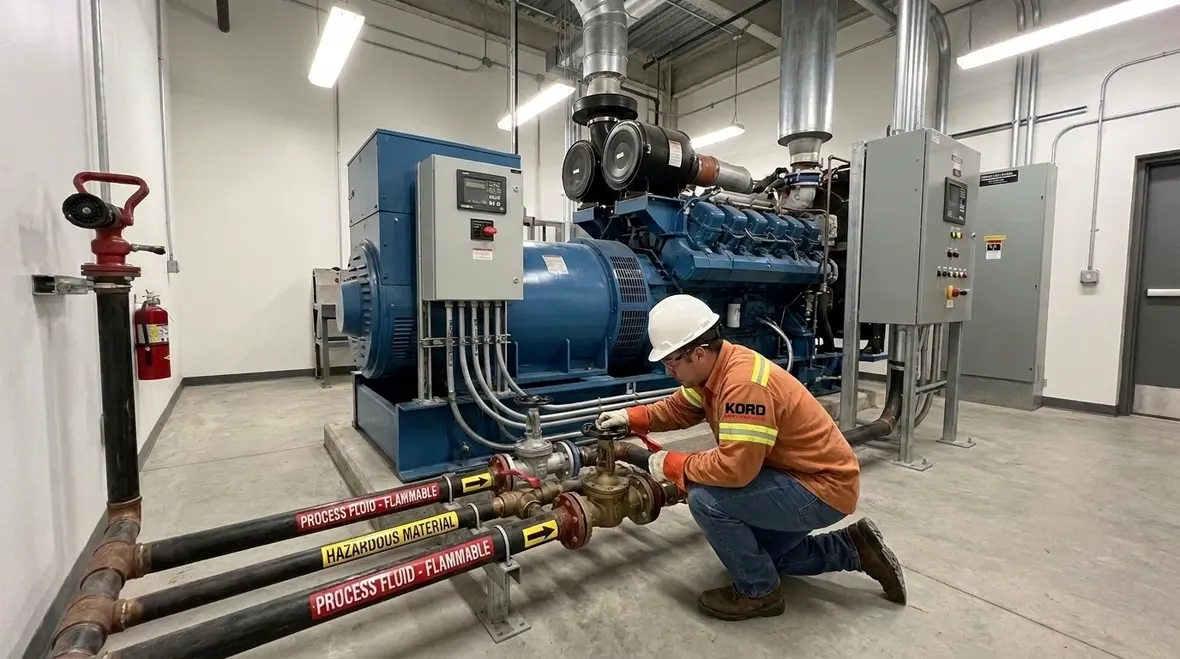
NFPA 37 Section 4.4: Engines Handling Hazardous Materials Beyond Their Fuel
Quick Answer
NFPA 37 Section 4.4 addresses how engines must be installed and managed when they handle hazardous materials beyond their normal fuel supply. The requirement focuses on preventing ignition sources, controlling leaks, and ensuring compatible equipment, placement, and protection for commercial operations.
For teams building a broader compliance program around inspections and maintenance, inspection, testing, and maintenance fire protection guidance helps connect code intent to recurring field execution.
What NFPA 37 Section 4.4 Means in Real Facilities
NFPA 37 sets performance and safety expectations for engines and engine systems in industrial settings. Under NFPA 37 Section 4.4, the compliance topic extends beyond typical engine fuel. When the engine is arranged to handle, process, or manage hazardous materials other than its fuel, the installation and operational controls must reduce the risk of ignition, fire spread, and unsafe failure modes.
For facility managers and safety teams searching for practical guidance, the NFPA 37 engines handling hazardous materials requirements should be treated as a design and lifecycle standard. It drives how the engine is located, how hazardous piping and housings are protected, how ignition hazards are evaluated, and how inspections verify continued control.
Where This Applies: Common Commercial and Industrial Scenarios
Section 4.4 typically becomes relevant when a site’s engine is connected to processes that introduce hazardous vapors, gases, liquids, or residues beyond what the engine burns. In real commercial facilities, this can occur in engine driven systems that support:
- Transfer and pressure control for flammable or toxic process fluids
- Gas handling or compressor support where the engine sits adjacent to hazardous piping
- Packaging or processing areas where engine driven equipment shares the same hazardous classification boundary
- Backup power or auxiliary systems positioned near chemical storage, dispensing, or reaction zones
- Engine housed units that include additional ports, valves, or enclosures connected to hazardous material containment
The operational takeaway: Section 4.4 does not only address fuel lines. It addresses the overall ignition risk created by the engine and its surroundings when hazardous materials are in play.
Key Compliance Themes Under Section 4.4: Ignition Control and Compatibility
The intent behind Section 4.4 is straightforward: prevent hazardous material releases from finding an ignition source, and prevent unsafe conditions from being created during operation, start up, stopping, or maintenance. In practice, compliance teams focus on several themes.
1) Preventing ignition sources during normal and abnormal operation
Engines can create ignition hazards through heat, electrical arcing, hot surfaces, exhaust components, and mechanical sparks. When hazardous materials are present beyond the fuel, compliance reviews typically ensure:
- Exhaust routing and hot surfaces do not expose hazardous vapors or leaked liquid
- Air intake and ventilation arrangements limit the entry of flammable atmospheres
- Electrical components remain appropriate for the surrounding hazard class and environment
- Controls and shutdown sequences reduce the likelihood of ignition during transient conditions
2) Ensuring hazardous material pathways remain contained and controlled
If hazardous materials are handled by components associated with the engine system, the facility must consider leaks at fittings, seals, hose connections, valves, and flanges. Practical control measures often include:
- Verification of appropriate gasket and seal compatibility with the hazardous fluid
- Secondary containment or leak detection where releases would reach engine hazards
- Pressure relief strategy that prevents hazardous discharge near ignition capable surfaces
3) Aligning engine installation details with the surrounding hazard classification
Many compliance failures occur when an engine is approved for a generic environment, but the process area later changes classification due to new materials or revised operating conditions. Section 4.4 reinforces the need for the engine and surrounding systems to remain aligned with the hazard reality at the time of operation.
Operational Procedures and Maintenance That Commonly Fail Inspections
Even when a design appears compliant, inspections often find breakdowns in routine procedures, maintenance execution, and documentation. These are the issues that most frequently drive noncompliance risk for engines handling hazardous materials.
Start up, shut down, and transient control
Transients create the highest risk during start up and shutdown because components reach temperatures, pressures, and electrical states in sequence. Typical gaps include:
- Start up procedures that do not account for ventilation purge requirements or delayed hazardous vapor clearance
- Improper warm up behavior for units located near chemical dispensing or process leak points
- Shutdown sequences that allow hazardous discharge or residual flow near hot surfaces
Leak management and cleaning practices
Leaks plus improper cleanup practices can defeat engineering controls. Common failures include:
- Reusable spill kits not appropriate for the specific chemical (wrong absorbent or incompatible neutralizer)
- Cleaning agents that increase flammability or leave residues that are ignition prone
- Delayed repair of hose aging, valve seepage, or seal degradation
Inspection and documentation drift
Maintenance drift happens when the program focuses only on engine running condition instead of the hazard control components. Facilities should verify that inspections cover:
- Protective devices and guards that prevent contact with hot or sparking components
- Integrity of enclosures and seals around any hazardous connections
- Condition of wiring runs, terminals, connectors, and conduit seals near hazardous material pathways
- Evidence that any changes to piping, valves, or process materials were evaluated for hazard alignment
Equipment Mechanisms: What Inspectors Look For During Walkdowns
A credible compliance walkdown ties physical observations to ignition risk control and hazardous material management. Inspectors and AHJ representatives often validate the following mechanisms and conditions.
Engine heat and exhaust hazards
Walkdowns frequently verify that exhaust systems, mufflers, and hot surfaces do not create an ignition point within the hazardous environment. This includes checking routing clearances, heat shields, and whether any modifications reduced separation distances.
Electrical equipment and wiring integrity
Ignition can occur from damaged insulation, loose connections, or compromised conduit sealing. Facilities should ensure that electrical components related to control panels, sensors, and starters remain suitable for the surrounding conditions and that cable routes do not cross hazardous release points without protection.
Hazardous material containment interfaces
Inspectors commonly focus on connections: flange gaskets, hose assemblies, valve packing, and threaded joints. Evidence of seepage, corrosion, or wrong materials of construction can indicate that hazardous material pathways no longer meet control intent.
Barriers, enclosures, and protective housings
When engines are installed in proximity to hazardous materials, barriers and enclosures often determine whether a leak reaches ignition capable surfaces. Teams should ensure the integrity of these components and verify they are not bypassed for convenience.
How Kord Fire Protection Supports Ongoing NFPA 37 Compliance
Compliance programs succeed when they connect engineering intent to repeatable inspection, testing, and maintenance. Kord Fire Protection helps commercial, industrial, and retail facilities build a practical approach to NFPA 37 engines handling hazardous materials requirements, including documentation readiness and field verification that controls stay effective over time.
For additional fire and life safety guidance relevant to how hazards are managed and maintained across commercial facilities, teams can review fire protection services in Southern California for expert support planning and schedule driven compliance.
If your team is specifically coordinating pump readiness and inspection documentation alongside broader life safety work, this guide to fire pump testing requirements is a useful companion read.
Frequently Asked Questions
Conclusion: Confirm Your Engine Hazard Controls Now
NFPA 37 Section 4.4 requires more than basic engine readiness. It requires verified control of ignition risk and hazardous material pathways beyond fuel, including reliable procedures, inspection coverage, and documentation that reflects current site hazards. Take action by conducting a targeted walkdown of engine interfaces and transient operations, then schedule ongoing inspection and maintenance with Kord Fire Protection to keep your program defensible with the AHJ and your internal standards.

Join Our Newsletter!
Get the latest fire safety tips delivered straight to your inbox From our Newsletter.



