
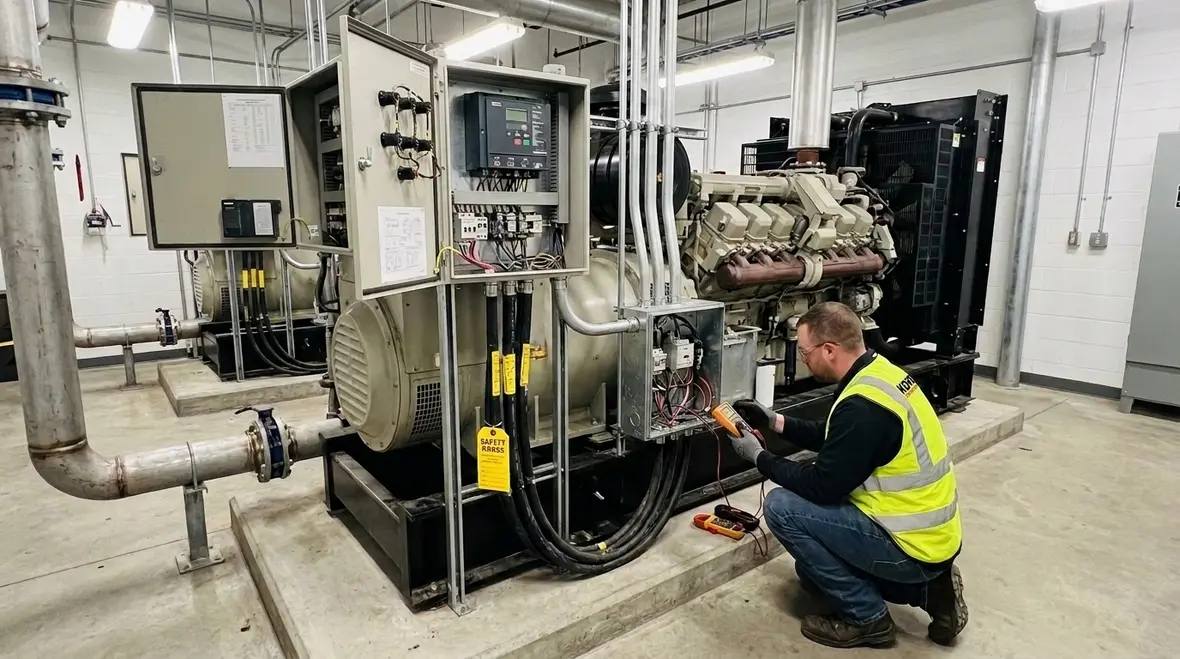
NFPA 37 Section 4.5: Electrical Installations for Stationary Engines
Quick Answer
NFPA 37 Section 4.5 sets minimum safety criteria for how electrical equipment is installed and maintained for stationary engines. It focuses on wiring integrity, component compatibility, protection from physical damage, and safe operating conditions to reduce ignition and shock hazards in commercial spaces.
For facilities that also need a broader compliance view around pump equipment, fire pump testing requirements are worth reviewing early so electrical reliability, inspection planning, and documentation stay aligned.
What NFPA 37 Section 4.5 Requires for Stationary Engine Electrical Systems
When facilities install or modify stationary engines, the NFPA 37 electrical installation requirements engines depend on the risk profile and the electrical components involved. Section 4.5 addresses how the electrical parts that start, control, and power stationary engines must be arranged and protected to support safe operation during normal service and foreseeable conditions. For commercial, industrial, and retail occupancies, compliance is not only a paper exercise. The electrical setup must remain safe over time despite vibration, moisture, corrosion, and routine maintenance activities.
From an operational standpoint, the biggest compliance challenge is that engine electrical systems often change during upgrades: new starters, modified controls, relocated disconnects, or replaced cables that do not match the original protective measures. Section 4.5 expectations require facilities to verify that installation details still meet the standard, not merely that “something works.”
Electrical Installation Scope: Start, Control, and Power Circuits
NFPA 37 Section 4.5 applies to electrical installations connected to stationary engines. That includes the wiring and equipment used to power engine systems and provide controls and protective functions. In practice, commercial facilities must treat the installation as an integrated system rather than scattered components.
Typical elements affected
- Engine starter circuits and associated disconnects or controllers
- Control wiring for start, stop, monitoring, and shutdown functions
- Power distribution to engine driven equipment and accessories
- Electrical enclosures, conduit routing, and protection from damage
- Field wiring terminations, splices, and connection points
Professionals should evaluate whether each circuit is installed to reduce ignition sources and prevent unsafe conditions. That evaluation includes verifying that conductors are sized correctly, routed safely, secured properly, and protected against mechanical damage and environmental exposure.
Common Compliance Targets in Field Installations
Section 4.5 compliance is usually proven through a combination of design verification, installation inspections, and ongoing maintenance. Commercial facilities benefit from aligning installation documentation with real field conditions, because inspectors commonly compare what is installed with what the equipment expects.
1) Wiring integrity and routing
Engine rooms and generator areas frequently experience vibration, temperature swings, and condensation. NFPA 37 electrical installation requirements engines are undermined when wiring is routed where abrasion can occur, where strain relief is missing, or where cable glands are improperly installed. Facilities should confirm that cables and wiring methods are secured at appropriate intervals, that penetrations are sealed where required by the surrounding environment, and that routing avoids pinch points during maintenance access.
2) Electrical component compatibility
Starter components, protective devices, and control equipment must be compatible with the engine system and its duty cycle. A frequent failure point is replacing a component with an equivalent part that differs in voltage rating, thermal behavior, or enclosure requirements. Even minor deviations can change how heat is generated or how protective functions respond during abnormal operation.
3) Enclosure protection and environmental exposure
Commercial locations often include dust, washdown operations, humidity, and chemical exposure near certain engine driven processes. Electrical installations must maintain safe enclosure integrity to prevent moisture intrusion and to keep energized components protected. Inspectors look for degraded gasketing, loose covers, and damaged seals. These are the items that commonly fail first after seasonal shutdowns and after maintenance crews re enter equipment spaces.
4) Separation from ignition and hazardous conditions
Stationary engines involve fuel systems and hot surfaces. Electrical systems can become an ignition contributor if wiring methods, terminations, or controls create unsafe arcing conditions or if components are installed in locations that increase exposure to flammable vapors. Facilities should validate that electrical equipment placement supports safe conditions during both normal and upset operation scenarios.
Inspection, Testing, and Maintenance for Ongoing Compliance
NFPA 37 Section 4.5 is not limited to the first day of commissioning. For commercial compliance, it becomes a lifecycle program that includes inspection intervals, corrective maintenance, and documented verification of key conditions.
Maintenance routines that protect compliance
- Torque verification on terminations where vibration can loosen connections
- Visual inspections for insulation damage, cable abrasion, and compromised conduits
- Verification of enclosure integrity, including covers, gaskets, and gland tightness
- Functional checks of start and shutdown controls after replacement work
- Condition monitoring for corrosion and moisture intrusion at interfaces
When facilities document these activities, they reduce “unknown condition” risk during inspections. Maintenance crews should use job-specific checklists that reflect how the engine electrical system is actually installed, including where wiring is routed and where termination points are located.
Why commercial facilities need a disciplined test plan
Engine electrical issues often appear intermittently. A loose connection may work for months and then fail under load or during a weather cycle. A disciplined test plan identifies early signs such as abnormal temperature rise, nuisance trips, or irregular control behavior. That approach supports safe operation and reduces emergency callouts that typically occur after a critical testing window has already passed.
How Kord Fire Protection Supports NFPA 37 Electrical Compliance
Commercial engine installations tend to evolve over time through renovations, equipment swaps, and site utility modifications. Kord Fire Protection helps facilities maintain compliance by supporting inspection planning, field verification, and maintenance coordination aligned with NFPA 37 expectations for electrical installations for stationary engines. This reduces the gap between design intent and field reality.
To support broader fire and life safety program requirements, facilities can also review Kord Fire Protection services for additional inspection, testing, and maintenance support.
For teams responsible for industrial, commercial, and retail compliance, a consistent partner helps reduce rework. It also improves readiness for audits by keeping documentation aligned to the installed configuration and maintenance history.
Frequently Asked Questions
Next Step: Schedule a Compliance Review
If stationary engines are installed or being modified, a focused electrical installation review helps confirm that NFPA 37 Section 4.5 expectations still match the field condition. Contact Kord Fire Protection to assess installation integrity, strengthen inspection and maintenance documentation, and reduce the risk of noncompliance during audits or operational testing. Act early, correct small issues before they escalate, and keep engine electrical systems reliably safe.

Join Our Newsletter!
Get the latest fire safety tips delivered straight to your inbox From our Newsletter.



