
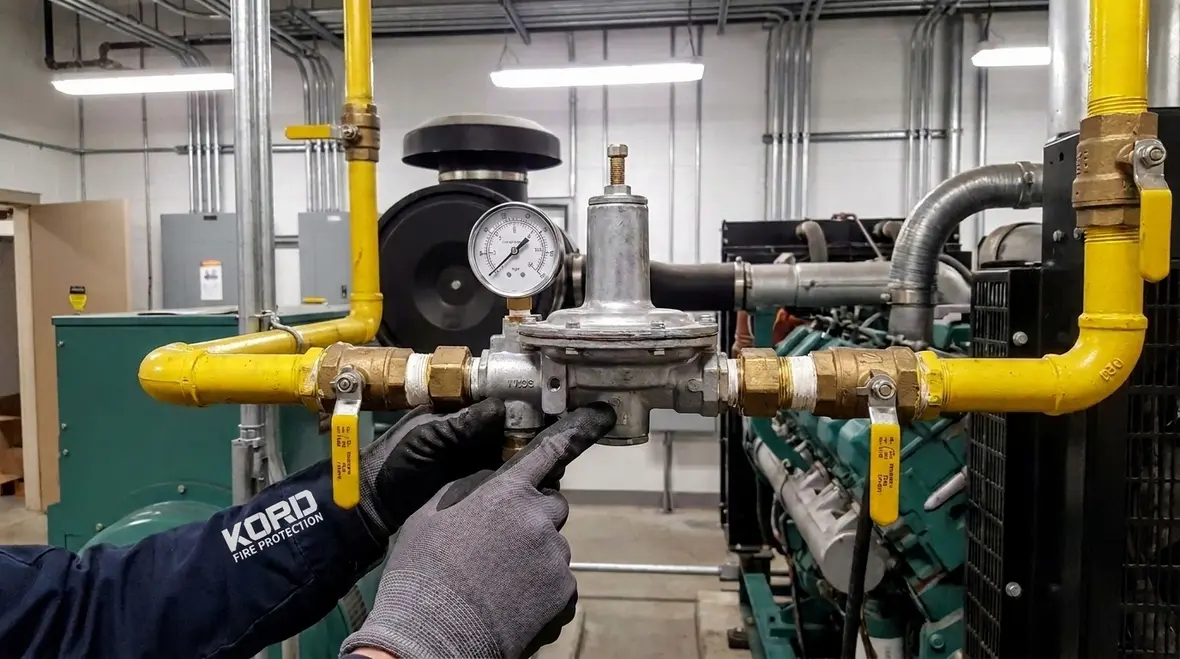
NFPA 37 Section 5.3: Gas Pressure Regulators for Engine Fuel Systems
Quick Answer: NFPA 37 Section 5.3 sets the expectations for selecting, installing, and maintaining gas pressure regulators used in engine fuel systems. Compliance focuses on correct regulator capacity and settings, safe venting, leak resistance, and inspection practices that prevent unsafe pressure conditions.
What NFPA 37 Section 5.3 covers for engine fuel gas regulators
NFPA 37 addresses safe handling of combustible gases and fuels in commercial and industrial settings. Within that framework, Section 5.3 governs gas pressure regulators for engine fuel systems, where incorrect pressure control can lead to overfueling, improper combustion, regulator damage, or unsafe gas leakage. For facilities seeking NFPA 37 gas regulator requirements engine fuel alignment, the practical takeaway is straightforward: regulators must be properly matched to the fuel system, installed to operate safely under expected conditions, and maintained to stay within safe performance limits.
Commercial compliance does not end at installation. Regulators experience wear, contamination, diaphragm fatigue, and vent blockage over time. Because many sites operate engines intermittently, issues can develop during long idle periods, then surface during start up when demand, pressure, and vibration change quickly.
Where this applies in real facilities
- Backup or prime power generation rooms serving commercial buildings and industrial campuses
- On site engines used in manufacturing, packaging, material handling, or industrial utilities
- Retail and mixed use facilities with dedicated gas powered backup systems
- Telecom and critical infrastructure environments where reliability and documented testing matter
How regulator pressure control protects engine fuel systems
In engine fuel systems, a regulator provides controlled gas pressure downstream of the supply to support predictable engine operation. Section 5.3 expectations typically translate into requirements for a safe operating envelope that prevents unsafe high pressure and maintains stable delivery during engine load changes. When regulators function correctly, the system avoids spikes that can cause regulator overpressure conditions, incomplete combustion, or nuisance alarms.
Key performance mechanisms that inspectors look for
- Capacity matching: The regulator must support expected flow without excessive pressure droop that can starve the engine or affect ignition.
- Pressure stability: Stable setpoints and controlled droop protect combustion quality and emissions performance.
- Controlled relieving behavior: Proper venting and relief pathways prevent gas accumulation and reduce hazardous concentration risk.
- Leak tight integrity: Diaphragm seals, valve seats, and threaded connections must remain gas tight over time.
NFPA 37 gas regulator requirements engine fuel: selection and installation fundamentals
Facility teams often focus on “having a regulator,” but Section 5.3 compliance is more specific: regulators must be suitable for the system design basis. That includes correct pressure ratings, appropriate outlet and inlet pressure ranges, and compatibility with the gas type and environment. In commercial installations, design decisions are frequently constrained by available space, ventilation layouts, and routing of vent piping.
For facilities managing broader inspection and code deadlines, Kord Fire’s fire protection services in Southern California provide a useful overview of compliance support that fits naturally alongside fuel system risk planning.
Selection criteria that drive compliance
- Regulator pressure setting: The setpoint must align with engine manufacturer requirements and the fuel train design.
- Maximum inlet pressure: Components must withstand supply pressure without drifting beyond safe limits.
- Gas type compatibility: Fuel composition impacts regulator materials and performance characteristics.
- Environmental suitability: Installations in mechanical rooms must account for temperature range and exposure to contaminants.
Installation details that frequently cause noncompliance
- Improper vent routing: Vents must discharge safely, away from ignition sources and air intakes, and remain protected from blockage.
- Incorrect orientation: Some regulator designs require specific mounting orientation for proper operation.
- Inadequate isolation and access: Regulators need practical access for inspection, adjustment checks, and service.
- Undocumented modifications: Field changes without engineering documentation create traceability gaps and may invalidate regulator selection.
- Connection practices: Poor thread engagement, improper sealant selection, or torque variability can cause slow leaks.
Commercial facilities can reduce risk by requiring a documented commissioning package that ties regulator settings to test results and engine operating parameters. This practice supports audits and accelerates troubleshooting when abnormal pressure behavior appears.
For additional fire protection and code-aligned risk reduction strategy in engineered fuel systems, facilities can reference Kord Fire Protection’s broader service support through their fire protection and safety inspection company overview.
Inspection, testing, and maintenance practices under Section 5.3
NFPA 37 Section 5.3 compliance relies on ongoing assurance that regulators continue to operate safely. In practice, that means implementing an inspection and maintenance regime that addresses both visible conditions and performance indicators.
What to inspect during routine compliance checks
- Regulator body condition: Look for corrosion, impact damage, loose housings, and evidence of moisture intrusion.
- Diaphragm and internal wear indicators: Verify for signs of drift or inconsistent behavior during start up and load changes.
- Vent line integrity: Confirm vent lines are unobstructed, properly routed, and not collecting debris or condensate.
- Leak checks: Perform gas leak detection at joints, fittings, and regulator connections using facility approved methods.
- Control stability: Compare measured outlet pressure trends against the system baseline or recorded commissioning values.
Common failure points that lead to unsafe conditions
- Vent blockage: Debris, insect nests, paint overspray, or improper caps can prevent safe discharge.
- Setpoint drift: Springs and diaphragms can degrade, especially after thermal cycling and vibration.
- Contamination: Pipeline scale, moisture, oil mist, or particulate can damage valve seats and cause sticking.
- Thread seal degradation: Aging sealants or repeated service can create micro leaks.
- Inadequate servicing: Replacing a regulator without updating records and pressure verification can mask latent issues.
Commercial technical operations often benefit from a structured maintenance workflow: pre start verification, regulator performance monitoring during engine run tests, post maintenance pressure verification, and documented closeout. Kord Fire Protection supports facilities by aligning testing and documentation practices with commercial inspection expectations so that compliance evidence remains clear, consistent, and audit ready.
Documentation and audit readiness for commercial and industrial sites
Regulator compliance is only defensible when records show what was installed, how it was adjusted, and what was verified. Section 5.3 compliance efforts typically break down when facilities cannot demonstrate traceability from design through maintenance.
Best practice documentation package
| Record Type | Why It Matters for NFPA 37 Section 5.3 Compliance |
|---|---|
| Regulator cut sheets and ratings | Proves suitability for the system pressure range and gas service |
| Commissioning setpoints and baseline test results | Establishes performance benchmarks for future comparison |
| Vent routing drawings | Supports verification that vent discharge stays safe over time |
| Leak test results and gas detection reports | Documents ongoing integrity of fuel train joints and regulator connections |
| Maintenance logs with adjustments and parts replacement | Shows that service actions did not compromise safe operation |
| Findings and corrective action closeout | Confirms that identified issues were resolved and verified |
Facilities with multiple engines or distributed gas trains should standardize the recordkeeping template. This simplifies internal reviews and improves consistency when third party inspections occur.
Operational compliance challenges and how to prevent them
In commercial environments, the biggest regulator compliance challenges come from operational variability. Engines may cycle with irregular load, maintenance staff may service other components without checking pressure performance, and mechanical rooms may undergo construction or repainting that inadvertently affects vent lines.
Practical prevention actions
- Establish a pressure monitoring interval: Verify outlet pressure stability at defined intervals or during service windows.
- Create vent protection controls: Implement housekeeping rules that prevent obstruction and confirm access points remain clear.
- Integrate regulator checks into start up routines: Include visual checks and leak detection during commissioning and after downtime.
- Require change control: Any regulator replacement, setting adjustment, or piping modification must update engineering and maintenance records.
Kord Fire Protection helps commercial facilities manage these operational realities by supporting compliance testing, documentation, and ongoing maintenance coordination. This reduces the likelihood that small issues become major safety or downtime events.
Frequently Asked Questions
Next step: verify your regulator compliance program
Facilities should confirm regulator sizing, setpoints, vent routing, and documented test history align with NFPA 37 Section 5.3. Kord Fire Protection can support regulator inspection planning, leak testing coordination, and compliance documentation so your engine fuel system stays reliable and audit ready. Contact Kord Fire Protection to schedule a compliance review and maintenance alignment for your specific fuel train configuration.

Join Our Newsletter!
Get the latest fire safety tips delivered straight to your inbox From our Newsletter.



