
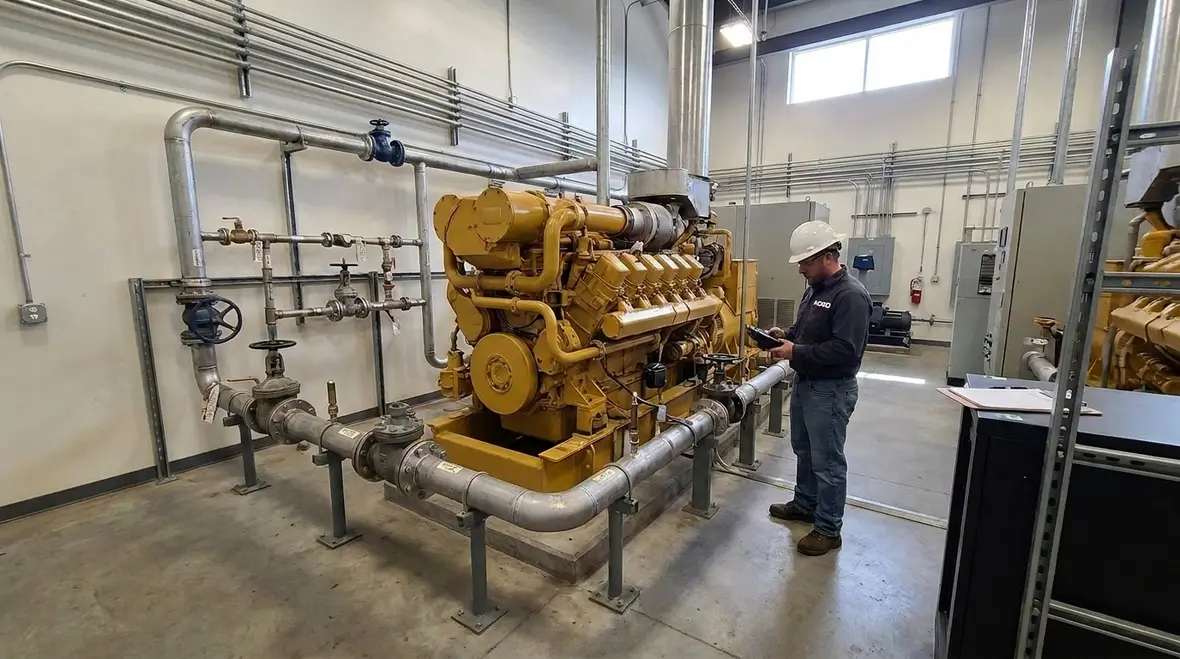
NFPA 37 Section 5.1: Gas Piping Requirements for Stationary Engines
Quick Answer
NFPA 37 Section 5.1 sets the minimum gas piping requirements used to supply stationary engines. It addresses installation practices, material and joint integrity, routing and protection, support and alignment, and inspection readiness. Facilities that follow these provisions reduce leak risk and simplify commissioning, testing, and ongoing maintenance.
For facilities building a stronger inspection and maintenance process around these systems, inspection, testing, and maintenance fire protection programs help keep documentation organized and deficiencies from quietly becoming expensive headaches.
What NFPA 37 Section 5.1 actually governs for stationary engine gas systems
NFPA 37 Section 5.1 focuses on how gaseous fuel piping gets designed, installed, and maintained when it supplies stationary engines. For commercial, industrial, and retail facilities, this section matters because engine rooms and utility spaces often combine multiple hazards: hot surfaces, electrical equipment, vibration, vehicle access, and frequent service traffic. The intent behind the NFPA 37 gas piping requirements stationary engines framework is to prevent uncontrolled releases and ensure the piping system remains capable of safe operation through installation, startup, and routine service.
In practice, compliance does not stop at “pipe is present.” Inspectable piping condition, protected routing, correct support spacing, and verified leak tightness are the elements that keep facilities passing authority having jurisdiction (AHJ) review and internal safety audits.
Installation fundamentals: routing, location, and protection where failures start
Stationary engine gas piping typically fails in predictable ways. Many issues originate from poor routing decisions, inadequate separation from ignition sources, and lack of physical protection where impacts can occur. NFPA 37 Section 5.1 requirements for the piping system emphasis commonly translate into the following operational expectations during plan review and field inspection:
Routing that limits damage exposure. Piping gets installed to reduce mechanical impact risk from carts, forklifts, cleaning crews, and maintenance work. Where exposure exists, practical protection measures are expected so the system is not left vulnerable at the lowest points.
Separation and protection from heat and ignition sources. Engine rooms combine hot surfaces and electrical controls. Proper clearances, shielding, and protection help maintain safe operating conditions and prevent deterioration of seals and fittings.
Support and alignment maintained under vibration. Stationary engines introduce vibration. Supports and anchors must control movement so joints do not become overstressed or misaligned over time.
Access for inspection and maintenance. The piping layout needs serviceability. When components become “hidden,” leak detection, regulator maintenance, and replacement cycles become more difficult and increase outage risk.
Commercial facilities frequently discover that routing changes requested mid project are where compliance slips. A revised path can introduce new penetration points, reduce clearances, or shift piping into a zone subject to impact or corrosive conditions. Align field changes with the approved design and document deviations early.
Materials, joints, and integrity: how leak tightness gets verified
NFPA 37 Section 5.1 requires piping installations that maintain integrity throughout the system life. While exact construction details depend on the specific gas type, system design, and engine manufacturer requirements, the compliance outcomes remain consistent: joints must be reliable, installed correctly, and able to withstand pressure conditions and environmental stressors.
Common joint integrity failure points
Improper assembly practices. Incorrect assembly procedures can reduce seal reliability at threaded joints, flanged connections, or transition points.
Corrosion at protected and semi protected locations. Condensation and cleaning chemicals can degrade materials if exposure was underestimated during design.
Stress from misalignment. Misalignment can force stress into the joint and accelerate leakage under vibration.
Uncontrolled penetrations and sleeves. Gaps around penetrations can create pathways for corrosive air and complicate inspection and sealing quality.
From a compliance and maintenance perspective, tightness verification must be scheduled as a controlled activity. Facilities benefit from documenting test method, acceptance criteria, and retrace of corrected deficiencies so the system returns to service without ambiguity.
Commissioning and acceptance: testing, labeling, and documentation
After installation, NFPA 37 Section 5.1 expectations drive the operational requirement that the piping system remains inspectable and testable. Commercial facilities often run into a common gap: commissioning happens, but documentation is incomplete or does not map to the installed configuration.
High value commissioning deliverables typically include:
As built piping diagrams. The as built layout must match the installed routing, offsets, and component locations relevant to the stationary engine gas supply.
Test records and correction logs. Leak test results, pressure test data if applicable, and a log of deficiencies corrected during the process.
Component identification. Regulators, shutoff valves, strainers where used, and flexible connectors if present should be identifiable for maintenance planning.
Maintenance oriented documentation. Written instructions aligned with the engine manufacturer and the facility safety program.
Because systems change over time due to equipment upgrades and tenant improvements, document control becomes a safety issue. Kord Fire Protection supports ongoing compliance management with field verification and maintenance planning so facilities can maintain traceability during audits and service cycles.
Ongoing inspection and maintenance: staying compliant after startup
NFPA 37 gas piping requirements stationary engines do not end with installation. Operational reality creates degradation risk: vibration cycling, gasket aging, regulator wear, and accidental impacts from routine work. Effective maintenance programs should treat gas piping like a living safety system, not a one time task.
What inspections should realistically focus on
Visible piping condition. Inspect for corrosion, coating failure, damaged supports, and signs of joint leakage or residue.
Support integrity and movement. Verify anchors and hangers remain secure and that piping alignment appears stable under operating conditions.
Valves and access points. Confirm shutoff devices operate as intended and that maintenance access pathways remain clear.
Regulator and filter serviceability. Components that restrict flow or drift in performance can alter operating conditions, which increases the need for planned service.
Many commercial sites struggle with scheduling. Engine rooms often share space with HVAC controls, electrical panels, and housekeeping access routes. A coordinated safety plan reduces work conflicts and ensures inspections occur before issues become recurring failures.
If your facility needs an organized compliance approach, Kord Fire Protection provides support for commercial gas safety readiness, inspection documentation, and maintenance coordination to help reduce downtime and prevent recurring non compliance findings.
For more information on broader code-compliant support, visit Kord Fire Protection’s full fire protection services.
Practical compliance challenges in commercial and industrial facilities (and how to fix them)
Even well designed systems can become non compliant after changes. The most common field challenges include:
Tenant or equipment changes that alter load and piping configuration. Upgrades can require rerouting. Facilities should require engineering review and a documented method to confirm continued adherence to NFPA 37 gas piping requirements stationary engines.
Improper repairs during maintenance. Quick fixes can introduce new leak paths or create stress concentrations. Repairs should follow approved procedures and use appropriate components.
Shared access congestion. Storage of supplies or temporary barriers can block inspection access or create impact exposure. Maintain a controlled engine room layout.
Inconsistent records across vendors. When multiple contractors touch the piping, record gaps can delay troubleshooting and complicate AHJ review. Centralize documentation.
A strong compliance program combines field verification, maintenance scheduling, and corrective action tracking. Kord Fire Protection helps facilities build that loop so safety performance remains consistent from commissioning through long term operation.
Frequently Asked Questions
Call to action
Stationary engine gas piping compliance requires more than “installed piping.” Facilities should verify routing, joint integrity, protection from damage, and maintain a documentation trail that matches the as built configuration. If your facility is preparing for AHJ review or needs a practical maintenance plan to sustain NFPA 37 gas piping requirements stationary engines, contact Kord Fire Protection to support inspections, testing readiness, and ongoing compliance coordination.

Join Our Newsletter!
Get the latest fire safety tips delivered straight to your inbox From our Newsletter.



