NFPA 36 Section 4.8: Exit and Egress Requirements in the Plant
Quick Answer: NFPA 36 Section 4.8 sets expectations for how occupants safely exit industrial processing plants during emergencies. Compliance depends on maintaining clear egress paths, proper door operation, reliable exit signage, and coordinated fire safety impairment controls across working floors.
Facilities managing changing hazards, equipment layouts, and inspection deadlines often benefit from broader fire protection services in Southern California that support inspections, repairs, and practical compliance scheduling.
What NFPA 36 exit egress requirements plant typically demand in Section 4.8
NFPA 36 exit egress requirements plant focus on safe, dependable movement from hazards to protected exits and ultimately to the exterior. Facilities covered by NFPA 36 often include processing areas where radiant heat, smoke accumulation, and equipment layout can complicate escape routes. Section 4.8 addresses how exits, exit access, and exit discharge support occupant self evacuation, while also anticipating practical plant conditions such as changing production lines, temporary work, and after-hours occupancy.
Because “installed” protections can degrade, plant owners and safety managers must treat exit and egress as an ongoing operational program. That includes inspection routines, impairment controls, door maintenance, and documentation that demonstrates consistent readiness.
Step 1: Define and maintain the exit system boundaries (exit access, exits, exit discharge)
Section 4.8 aligns the egress system into connected segments. Each segment has different performance expectations, and common compliance problems arise when teams only manage one portion.
Exit access: keep routes navigable and hazard aware
-
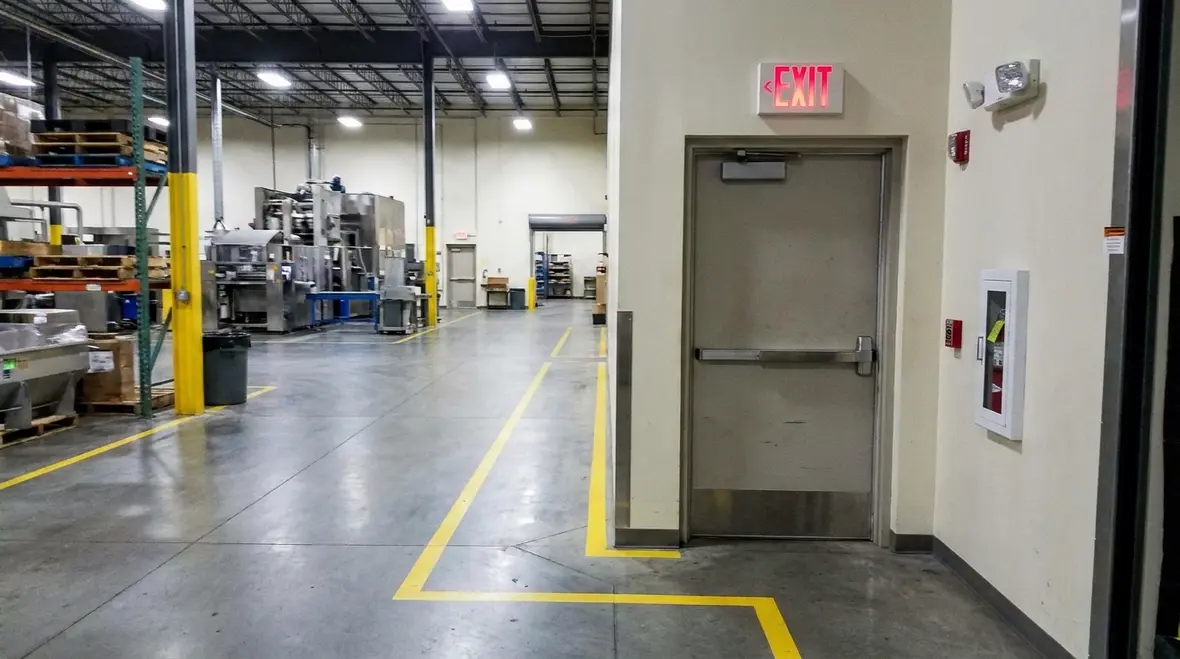
Continuity matters. Exit access routes must remain unobstructed so occupants can move toward exits without dead ends or confusing pathing, especially near process areas and storage.
-
Layout changes trigger risk. New pallets, temporary construction, cabling, and seasonal material staging frequently encroach on egress corridors or change travel distance. Plant supervisors need a process to review egress impacts before production changes start.
-
Floor and threshold conditions. Uneven surfaces, blocked door approaches, and failing dock transitions can slow evacuation or cause injuries. Maintenance must treat these as egress hazards, not housekeeping issues only.
Exits: verify doors, width, and operational reliability
-
Doors must function correctly under stress. Doors on required exit pathways must open as intended and not rely on manual improvisation. Regular testing ensures hinges, closers, and latching mechanisms stay within acceptable performance.
-
Hardware performance drives compliance. Exit door hardware that sticks or fails to latch can create delays that defeat the purpose of the egress system. Plants must address common failure points like damaged closers, misaligned frames, and worn latch components.
-
Signage and visibility. Exit markings and required illumination must remain legible in normal operation and during likely emergency conditions.
Exit discharge: safe transition from the building
-
Discharge must not funnel occupants into hazards. Exterior discharge areas must remain clear of locked gates, stacked materials, vehicle staging, and snow or ice management failures.
-
Lighting and visibility outdoors. Inadequate exterior lighting can effectively reduce the usefulness of exits, especially during shift changes and winter operations.
Door operation and impairment controls: where plant realities create risk
Industrial and retail hybrid operations frequently use doors that serve both egress and operational segregation. Section 4.8 expects exit systems to remain dependable. That requirement conflicts with real world practices like propping, temporary holds, and “worksite exceptions” that persist beyond their approval windows.
Common noncompliance triggers
-
Propped or blocked exit doors. Even short durations can violate impairment rules during an inspection cycle or during an actual incident.
-
Improper door hold-open arrangements. Doors that are supposed to close automatically may fail due to actuator issues, wiring faults, or damaged release mechanisms.
-
Maintenance gaps for closer and latching systems. Misadjusted closers can create excessive force, delayed closure, or incomplete latching.
Operational controls that reduce failure probability
-
Impairment authorization. Establish a formal system to document temporary impairments, including who can approve them, when impairments expire, and how compensatory measures protect egress.
-
Shift handoff verification. Egress conditions change during shifts. Supervisors need quick checks for doors, access paths, and signage visibility before rooms become occupied.
-
Production change management. Any process reconfiguration should include an egress pathway review so temporary staging does not “creep” into corridors.
Inspection, testing, and documentation: how compliance stays current
Exit and egress compliance succeeds or fails on maintenance discipline. NFPA 36 exit egress requirements plant provisions assume that exit components remain functional, correctly positioned, and unobstructed. A best practice is to treat egress readiness like fire alarm and sprinkler readiness, with scheduled inspections and recorded outcomes.
What to inspect routinely on plant floors
-
Exit route clearances. Verify no obstructions along defined travel paths, including storage adjacent to corridors and staging near door approaches.
-
Door swing and closure performance. Check for binding, improper latching, and inconsistent operation of closers and locking components.
-
Exit illumination and signage. Confirm required visibility during normal conditions and validate emergency power testing intervals where applicable.
-
Hardware wear. Track recurring issues such as latch failures, damaged frames, or worn hinges that lead to misalignment.
Documentation that matters during audits
Compliance reviews often focus on evidence. The most defensible documentation includes inspection logs, test results, corrective action records, and impairment tickets tied to dates, locations, and responsible personnel. Where plants operate multiple buildings or expansion phases, documentation should map findings to specific doors, corridors, and discharge points.
For ongoing commercial service support, Kord Fire Protection helps owners and safety teams keep egress features functional through inspection, testing, and maintenance programs designed for industrial operating schedules. See additional guidance through Kord Fire Protection services.
Design and construction coordination: avoid egress defects during upgrades
Many egress failures happen during renovations, equipment swaps, and tenant improvements. Section 4.8 expects exits to remain a coherent system. Construction projects can disrupt that system through temporary layouts, partial commissioning, or delayed restoration of egress pathways.
Coordination checkpoints for plant managers
-
Pre construction egress mapping. Document current exit routes, door locations, and discharge areas before layout changes.
-
Temporary routing controls. If temporary pathways are required, they must remain safe and clearly communicated, with oversight to prevent drift into noncompliant conditions.
-
Post construction restoration verification. Confirm doors, signage, and corridor clearances return to the final approved configuration. Assign a responsible party to sign off before occupancy.
Frequently asked questions
Conclusion and CTA
NFPA 36 Section 4.8 requires more than marked doors. It requires a plant-wide egress program that keeps exit routes clear, door hardware reliable, and exit discharge safe through changing operations. Kord Fire Protection supports ongoing compliance with inspection, testing, and maintenance workflows that fit real production schedules. Engage Kord Fire Protection to validate your current exit and egress readiness and establish a defensible maintenance and documentation plan.

Join Our Newsletter!
Get the latest fire safety tips delivered straight to your inbox From our Newsletter.