NFPA 36 Section 4.7: Piping, Valves, and Fittings for Solvent Systems
Quick Answer: NFPA 36 Section 4.7 sets construction and installation expectations for solvent system piping, valves, and fittings, with emphasis on compatibility, leak prevention, proper ratings, and reliable joining methods. Facilities must also plan for inspection, testing, and ongoing maintenance to sustain safe operation.
For a broader look at scheduled inspections, testing, and preventive upkeep, see ITM Fire Protection Inspection Testing Maintenance.
Why NFPA 36 solvent system piping details matter in real facilities
Solvent piping failures typically start long before a visible leak. Small incompatibility issues, incorrect pressure ratings, degraded seals, improper gasket selection, or poorly supported piping can create gradual deterioration that accelerates under thermal cycling, vibration, or repeated pressurization. NFPA 36 solvent piping valves fittings requirements exist to reduce those failure paths through disciplined material selection, correct component ratings, and dependable installation practices.
For commercial, industrial, and retail properties, compliance also affects day to day operations: commissioning timelines, maintenance access, spare parts strategy, and the ability to document condition during routine inspections. Many facilities discover compliance gaps when renovations introduce new solvent lines or when older components are “patched” rather than replaced to match current expectations.
What Section 4.7 typically governs for solvent piping components
NFPA 36 Section 4.7 addresses piping, valves, and fittings as a system, not isolated parts. In practice, inspectors and fire protection professionals focus on whether the components and their connections provide adequate integrity for the intended solvent service. The main compliance themes usually include:
- Material compatibility with the solvent, including long term resistance to swelling, embrittlement, permeation, and chemical attack.
- Pressure and temperature suitability based on system design conditions and credible operating scenarios.
- Reliable joints and connections that remain tight under pressure cycles and mechanical stress.
- Valve performance and containment, including stem sealing integrity, actuator stability, and full closure capability when required.
- Prevention of foreseeable leak points such as poor alignment, unsupported piping loads, and incompatible elastomer selection.
Even when a facility selects a code approved pipe material, non compliant valves, mismatched fittings, or incorrect connection practices can create the weak link. That is why NFPA 36 solvent piping valves fittings requirements apply to the full assembly from isolation control to end connections.
How valves and fittings fail in solvent service, and what to prevent
Operational failure modes in solvent systems usually fall into a few predictable categories. Understanding these helps facilities design inspection routes and maintenance intervals that are realistic for occupied buildings.
1) Seal degradation and seepage at valve packing or seats
Valve leakage often develops around the stem packing, seal rings, or seating surfaces. Solvent compatible elastomers and proper installation torque matter. A common commercial gap appears after maintenance: technicians replace a seal with an available substitute rather than the specified material, or they reuse damaged gaskets and O rings. Once seepage begins, it can migrate to supports and nearby cable trays, creating corrosion and hidden loss of integrity.
2) Chemical incompatibility in gaskets, O rings, and threaded joints
Fittings and joints frequently use gasketed interfaces or sealing compounds. If those materials do not match the solvent chemistry and temperature range, they can harden, swell, or crack. Threaded joints introduce another risk: improper thread form, cross threading, or incorrect sealant application can prevent full engagement or cause micro channels that slowly leak under pressure cycling.
3) Mechanical stress from poor support and alignment
Solvent lines can be sensitive to alignment. Unsupported piping transmits vibration and bending stresses into fittings and valve bodies. Over time, those stresses loosen connections, distort valve seats, and increase wear on flexible couplings or flanges. Facilities that renovate adjacent spaces often unknowingly change load paths by adding new equipment, rerouting conduits, or altering ceiling support conditions.
4) Incorrect pressure ratings and service conditions
Another common issue involves selecting components with nominal ratings that do not match actual operating conditions. A valve that technically “works” during commissioning may not survive long term cycling or may bypass at higher system pressures. Documentation of design conditions and actual operating profiles supports safer component selection and defensible inspection criteria.
Practical compliance checklist: what inspectors look for during verification
Facility teams can reduce inspection findings by treating Section 4.7 verification as a structured work process. Below is a practical checklist approach aligned with typical compliance expectations for NFPA 36 solvent piping valves fittings requirements.
Component documentation and identification
- Confirm each valve, fitting, and connection type is documented with its rated pressure, temperature, and material compatibility.
- Verify labeling or traceability for critical components, especially after replacements during maintenance cycles.
- Maintain a current “as built” piping diagram that matches actual routing, valves, and connection types.
Installation quality and leak prevention
- Confirm proper alignment and support spacing to limit stress at fittings and valve bodies.
- Verify gasket, O ring, and sealant selections match solvent chemistry and temperature exposure.
- Inspect for evidence of poor joint execution such as tool marks, improper torque patterns, or visible seepage at connections.
Valve operational readiness
- Verify correct actuator function, full travel, and that no binding occurs after system pressure exposure.
- Confirm stem sealing condition and that packing or seals remain within expected condition limits.
- Ensure isolation and control valves can be operated safely without damaging adjacent piping support or wiring.
Maintenance and readiness evidence
- Use a documented maintenance plan that includes inspection frequency, leak detection method, and criteria for component replacement.
- Record test results, corrective actions, and any component substitutions with part number and compatibility confirmation.
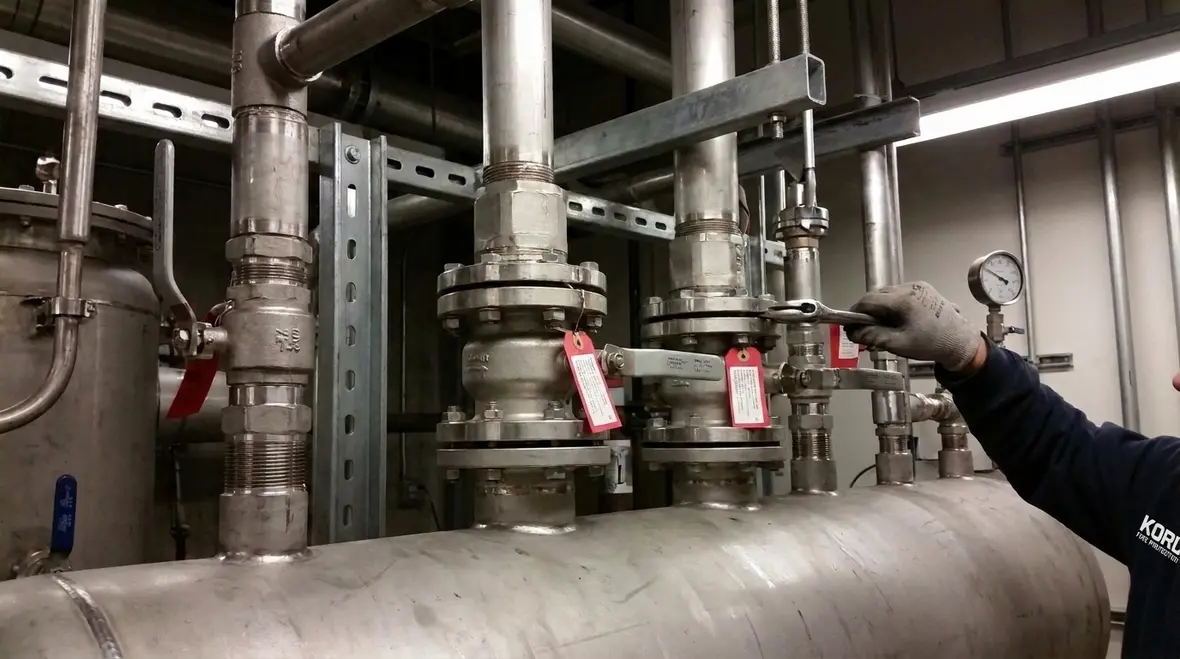
Commercial facility owners often reduce compliance risk by linking these tasks to a single inspection and maintenance workflow. Kord Fire Protection supports this by coordinating documentation, field verification, testing support, and corrective follow up so solvent systems remain reliably compliant over time.
For additional guidance on fire protection documentation and inspection readiness, see Kord Fire Protection’s fire protection services guide and request a tailored compliance review.
Inspection, testing, and maintenance: sustaining Section 4.7 integrity
Compliance does not end at installation. Solvent systems require disciplined upkeep because component condition changes with chemical exposure and system cycling. Facilities typically strengthen compliance outcomes by integrating the following practices.
Routine field inspections focused on connection integrity
Technicians should prioritize visual verification of piping runs, supports, valve bodies, and fitting interfaces. The goal is to catch early seepage indicators, corrosion patterns, or signs of mechanical stress. Because small solvent leaks can be difficult to see immediately, facilities should define a consistent inspection method that matches the solvent visibility and local conditions.
Condition based maintenance for seals and packing
Seal components often require replacement before catastrophic failure. A maintenance program should specify what triggers service, such as observed seepage, abnormal valve resistance, or deterioration consistent with solvent exposure. When replacing seals and gaskets, teams must use solvent compatible materials that match the original design intent.
Post activity verification after any system work
Any intervention involving valve replacement, fitting change out, disassembly, or realignment warrants verification. Even when parts are correct, installation steps can introduce leaks. A documented post work verification step reduces the likelihood of leaving an unresolved defect in place.
Spare parts strategy and part substitution control
Commercial sites should maintain a controlled spare inventory for critical valves and compatible seals and fittings. Substitutions should be treated as engineering decisions requiring compatibility confirmation, not convenience choices. This control directly supports NFPA 36 solvent piping valves fittings requirements by preventing inadvertent introduction of incompatible elastomers or incorrect ratings.
Frequently Asked Questions
Call to action
Ensure your solvent piping, valves, and fittings stay compliant with NFPA 36 by scheduling a structured inspection and maintenance review with Kord Fire Protection. Get help verifying component compatibility, installation integrity, and condition based upkeep so you reduce leak risk, protect operations, and maintain defensible documentation. Contact Kord Fire Protection today to plan a site specific compliance walkthrough and ongoing service strategy.

Join Our Newsletter!
Get the latest fire safety tips delivered straight to your inbox From our Newsletter.