
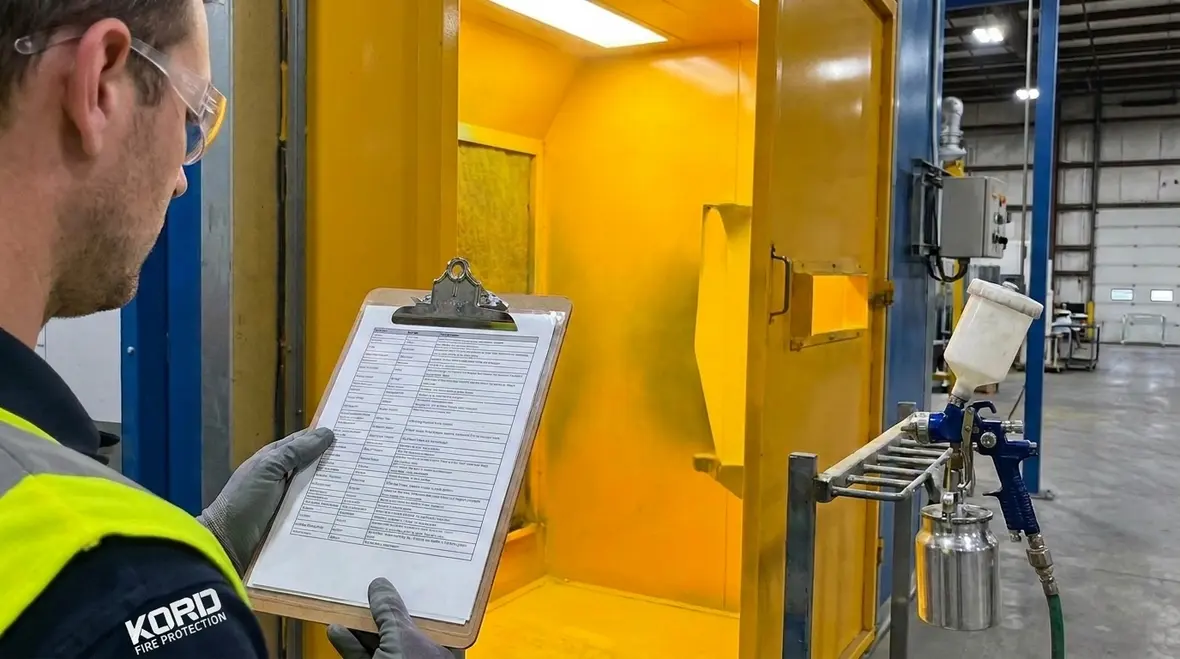
NFPA 35 Section 3.2: Official NFPA Terms Used in the Coatings Standard
Quick Answer: NFPA 35 Section 3.2 consolidates the official terms that the coatings standard uses throughout the document. A cross reference to these definitions helps facilities interpret requirements consistently during design, installation, inspections, training, and maintenance. This reduces compliance risk and prevents misapplication of technical language.
If you are building a broader compliance workflow around coatings operations, a related starting point is Kord Fire Protection’s guidance on NFPA 35 scope for organic coatings plants, which helps teams confirm where the standard applies before they start mapping definitions into field controls.
Why NFPA 35 definitions matter for real compliance work
In daily facility operations, the difference between “getting it right” and “failing the audit” often comes down to wording. NFPA 35 Section 3.2 establishes the official definitions that control how requirements in the coatings standard should be interpreted. When those terms get misunderstood, the downstream impact appears in permitting packages, contractor submittals, inspection checklists, and corrective actions.
For commercial, industrial, and retail occupancies that use coatings, linings, or application processes, the practical goal is straightforward: apply the correct technical meaning every time. That is exactly what an NFPA 35 official definitions cross reference workflow supports during commissioning, ongoing inspections, and maintenance planning.
What Section 3.2 covers in NFPA 35
NFPA 35 Section 3.2 does not introduce new fire protection concepts by itself. Instead, it standardizes how key terms get used across the rest of the coatings standard. This affects everything from how ignition sources and hazardous processes get categorized to how equipment, locations, and operating conditions get described.
Operationally, Section 3.2 functions as the “translation layer” between the code text and field implementation. When a facility builds internal procedures, develops training modules, and writes inspection criteria, the definitions in Section 3.2 provide the authoritative baseline for what inspectors will expect to see.
How to build an NFPA 35 official definitions cross reference for your facility
A workable cross reference system is not a spreadsheet that no one uses. It needs to be tied to how work actually gets performed: pre task planning, job safety analysis, hot work controls, equipment checks, and written corrective action tracking.
Step 1: Map Section 3.2 terms to your coating operations
Start by listing the NFPA 35 terms that show up in your coatings scope: application areas, storage and handling practices, ventilation language, ignition source controls, and inspection expectations. Then map each term to the processes it influences.
Common failure point: teams copy definitions into documents but do not connect them to which department owns the task. The definition remains “known,” but the control is not operational.
Step 2: Link definitions to inspection acceptance criteria
Facilities should convert the meaning of key terms into checkable conditions. For example, if a term defines a category of area or condition, the inspection should verify the specific control measures that demonstrate the area or condition is maintained as defined.
Common failure point: inspection records capture “observed” statements without referencing the definition that drove the requirement. That makes trend analysis and audit defense difficult.
Step 3: Align maintenance procedures with the definitions
Maintenance teams need definition based instructions that prevent drift. Equipment effectiveness can degrade over time due to wear, contamination, or configuration changes. By tying maintenance triggers to NFPA 35 term meanings, a facility can detect and correct deviations before they become hazards.
Common failure point: maintenance schedules follow generic vendor guidance only. NFPA driven definitions can require additional checks tied to coatings processes and hazardous conditions. For teams refining inspection cadence, Kord Fire Protection also covers inspection, testing, and maintenance schedules for coating-related operations in a related article.
Operational compliance challenges commercial facilities run into
Misinterpretation during installation and contractor handoffs
Commercial and industrial facilities commonly use multiple contractors for surface preparation, application, curing, and finishing. If the contractor does not interpret NFPA 35 terminology the same way as the facility, controls can be installed correctly in appearance but wrong in meaning. The result is rework, schedule delays, and findings that require costly corrective action.
Change management gaps for coatings materials and methods
Coatings programs evolve. New products, different film thickness targets, alternative application methods, and process equipment substitutions can change the hazardous conditions. If the facility does not maintain an updated NFPA 35 official definitions cross reference, staff may assume the prior interpretation still applies.
Inadequate training reinforcement
Training that covers “what to do” without reinforcing “what the terms mean” leads to inconsistent job execution. High turnover in retail and logistics settings, shift based staffing, and contractor labor also amplify the risk of terminology drift.
Kord Fire Protection supports facilities by translating NFPA expectations into practical inspection and maintenance routines that training can reference during daily work.
Inspection and maintenance: the field mechanism behind Section 3.2
Although Section 3.2 defines terms, the verification work happens throughout the rest of NFPA 35. Inspectors and fire safety professionals use the definitions to judge whether conditions meet the standard. That means inspection readiness requires more than a document set.
What an effective inspection program looks like
-
Pre inspection review: compare current site practices to the definition based control intent, not just to the latest revision of the binder.
-
Targeted field checks: verify controls that demonstrate defined conditions and operational categories are actually maintained.
-
Traceable findings: document corrective actions with reference to the definition that drove the inspection expectation.
Common equipment and control failure points
-
Ventilation performance drift: contamination, blocked ducting, or changes to operating parameters can weaken control effectiveness over time.
-
Ignition source control gaps: procedures may exist, but daily enforcement often weakens without definition reinforced training.
-
Configuration changes: upgrades or substitutions can unintentionally alter how a defined condition is achieved.
How Kord Fire Protection supports NFPA 35 compliance in coatings operations
Facilities need dependable fire safety partners that understand both the code language and the operational realities of coatings. Kord Fire Protection helps commercial organizations maintain compliance through inspection support, practical maintenance planning, and documentation that ties field evidence to the code definitions.
If you want to strengthen your program, start with a gap review and build a repeatable workflow that supports consistent interpretation across contractors, internal teams, and inspection cycles.
For related resources on inspection practices and fire protection program execution, see this Kord Fire Protection inspection guide.
Frequently Asked Questions
Next step: tighten your definition based compliance workflow
If your coatings program relies on outdated terminology, inconsistent contractor inputs, or inspection notes that do not trace back to official definitions, you are exposed to preventable findings. Kord Fire Protection can help you build a practical, repeatable NFPA 35 compliance approach that ties NFPA 35 Section 3.2 terms to real field controls, maintenance tasks, and audit ready documentation. Contact Kord Fire Protection today to schedule a program review and corrective action plan.

Join Our Newsletter!
Get the latest fire safety tips delivered straight to your inbox From our Newsletter.



