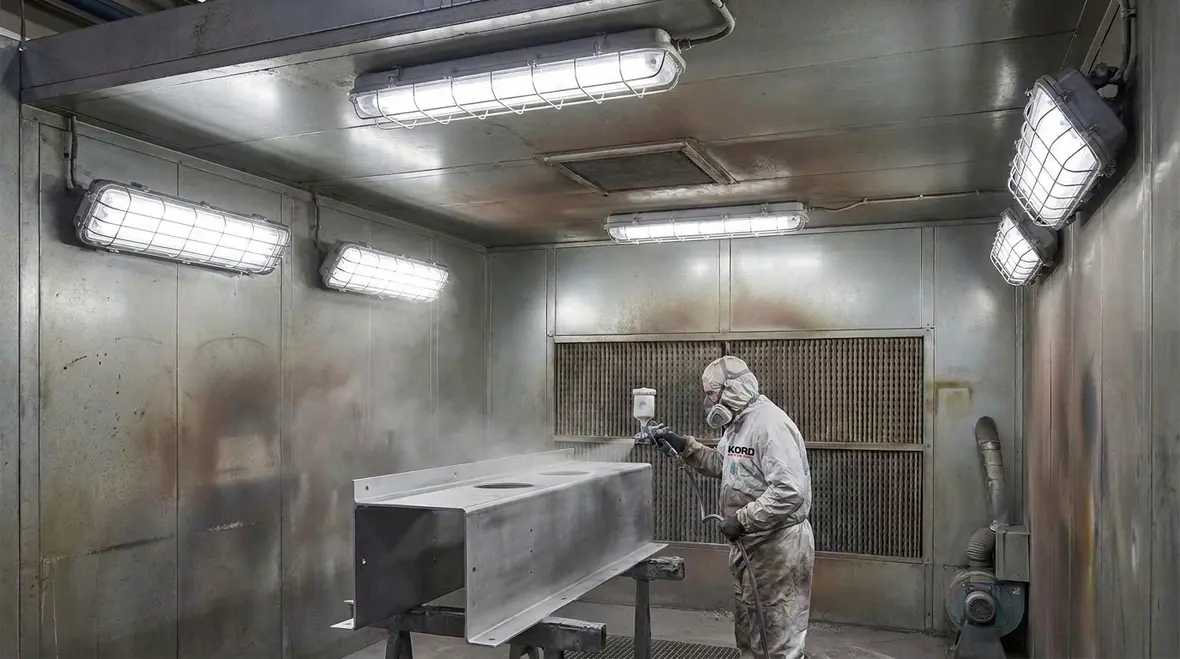
NFPA 33 Section 6.6: Illumination Requirements for Classified Spray Locations
Quick Answer
NFPA 33 Section 6.6 sets performance and safety expectations for lighting used in classified spray locations. It requires listed or approved luminaires, correct wiring methods, and ongoing verification so ignition sources do not compromise coating spray operations. Compliance depends on proper equipment selection and disciplined maintenance.
What NFPA 33 illumination classified spray locations actually requires
For facilities that spray flammable or combustible materials, lighting design cannot rely on “good lighting” alone. NFPA 33 illumination classified spray locations must be installed in a way that prevents lamps, wiring, and housings from becoming ignition sources within hazardous atmospheres. In practice, Section 6.6 coordinates with classification requirements and the broader electrical and ignition source control philosophy used across NFPA 33.
Because spray areas are dynamic, the illumination system must remain safe under normal operations, expected ventilation conditions, and typical maintenance activities. A commercial facility that changes spray processes, updates ventilation, or replaces luminaires without revalidation often creates latent risk that inspection staff will later identify.
If your team is also tightening broader inspection routines, Kord Fire Protection’s fire pump testing requirements guide shows the same documentation-first mindset that helps facilities stay ready for code-driven verification.
Where Section 6.6 applies: “classified spray locations” in real facilities
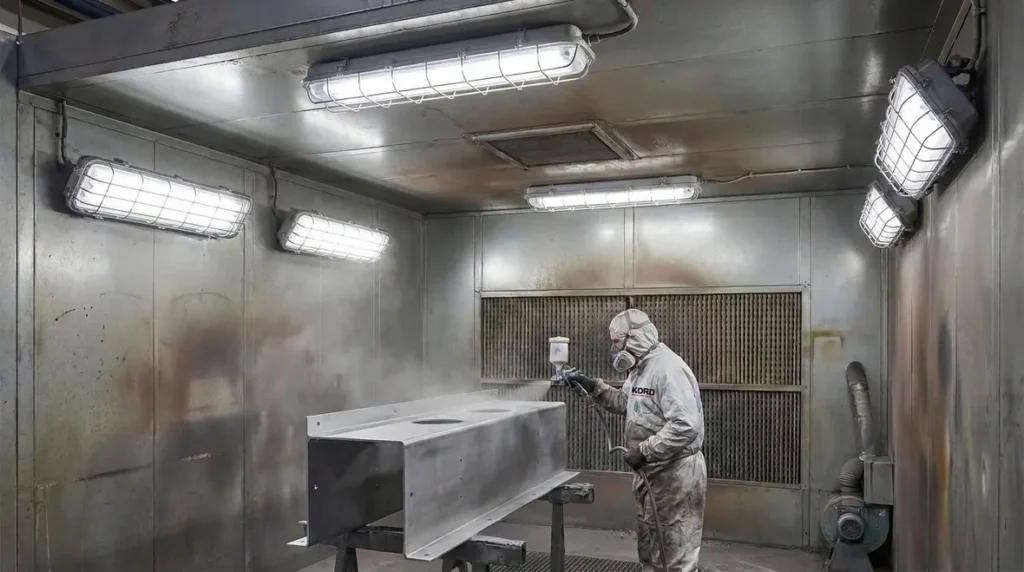
NFPA 33 classifies spray areas based on the likelihood of ignitable concentrations of vapors or combustible residues. Section 6.6 then addresses illumination within those classified zones. Common real world scenarios include:
Paint spray booths, spray rooms, and mixing rooms where coating vapors can accumulate
Areas near spray guns where atomized material and solvent mists can create flammable atmospheres
ESD sensitive workcells where coatings require specialized handling and process controls
Maintenance spaces around spray equipment where exposure may occur during prep, cleaning, or filter changes
Operationally, facilities should treat illumination as part of the overall ignition source control system. If ventilation performance changes, solvent loading increases, or spray duration extends, the illumination layout must still protect the hazardous atmosphere from hot surfaces, arcing, and surface temperatures that exceed equipment ratings.
Equipment selection: luminaires, lamp systems, and approval basis
Section 6.6 requires that illumination equipment used in classified spray locations be suitable for the environment. That suitability typically means the luminaires and their components must be evaluated and listed or approved for the conditions present in classified areas, including hazardous location requirements and temperature performance.
Key selection controls for compliance
Temperature rating discipline: Luminaires must meet the maximum expected ambient conditions and the temperature class or temperature limits relevant to the hazardous atmosphere.
Enclosure integrity: Housings and seals must prevent vapor ingress and protect internal components from becoming ignition sources.
Correct lamp and driver pairing: Substituting components after installation can invalidate the listing basis. Facilities should document approved replacements before procurement.
Ingress protection and residue tolerance: Spray operations deposit residues and cleaning chemicals. Lighting systems must remain safe as residues accumulate and as washdowns occur.
Common failure point: sites install “temporary” portable lighting, then forget to remove it. Another frequent issue involves retrofit LED swaps where the new luminaire does not match the original approval basis, temperature limits, or mounting method used for the classified zone.
Wiring and installation practices that inspectors scrutinize
Illumination safety depends on both the luminaire and the electrical installation. In classified spray locations, installation methods must prevent arcing, overheating, and unsafe wiring conditions that could ignite vapors or combustible spray residues.
Installation items to verify during compliance rounds
Conduit and fittings compatibility: Verify approved wiring methods and compatible components. Mixing component types can create gaps, loose seals, or ineffective protection.
Sealing and penetration control: Penetrations through walls and panels should be sealed to the extent required by the classified area approach and the equipment listing.
Grounding and bonding: Verify proper bonding continuity to reduce fault risk and prevent energization of housings that could be exposed to residues or cleaning chemicals.
Mounting location and protection: Ensure luminaires resist mechanical damage from cleaning tools, maintenance access, and overspray impacts.
Inspections often focus on whether the installed system matches what was originally approved. If a facility has ongoing maintenance, it should establish a control plan that includes manufacturer installation instructions, approved spares lists, and a “no substitution” rule for critical components.
Maintenance and inspection: how illumination systems fail over time
Section 6.6 compliance does not end at installation. Lighting systems deteriorate due to cleaning chemicals, vibration, overspray residue, and thermal cycling. The result can be cracked lenses, degraded gaskets, moisture ingress, and component drift that affects temperature performance.
Routine operational checks that reduce risk
Visual integrity: Inspect lenses, gaskets, seals, and housings for cracks, missing hardware, and residue buildup that blocks heat dissipation.
Operational verification: Confirm lighting functions reliably during production and after maintenance cycles, including emergency lighting arrangements where applicable to site life safety procedures.
Cleaning procedure compliance: Use cleaning methods that do not damage seals, coatings, or external temperature limiting features.
Replacement control: Replace failed lamps or drivers only with components verified against the luminaire’s listing basis.
Facilities commonly discover noncompliance during shutdowns when maintenance replaces luminaires quickly using available inventory. To avoid this, many commercial organizations partner with Kord Fire Protection for recurring compliance support, testing coordination, and documentation that aligns inspection evidence with the facility’s actual configuration.
Common compliance challenges and practical mitigation steps
Commercial, industrial, and retail facilities often face similar hurdles when meeting NFPA 33 illumination classified spray locations requirements.
1) Process changes outpace documentation
A site changes solvents, increases production speed, or modifies spray booth airflow. Lighting still functions, but the classified extent and environmental conditions may shift. Mitigation requires a process change review and confirmation that existing luminaires remain suitable.
2) LED retrofits and “like for like” assumptions
Technicians frequently treat luminaires as drop in replacements. However, temperature ratings, driver behavior, and enclosure designs can change. Mitigation involves validating each retrofit against the approved basis for classified locations and updating asset documentation.
3) Overspray deposits and blocked heat dissipation
Residue can insulate luminaires or impair cooling. Mitigation involves scheduled cleaning intervals tied to production conditions, plus maintenance verification that heat dissipation surfaces remain clear.
4) Emergency response equipment interactions
Facilities may add exit signs or emergency fixtures. If these devices enter classified zones, they must be appropriate for those areas. Mitigation includes mapping classified boundaries and verifying every lighting device in and near those boundaries.
How Kord Fire Protection supports ongoing NFPA 33 compliance
NFPA 33 illumination classified spray locations requirements succeed in the field when facilities treat lighting as a maintained safety system, not a one time equipment purchase. Kord Fire Protection helps commercial sites build repeatable processes for inspection readiness, documentation control, and corrective action tracking.
For additional ignition source control context and related fire protection guidance, facilities can also review resources available through Kord Fire Protection for commercial compliance support and maintenance planning.
If the site already has a maintenance history, Kord Fire Protection can assist by aligning fixture inventories, replacement procedures, and field conditions with what inspectors expect to see during walkthroughs and verification activities. For broader spray-operation code context, the related article on NFPA 33 Section 1.3 application and spray operations coverage fits naturally here and helps frame where these lighting requirements sit in the bigger compliance picture.
Frequently Asked Questions
Conclusion and call to action
NFPA 33 illumination classified spray locations requirements protect ignition source control where vapors and residues can accumulate. Compliance depends on selecting listed or approved luminaires, installing them with the right wiring methods, and maintaining enclosure integrity and temperature performance through disciplined inspections. Facilities should not wait for the next walkthrough to validate “as installed” conditions. Contact Kord Fire Protection to review your lighting and maintenance practices, tighten documentation, and support an inspection ready program.

Join Our Newsletter!
Get the latest fire safety tips delivered straight to your inbox From our Newsletter.