NFPA 34 Section 7.1 Scope: Ventilation Requirements
Quick Answer
NFPA 34 Section 7.1 establishes the ventilation requirements that manage flammable vapor, combustion byproducts, and worker exposure in processes covered by the code. The NFPA 34 ventilation chapter scope clarifies when mechanical ventilation is required, how it must be designed, and how systems are maintained for continued compliance.
What does NFPA 34 Section 7.1 Scope actually cover?
NFPA 34 Section 7.1 is the starting point for ventilation expectations within the code’s process safety framework. In commercial and industrial environments, ventilation is not treated as a generic “comfort” feature. It functions as an engineering control to reduce hazardous atmospheres, limit ignition risk, and support safe operation of equipment that can generate vapors, aerosols, dusts, or combustion products.
Within the NFPA 34 ventilation chapter scope, facilities must understand when ventilation is required, what hazards the ventilation is intended to control, and what performance and maintenance behaviors the system must sustain. For many sites, the biggest practical challenge is aligning the design intent from installation documents with the realities of daily operations, process variability, and ongoing inspection standards.
For teams tightening inspection discipline and documentation at the same time, Kord’s fire protection compliance auditing guide gives useful context on how field verification and records support a stronger compliance process.
Why ventilation becomes a life safety and compliance control
Ventilation in NFPA 34 applications is tied to hazard management. A compliant ventilation strategy supports the prevention of ignitable vapor concentrations and helps control exposure to potentially harmful air contaminants. The code’s section-level scope typically focuses on how ventilation must be provided and where it must effectively remove or dilute contaminants.
In commercial facilities such as retail storage areas, light industrial packaging operations, and industrial laboratories, common failure patterns include:
- Airflows that drift over time due to filter loading, damper mispositioning, or fan wear.
- Local exhaust that is present but not correctly positioned relative to the emission source.
- Interlocks or shutdown logic that are bypassed during troubleshooting or maintenance.
- Modification without revalidation, such as changes in product formulations, throughput, or storage configurations.
These issues undermine the hazard control function. That is why inspection and maintenance are treated as ongoing compliance tasks rather than one-time commissioning events.
How facilities typically determine the ventilation approach
Section 7.1 scope expectations commonly translate into facility procedures that identify hazardous sources and match ventilation methods to those sources. Operationally, a compliant program usually includes the following steps.
1) Identify ventilation-relevant processes and emission sources
Facilities map where vapors, mists, aerosols, gases, or dusts can be released. This includes normal operations and credible abnormal events such as minor spills, container changes, transfer activities, and cleaning cycles.
2) Select ventilation type based on hazard behavior
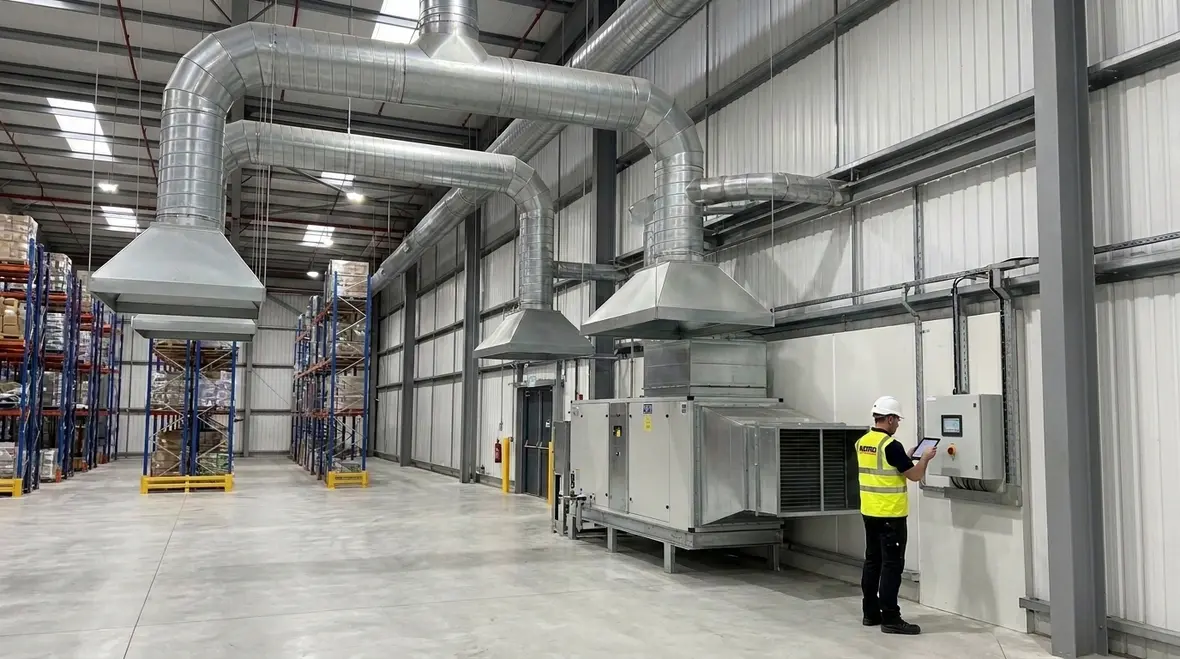
Ventilation solutions typically fall into local exhaust or dilution strategies, depending on where the contaminant forms and how it behaves. Local exhaust is often preferred where capturing at the source reduces the chance of spreading vapors into occupied or ignition risk areas.
3) Establish performance criteria and acceptance points
Design documents should define expected airflow rates, duct routing, fan capacity, pressure drops, and how system balancing supports the intended capture or dilution. In practice, compliance teams must verify that field conditions match those acceptance points.
4) Build maintenance and verification into the compliance plan
A ventilation system is only as effective as its controllability and sustained performance. Filters, belts, bearings, dampers, and sensors require scheduled attention. When maintenance lags, system performance can drop while the facility continues operating under the original design assumptions.
Operational inspection and maintenance practices that keep ventilation compliant
Commercial and industrial operators often manage ventilation across multiple tenants, buildings, or process areas. That complexity can create inconsistent maintenance execution. A strong compliance approach standardizes verification routines and tracks results.
Common inspection focus areas
- Airflow performance: confirm that exhaust and supply systems achieve required airflow under operating conditions.
- Damper and control function: verify that dampers position correctly and do not stick open or shut.
- Duct integrity: check for leaks, corrosion, loose joints, and obstructions that reduce capture efficiency.
- Fan operation: monitor for vibration, noise changes, motor overheating, and belt tension issues.
- Filtration and cleaning cycles: ensure filters are sized and replaced or cleaned at the right intervals.
- Interlocks and shutdown logic: verify that ventilation response matches operating modes and safety requirements.
Where systems fail during real-world use
Some failures occur even when equipment appears “running.” A fan can rotate while airflow fails due to blocked screens, misrouted ducting, or a pressure drop that no longer matches design assumptions. Similarly, ventilation that relies on sensors can pass a basic check while drifting out of calibration. These are the types of gaps that typically surface during compliance verification inspections.
To support sustained compliance, Kord Fire Protection provides commercial ventilation compliance support that aligns field verification with the intent of the NFPA requirements and the facility’s own operating procedures. For teams building a repeatable process, Kord Fire Protection also supports documentation practices that help reduce audit friction.
If documentation is one of the sticking points, Kord’s article on fire safety system documentation for compliance fits naturally with ventilation verification and maintenance tracking.
Compliance challenges in commercial, industrial, and retail settings
Ventilation compliance gets harder as operational variability increases. Retail and light industrial environments may experience frequent layout changes, tenant-driven product shifts, or seasonal operating schedules that influence emission intensity and ventilation demand.
Typical challenge areas include:
- Process change without engineering review: formulation changes can alter volatility and emission rates.
- Irregular maintenance scheduling: weekend or off shift staff may not follow the same verification routine.
- Shared infrastructure: multiple zones relying on one ventilation design can create unexpected cross effects.
- Building management system drift: automation updates or controller resets can reduce airflow or delay control responses.
These challenges can be mitigated with disciplined work instructions, documented acceptance criteria, and routine verification testing tied to actual operating modes. When facilities treat ventilation verification like a recurring safety program rather than an ad hoc task, they reduce both risk and regulatory exposure.
How to close the gap between design intent and day to day performance
To remain aligned with the NFPA 34 ventilation chapter scope, facilities should operate ventilation systems through a lifecycle approach:
- Document the design intent from commissioning and as built drawings, including target airflow and control logic.
- Define inspection triggers for filter changes, airflow trending, duct inspection, and sensor calibration.
- Verify performance under normal operating conditions, not just during startup or test modes.
- Control change management so modifications trigger ventilation revalidation when emission characteristics change.
- Maintain records that show ventilation performance and maintenance outcomes over time.
If your facility needs a practical partner to maintain documentation quality and verification discipline, Kord Fire Protection helps commercial sites manage ongoing compliance, testing coordination, and maintenance support. Learn more at Kord Fire Protection.
For broader service support, explore Kord Fire Protection’s fire protection services to connect ventilation-related compliance work with inspections, testing, maintenance, and documentation support.
Frequently Asked Questions
Call to Action
Review your current ventilation documentation, inspection routines, and maintenance records against the requirements implied by NFPA 34 Section 7.1 scope expectations. Then schedule a field verification plan that confirms real operating performance, not just equipment status. Kord Fire Protection can help commercial facilities align testing, maintenance, and compliance documentation into one repeatable process. Contact Kord Fire Protection today to discuss ventilation verification and ongoing compliance support.

Join Our Newsletter!
Get the latest fire safety tips delivered straight to your inbox From our Newsletter.