
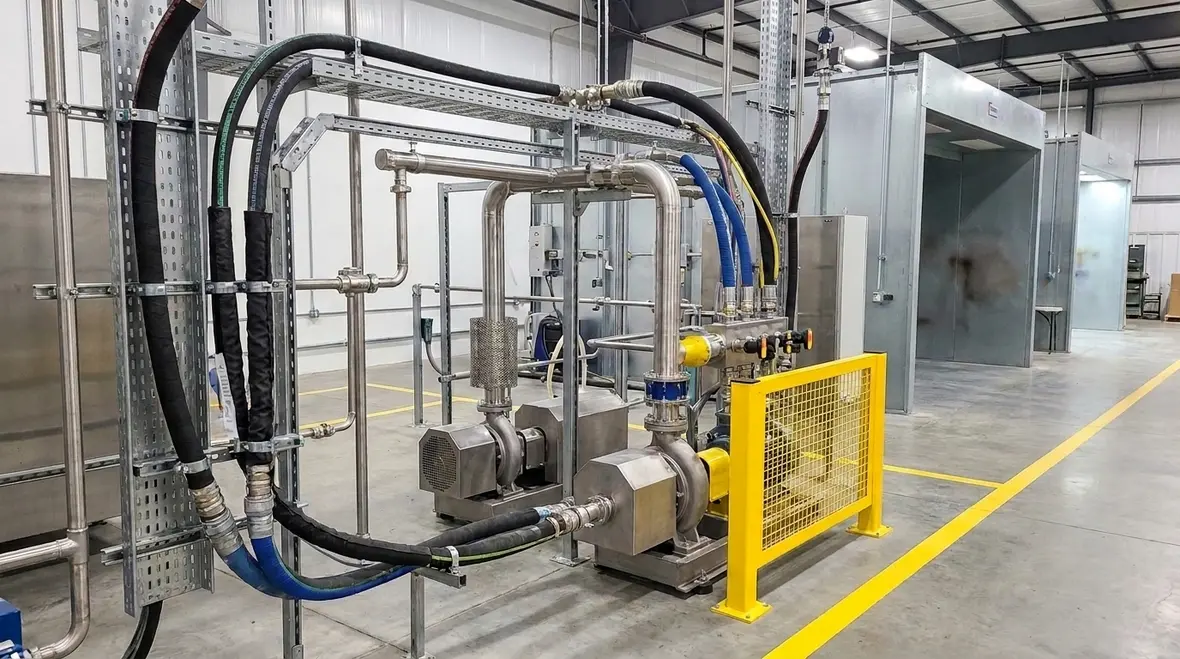
NFPA 33 Section 9.3: Protection of Coating Material Delivery Systems
Quick Answer
NFPA 33 Section 9.3 requires facilities to protect coating material delivery systems from ignition sources and damage that could compromise safe operation. Compliance focuses on equipment design, installation controls, separation from hazards, and ongoing inspection and maintenance to prevent leaks, buildup, and impact failure.
For facilities tightening up related inspection workflows and documentation practices, review this fire protection system documentation checklist for practical support that fits naturally alongside Section 9.3 compliance planning.
What Section 9.3 covers in plain terms
NFPA 33 Section 9.3 addresses the practical reality that coating delivery systems move flammable and combustible liquids through tubing, hoses, pumps, valves, and related components. The intent is to reduce ignition risk and prevent loss of containment during normal operation and foreseeable upset conditions. For facilities pursuing NFPA 33 coating delivery system protection requirements, the standard treats protection as a complete system issue, not a single “protect-the-pipe” measure.
In commercial settings, this often becomes a coordination challenge. Fire safety, EHS, maintenance teams, and production supervisors must align on equipment configuration, inspection frequency, and response procedures when delivery systems show wear, leakage, or abnormal operating conditions.
Where protection needs to start: delivery system components and failure points
A compliant protection strategy begins by mapping the full delivery pathway. Section 9.3 expectations typically influence how facilities manage coating transfer routes, especially at common failure points.
1) Hose and tubing integrity
Coating hoses and flexible connections frequently fail first due to abrasion, kinking, vibration, ultraviolet exposure, chemical attack, or improper routing. Protection requirements often translate into controlling physical damage risk, using suitable materials, and maintaining routing clear of pinch points, traffic zones, and sharp edges.
Common operational symptoms that should trigger immediate evaluation include persistent weeping at couplings, cracked jackets, stiffening or swelling of hoses, and discoloration that indicates chemical degradation.
2) Couplings, valves, and fittings
At connections, ignition risk grows when leaks occur. Facilities often underestimate how quickly a small leak can generate an ignitable vapor cloud in the presence of hot surfaces, electrostatic discharge, or powered equipment. Protection planning must account for the mechanical vulnerability of fittings and the consequences of gasket failure or improper torque.
3) Pumps and pressure regulation
Pumps introduce both energy and heat sources. Misalignment, worn seals, and abnormal motor operation can elevate temperature and increase leak frequency. Protection requirements should therefore connect system protection with mechanical integrity programs, including seal inspections, lubrication controls, and verification that pressure regulation remains within design parameters.
4) Containment and leak management
Even when systems remain sealed, setbacks, collisions, and maintenance errors can create discharge. Practical compliance emphasizes preventing discharges from reaching ignition sources and limiting spread across the work area.
How facilities meet NFPA 33 expectations in real operations
Commercial facilities often implement Section 9.3 through layered controls. The most durable approach pairs engineered protection with disciplined operational procedures and maintenance performance tracking.
Segregation and physical protection around ignition sources
Delivery systems should not share hazards with ignition sources in a way that allows a leak to be exposed. Facilities often reduce risk through separation, shielding, and routing controls that prevent direct exposure to hot motors, electrical enclosures that can generate arcs, heaters, and other ignition capable equipment.
In paint preparation and application areas, this becomes a layout problem. Operators may request short routes to improve workflow, but those routes can place hoses in close proximity to moving equipment or impact zones. Section 9.3 compliance requires balancing productivity with the protection intent.
Protection during transfer and cleaning activities
Many incidents occur during changeover, purging, and equipment cleaning when system pressures and flow paths differ from normal operation. Facilities should verify that hoses and connections used during purges receive the same protection level as the primary transfer components.
Operators should also follow defined steps for depressurization and safe handling of residual coating materials. Improper draining or reconfiguring delivery lines can introduce unexpected vapor or spill conditions.
Maintenance and inspection as compliance, not paperwork
NFPA 33 protection requirements rely on the assumption that protected components remain effective. If protective guards, shields, routing supports, or containment features degrade, the original risk control fails.
Effective inspection programs for delivery systems typically include:
- Routine visual checks for abrasion, corrosion, swelling, and cracking on hoses and tubing
- Leak detection during operation and after shutdown
- Verification of secure coupling engagement and appropriate gasket condition
- Assessment of routing clearances, including access to replace worn components
- Documentation of corrective actions and return to service approvals
For facilities with multiple shifts, the program must include turnover standards so hazards found by one team do not persist into the next production cycle.
Teams building stronger inspection readiness may also find value in this fire suppression inspection guide, especially where corrective actions and reporting need to stay aligned with field realities.
Design and installation controls that reduce ignition risk
Section 9.3 drives attention to how systems are installed and maintained, especially in high demand commercial and industrial spaces where equipment is frequently reconfigured.
Routing discipline and impact resistance
Delivery lines and hoses must be routed to resist mechanical damage. In warehouses, retail finishing areas, and mixed use industrial bays, traffic patterns and lift equipment routes often change over time. Facilities should periodically reassess delivery line locations against the current layout and traffic plan.
Support, strain relief, and movement control
Hoses and flexible connections require strain relief and proper support to reduce fatigue failures. Facilities typically benefit from defined routing pathways with supports designed to prevent sagging and friction contact with building structure.
Equipment compatibility and chemical resistance
Coating chemistry can attack hose and seal materials, especially when coatings contain solvents or reactive components. Compatibility validation should include how temperature and dwell time affect materials during production cycles and shutdown periods.
Commercial compliance challenges that cause recurring nonconformities
Across commercial facilities, auditors and insurers often see predictable issues. These patterns help teams target resources and reduce repeat findings.
- Uncontrolled modifications: Production teams add extensions, change routing, or replace hoses with mismatched materials without an EHS review.
- Inadequate protection at transitions: The system looks protected in the main run, but connections, quick disconnects, and temporary hoses lack equivalent guarding.
- Partial maintenance: Preventive maintenance focuses on pumps while hoses and fittings receive only reactive repair.
- Weak inspection documentation: Records show inspections occurred, but corrective actions do not close out repeat defects, and return to service criteria are unclear.
- Cleaning and purging variability: Practices change between shifts or contractors, increasing the chance of unexpected leaks or vapor release.
When these gaps appear, Kord Fire Protection supports facilities with ongoing inspection planning, documentation support, and coordinated fire protection expertise aligned to real maintenance workflows. For related guidance on commercial fire protection planning and documentation expectations, review Fire Safety System Documentation for Compliance.
Frequently Asked Questions
Get Section 9.3 protection aligned with your facility
If your coatings program involves frequent transfer, changeover, or contractors, a single missed protection element can undermine your risk controls. Kord Fire Protection helps commercial facilities build practical inspection and maintenance routines that support NFPA 33 coating delivery system protection requirements and reduce repeat findings. Contact Kord Fire Protection to evaluate your delivery system protection approach and strengthen ongoing compliance.

Join Our Newsletter!
Get the latest fire safety tips delivered straight to your inbox From our Newsletter.



