
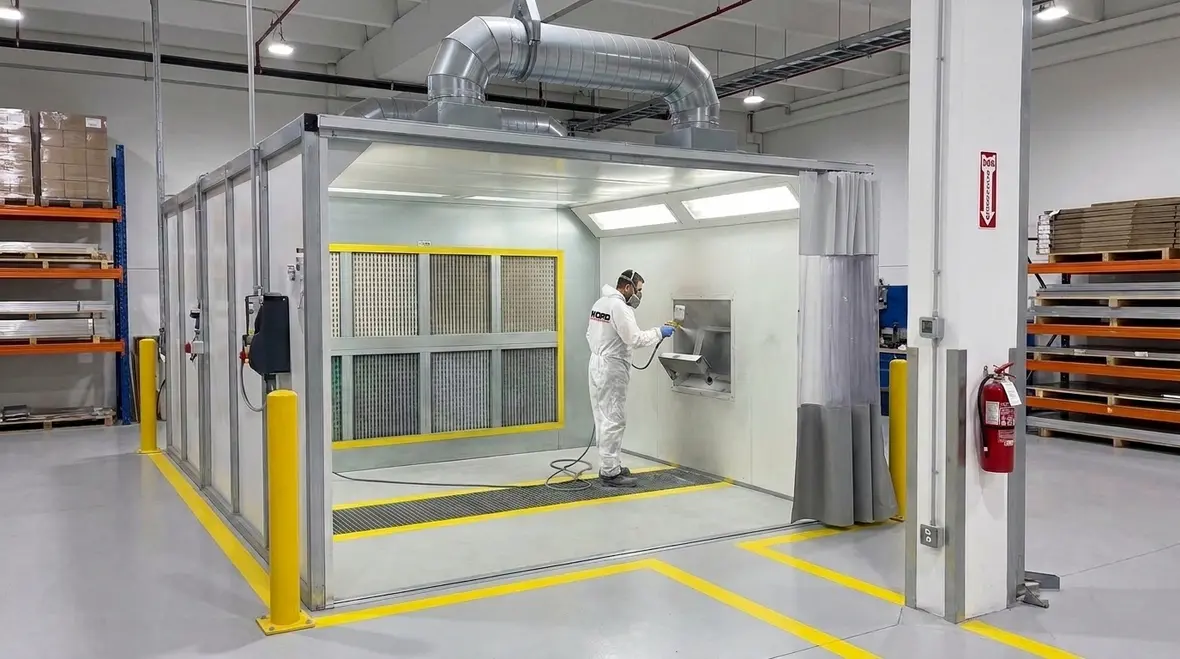
NFPA 33 Section 4.1: Location Rules for Spray Application Operations
Quick Answer
NFPA 33 Section 4.1 sets where spray application operations may occur and what surrounding conditions must be controlled to reduce ignition and fire propagation risks. These rules affect layout, ventilation, ignition source control, storage separation, and maintenance practices for ongoing compliance.
NFPA 33 location requirements spray application operations focus on controlling ignition hazards, limiting exposure to combustible materials, and managing hazardous atmospheres created or intensified by spraying processes. In commercial facilities, compliance often fails not from a lack of intent, but from practical site changes, poor housekeeping, or equipment that is technically present but not operational as required.
What NFPA 33 Section 4.1 Actually Requires at the Site Level
NFPA 33 Section 4.1 addresses location rules for spray application operations by tying hazardous process controls to where spraying happens and what surrounds it. The code intent is straightforward: the location must support safe operation by preventing ignition sources from reaching the sprayed mixture and by controlling combustible residues and overspray accumulation.
In practice, this becomes a site design and ongoing operations problem. A facility can be fully compliant on paper while still noncompliant due to real world conditions, such as modified partitions, temporary construction, closed or degraded ventilation components, or changes in storage arrangement around spray areas.
Facilities reviewing this section often also benefit from broader fire protection services for commercial properties, especially when spray area compliance needs to stay aligned with inspections, maintenance, and day to day operational changes.
How “Location” Impacts Ignition Control and Hazard Management
Spray application creates a localized risk profile. The hazard drivers include the sprayed material, solvent or carrier vapors, atomized particles, and residues that can accumulate on nearby surfaces. NFPA 33 location requirements spray application operations require that the spray area and its immediate environment do not permit ignition capable conditions to develop or persist.
Common compliance challenges in commercial spaces
Adjacent work activities: Hot work, powered industrial trucks, welding, or grinding near the spray area can defeat ignition control plans even when the spray equipment itself is rated correctly.
Improper separation from combustibles: Cardboard, rags, coatings, packaging, and flammable liquids stored too close can increase the consequences of ignition and complicate cleanup and residue control.
Ventilation performance variability: Duct leaks, blocked filters, or fans running outside intended duty cycles reduce contaminant removal and increase the likelihood of flammable mixtures.
Overspray migration: Poorly designed containment or airflow patterns can move atomized material to adjacent rooms, mechanical areas, or return air paths.
Site walkdown matters
Safety professionals should not limit review to drawings. A compliant location is validated by observing airflow patterns, checking for residue on vertical surfaces and ledges, verifying access control to the spray zone, and confirming that equipment operating states match the intent of the fire safety design.
Operational Procedures that Support Code Compliance
Even when a facility’s layout meets the intent of NFPA 33 Section 4.1, location compliance depends on how operations are run. The highest risk failures typically occur during transitions, maintenance periods, or process changes.
Controls that must align with the spray location
Start up and shutdown sequencing: Ventilation should operate during spraying and in the required time windows so the location does not transition into an unsafe state.
Housekeeping and residue management: Overspray dust and residue can settle beyond the immediate spray zone. A location rule becomes ineffective if housekeeping cannot keep the surrounding spaces free of accumulations.
Access and ignition source control: Authorized personnel only, ignition source permitting, and confirmation that nondesignated equipment is isolated from the spray environment.
Maintenance verification: Filters, air movers, ducting, interlocks, and electrical fittings must remain in serviceable condition. A small deterioration can produce a large change in risk at the location.
For commercial facilities, Kord Fire Protection typically finds that documentation is present but does not reflect operational reality. Interim process changes, contractor work, and equipment replacements frequently drift out of compliance unless a structured inspection and maintenance program exists.
Inspection, Testing, and Maintenance: Where NFPA 33 Compliance Breaks
NFPA 33 location requirements spray application operations require continuous assurance. The location is not a static condition. It changes with modifications to HVAC, housekeeping practices, material types, and building use.
What inspectors verify during location based compliance checks
Ventilation effectiveness: Confirmation that air movement supports containment and removal of vapors and particulates consistent with the intended spray operation.
Integrity of spray area boundaries: Doors, partitions, and barriers must prevent overspray and protect nearby exposures.
Equipment and electrical safety features: Verification that listed or designed protective features remain intact and correctly installed.
Housekeeping condition: Inspection for settled residue, dust accumulation, and accessible combustible debris in and around the spray location.
Changes to layout or process: Review of any recent construction, relocations, added storage, or new spraying materials that may alter hazard classification or distances.
If the goal is defensible compliance, maintenance records must show that the location controls remained effective over time. Where organizations rely on visual observations only, risks increase after filter loading, duct damage, or changes in production schedules.
To support a broader safety program, Kord Fire Protection can assist with inspection planning, maintenance verification, and ongoing compliance services. For related technical coverage, see NFPA 33 Section 1.3 application guidance for spray operations for additional context on how facilities determine whether specific spraying work falls under the standard.
Designing and Managing the Spray Location in Real Facilities
Commercial, industrial, and retail facilities often share a common problem. The “spray location” is treated as a room, but the hazard behaves like a moving plume. NFPA 33 Section 4.1 encourages controls that match how spray aerosols and vapors actually travel.
Practical location management steps
Define the spray zone boundaries using containment controls, signage, and access rules that align with actual airflow and overspray behavior.
Control nearby exposures by managing storage, cleaning waste, and other ignition susceptible activities within the surrounding area.
Establish maintenance checkpoints for ventilation systems, filters, and interlocks that directly affect hazardous atmosphere management at the location.
Document process changes so equipment substitutions, material swaps, or schedule changes trigger a location risk review rather than relying on memory.
When “temporary” becomes permanent
Temporary partitions, makeshift duct rerouting, or short term storage for staging often persist for months. NFPA 33 location requirements spray application operations do not relax just because changes started as an expedient solution. A formal change management review protects compliance and reduces the chance that an updated process creates an unrecognized ignition exposure path.
Frequently Asked Questions
Conclusion and Call to Action
NFPA 33 Section 4.1 location rules succeed only when the spray area is controlled in day to day operations, not just during installation. Kord Fire Protection helps commercial facilities verify location based controls through inspection planning, maintenance support, and compliance focused documentation. Arrange a site review to confirm your spray location protections, ventilation effectiveness, and housekeeping readiness before a change in production or building conditions creates new risk.

Join Our Newsletter!
Get the latest fire safety tips delivered straight to your inbox From our Newsletter.



