
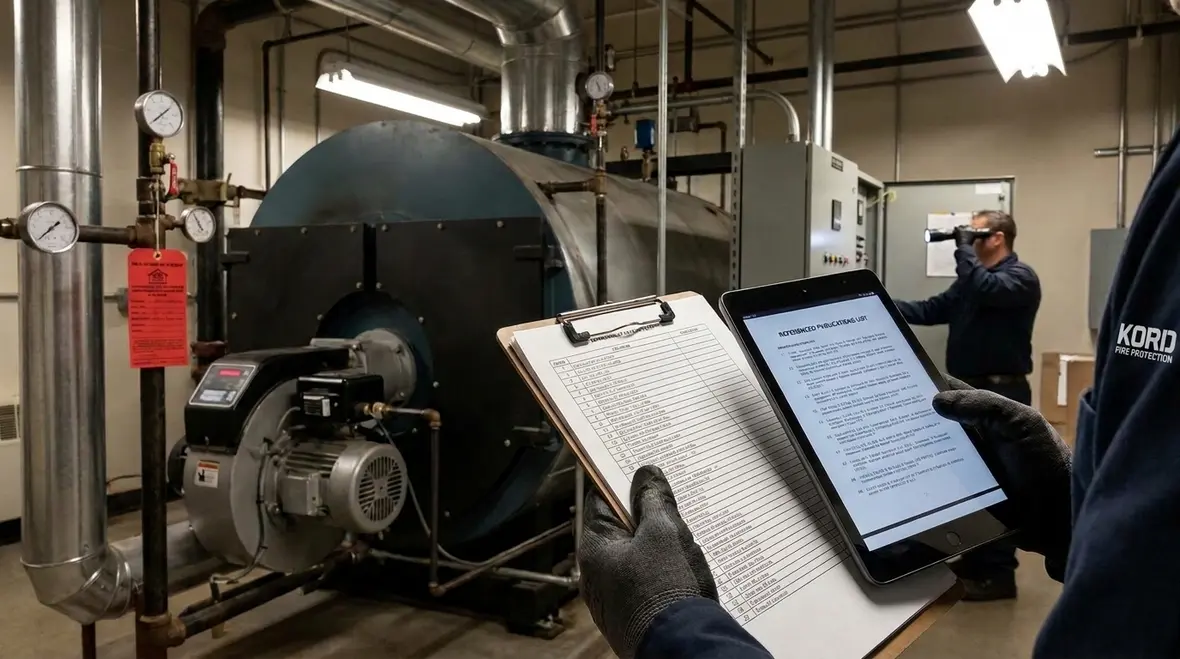
NFPA 31 Section 2.1: How to Read the Referenced Publications List
Quick Answer
Navigating NFPA 31 Section 2.1 requires reading the referenced publications list as a compliance map, not a bibliography. Facilities must confirm the edition, understand which documents apply to specific systems, and then align installations, inspections, and maintenance practices to those standards.
If your facility handles related system planning and documentation across fire protection assets, Kord Fire’s fire pump systems service support shows how inspection, maintenance, testing, and reporting can stay coordinated instead of becoming a paper chase.
Why Section 2.1 matters in a real facility
NFPA 31 Section 2.1 tells users how to treat the standards cited elsewhere in the document. For commercial, industrial, and retail facilities that store, process, or use oil burning equipment, this section is where compliance becomes practical. The referenced publications list controls how inspectors interpret system construction, safety features, and operating requirements.
In the field, the most common failure is not misunderstanding “what” the document is, but missing “which edition” or “which scope.” This leads to gaps in testing, documentation, and maintenance practices that can surface during installation sign off, insurance surveys, or recurring inspection cycles. The safest approach is to build an internal audit method aligned with the NFPA 31 referenced publications overview and update it whenever standards editions change.
How to read the NFPA 31 referenced publications overview step by step
Step 1: Identify the citation purpose within NFPA 31
Referenced publications in NFPA 31 are used to support specific technical requirements. When a line item cites another standard, the NFPA 31 requirement usually depends on that external standard for details such as terminology, test methods, construction rules, or performance criteria. A correct read starts by mapping each citation to the NFPA 31 sections that rely on it.
Compliance teams should avoid a blanket interpretation like “we meet NFPA 31, so we meet everything cited.” Instead, teams should confirm the cited document is actually engaged by the applicable NFPA 31 clause for the equipment type in the facility, such as burners, piping, tanks, controls, or ventilation components.
Step 2: Verify the applicable edition and update timing
Section 2.1 emphasizes that the listed publications have defined editions. Inspectors commonly look for evidence that the facility or contractor followed the edition that the code edition expects. In practice, edition drift happens when facilities use long lead documentation, legacy service records, or older training references.
Operationally, the fix is simple but must be disciplined: maintain a standards register for each building or site, with the NFPA 31 edition in effect and the corresponding referenced publications edition for that code cycle. When equipment is modified or replaced, recheck the register rather than assuming “previously compliant” means “currently acceptable.”
Step 3: Translate the reference into install, test, and maintenance actions
Reading Section 2.1 correctly means translating citations into field actions. For example, an external standard may define the required inspection sequence, acceptance criteria, or preventive maintenance frequency for oil piping components and burner control systems. Facilities that only maintain “what fails” will eventually miss the maintenance-based evidence that auditors request.
For commercial burners and heating systems, this translation process should include at minimum: startup commissioning records, safety control sequence documentation, required functional testing intervals, and evidence of correct adjustments for combustion and safety shutdown operation.
Step 4: Build traceability from drawings to field verification
Referenced publications often include requirements that are not directly visible on drawings, such as installation clearances, component labeling, test port verification, or pressure and leak testing methods. The compliance method should therefore connect three layers: design documents, equipment submittals, and field test results.
This traceability reduces rework during AHJ reviews and shortens correction cycles. It also improves the facility’s ability to respond to recurring concerns like nuisance lockouts, incomplete combustion, and sensor drift that can affect safety shutdown performance.
What typically goes wrong when teams misread the referenced list
Edition mismatch and documentation gaps
Facilities often inherit documentation from previous contractors. When the referenced publications edition changes, the old paperwork can still be present but no longer aligns with current expectations. The result is a delayed correction discovered during inspection, not during the installation planning phase.
Commercial sites with multiple tenants also see confusion when tenants update equipment independently. A shared compliance register and controlled maintenance workflow helps prevent this.
Scope confusion across oil burning equipment systems
Another frequent issue is applying requirements to the wrong component. A referenced publication might apply to burner controls but not to the oil supply piping, or it might apply to a tank system but not to the ventilation interface. A correct NFPA 31 referenced publications overview workflow keeps scope aligned to equipment type and the exact NFPA 31 clause that triggered the reference.
Inspection and testing routines not matching the code intent
Even when installations are completed, maintenance routines may not reflect the testing methods referenced in the external standards. Common operational failure points include incomplete safety shutdown sequence verification, missing combustion air and venting checks, and insufficient leak detection evidence for oil-handling components.
For facilities, the consequence is not only audit findings, but also higher risk of unsafe operation during abnormal conditions such as ignition failure, restricted flue flow, or impaired oil delivery.
Practical compliance application for commercial oil burning equipment
To apply Section 2.1 in a way that holds up during inspections, commercial teams should standardize a repeatable workflow. Kord Fire Protection supports these workflows through documentation practices, inspection coordination, and maintenance planning that align with NFPA 31 expectations for oil burning equipment.
Operational procedure: confirmation during commissioning
During installation or replacement, teams should confirm that the burner and oil piping system are configured to the relevant referenced standards that NFPA 31 points to for that equipment type. Commissioning records should include key safety functional checks, proper settings, and evidence of correct operating sequence performance.
Maintenance requirement: scheduled verification, not ad hoc repairs
Oil burning equipment requires planned verification because safety controls and combustion conditions can drift. Maintenance should capture functional testing results and corrective actions linked to the referenced requirements, not just “service was performed.” This approach helps facilities demonstrate continued compliance between inspection events.
For additional operational detail on burner and installation expectations, facilities can use this internal guide as a practical reference for equipment installation considerations: NFPA 31 a practical guide to oil burning equipment installation.
How Kord Fire Protection helps facilities maintain compliance over time
Reading Section 2.1 correctly is the starting point, but maintaining compliance requires ongoing control of documentation, inspections, and maintenance outcomes. Kord Fire Protection helps commercial facilities avoid compliance drift by supporting standards-aligned service planning, coordinated inspections, and clear reporting that connects field verification to the applicable NFPA framework.
This partnership is especially valuable in environments where equipment is updated in stages, where multiple trades touch life safety systems, or where tenant turnover introduces inconsistent maintenance documentation.
Frequently Asked Questions
Get your referenced publications workflow under control
Facilities can reduce audit and inspection risk by building a traceable system that links NFPA 31 requirements to the correct referenced publications editions, then ties those references to real commissioning and maintenance records. Kord Fire Protection can support ongoing inspections and maintenance planning to keep your oil burning equipment compliance current. Contact Kord Fire Protection to review your current documentation and service workflow and identify gaps before they become field corrections.
Explore practical oil burning equipment installation guidance

Join Our Newsletter!
Get the latest fire safety tips delivered straight to your inbox From our Newsletter.



