
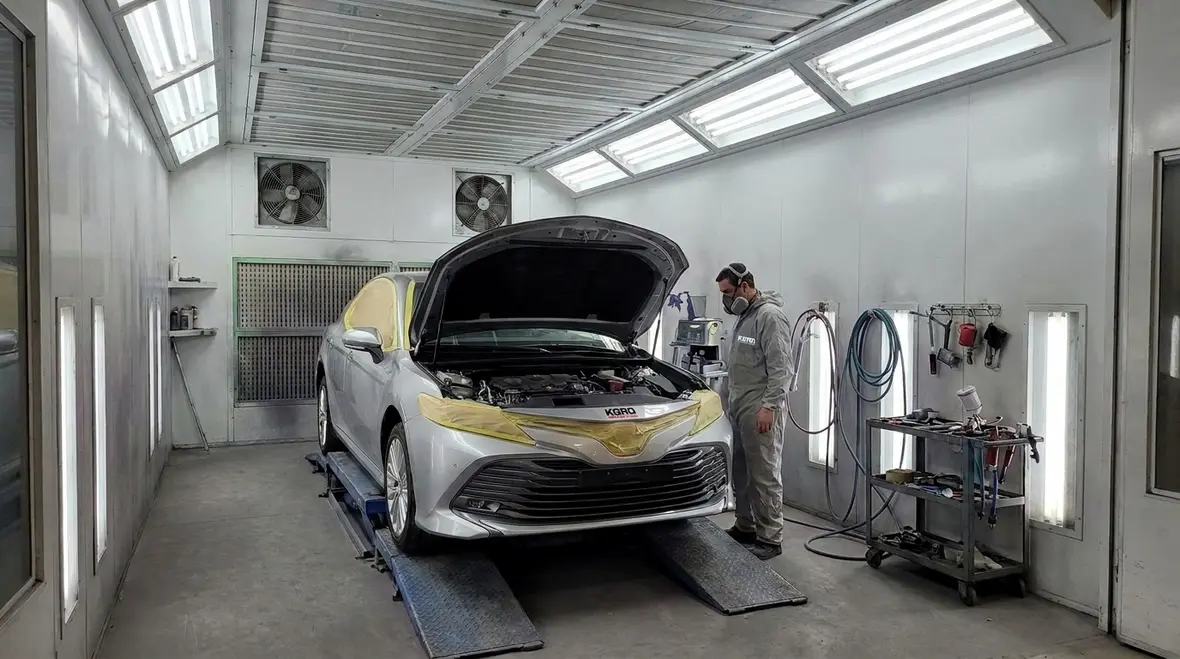
NFPA 33 Section 4.4: Fueled Vehicles Inside Spray Application Operations
Quick Answer
NFPA 33 Section 4.4 addresses how fueled vehicles may be handled during spray application operations. It focuses on controlling ignition sources, managing flammable vapor hazards, and ensuring vehicles and surrounding equipment do not defeat the facility’s fire protection safeguards. Compliance depends on inspection, operating controls, and maintenance.
Facilities that perform coating, spray finishing, adhesive application, or related processes often question whether a fueled vehicle can be present in the spray area. This is not just a policy issue. It directly affects ignition control, ventilation effectiveness, and overall risk management. The applicable compliance topic is captured in NFPA 33 fueled vehicles spray operation requirements.
What NFPA 33 Section 4.4 Is Trying to Prevent
NFPA 33 Section 4.4 centers on the hazard created when a fueled vehicle is placed into or maintained within spray application operations. Spray processes can generate flammable and combustible vapors, and those vapors can ignite from multiple potential sources, including electrical systems, mechanical switching, static discharge, engine related ignition risks, and other hot surfaces.
In practical terms, the standard seeks to prevent a scenario where normal vehicle operation or vehicle systems inadvertently introduce an ignition source into a flammable atmosphere created by spray activity.
Defining “Fueled Vehicle” and the Real-World Risk Drivers
NFPA 33 treats vehicles with fuel onboard as higher-risk because the fuel system and vehicle power systems introduce ignition potential. The hazard is magnified when a spray operation creates vapor concentrations near the vehicle surfaces and around areas where vapors can accumulate, such as pits, wheel wells, undercarriages, and enclosed booths or prep areas.
Common risk drivers include:
- Vapor accumulation patterns under and around the vehicle
- Vehicle electrical activity such as alternator output, battery cycling, or starter related components
- Hot surfaces and exhaust heat that can become ignition sources if vapors are present
- Fuel system leaks or pressure changes that can increase flammable vapor release
- Static charge generation from movement, handling, or process airflow
Commercial operations often underestimate how quickly vapor pathways form. Even if the spray booth has good average ventilation, localized pockets can exist around complex vehicle geometries.
How to Control the Hazard During Spray Operations
Meeting NFPA 33 fueled vehicles spray operation requirements requires a systems approach: ignition source control plus vapor control. Compliance typically depends on controlling conditions for vehicles within the spray environment, rather than relying on “good intentions” or ad hoc operator decisions.
Facilities handling these risks often also benefit from reviewing spray booth fire suppression for safer paint operations as part of a broader control and inspection strategy.
1) Establish operational boundaries for the spray area
Facilities should define where vehicles may enter, when they may remain, and what states they may be in. A “vehicle in the area” policy needs clear triggers tied to spray start and spray stop conditions. The intent is to prevent fueled vehicles from being present when flammable vapor concentrations could exist above safe thresholds.
2) Prevent ignition sources from being activated
Vehicle systems can energize during movement or during normal operation. The compliance approach typically addresses ignition source control by ensuring vehicle operating conditions do not create ignition potential during spray application.
Practical controls often include:
- Operating controls that prevent engine start or electrical system activation during spraying
- Interlocks or procedural barriers that stop spray when the vehicle state changes unexpectedly
- Hot work and maintenance scheduling that avoids overlapping ignition sources with spray vapor generation
3) Verify ventilation and airflow effectiveness where the vehicle sits
Ventilation is not just “on or off.” It must be effective at capturing and exhausting vapors created by spray application. Inspections should focus on the actual flow around the vehicle, including areas where overspray and solvent vapors tend to accumulate.
Facilities should document:
- Exhaust performance at the booth entry and inside the working envelope
- Appropriate makeup air without disturbing vapor containment
- Maintenance status of ducting, fans, filters, and air movers
4) Use safe work procedures tied to start up and shutdown
Operational controls must define what happens before spraying begins and what conditions must be met before spraying ends. This includes establishing a “safe to enter” and “safe to spray” sequence for fueled vehicles.
When procedures are vague, the first failure often appears at shift change, during rework, or when an operator improvises to meet production schedules.
Equipment Mechanisms and Common Failure Points
Compliance outcomes depend on equipment performance. Many failures that lead to noncompliance or unsafe conditions come from predictable mechanical and maintenance gaps.
Booth and exhaust components
Key failure points include:
- Restricted airflow from clogged filters, dirty plenums, or blocked duct sections
- Fan performance drift due to worn bearings, motor issues, or misalignment
- Airflow short circuiting that reduces capture near the vehicle
- Damper problems that cause uneven extraction
Electrical classification and ignition control
Spray application areas often involve electrical components that must be appropriate for the hazardous location risk. Vehicles add complexity because operators may request added services, battery charging, temporary wiring, or other actions that change ignition risk.
Facilities should ensure that the electrical system supporting spray operations is inspected and maintained, and that vehicle related electrical needs do not inadvertently defeat the hazardous location controls.
Static discharge and grounding
Static discharge becomes a concern when airflow, movement, and material contact create charge buildup. Vehicle grounding and conductive contact points must be maintained and verified for each application.
Inspection, Documentation, and Maintenance That Hold Up in Audits
Commercial and industrial facilities typically demonstrate compliance through documented risk controls, inspection records, and maintenance activities. For fueled vehicle spray operations, documentation should show that controls remain effective over time, not just during initial commissioning.
What to include in an audit ready compliance file
- Written procedures describing vehicle entry, vehicle condition, start and stop sequencing, and exceptions
- Ventilation inspection and test records including corrective actions and retesting outcomes
- Maintenance logs for fans, ductwork, filters, dampers, and any monitoring equipment
- Training records showing operators understand the ignition and vapor risk during fueled vehicle presence
- Inspection results tied to equipment condition and any identified hazards
Maintenance approach that reduces recurring problems
Many facilities encounter repeated issues because maintenance is reactive rather than preventive. A preventive program should focus on the parts most likely to drift or degrade: airflow components, detection and monitoring systems, and grounding paths.
If your facility is managing NFPA 33 compliance and spray booth safety across multiple rooms or production lines, Kord Fire Protection can support ongoing testing, inspection readiness, and corrective maintenance scheduling. For additional context and related compliance practices, see commercial fire protection services and code compliance support.
Frequently Asked Questions
Conclusion and Call to Action
NFPA 33 Section 4.4 requires more than a simple “no running the engine” rule. Facilities must control ignition sources, ensure ventilation effectiveness near the vehicle, and maintain documented inspection and maintenance programs that prove ongoing effectiveness. Kord Fire Protection can help you standardize compliance procedures, validate equipment condition through testing and inspections, and keep your documentation audit ready. Schedule a compliance review to confirm your current fueled vehicle spray operation controls align with NFPA 33 expectations.

Join Our Newsletter!
Get the latest fire safety tips delivered straight to your inbox From our Newsletter.



