
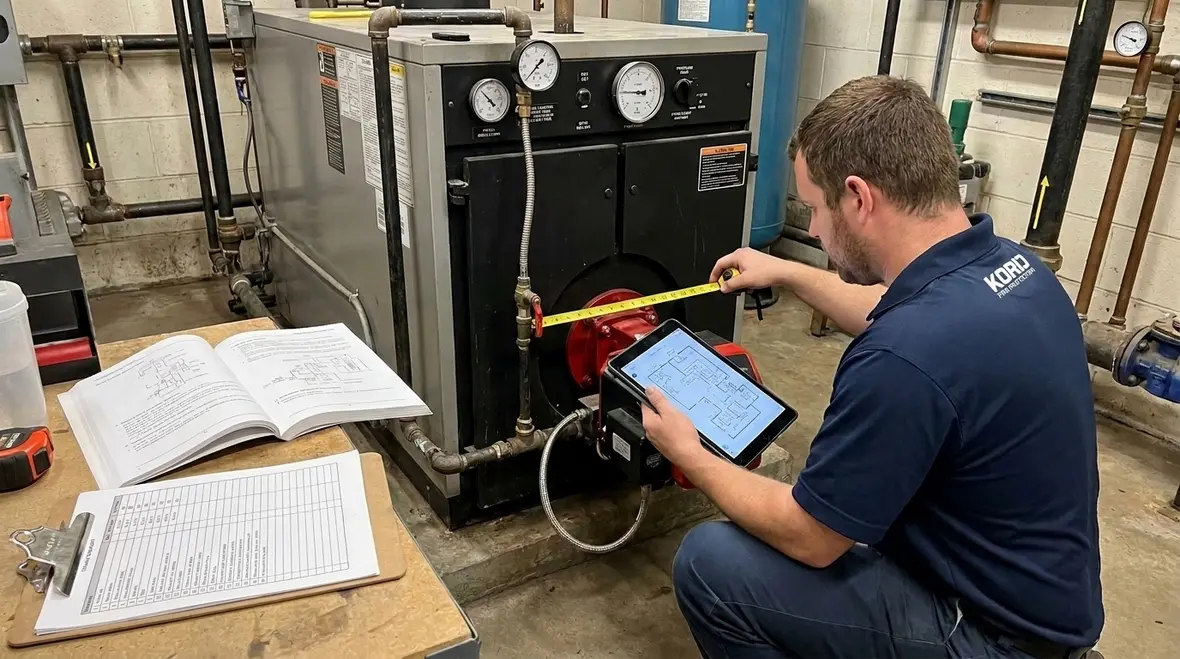
NFPA 31 Section 1.6: Units of Measure Used in the Code
Quick Answer: NFPA 31 Section 1.6 establishes the unit system the code uses for measurements and calculations. Facilities must align documentation, drawings, and maintenance procedures to the stated units to prevent design and inspection errors. Effective NFPA 31 SI and US customary units conversion reduces rework and compliance risk.
NFPA 31 Section 1.6, “Units of Measure Used in the Code,” may appear administrative, but it directly affects how oil burning equipment is designed, installed, inspected, and maintained. Commercial and industrial sites often operate with mixed metric and imperial engineering standards, especially when equipment, burners, controls, and commissioning data come from different jurisdictions. When the unit system is unclear, teams can misapply spacing, rates, capacities, pressure readings, and control setpoints. That can translate into delays, failed inspections, and recurring maintenance issues.
For facilities that want a broader compliance framework near the start of the project, Kord Fire Protection’s commercial fire suppression systems and services page gives useful context on how ongoing installation, inspection, testing, repair, and maintenance workflows support dependable code alignment.
Why NFPA 31 Section 1.6 matters in real installations
In practice, Section 1.6 influences every document that touches compliance. That includes shop drawings, installation checklists, commissioning forms, burner service reports, tank and piping calculations, and inspection punch lists. For commercial facilities, where contractors rotate and asset registers are maintained across multiple vendors, unit clarity becomes a control mechanism, not a formality.
Common operational consequences of unit mismatch include:
Incorrect discharge or clearance measurements that affect required separation distances, venting arrangements, and safe access for servicing.
Misinterpreted pressure and draft readings that cause burners to operate outside expected performance, increasing soot, incomplete combustion, and nuisance shutdowns.
Erroneous flow rate conversions used for sizing, verification, and troubleshooting, leading to improper atomization and unstable combustion.
Inconsistent label and signage units that confuse operators during manual checks, especially where multiple fuels or operating modes exist.
For teams that manage fleets of boilers, heaters, process burners, and unit heaters across retail, warehouse, and light industrial spaces, consistency in units becomes a practical risk reduction step aligned with inspection expectations.
NFPA 31 SI and US customary units conversion: what teams must standardize
NFPA 31 SI and US customary units conversion is not about choosing convenience. It is about preventing calculation and transcription errors between measurement systems. Commercial compliance workflows typically require a documented standard for how measurements are recorded and how converted values are verified.
Operational standardization steps
Lock the unit system per asset documentation set. For example, keep a single unit basis for drawings, commissioning reports, and annual inspection records for each equipment item.
Use controlled conversion rules. Convert once, document the basis, and retain original measurement data where possible.
Verify conversions during commissioning and after service. Burners and controls require accurate setpoints, and changes made after maintenance should not be introduced with incorrect unit assumptions.
Align equipment manuals and field instruments. Many instruments display readings in local or manufacturer units. Controls, scales, and pressure gauges must match the conversion intent used in compliance documentation.
In many commercial settings, the most expensive mistakes occur during “paper corrections” after work is completed. A disciplined unit standard reduces rework and keeps inspection readiness intact between service cycles.
Where unit errors show up during inspections and maintenance
NFPA 31 compliance depends on more than initial installation. Maintenance activities regularly revisit conditions that are expressed as measurable quantities. When units are inconsistent, field work often drifts away from the original design basis.
High risk measurement categories
Firing rate and fuel flow. During burner tuning, fuel delivery changes should be tracked with the correct volumetric or mass basis used by the code documentation set.
Pressure, draft, and combustion readings. Draft pressure and manifold pressure readings must be interpreted correctly. Incorrect conversions can lead to improper air to fuel ratios and unstable combustion.
Clearances and service access. If the site uses mixed measurement conventions for mechanical clearances, access routes, and service space, technicians may install or maintain components outside acceptable limits.
Pipe sizing and fittings. Flow and pressure drop calculations drive the selection of piping runs, valves, strainers, and filters. Units errors can create real performance and reliability impacts, not just documentation discrepancies.
Vent and combustion air parameters. Venting systems rely on correctly measured dimensions and termination requirements. Unit mismatch can affect sizing logic and installation verifications.
Commercial facility teams should ensure their inspection checklists and service templates use the same unit basis that appears in the applicable compliance reference documents. That alignment improves consistency across contractors and internal maintenance staff.
Practical compliance controls for commercial, industrial, and retail sites
Facilities that run oil burning equipment typically face multiple practical constraints: limited service downtime, high tenant and retail traffic, and shared utility corridors. These factors increase the importance of repeatable work instructions that reference the correct units and reduce on site guesswork.
Recommended controls
Unit verified drawings at the point of installation. Confirm that the installation drawings used by the contractor match the unit system required for calculations and inspection acceptance criteria.
Training for technicians and inspection staff. Ensure the team understands how NFPA 31 SI and US customary units conversion affects the way they record readings, not just how they interpret them.
Instrument calibration and unit labeling. Calibrated instruments must display readings in consistent units. Replace or clearly label gauges that create confusion during service calls.
Change control during burner service. When maintenance alters nozzles, regulators, linkages, or control parameters, the updated report should reflect the correct unit system and include the measurement context.
When these controls are embedded into routine operations, the facility reduces the likelihood of recurring combustion problems such as soot accumulation, short cycling, and persistent flame instability that often surface after incorrect adjustments.
How to apply unit clarity to oil burning equipment work packages
Many compliance projects involve multiple scopes: installation verification, tuning, filtration service, vent inspection, and documentation updates. Unit clarity should be addressed at the work package level so every contractor and technician starts from the same baseline.
For a broader installation and commissioning perspective that supports consistent execution for oil burning equipment, refer to this practical resource: NFPA 31 practical guide to oil burning equipment installation. Using work package templates derived from proven install practices helps maintain measurement consistency and reduces field transcription errors.
Commercial service partners such as Kord Fire Protection typically support ongoing compliance with repeatable maintenance workflows, documented testing, and clear reporting that aligns with inspection readiness goals. This approach helps facilities maintain continuity across service intervals and equipment modifications.
Frequently Asked Questions
Conclusion and call to action
NFPA 31 Section 1.6 seems straightforward, but unit clarity affects real-world installation accuracy, inspection outcomes, and burner reliability. To reduce rework and compliance risk, standardize your measurement basis, control NFPA 31 SI and US customary units conversion in your documentation, and verify converted values during service. Kord Fire Protection can support ongoing testing, maintenance, and inspection readiness with consistent reporting and practical field execution. Schedule an assessment to confirm your unit standards and maintenance templates now.

Join Our Newsletter!
Get the latest fire safety tips delivered straight to your inbox From our Newsletter.



