
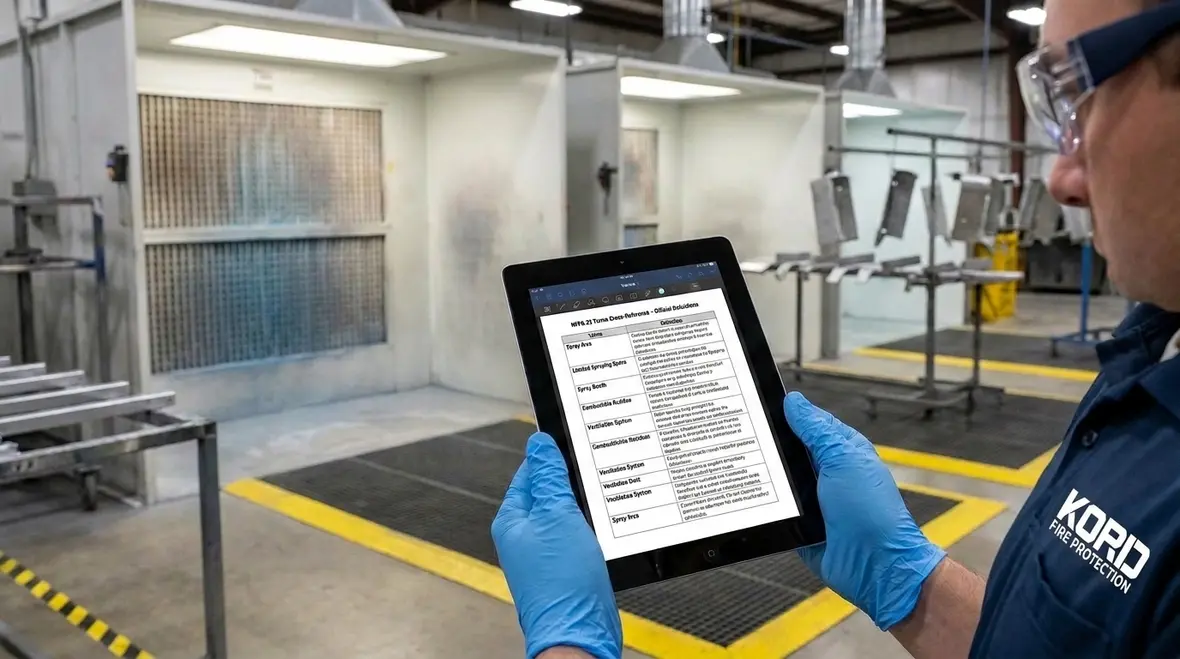
NFPA 33 Section 3.2: Official NFPA Terms Used in the Spray Code
Quick Answer: NFPA 33 Section 3.2 consolidates official terms used throughout the Spray Application and Dipping process code. A practical cross reference of these definitions helps facilities interpret requirements consistently, reduce inspection findings, and standardize how operations, equipment, and maintenance procedures are documented.
NFPA 33 Section 3.2, “Official NFPA Terms Used in the Spray Code,” establishes the vocabulary used across the Spray Application and Dipping chapter structure. For commercial, industrial, and retail facilities that spray flammable or combustible coatings, this matters because inconsistent interpretation often turns into recurring inspection issues. An NFPA 33 official definitions cross reference supports correct training, safer work practices, and defensible compliance documentation.
Facilities reviewing terminology alignment often also benefit from a broader fire protection services plan for Southern California facilities, especially when inspection readiness, documentation gaps, and maintenance evidence all need to line up under one compliance approach.
Why Section 3.2 Definitions Control Real-World Compliance
In practice, NFPA compliance is not only about hardware and procedures. It also depends on how the organization defines terms internally and applies them consistently across permits, operating instructions, inspection checklists, and maintenance records. Section 3.2 standardizes the meaning of key language used throughout NFPA 33, which affects how technicians and supervisors interpret spray area requirements, ventilation concepts, ignition control expectations, and spray equipment controls.
Common commercial facility challenges include:
- Training drift: Operators may use older internal wording that conflicts with NFPA terminology.
- Documentation gaps: Inspection forms may reference processes without aligning to defined terms.
- Maintenance misunderstandings: Tasks may be scheduled using vague descriptions that do not map to the defined scope.
- Change management failures: Process updates or equipment swaps are not reviewed against the current definition set.
When NFPA 33 definitions are applied correctly, facilities typically reduce variance between day-to-day operations and the way inspectors evaluate the written program and the physical system.
What Section 3.2 Does and How to Build a Cross Reference
NFPA 33 Section 3.2 provides official terms used in the Spray Code. These terms typically function like “building blocks.” They control how the rest of the code is understood, especially when requirements use structured language rather than plain descriptions.
Operational approach for an NFPA 33 official definitions cross reference
A robust cross reference should do more than list definitions. It should connect each defined term to how the facility must use it. A practical method includes:
- Term inventory: Identify the terms used in your site procedures, hot work controls, spray work instructions, and inspection checklists.
- Definition mapping: Tie each term to the NFPA 33 Section 3.2 meaning and record the exact wording reference for traceability.
- Procedure alignment: Update work instructions so operators do not rely on informal definitions.
- Inspection checklist linkage: Ensure each inspection item references the correct term intent, not a loosely related synonym.
- Maintenance scope definition: Specify the defined scope for cleaning, adjustment, component replacement criteria, and verification testing.
- Training verification: Require sign-off that confirms operators can explain the term’s meaning and its operational implications.
This process reduces ambiguity during audits and supports consistent decision making during both routine operations and abnormal conditions such as equipment downtime or ventilation impairment.
Where Definition Errors Create Inspection and Maintenance Failure Points
Facilities often think they are “following NFPA,” but inspectors evaluate whether the organization used the code language correctly. Misreading Section 3.2 terms can cascade into operational errors. The most common failure points relate to interpretation.
1) Misalignment between spray work instructions and defined terms
Spray work programs typically include prerequisites such as ventilation status, ignition source controls, and equipment readiness. If the program uses internal labels that do not match the defined terms used in NFPA 33, the facility may document compliance with one intent while performing work to a different standard.
2) Confusing control concepts used in ventilation and ignition management
NFPA 33 frequently relies on defined concepts when describing how spray operations manage flammable atmospheres and ignition sources. If definitions are not captured in training and procedure documents, teams may apply the wrong control logic during startup, changeover, or extended idle periods.
3) Maintenance records that cannot prove defined-scope tasks
Many maintenance programs describe activities in general terms such as inspection, verification, or servicing without clearly stating the defined scope. That approach can produce repeat findings, especially when inspectors request proof of specific verification steps and acceptance criteria.
Commercial facilities benefit from scheduled, evidence-based maintenance where each task is tied to the defined term intent and supported by test results, component condition notes, and corrective action logs.
How Kord Fire Protection Helps Facilities Apply NFPA 33 Terms Correctly
Correct interpretation of NFPA 33 official definitions cross reference items improves outcomes across compliance, training, and system readiness. Kord Fire Protection supports commercial facilities by translating NFPA terminology into operational and maintenance controls that can be implemented, inspected, and sustained.
If your team is reviewing broader spray-code context, it is also worth reading NFPA 33 Section 1.3 on spray operations covered and excluded, since scope questions and definition questions love showing up to the same compliance party.
Practical services that strengthen ongoing compliance
- Spray safety documentation support: Term mapping to ensure procedures and checklists match the code vocabulary used in NFPA 33.
- Inspection readiness reviews: Identification of documentation gaps that cause preventable findings during audits.
- Verification and testing coordination: Evidence collection and maintenance planning to prove defined-scope performance.
- Corrective action support: Root cause analysis when a defined concept was misunderstood or applied inconsistently.
For facilities managing multiple spray lines, multiple coatings, or shared ventilation systems, Kord’s approach helps unify terminology across departments, including operations, engineering, and facilities maintenance.
Internal Controls for Training, Checklists, and Maintenance Evidence
Section 3.2 definitions become enforceable in day-to-day operations only when the facility builds internal controls around them. The goal is to ensure that operators, supervisors, and maintenance technicians use the same meaning for the same terms.
Recommended control set for commercial sites
- Standard operating procedure language: Replace informal wording with the defined term intent where applicable.
- Competency-based training: Include short knowledge checks tied to the definitions and their operational implications.
- Inspection checklist standardization: Use checklist item descriptions that mirror the defined term intent.
- Maintenance work order templates: Require references to the defined scope and require results fields for verification evidence.
- Audit trail management: Store revision history and approvals to show the facility continuously aligns with the current NFPA terminology.
When these controls exist, teams can respond consistently to abnormal events such as ventilation disruptions, altered work schedules, or equipment replacements without introducing term-based ambiguity.
Frequently Asked Questions
Call to Action
If your facility sprays coatings or uses dipping operations, Section 3.2 terminology deserves more than a one-time read. Engage Kord Fire Protection to build an actionable NFPA 33 official definitions cross reference, align training and checklists, and strengthen evidence for ongoing inspections. Contact Kord Fire Protection today to schedule a compliance documentation and readiness review tailored to your spray lines, ventilation setup, and maintenance practices.

Join Our Newsletter!
Get the latest fire safety tips delivered straight to your inbox From our Newsletter.



