
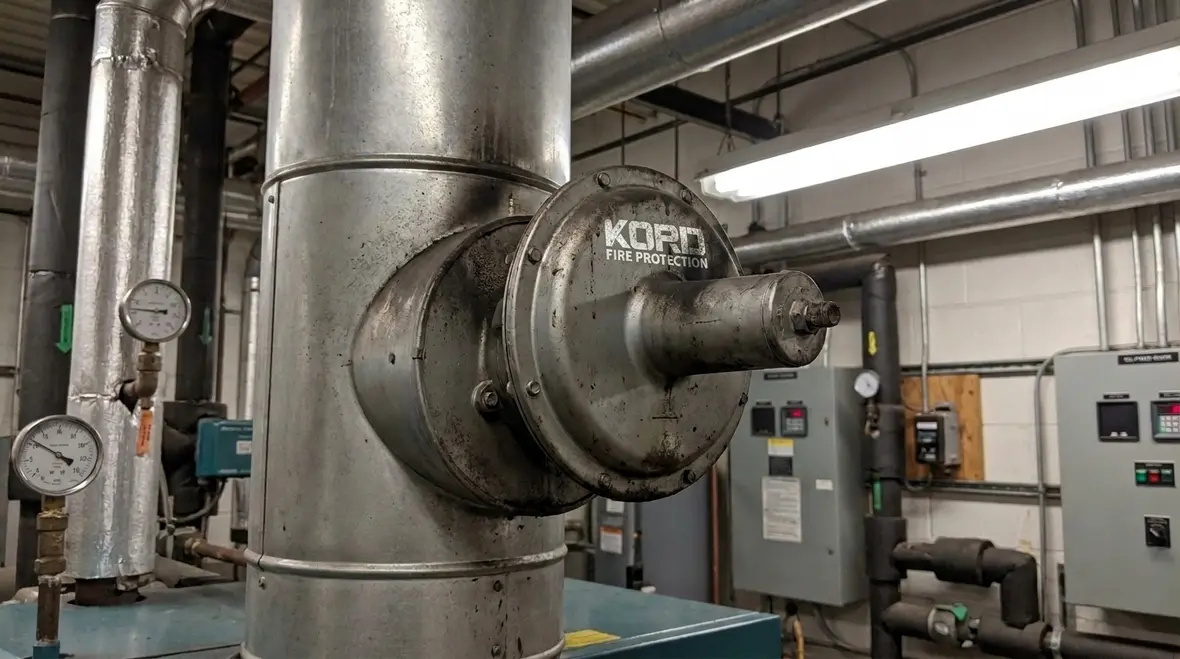
NFPA 31 Section 6.4: Draft Regulators for Oil Burning Equipment
Quick Answer
NFPA 31 Section 6.4 focuses on how draft regulators are selected, installed, and maintained to keep oil burning equipment operating within safe combustion and draft conditions. Proper NFPA 31 draft regulators installation reduces soot, stabilizes flame performance, and lowers failure risk from unstable chimney draft.
Facilities that need broader compliance support can also explore Kord Fire Protection’s fire protection services in Southern California for inspections, repairs, installations, and emergency support. ([kordfire.com](https://kordfire.com/fire-protection-services-southern-california/?utm_source=openai))
Why NFPA 31 draft regulators matter in real installations
Draft regulators directly influence combustion stability, burner lockout frequency, smoke production, and safe venting. In commercial facilities, the problem is rarely a single failed part. It is usually a combination of site pressure changes, flue temperature variation, wind effects, boiler cycling, and inadequate commissioning after maintenance. NFPA 31 Section 6.4 addresses that reality by requiring draft regulators that deliver controlled draft to the burner and chimney system, not random draft behavior.
For facilities managing multiple call outs, poor draft control creates recurring work: soot cleaning, burner adjustments, and nuisance service visits. This is why NFPA 31 draft regulators installation should be treated as a compliance and performance system, not a one time procurement task.
What Section 6.4 requires: the functional intent
NFPA 31 Section 6.4 is designed to ensure oil burning equipment receives a stable, controlled draft condition. The regulator works as a controlled air inlet or balancing mechanism to offset variations in chimney draft. When draft becomes excessive, burners can overfire, combustion can become unstable, and flue gas carryover may increase. When draft becomes insufficient, combustion can deteriorate, smoke can form, and safety controls may respond to abnormal conditions.
Key functional outcomes to document
- Draft conditions stay within the design intent of the burner, boiler, or heater and the vent system across normal operating modes.
- The draft regulator maintains consistent operation during load changes such as staging, cycling, and start up.
- After installation or service work, the system returns to verified combustion and draft performance rather than assumed settings.
Draft regulator components and how they behave during operation
Draft regulators typically integrate a moving control element that responds to draft pressure changes in the flue. While designs vary by manufacturer and application, the operating principle remains consistent: the regulator reduces draft excursions by admitting controlled air or mechanically adjusting the effective flow path.
Common mechanisms and what can go wrong
- Barometric or atmospheric regulator assemblies: Performance depends on correct adjustment and free movement. Soot, corrosion, bent linkage, and paint or oil contamination can cause sticking and delayed response.
- Flue gas sensor or reference pressure approach (where used): Incorrect sensing location or damaged tubing can misread draft, resulting in incorrect regulator action.
- Inlet air pathways: Blockage by insulation debris, vermin, or construction materials increases restriction. This often appears after renovations or roof repairs that disturb the flue room envelope.
Operational failure patterns seen on site
Facilities commonly notice unstable stack draft during weather changes, after roof winds, or after HVAC sequences shift. Another frequent pattern is post service drift: the regulator is installed but the combustion analysis and draft verification are not completed to confirm stable operation across the burner operating range.
How NFPA 31 draft regulators installation should be executed
Even when the regulator hardware appears correct, incorrect installation details can undermine compliance. Effective installation requires correct location, orientation, clearance, and commissioning verification tied to combustion testing.
Installation controls that prevent recurring issues
- Confirm compatibility with the burner and vent system. Match regulator type and sizing to the appliance firing rate, flue characteristics, and chimney or vent draft potential.
- Install for stable reference conditions. The regulator must see the draft conditions intended by the design. Avoid routing changes, elbows, or obstructions that alter pressure behavior at the regulator.
- Maintain mechanical freedom. Linkage and moving parts must move freely through the adjustment range. Ensure components are not forced into alignment that creates binding.
- Secure and seal as required for the system design. Inappropriate sealing can alter air pathways or create unintended leakage. Leakage can also bypass the regulator and defeat its control function.
- Commission with combustion and draft verification. After installation, confirm stable combustion and correct flue gas results across normal operating conditions, not only during initial start up.
For a practical installation overview that aligns with commercial realities, reference this resource: NFPA 31 practical guide to oil burning equipment installation.
Inspection, testing, and maintenance: what compliance teams should verify
Draft regulators do not remain correct by default. Facilities need an inspection routine that checks both mechanical condition and functional performance. From a compliance perspective, documentation must support that the regulator continues to deliver controlled draft after time, soot loading, and normal wear.
Maintenance tasks that prevent hidden degradation
- Visual inspection of regulator internals: Look for soot buildup, corrosion, damaged seals, and restricted movement.
- Check adjustment stability: Verify the regulator settings have not shifted after maintenance, vibration, or minor service access work.
- Verify flue integrity and air pathways: Confirm there are no leaks or blockages in the connection points and inlet air arrangements that bypass the regulator.
- Confirm combustion performance: Use appropriate test instruments to validate combustion quality and venting behavior under normal loads.
Commercial facility challenges Kord Fire typically addresses
Commercial boilers and heaters often run with frequent cycling and variable loads. In retail and industrial sites, rooftop HVAC changes, door opening patterns, and ongoing maintenance can alter pressure regimes in the flue room. Kord Fire Protection supports ongoing compliance by coordinating inspection scheduling, commissioning verification after service, and documented maintenance that aligns with the operational expectations of commercial plant management.
Frequently asked questions about NFPA 31 draft regulators installation
Conclusion and call to action
NFPA 31 Section 6.4 draft regulator control protects combustion safety and reduces maintenance churn when installations include correct placement, mechanical freedom, and commissioning verification. Kord Fire Protection can support your site with inspections, testing, documented compliance, and maintenance that accounts for commercial pressure changes and equipment cycling. If your oil burning equipment shows smoke, instability, nuisance lockouts, or recurring soot cleaning, contact Kord Fire Protection to review your regulator installation and performance.

Join Our Newsletter!
Get the latest fire safety tips delivered straight to your inbox From our Newsletter.



