
NFPA 33 Section 3.3 Key Spray Operation Terms Defined: Booths, Rooms, Flash Point
Quick Answer: NFPA 33 Section 3.3 defines core spray operation terminology that drives how facilities design, operate, and inspect spray areas. Clear definitions of booths, rooms, and flash point determine ventilation, ignition control, and compliance documentation for spray coating and finishing.
Commercial facilities that conduct spray finishing depend on consistent terminology. Mislabeling a spray booth as a spray room, or treating a solvent’s flash point as a general “flammability” value, creates gaps in hazard analysis, inspection scope, and compliance evidence. For teams performing risk reviews, permitting, or annual equipment verification, the most practical starting point is NFPA 33 Section 3.3.
When facilities apply NFPA 33 general definitions spray booth room terminology, they align design intent with inspection expectations. This reduces the likelihood of enforcement findings related to ventilation performance, electrical classification boundaries, storage controls, and operating procedures.
For a practical look at protection strategy around paint operations, see spray booth fire suppression for safer paint operations. It fits naturally with this terminology discussion because once the booth or room is defined correctly, the protection approach stops being guesswork and starts being a plan.
Why NFPA 33 Section 3.3 Definitions Matter in the Real World
NFPA 33 Section 3.3 provides definitions that influence multiple requirements across the standard. Even when the rest of the code focuses on engineering controls, the definitions determine the “where” and “how” that controls apply. In day to day operations, facilities tend to think in terms of equipment and workflow. NFPA 33 requires facilities to think in terms of hazard boundaries and operating conditions, anchored to defined terms.
Common compliance challenges include:
- Boundary confusion: Areas treated as “inside the booth” during operations may actually function as a room under code interpretation, affecting ventilation and ignition control strategy.
- Solvent and coating variability: Product substitutions change flash point data, which can alter classification of spray operations and required controls.
- Maintenance drift: Fans, make up air, ducting, and filtration performance degrade over time, but operational definitions remain unchanged unless the facility verifies performance.
Booths in NFPA 33: What the Term Controls During Spray Operations
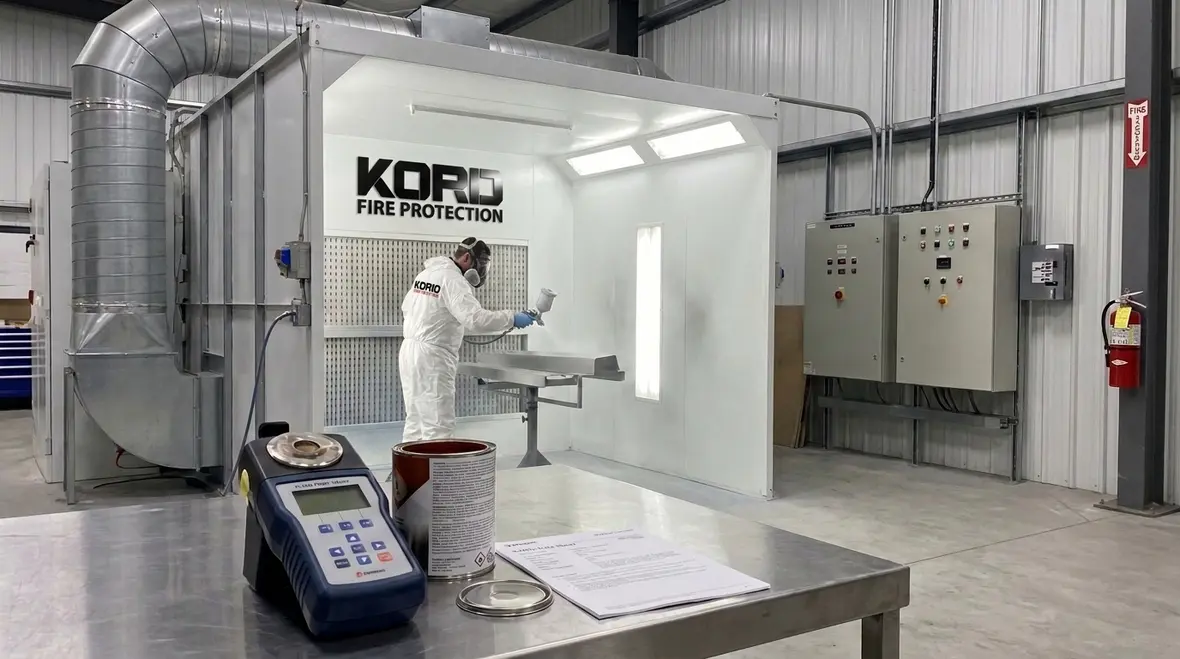
In NFPA 33, a spray booth definition is not a marketing label. It is a technical category used to establish the intended enclosure and operating controls for spray application. A booth typically creates a controlled spray environment designed to capture overspray and maintain conditions that support safe operation, including managing flammable or combustible vapors generated during spraying.
Operational implications for commercial facilities
When a facility uses a booth, it must treat it as a defined spray space with predictable ventilation and capture performance. In practice, booth compliance hinges on:
- Ventilation effectiveness: Airflow must maintain the booth’s intended performance so that vapor and overspray hazards remain contained and managed.
- Proper airflow direction: Air movement must support safe conditions for spraying, cleaning, and interruptions in operation.
- Filtration and maintenance: Overspray loading increases pressure drop and can reduce capture. Filters, ducting, and seals require scheduled verification.
Common failure points
- Leaky doors or misaligned airflow: Door adjustments and maintenance shortcuts can change capture performance without obvious visual cues.
- Improper interlocks: Interlocks that fail to prevent spraying when ventilation is not operating can defeat the safety intent of booth design.
- Unverified retrofit changes: Adding shelving, moving work tables, or changing production flow can introduce dead zones and alter spray dispersion.
Because booth performance depends on installed systems and ongoing maintenance, facilities often benefit from structured periodic commissioning and inspection. Kord Fire Protection supports commercial sites with practical compliance verification and maintenance guidance tailored to spray equipment and fire protection systems.
Rooms in NFPA 33: How a “Spray Room” Changes the Compliance Equation
A spray room differs from a booth primarily because the facility treats the space differently regarding enclosure expectations, ventilation strategy, and hazard control. NFPA 33 uses “room” terminology to describe areas where spray application occurs that may not meet booth characteristics or may be treated under different operational assumptions.
What facilities must verify when operations occur in a room
Room classification typically increases the importance of managing the overall space, not only the immediate spray point. Facilities generally need to focus on:
- Cross contamination control: Airflow patterns influence how vapors and overspray migrate throughout the room.
- Ignition source management: Electrical equipment, heaters, and maintenance tools must align with the room’s hazard context and operational practices.
- Operational procedures: Start up and shutdown steps matter. Vapors can accumulate if ventilation sequencing and housekeeping are inconsistent.
Why “room” misclassification is a frequent inspection issue
Many facilities use everyday language that conflicts with technical definitions. A room that functions like an open area during production can be treated as a room even if it has partial containment features. This mismatch can lead to inadequate ventilation design assumptions and missing documentation for hazardous area controls.
To strengthen defensibility during inspections, facilities should maintain a current basis of design and align operating procedures to actual equipment configuration. Kord Fire Protection can help validate practical compliance pathways by connecting NFPA 33 terminology to the installed realities of commercial systems, maintenance plans, and documentation packages.
Flash Point Defined: Why This Number Drives Fire Safety Controls
Flash point is a fundamental property of flammable liquids and coatings that indicates the temperature at which sufficient vapor forms to ignite. NFPA 33 Section 3.3 includes flash point as a key term because it directly influences how the standard addresses ignition hazards associated with spraying operations.
How flash point affects operational controls
Flash point data influences decisions such as:
- Material handling: Storage and transfer practices must match the ignition risk posed by the specific products used.
- Ventilation planning: Higher vapor generation risk demands more reliable capture and air movement verification.
- Work practice controls: During spray, interruptions, and cleanup, the facility must limit ignition sources and manage vapor accumulation.
Common flash point compliance mistakes
- Using outdated SDS values: SDS revisions happen. Facilities that do not update hazard information can operate outside the assumptions used for approvals.
- Confusing formulation labels with engineering data: “Low odor” or “non flammable” marketing claims do not replace flash point requirements.
- Failing to control substitutes: Production often changes products. Each substitution can change flash point and therefore required controls and inspection scope.
In many commercial settings, the safest approach is a controlled materials program that ties SDS review to operational controls and periodic verification. Kord Fire Protection can help establish recurring review workflows and inspection schedules that reflect current product hazards and actual system performance.
How Facilities Should Document Spray Area Definitions for Compliance
Definitions from NFPA 33 Section 3.3 become useful when facilities document them in operational records. This typically includes how the site identifies the booth or room boundaries, how ventilation is verified, and what material data drives hazard controls.
Recommended documentation elements
- Spray space description: Identify whether operations occur in a booth, a room, or both, and describe physical and airflow boundaries.
- Ventilation verification records: Capture airflow readings, fan status checks, and periodic maintenance logs.
- Product hazard records: Maintain current SDS documents and verify flash point data for coatings and solvents used during spray.
- Operating procedures: Document start up, shutdown, ventilation sequencing, and cleanup steps aligned to the defined spray space.
For facilities building a broader compliance roadmap, Kord Fire Protection’s NFPA 33 scope overview is a strong companion read because it connects booth, room, and flash point terminology to what the standard actually covers in practice.
Frequently Asked Questions
Conclusion and Call to Action
NFPA 33 Section 3.3 definitions for booths, rooms, and flash point create the foundation for safe spray operations and inspection-ready documentation. Facilities should verify airflow performance, confirm material flash point data against current SDSs, and align operating procedures to the defined spray space boundaries. Kord Fire Protection helps commercial, industrial, and retail sites maintain compliance through ongoing inspection support, maintenance planning, and practical verification. Schedule a review to close terminology gaps before they become inspection findings.

Join Our Newsletter!
Get the latest fire safety tips delivered straight to your inbox From our Newsletter.



